
Transforming how we harness solar energy, modern photovoltaic technology basics have evolved into sophisticated systems capable of unprecedented energy conversion efficiencies. Recent breakthroughs in perovskite-silicon tandem cells have pushed conversion rates beyond 30%, marking a significant leap from traditional single-junction architectures. This rapid advancement, coupled with emerging bifacial modules and transparent solar technology, signals a pivotal shift in renewable energy infrastructure.
The integration of artificial intelligence and machine learning algorithms now enables real-time optimization of photovoltaic systems, maximizing energy yield while minimizing maintenance requirements. These smart systems adapt to environmental conditions, predict performance fluctuations, and automatically adjust for optimal efficiency. As manufacturing costs continue to decline and efficiency ratings climb, photovoltaic technology stands at the forefront of sustainable energy solutions, promising to reshape both industrial power generation and distributed residential systems.
The Evolution of Hybrid Photovoltaic Systems
Traditional vs. Hybrid PV Systems
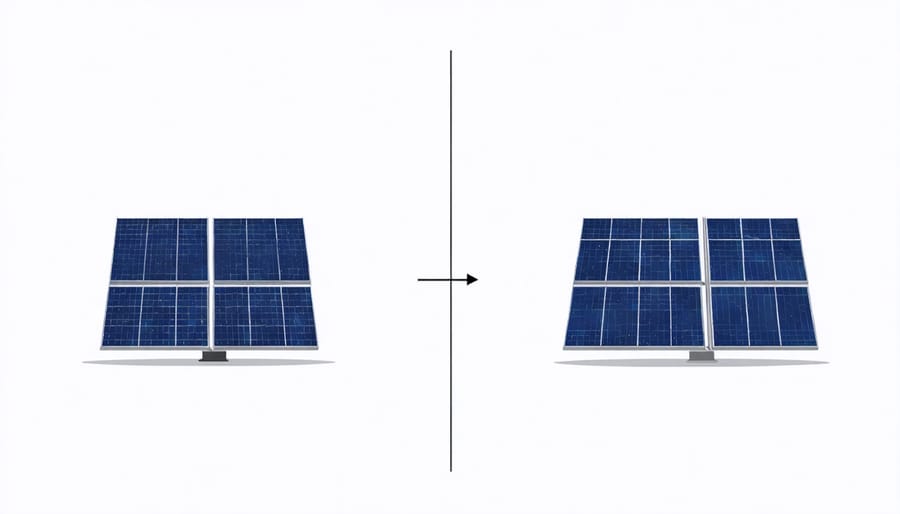
Traditional photovoltaic systems primarily consist of solar panels that convert sunlight directly into electricity through semiconductor materials, typically silicon-based cells. These conventional systems have been the industry standard for decades, offering reliable performance and well-established installation protocols. However, they face efficiency limitations and are dependent solely on direct sunlight for power generation.
Hybrid PV systems represent an evolution in solar technology by combining conventional photovoltaic cells with complementary technologies. These systems may integrate thermal collectors, energy storage solutions, or other renewable energy sources to enhance overall system efficiency and reliability. The most common hybrid configuration pairs solar panels with battery storage, enabling continuous power supply even during non-sunlight hours.
Key advantages of hybrid systems include increased energy self-consumption, reduced grid dependency, and improved system economics through smart energy management. While traditional systems typically achieve conversion efficiencies of 15-20%, hybrid solutions can push overall system efficiency higher through synergistic operation of multiple components. However, hybrid systems generally require higher initial investment and more complex installation and maintenance procedures compared to their traditional counterparts.
Key Components of Modern Hybrid Systems
Modern hybrid photovoltaic systems integrate several key components that work in synergy to maximize energy production and efficiency. The primary element is the solar panel array, typically combining different cell technologies such as monocrystalline and thin-film cells to optimize performance across varying environmental conditions. These are complemented by advanced power inverters that convert DC electricity to AC while managing power flow between multiple sources.
Energy storage systems, predominantly lithium-ion batteries or flow batteries, form another crucial component, enabling consistent power supply during low-light periods. Sophisticated charge controllers protect batteries while optimizing charging cycles, and smart monitoring systems provide real-time performance data and predictive maintenance capabilities.
The integration layer, comprising hybrid controllers and energy management systems, orchestrates the interaction between renewable and conventional power sources. These systems employ artificial intelligence algorithms to predict energy demand patterns and adjust power distribution accordingly. Modern installations also incorporate safety features like rapid shutdown systems and surge protection devices, ensuring reliable operation while meeting stringent regulatory requirements.
Breakthrough Hybrid Technologies
Tandem Solar Cells
Tandem solar cells, also known as multi-junction solar cells, represent a significant advancement in photovoltaic technology by stacking multiple semiconductor layers to capture a broader spectrum of sunlight. Each layer is engineered to absorb specific wavelengths of light, allowing the cell to convert solar energy more efficiently than traditional single-junction cells.
The architecture of tandem cells typically consists of semiconductors with different bandgaps arranged in descending order. The top layer captures high-energy photons while allowing lower-energy photons to pass through to subsequent layers, maximizing the overall energy conversion. Modern tandem cells can achieve efficiencies exceeding 45% under concentrated sunlight, compared to the theoretical limit of about 33% for single-junction silicon cells.
Commercial applications of tandem cells include space satellites, where high efficiency justifies higher production costs, and concentrated photovoltaic (CPV) systems. Recent developments in perovskite-silicon tandem cells have shown promising results, with laboratory efficiencies surpassing 29% while offering potential cost reductions in manufacturing.
Challenges in tandem cell development include optimizing layer interfaces, managing thermal expansion differences between materials, and reducing production costs. However, ongoing research in material science and manufacturing processes continues to improve their commercial viability, particularly for utility-scale solar installations where high efficiency can offset initial investment costs.
Perovskite-Silicon Hybrid Systems
The integration of perovskite solar technology with traditional silicon cells represents one of the most promising developments in photovoltaic advancement. These hybrid systems combine the proven reliability of silicon cells with the exceptional light-absorption properties of perovskite materials, potentially achieving conversion efficiencies exceeding 30%.
The tandem cell architecture typically places a perovskite layer atop a conventional silicon cell, enabling the capture of different portions of the solar spectrum. The perovskite layer primarily absorbs higher-energy visible light, while the silicon layer captures lower-energy infrared radiation, maximizing overall energy harvesting capability.
Recent laboratory tests have demonstrated remarkable progress, with some prototypes achieving efficiency improvements of 20-25% compared to traditional silicon-only cells. These advances are particularly significant considering the relatively low production costs and scalability potential of perovskite materials.
However, challenges remain in terms of stability and durability. Research teams worldwide are focusing on improving the longevity of perovskite layers and developing enhanced encapsulation methods to protect against environmental degradation. Manufacturing processes are being refined to ensure consistent quality in large-scale production.
The commercialization pathway for these hybrid systems is becoming increasingly clear, with several major manufacturers conducting pilot programs and planning commercial releases within the next few years. This technology represents a crucial stepping stone toward more efficient and cost-effective solar energy solutions.
Thermal-PV Hybrid Solutions
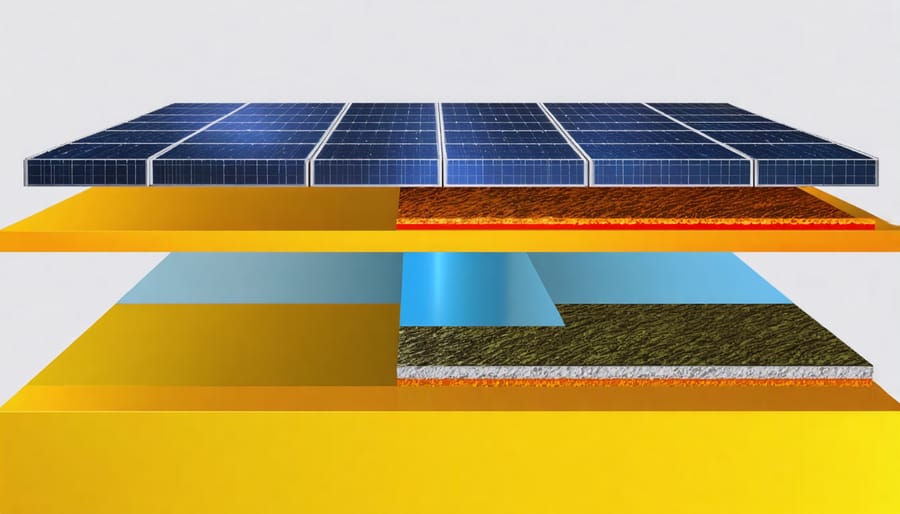
The integration of thermal and photovoltaic technologies has revolutionized solar energy harvesting, offering unprecedented efficiency gains through dual-purpose collection systems. PVT solar collection systems combine traditional photovoltaic cells with thermal collectors, enabling simultaneous electricity generation and heat capture from a single installation.
These hybrid solutions typically achieve overall system efficiencies of 70-80%, significantly outperforming standalone PV systems. The thermal component helps regulate PV cell temperature, preventing efficiency losses due to overheating while capturing valuable thermal energy for space heating, water heating, or industrial processes.
Modern thermal-PV hybrid designs incorporate advanced heat transfer fluids, specialized coating materials, and sophisticated control systems to optimize performance across varying environmental conditions. Key innovations include spectrally selective absorbers that maximize both electrical and thermal energy capture, and smart thermal management systems that dynamically adjust flow rates based on real-time demand and conditions.
The economic benefits of these systems are particularly compelling for applications requiring both electricity and heat, such as commercial buildings, industrial facilities, and large residential complexes. Implementation costs have decreased by approximately 30% over the past decade, while system lifespans have extended to 25-30 years, making them increasingly attractive for long-term energy solutions.
Commercial Applications and Market Impact
Current Market Applications
The commercial adoption of hybrid photovoltaic technology has gained significant momentum across various sectors. Leading manufacturers now offer integrated solutions that combine solar panels with energy storage systems, maximizing hybrid PV system benefits for both residential and commercial applications.
Major installations include large-scale industrial facilities utilizing hybrid solar-thermal systems for both electricity generation and process heating. Notable examples can be found in the manufacturing sector, where companies have implemented hybrid PV solutions to reduce operational costs while meeting sustainability goals. The agricultural sector has also embraced hybrid technology, with greenhouse operations incorporating semi-transparent PV panels that generate power while allowing controlled light transmission for crop growth.
In the building sector, building-integrated photovoltaics (BIPV) have evolved to include hybrid functionalities, combining energy generation with thermal management and architectural aesthetics. Commercial developments now feature facade elements that serve multiple purposes: power generation, thermal insulation, and daylighting control.
Utility-scale installations have demonstrated the viability of hybrid systems through combined solar-wind parks and integrated storage solutions. These installations showcase improved grid stability and enhanced power availability, particularly in regions with variable weather conditions. The market has also seen innovation in mobile applications, with hybrid PV technology being incorporated into electric vehicle charging infrastructure and portable power solutions for remote operations.
Future Market Projections
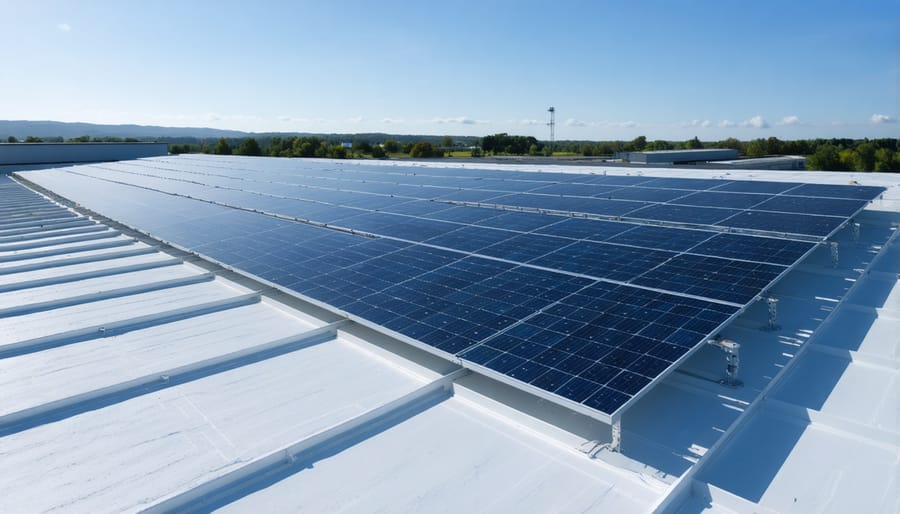
The photovoltaic market is projected to experience substantial growth over the next decade, with analysts forecasting a compound annual growth rate (CAGR) of 20.3% from 2024 to 2030. This expansion is primarily driven by increasing renewable energy adoption, favorable government policies, and declining manufacturing costs.
Key market indicators suggest that solar PV installations will triple by 2027, with utility-scale projects leading the growth. Emerging markets, particularly in Asia-Pacific and Latin America, are expected to contribute significantly to this expansion, while established markets in Europe and North America continue to show steady growth through retrofit and replacement projects.
Technological advancements in cell efficiency and material science are anticipated to further reduce production costs by approximately 35% by 2025, making photovoltaic systems increasingly competitive with traditional energy sources. The integration of artificial intelligence and IoT capabilities in PV systems is expected to create new market opportunities, particularly in smart grid applications and energy management solutions.
Investment in research and development is projected to reach $12 billion annually by 2026, with a particular focus on perovskite solar cells and bifacial modules. The commercial and industrial sectors are expected to emerge as major growth drivers, accounting for an estimated 40% of new installations by 2028.
Challenges remain in supply chain optimization and raw material availability, but innovations in recycling and circular economy practices are expected to address these concerns while creating new market segments.
Implementation Challenges and Solutions
Technical Challenges
Despite significant advancements in photovoltaic technology, several technical challenges continue to impact its widespread adoption and efficiency. The primary limitation remains the relatively low conversion efficiency of solar cells, with most commercial panels operating at 15-20% efficiency. Silicon-based cells face theoretical efficiency limits known as the Shockley-Queisser limit, which caps their maximum potential at around 33%.
Material degradation poses another significant challenge, particularly in harsh environmental conditions. Solar panels experience performance decline over time due to UV exposure, temperature fluctuations, and physical stress. Current research focuses on developing more durable materials and protective coatings to extend panel lifespan.
Grid integration presents complex technical hurdles, especially regarding energy storage and intermittency issues. The variable nature of solar power generation requires sophisticated power management systems and advanced storage solutions. Additionally, manufacturing processes still struggle with reducing material waste and energy consumption during production, affecting both cost-effectiveness and environmental impact.
These challenges drive ongoing research into novel materials, improved manufacturing techniques, and enhanced system designs to boost overall system performance and reliability.
Economic Considerations
The economic landscape of photovoltaic technology continues to evolve favorably, with installation costs declining by approximately 70% over the past decade. Current market analysis indicates that commercial PV systems typically achieve return on investment (ROI) within 5-7 years, depending on geographical location and local incentives. Initial capital costs average $2.50-$3.50 per watt for utility-scale installations, while residential systems range from $2.70-$4.00 per watt.
Operating and maintenance costs remain relatively low, typically 1-2% of the initial system cost annually. Module efficiency improvements and manufacturing scale economies have contributed significantly to cost reductions, making photovoltaic solutions increasingly competitive with traditional energy sources. Government incentives, tax credits, and renewable energy certificates further enhance the financial viability of PV installations.
Lifecycle cost analysis demonstrates that modern PV systems can generate electricity at $0.05-$0.10 per kilowatt-hour, comparable to or lower than conventional power sources in many regions. Additionally, technological advancements in energy storage solutions are improving the overall economic proposition by addressing intermittency challenges and enabling more efficient grid integration.
Hybrid photovoltaic technology stands at the cusp of a transformative era, poised to revolutionize the renewable energy landscape. The convergence of advanced materials science, improved manufacturing techniques, and innovative design approaches has created unprecedented opportunities for enhanced solar energy harvesting. Industry projections indicate that hybrid PV systems will achieve efficiency ratings exceeding 30% by 2030, while manufacturing costs continue to decrease through economies of scale and technological refinements.
The integration of artificial intelligence and machine learning algorithms in hybrid PV systems promises to optimize performance and maintenance protocols, leading to increased reliability and reduced operational costs. Additionally, emerging materials such as perovskites and quantum dots are showing exceptional potential for creating next-generation hybrid cells with superior light absorption properties and improved durability.
Market analysts predict substantial growth in hybrid PV adoption across both residential and commercial sectors, driven by favorable government policies, increasing environmental awareness, and improving cost-effectiveness. Research collaborations between industry leaders and academic institutions continue to accelerate technological breakthroughs, particularly in areas such as tandem cell configurations and smart grid integration.
As we look ahead, hybrid PV technology will play a crucial role in achieving global renewable energy targets and addressing climate change challenges. The combination of ongoing research, technological advancement, and market maturation suggests a bright future for hybrid photovoltaic solutions in the sustainable energy landscape.