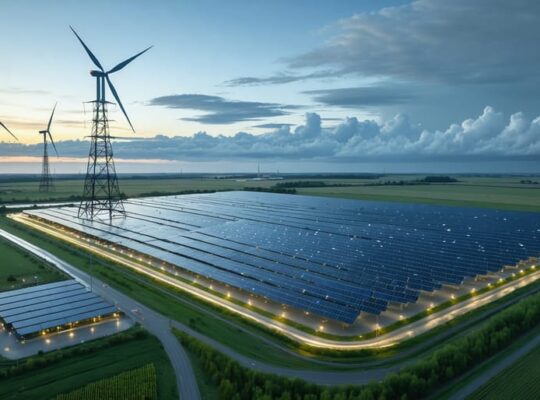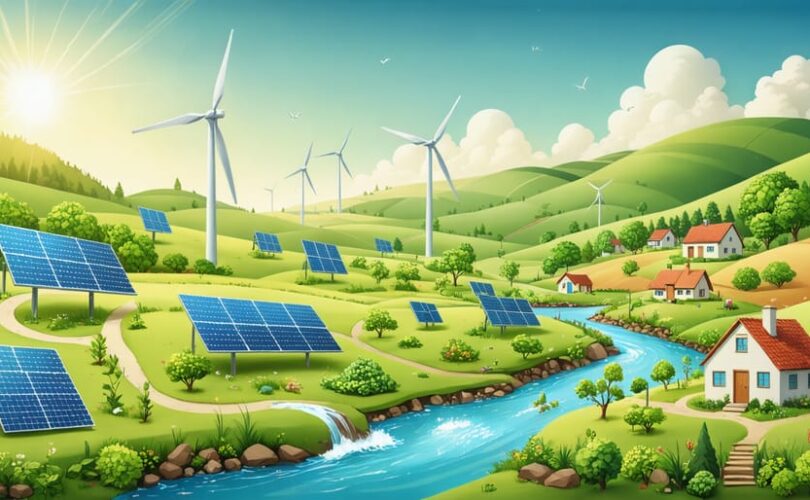
Renewable energy stands at the forefront of our global transition toward sustainable power generation, offering increasingly accessible solutions for communities worldwide. As technology advances and costs decrease, these clean energy sources are revolutionizing how we power our homes, businesses, and industries through innovative smart grid integration. From the sun-drenched deserts of Arizona to the windswept plains of Northern Europe, renewable energy resources are proving their reliability and economic viability across diverse geographical and socioeconomic contexts.
This comprehensive exploration examines five principal renewable energy sources: solar, wind, hydroelectric, geothermal, and biomass power. Each resource presents unique advantages and implementation considerations, particularly in terms of equitable access and community-scale deployment. Understanding these options is crucial for policymakers, industry professionals, and communities seeking to transition toward sustainable energy solutions while ensuring broad accessibility and environmental justice.
As we delve into these renewable resources, we’ll analyze their technological foundations, practical applications, and the evolving frameworks that make them increasingly accessible to diverse populations. This knowledge is essential for creating resilient, sustainable energy systems that serve all community members equitably.
Solar Power: The Most Accessible Renewable Resource
Photovoltaic Technology Advancements
Recent advancements in photovoltaic (PV) technology have revolutionized the solar energy landscape, making it increasingly accessible and cost-effective. Modern solar panels now achieve conversion efficiencies exceeding 20%, with cutting-edge designs approaching 30% in laboratory conditions. These improvements, coupled with available solar incentives and benefits, have significantly reduced implementation costs.
Perovskite solar cells represent a promising breakthrough, offering potential efficiency improvements while utilizing more affordable materials. When combined with traditional silicon cells in tandem configurations, these systems demonstrate enhanced performance and durability. Additionally, bifacial solar panels, which capture light on both sides, increase energy yield by 5-30% compared to conventional modules.
Manufacturing innovations have dramatically reduced production costs, with prices declining by over 80% in the past decade. Advanced automation and improved manufacturing processes have enhanced quality control while reducing material waste. Emerging technologies like transparent solar cells and building-integrated photovoltaics (BIPV) are expanding application possibilities, enabling solar integration into windows, facades, and other architectural elements.
The development of more efficient energy storage solutions, particularly lithium-ion batteries and emerging solid-state technologies, complements these PV advancements. This synergy enables reliable power supply even during non-peak production hours, making solar energy increasingly viable for both residential and commercial applications.
Community Solar Initiatives
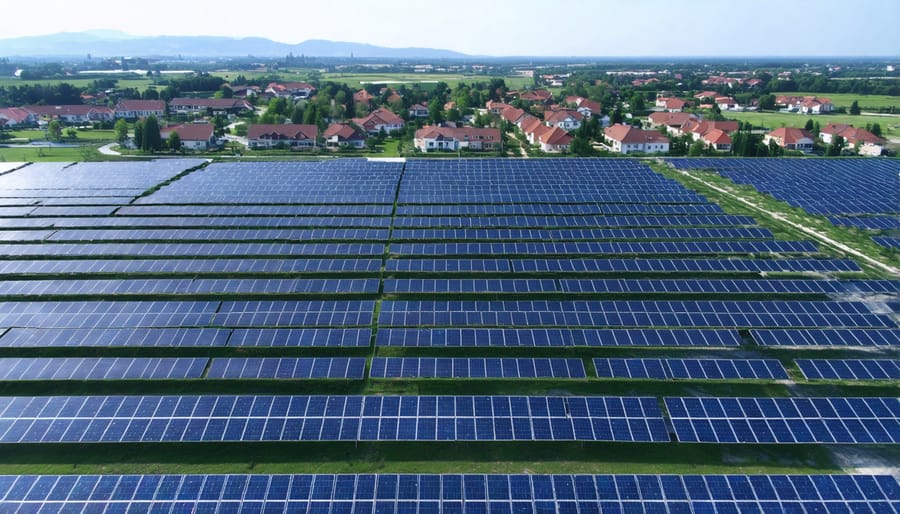
Community solar initiatives represent a transformative approach to renewable energy adoption, making solar power accessible to those who cannot install rooftop systems. These innovative community solar programs enable multiple participants to share the benefits of a single solar installation, typically located within their utility service area.
The model operates through virtual net metering, where subscribers receive credits on their electricity bills based on their share of the solar project’s output. This arrangement proves particularly valuable for renters, apartment dwellers, and homeowners with unsuitable roofs or shading issues. Participants often save 10-15% on their electricity costs while supporting clean energy development.
Implementation typically involves collaboration between utilities, solar developers, and local governments. Projects range from 100 kilowatts to several megawatts, serving dozens to hundreds of households. Successful initiatives often incorporate low-income household provisions, ensuring equitable access across socioeconomic boundaries.
Recent innovations include automated billing systems, simplified subscription processes, and flexible participation terms. Many programs now offer month-to-month commitments rather than long-term contracts, reducing barriers to entry. Additionally, some initiatives integrate workforce development components, creating local jobs and technical training opportunities in the renewable energy sector.
States with enabling legislation have seen rapid growth in community solar deployment, demonstrating the model’s effectiveness in democratizing access to renewable energy while supporting grid resilience and sustainability goals.
Wind Energy: Powering Communities Large and Small
Distributed Wind Solutions
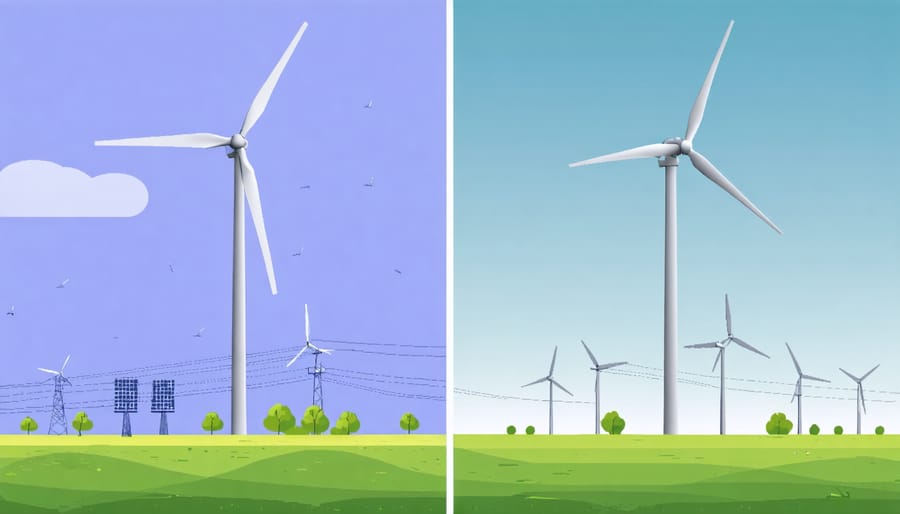
Distributed wind solutions represent a significant advancement in democratizing renewable energy access through small-scale wind power installations. These systems, typically ranging from 1 kW to 100 kW, are designed to serve individual households, farms, small businesses, and rural communities. Unlike utility-scale wind farms, distributed wind turbines are installed at or near the point of end-use, reducing transmission losses and infrastructure costs.
Modern distributed wind systems incorporate advanced technologies such as improved blade designs, smart controllers, and battery storage integration, enabling reliable power generation even in areas with moderate wind resources. These installations can achieve capacity factors of 25-35% in favorable locations, providing consistent renewable energy generation throughout the year.
Community wind projects have emerged as particularly successful implementations, allowing multiple stakeholders to share both costs and benefits. These initiatives often feature cooperative ownership models, where local residents can invest in and benefit from wind energy production. Notable examples include agricultural cooperatives utilizing wind power for irrigation and food processing, and rural municipalities powering public facilities through distributed wind installations.
The economic viability of distributed wind has improved significantly, with levelized costs of energy becoming competitive with traditional power sources in many regions. Modern systems typically achieve payback periods of 7-12 years, depending on local wind resources and electricity rates.
Cooperative Wind Projects
Community-owned wind projects have emerged as powerful examples of collective renewable energy initiatives, demonstrating how local communities can directly benefit from wind power infrastructure. The Middelgrunden Wind Farm in Copenhagen, Denmark, stands as a pioneering model, with 50% ownership shared among 8,500 local residents. This project generates enough electricity to power 40,000 households while providing direct financial returns to community investors.
In the United States, the Fox Islands Wind Project in Maine showcases how island communities can achieve energy independence. The community-owned initiative consists of three turbines that provide power to 1,800 year-round residents, effectively stabilizing electricity rates and reducing dependence on mainland power sources.
The Hepburn Wind Farm in Australia represents another successful model, where two turbines owned by 2,000 community members generate enough power for 2,300 homes. This project has established a community fund that supports local environmental and social initiatives.
These initiatives demonstrate key success factors: transparent governance structures, equitable profit-sharing mechanisms, and strong community engagement throughout the development process. The model has proven particularly effective in rural areas, where wind resources are abundant and communities can directly manage their energy infrastructure while creating local economic opportunities.
Hydropower: Sustainable Water-Based Energy
Small-Scale Hydro Solutions
Small-scale hydroelectric systems offer a reliable and sustainable power generation solution for communities with access to flowing water resources. These micro-hydro installations typically generate between 5 and 100 kilowatts of electricity, making them ideal for remote locations, agricultural operations, and small residential clusters.
Unlike large hydroelectric dams, micro-hydro systems have minimal environmental impact and can be implemented without major infrastructure changes. They operate by harnessing the natural flow of rivers or streams through a turbine system, converting kinetic energy into electrical power. The technology requires relatively low maintenance and can provide consistent power output throughout the year, depending on water availability.
Key components of a micro-hydro system include an intake structure, penstock pipe, turbine, generator, and control system. The selection of appropriate equipment depends on factors such as water flow rate, head height, and local terrain characteristics. Modern systems often incorporate advanced monitoring technology to optimize performance and ensure efficient operation.
Implementation costs vary based on site conditions and power requirements, but these systems typically offer favorable returns on investment through reduced electricity costs and potential grid independence. Many communities have successfully deployed micro-hydro solutions as part of their renewable energy portfolio, particularly in regions with adequate water resources and suitable topography.
Environmental Considerations
Renewable energy resources offer significant environmental benefits, but their implementation requires careful consideration of ecological impacts. Solar installations, while reducing carbon emissions, necessitate proper land management and end-of-life recycling protocols for panels. Wind farms must be strategically positioned to minimize bird and bat mortality rates, with ongoing wildlife monitoring programs becoming standard practice at major installations.
Hydroelectric power, despite its clean energy output, can significantly impact river ecosystems and fish migration patterns. Modern facilities incorporate fish ladders and maintain minimum water flow requirements to protect aquatic biodiversity. Geothermal energy development requires careful management of groundwater resources and proper handling of extracted minerals to prevent environmental contamination.
Biomass energy’s sustainability depends heavily on responsible sourcing practices and efficient resource management. When properly implemented, biomass projects can support waste reduction initiatives and promote sustainable forestry practices.
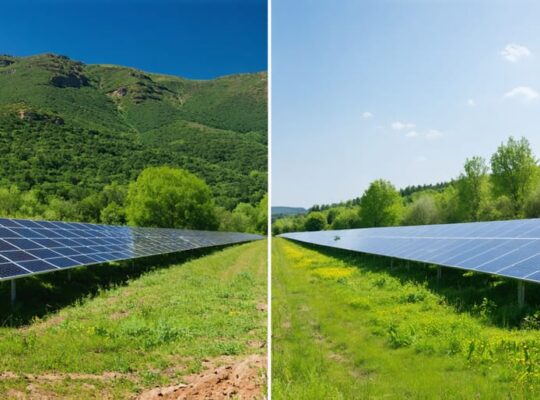
These renewable technologies collectively demonstrate positive community benefits, including improved air quality, reduced water pollution, and enhanced ecosystem preservation. Many installations now incorporate dual-use strategies, such as agrivoltaics, which combine solar energy generation with agricultural activities. Environmental impact assessments and community engagement have become integral components of renewable energy project development, ensuring long-term sustainability and ecological balance.
Biomass Energy: Local Resource Utilization
Agricultural Waste Solutions
Agricultural waste represents a significant untapped potential in renewable energy generation, offering a sustainable solution for both waste management and energy production. Through advanced biomass conversion technologies, agricultural residues such as crop stalks, husks, and animal waste can be transformed into valuable energy resources. These materials undergo processes including anaerobic digestion, gasification, and direct combustion to produce biogas, biofuels, and electricity.
Modern biomass facilities can process thousands of tons of agricultural waste annually, generating clean energy while reducing methane emissions from decomposing organic matter. For instance, a typical dairy farm with 200 cows can produce enough biogas to generate approximately 50 kilowatts of continuous electrical power through waste-to-energy conversion systems.
The implementation of agricultural waste solutions creates a circular economy model, where farmers can generate additional revenue streams while contributing to renewable energy production. Advanced preprocessing techniques and efficient conversion technologies have significantly improved the economic viability of these systems. Multiple successful installations across rural communities demonstrate how agricultural waste conversion can provide reliable baseload power while supporting local agricultural operations.
This approach not only addresses waste management challenges but also promotes energy independence in agricultural communities, making it an increasingly attractive option for sustainable energy development.
Community-Scale Implementation
Successful community-scale biomass energy projects require careful planning and stakeholder engagement. Begin by conducting a comprehensive resource assessment to identify available biomass feedstock sources within the community, including agricultural residues, forestry waste, and organic municipal waste. Establish partnerships with local farmers, waste management facilities, and industrial operations to ensure a steady supply chain.
Develop a feasibility study that evaluates technical requirements, economic viability, and environmental impact. Consider factors such as transportation logistics, storage facilities, and processing infrastructure. Engage environmental consultants to assess potential emissions and ensure compliance with local regulations.
Community involvement is crucial for project success. Create a stakeholder committee representing diverse community interests, including residents, businesses, and local government officials. Host public forums to address concerns and gather feedback. Implement transparent communication channels to keep the community informed about project developments.
Secure funding through multiple sources, including government grants, private investors, and community cooperative models. Consider partnering with educational institutions for research support and workforce development. Establish clear operational protocols and maintenance schedules to ensure sustainable long-term operation.
Monitor project performance through regular assessments of energy production, economic benefits, and environmental impacts. Share success metrics with stakeholders and use data to optimize operations and expand community support.
Geothermal Energy: Earth’s Natural Power
Direct Use Applications
Direct use applications of geothermal energy offer efficient and sustainable solutions across various sectors. In residential settings, geothermal heat pumps provide reliable space heating and cooling, while also supporting domestic hot water systems. Industrial applications include process heating for manufacturing, greenhouse operations, and agricultural drying processes.
The technology proves particularly valuable in agricultural applications, where geothermal resources maintain optimal temperatures for greenhouse cultivation, enabling year-round crop production. Aquaculture operations benefit from consistent water temperatures, supporting fish farming and other aquatic cultivation methods.
In the commercial sector, geothermal energy powers district heating systems that serve multiple buildings or entire communities. These systems are especially prevalent in regions with favorable geological conditions, such as Iceland, where geothermal energy provides heating for approximately 90% of buildings. Other applications include snow melting for roads and sidewalks, reducing winter maintenance costs and improving safety in cold climates.
Heat Pump Systems
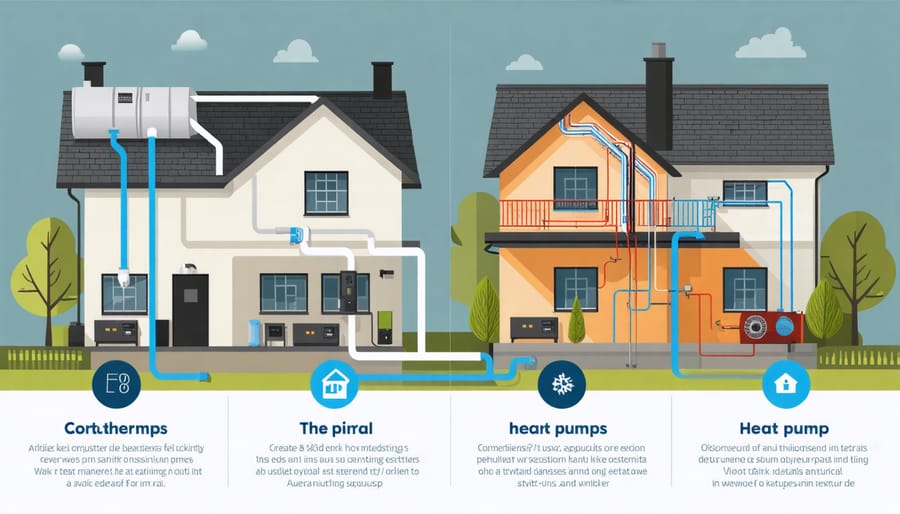
Heat pump systems represent a highly efficient renewable energy solution for both residential and commercial applications, extracting thermal energy from the air, ground, or water sources. These systems operate by transferring heat from one location to another, providing both heating and cooling capabilities throughout the year. In residential settings, heat pumps can reduce energy consumption by up to 50% compared to traditional HVAC systems, while commercial applications often demonstrate even greater efficiency gains when properly scaled.
Modern heat pump technology has evolved to operate effectively even in cold climates, making them viable alternatives to conventional heating systems across diverse geographical regions. Commercial facilities particularly benefit from ground-source heat pumps, which leverage the earth’s constant underground temperature to maintain consistent performance. The integration of smart controls and variable-speed compressors has further enhanced system efficiency, allowing for precise temperature regulation and reduced energy consumption.
These systems align with carbon reduction goals while offering substantial long-term cost savings, despite higher initial investment requirements.
The diverse array of renewable energy sources discussed represents a crucial framework for achieving global energy equity and sustainability. Each resource – from solar and wind to hydroelectric, geothermal, and biomass – offers unique advantages and applications suited to different geographical and socioeconomic contexts. Through shared renewable energy solutions, communities worldwide can access clean power regardless of their individual circumstances. The complementary nature of these technologies ensures reliable energy generation across varying conditions and seasons, while their decreasing costs and improving efficiencies make them increasingly accessible to diverse populations. By embracing this multi-faceted approach to renewable energy deployment, we can accelerate the transition to a sustainable and equitable energy future that serves all members of society.