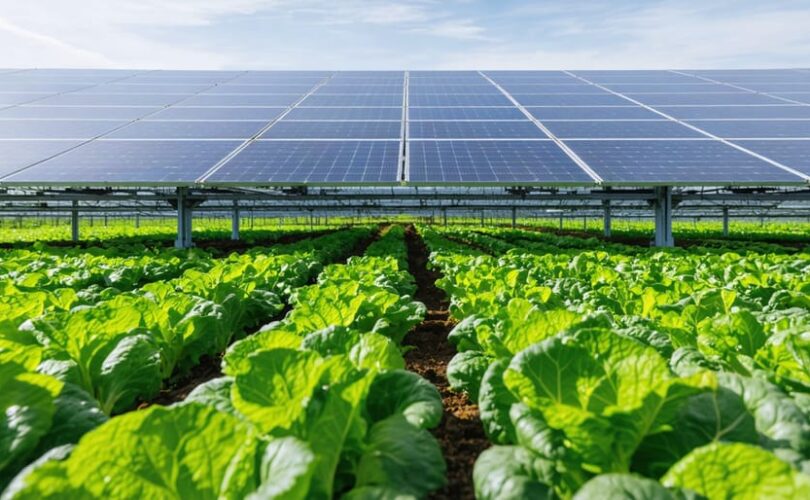
The National Renewable Energy Laboratory (NREL) stands at the forefront of agrivoltaic innovation, pioneering solutions that transform agricultural lands into dual-purpose energy and food production systems. Through groundbreaking research across diverse climate zones, NREL’s agrivoltaic installations demonstrate up to 70% water savings for crop cultivation while maintaining optimal solar energy generation. These advanced systems integrate specialized mounting structures, bifacial solar panels, and precision farming techniques to maximize both agricultural yield and renewable energy production.
Recent NREL field studies across Colorado, Massachusetts, and Arizona reveal that carefully designed agrivoltaic systems can increase overall land productivity by up to 60% compared to traditional single-use approaches. The laboratory’s comprehensive research encompasses crop selection, panel height optimization, and spacing configurations that ensure sufficient light penetration for plant growth while maximizing power generation efficiency. For farmers and solar developers alike, NREL’s evidence-based frameworks provide essential guidance for implementing successful agrivoltaic projects that enhance food security while advancing clean energy goals.
This dual-land-use strategy represents a crucial innovation in sustainable agriculture and renewable energy deployment, offering a viable solution to the growing competition for limited land resources while supporting rural economic development.
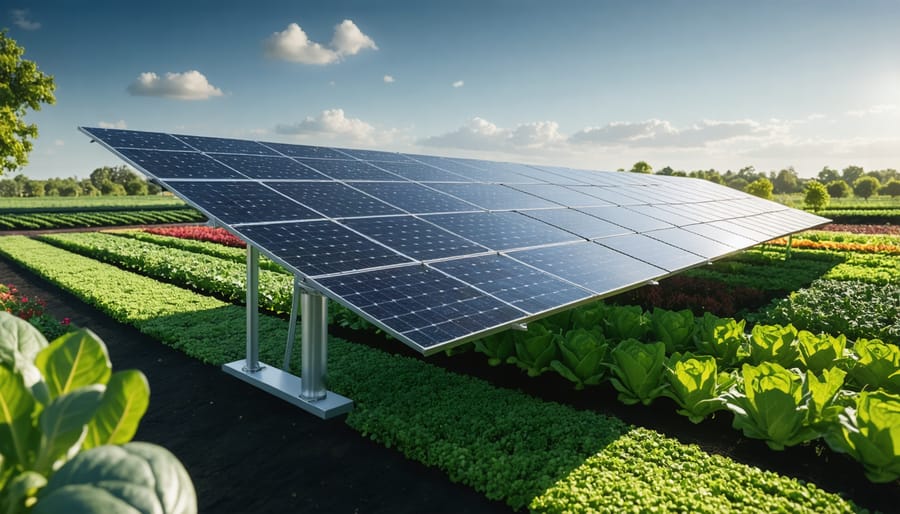
NREL’s Regional Agrivoltaic Research Framework
Climate-Specific Design Considerations
NREL’s agrivoltaic research recognizes that climate zones significantly influence both agricultural production and solar energy generation. Their approach to solar installation methods varies substantially across different regions to optimize both energy yield and crop productivity.
In arid regions, NREL emphasizes water conservation through elevated panel designs that provide shade and reduce evaporation. These installations typically feature wider spacing between arrays to accommodate drought-resistant crops and maintain adequate light distribution. For humid climates, researchers focus on moisture management and fungal disease prevention, implementing specialized panel arrangements that promote airflow and reduce humidity accumulation beneath the arrays.
Cold climate installations incorporate snow-shedding designs and reinforced structural elements to handle increased load requirements. Conversely, in tropical regions, NREL’s designs prioritize heat management and corrosion resistance while maximizing natural ventilation. Their climate-specific approach extends to panel tilt angles, array height adjustments, and crop selection, ensuring optimal performance across diverse environmental conditions.
Each regional design undergoes rigorous testing at NREL’s research facilities to validate performance metrics and agricultural compatibility before implementation in real-world settings.
Agricultural Integration Methods
NREL’s research has identified several crop varieties that thrive in agrivoltaic systems. Low-growing crops like lettuce, spinach, and other leafy greens perform exceptionally well, benefiting from the partial shade provided by solar panels. Root vegetables such as potatoes and beets have also shown promising results, particularly in regions with intense solar radiation.
The integration methodology focuses on optimizing both agricultural yield and solar energy generation. Spacing between solar panel rows is carefully calculated to allow adequate sunlight penetration for crop photosynthesis while maintaining optimal energy production. NREL researchers have developed specialized mounting systems that enable adjustable panel heights, accommodating different growth stages and harvesting requirements.
Irrigation systems are strategically designed to utilize the natural water runoff from panels, reducing overall water consumption. This approach has proven particularly effective in arid regions. Mechanized farming equipment requires modified configurations, with NREL recommending specific clearance heights and row spacing to accommodate standard agricultural machinery while preventing shadow-induced performance losses in the solar array.
These agricultural integration methods have demonstrated increases in land-use efficiency of up to 70% compared to separate solar and farming operations.
Installation Techniques for Different Agricultural Zones
Arid Region Solutions
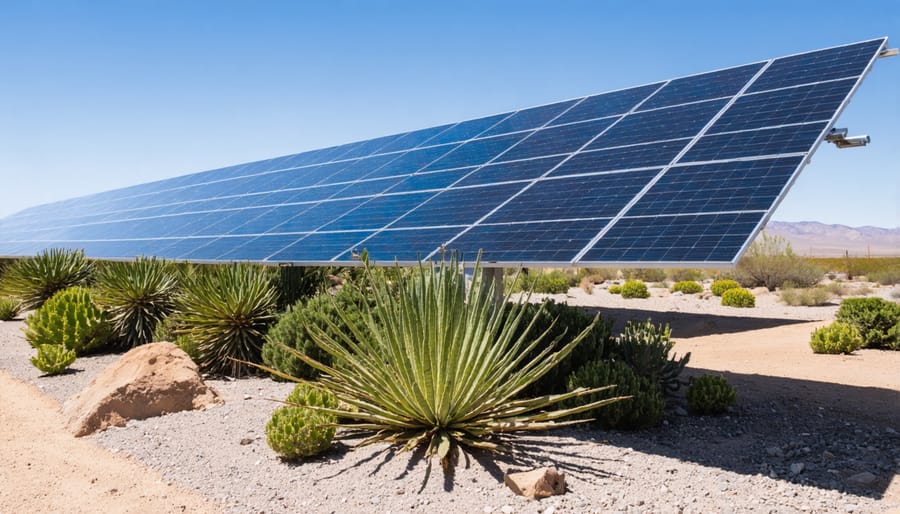
NREL’s research in arid regions has yielded innovative agrivoltaic solutions specifically designed for water-scarce environments. The integration of shade-tolerant desert crops beneath solar arrays has demonstrated significant water conservation benefits, with studies showing up to 40% reduction in irrigation requirements compared to traditional farming methods.
Key techniques developed include the implementation of precision drip irrigation systems synchronized with solar panel positioning to maximize water efficiency. The arrays are typically installed at increased heights of 3-4 meters, allowing for improved airflow and temperature regulation while accommodating desert-adapted crops such as agave, drought-resistant herbs, and specific varieties of beans.
Research conducted at NREL’s testing facilities has established optimal panel spacing configurations that balance solar generation with crop requirements in arid conditions. These configurations create beneficial microenvironments that reduce evaporation rates and protect plants from excessive heat stress during peak daylight hours.
The institute has also pioneered the use of semi-transparent photovoltaic modules that allow calibrated amounts of light transmission, specifically tailored for desert crops’ photosynthetic needs. This technology, combined with smart irrigation systems and soil moisture sensors, enables precise resource management crucial for desert agriculture.
These solutions have been successfully implemented in various arid regions across the American Southwest, demonstrating both improved crop yields and consistent energy generation while significantly reducing water consumption.
Temperate Zone Adaptations
In temperate zones, NREL’s agrivoltaic installations employ specific design considerations to balance solar energy generation with agricultural productivity. These systems typically feature elevated mounting structures ranging from 2.5 to 3.5 meters in height, allowing for comfortable machinery access and optimal crop growth conditions. Research shows that careful spacing between panel rows is crucial to optimize panel layout while ensuring sufficient light distribution for crops.
The installation methodology incorporates bifacial solar panels mounted at strategic tilt angles, typically between 15 and 30 degrees, depending on the latitude and specific crop requirements. These systems often utilize single-axis tracking technology to maximize both energy yield and controlled shading patterns throughout the growing season.
Foundation designs prioritize minimal soil disruption, employing driven piles or screw foundations that maintain soil integrity. Irrigation systems are integrated within the solar array infrastructure, utilizing support poles for mounting sprinklers or drip irrigation equipment. Cable management systems are elevated and protected to prevent interference with farming operations.
NREL’s research demonstrates that temperate zone installations benefit from modular designs that allow for seasonal adjustments and maintenance accessibility. These systems incorporate weather monitoring stations and smart controls to adjust panel positioning based on crop growth stages and environmental conditions.
High-Precipitation Area Considerations
In regions with high precipitation, NREL’s agrivoltaic research focuses on specialized design approaches that maximize both energy generation and agricultural productivity while managing water-related challenges. These systems incorporate elevated mounting structures with increased spacing between panels to ensure adequate light distribution and prevent waterlogging of crops below.
Research demonstrates that high-precipitation areas require particular attention to water management systems, including enhanced drainage solutions and strategic panel positioning. NREL studies have shown that proper water channeling can actually benefit crop irrigation, turning potential challenges into advantages for agricultural production.
The mounting systems in these regions typically feature rust-resistant materials and reinforced foundations to withstand increased moisture exposure. Additionally, NREL recommends implementing micro-grading techniques beneath the arrays to prevent soil erosion and optimize water distribution.
Panel cleaning requirements are often reduced in high-rainfall areas, as natural precipitation helps maintain panel efficiency. However, monitoring systems must be adapted to track humidity levels and potential impacts on electrical components. NREL’s research indicates that selecting appropriate crop varieties that thrive in partially shaded, moisture-rich environments is crucial for successful implementation.
These considerations have led to the development of specific design guidelines for high-precipitation regions, ensuring that agrivoltaic systems remain both structurally sound and agriculturally productive throughout their operational lifetime.
Performance Optimization and Monitoring
Data Collection Systems
NREL employs sophisticated monitoring systems to collect comprehensive data from agrivoltaic installations, integrating smart solar integration systems with advanced sensors and data logging equipment. The primary metrics tracked include solar panel performance, crop yield measurements, soil moisture content, and microclimate parameters.
Key monitoring technologies deployed at research sites encompass:
– Pyranometers for solar radiation measurement
– Environmental sensors for temperature and humidity
– Soil moisture probes at various depths
– Automated irrigation monitoring systems
– High-precision crop growth tracking devices
– Power output monitoring equipment
Data collection occurs through a network of wireless sensors that transmit information to centralized databases in real-time. This enables researchers to analyze the symbiotic relationship between solar arrays and agricultural activities continuously. The system monitors both above-ground parameters affecting crop growth and below-ground conditions crucial for root development.
NREL’s monitoring infrastructure includes automated weather stations that track precipitation, wind speed, and solar intensity. These measurements help optimize both energy generation and agricultural productivity. The collected data supports machine learning algorithms that predict system performance and suggest operational adjustments, ensuring maximum efficiency in both energy generation and crop production.
Yield Enhancement Strategies
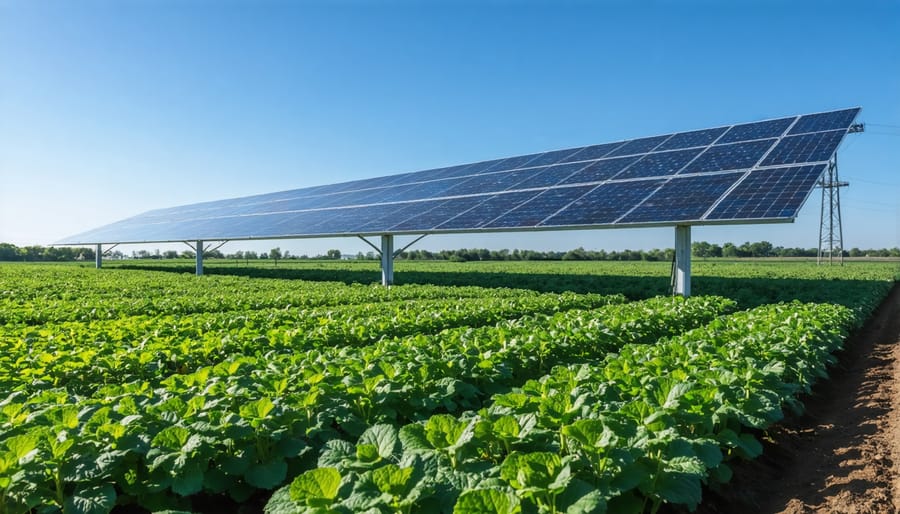
Agrivoltaic systems require careful optimization to maximize both agricultural yield and solar energy generation. NREL’s research has identified several key strategies for enhancing overall system productivity. Strategic panel spacing and elevation configurations allow for optimal light distribution to crops while maintaining efficient solar collection. Typically, panels are mounted 8-12 feet above ground level, with specific spacing determined by crop type and local solar conditions.
Crop selection plays a crucial role in yield enhancement. Plants that thrive in partial shade conditions, such as leafy greens, root vegetables, and certain berries, show particular promise in agrivoltaic settings. NREL studies demonstrate that some crops can achieve up to 70% higher water use efficiency under solar panels compared to traditional farming methods.
Advanced tracking systems further optimize the dual-use approach. Single-axis tracking systems can be programmed to adjust panel angles based on both solar position and crop growth stages, ensuring plants receive appropriate light levels throughout their growing cycle. Bifacial solar panels have shown particular effectiveness in agrivoltaic applications, capturing reflected light from crops and soil to increase energy yield.
Water management strategies, including precision irrigation systems and soil moisture monitoring, help maintain optimal growing conditions while maximizing the cooling effect that vegetation provides to solar panels. This symbiotic relationship can increase panel efficiency by up to 3% while reducing water consumption for irrigation by 20-40%.
Implementation Success Stories
NREL’s agrivoltaic research has yielded several remarkable implementation success stories across diverse geographical regions, demonstrating the versatility and effectiveness of this innovative approach. One notable example is the Jack’s Solar Garden in Boulder County, Colorado, where NREL collaborated with local farmers to establish a 1.2-megawatt solar array spanning 5 acres. This installation successfully cultivates vegetables, herbs, and flowers beneath elevated solar panels, achieving a 40% increase in land-use efficiency while showcasing the environmental benefits of solar farming.
In Massachusetts, the UMass Crop Research and Education Center partnered with NREL to implement a dual-use system focusing on specialty crops. Their research demonstrated a 60% increase in overall land productivity, with certain shade-tolerant crops showing improved yields under partial solar panel coverage. The installation’s innovative design maintains optimal spacing for agricultural machinery access while generating clean energy for the local grid.
Another successful implementation occurred at the Komohana Research and Extension Center in Hawaii, where NREL’s agrivoltaic system proved particularly effective for tropical agriculture. The installation features bifacial solar panels mounted at varying heights, allowing researchers to optimize light distribution for different crop varieties. Initial results showed a 30% reduction in irrigation needs due to decreased evaporation, while maintaining consistent crop yields.
In Arizona’s arid climate, NREL’s collaboration with the University of Arizona’s Biosphere 2 facility demonstrated how agrivoltaic systems can enhance water efficiency in desert environments. The installation reduced water consumption by 40% while providing vital shade for drought-resistant crops. This project has become a model for sustainable agriculture in water-scarce regions, proving that agrivoltaic systems can address multiple sustainability challenges simultaneously.
These success stories validate NREL’s research findings and provide valuable data for future implementations across different climatic zones and agricultural contexts. Each installation contributes to the growing body of evidence supporting the viability of agrivoltaic systems as a solution for sustainable land use and clean energy generation.
NREL’s extensive research and pilot programs in agrivoltaics have demonstrated significant potential for widespread adoption across diverse geographical regions. The studies consistently show that dual-use solar installations can increase land-use efficiency by 60-70% while maintaining or improving crop yields in many cases. Regional successes vary based on climate conditions, crop selection, and system design, highlighting the importance of location-specific implementation strategies.
Looking ahead, NREL’s research indicates promising opportunities for expanding agrivoltaic systems, particularly in water-stressed regions where shade from solar panels can reduce irrigation needs by up to 20%. The institute’s collaborations with universities and agricultural partners continue to refine best practices and develop innovative solutions for different climatic zones.
Future developments will likely focus on optimizing panel designs for specific crop types, integrating advanced monitoring systems, and creating standardized guidelines for regional implementations. As climate change impacts intensify and land-use pressures grow, agrivoltaic systems represent a crucial pathway toward sustainable agriculture and renewable energy integration, with NREL leading the way in research and practical applications.