
The transformative impact of solar energy on global economies has reached an inflection point, driven by unprecedented technological advances and shifting regulatory landscapes. As installation costs plummet and efficiency metrics soar, solar power increasingly influences everything from national energy policies to individual investment decisions. Recent market analyses reveal that the solar sector now employs over 3.4 million people worldwide, while total investment in solar projects exceeded $180 billion in 2021 alone. This surge in economic activity extends beyond direct infrastructure investments, creating ripple effects across supply chains, labor markets, and auxiliary industries. Understanding these complex economic dynamics has become crucial for policymakers, investors, and industry stakeholders as they navigate the transition toward renewable energy sources. The interplay between government incentives, market forces, and technological innovation continues to reshape the solar energy landscape, presenting both challenges and opportunities for sustainable economic growth. This analysis examines the multifaceted economic impacts of solar energy adoption, from job creation and market development to policy implications and future growth trajectories.
Federal Policy Impact on Solar Market Development
Investment Tax Credits and Market Growth
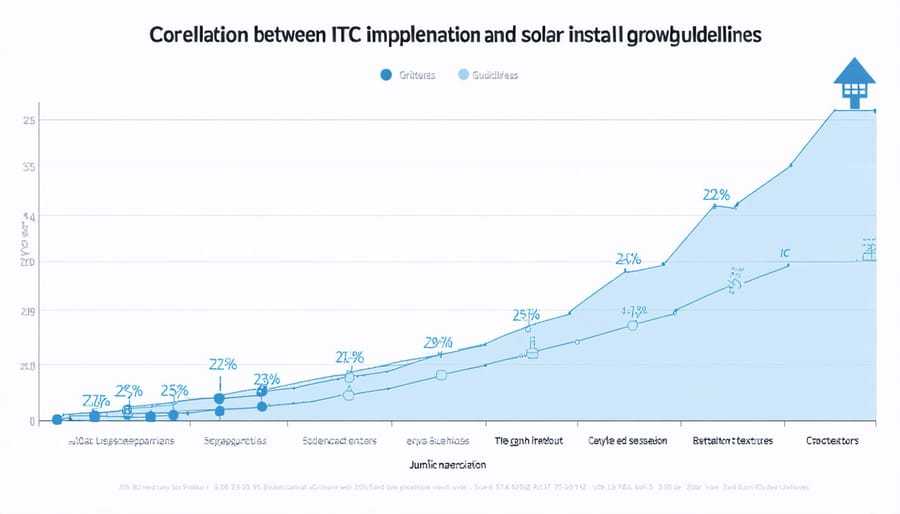
The Investment Tax Credit (ITC) has been a pivotal driver of solar energy adoption in the United States since its implementation in 2006. This federal incentive, which allows property owners to deduct a significant percentage of their solar installation costs from their federal taxes, has fundamentally transformed the economics of solar investments. When combined with various solar financing options, the ITC has made photovoltaic systems increasingly accessible to both residential and commercial customers.
Analysis shows that the ITC has contributed to an average annual growth rate of 52% in the solar industry over the past decade. This expansion has created thousands of jobs, with employment in the solar sector growing by 167% between 2010 and 2020. The credit has also sparked significant private investment, with every federal dollar of ITC generating approximately $3 in private investment.
Recent extensions and modifications to the ITC framework have provided market stability and predictability, essential factors for long-term industry planning. The current structure maintains a 30% credit through 2032, before beginning a gradual step-down. This extended timeline has encouraged manufacturers to expand production capacity and developers to pursue larger-scale projects, resulting in continued cost reductions through economies of scale.
The multiplier effect of the ITC extends beyond direct solar installations, stimulating growth in adjacent industries such as energy storage, grid infrastructure, and smart energy management systems. This comprehensive market impact has established solar energy as a cornerstone of the clean energy transition.
Federal Procurement Programs
Federal procurement programs have emerged as significant drivers in the solar energy market, creating substantial economic ripple effects throughout the industry. The Federal Energy Management Program (FEMP) requires federal agencies to derive a specified percentage of their electricity from renewable sources, with solar playing a pivotal role in meeting these requirements.
The Department of Defense (DoD), as the federal government’s largest energy consumer, has implemented ambitious solar procurement initiatives, targeting 10 gigawatts of renewable energy installations on military installations by 2025. These procurement mandates have stimulated market growth by creating predictable demand and encouraging manufacturers to scale up production.
The General Services Administration (GSA) has streamlined solar acquisition through its Multiple Award Schedule program, reducing procurement barriers and transaction costs for federal agencies. This standardization has led to more competitive pricing and increased market participation from solar vendors.
Federal procurement policies have also catalyzed innovation in financing mechanisms, such as Power Purchase Agreements (PPAs) and Energy Savings Performance Contracts (ESPCs). These instruments enable agencies to implement solar projects with minimal upfront costs while providing stable revenue streams for developers.
The economic impact extends beyond direct procurement, as these programs have established best practices and standards that state and local governments frequently emulate. This cascade effect has contributed to market maturation and cost reductions across the broader solar industry, benefiting both public and private sector installations.

State-Level Regulatory Frameworks
Net Metering Policies
Net metering policies play a crucial role in determining the economic viability of residential and commercial solar installations across different states. These regulations allow solar energy system owners to receive credits for excess electricity they feed back into the grid, significantly impacting the return on investment for affordable solar installations.
States with favorable net metering policies typically see higher solar adoption rates. For example, states offering full retail rate compensation for excess generation have experienced up to 50% higher installation rates compared to those with less generous policies. However, variations in these regulations create market uncertainties and affect investment decisions.
Recent policy shifts in several states have introduced new compensation models, including time-of-use rates and value-of-solar tariffs. These changes can significantly impact project economics, with some jurisdictions reducing compensation rates to below retail prices, extending payback periods for solar investments.
Key factors influencing net metering policies include:
– Grid infrastructure costs
– Utility company concerns about revenue loss
– Consumer advocacy for fair compensation
– State renewable energy goals
The stability of net metering policies directly affects market growth, with sudden policy changes potentially disrupting local solar markets. States maintaining consistent, favorable policies tend to foster more robust solar industries, creating jobs and stimulating economic development. Understanding these regulatory frameworks is essential for stakeholders planning solar investments or market expansion strategies.
Renewable Portfolio Standards
Renewable Portfolio Standards (RPS) have emerged as powerful drivers of solar energy adoption across the United States, creating significant market impacts through state-level mandates for renewable energy procurement. These standards typically require utilities to source a specified percentage of their electricity from renewable sources, with solar often receiving special carve-outs or multipliers.
The economic effects of RPS policies are multifaceted. In states with robust RPS requirements, utilities must either develop renewable energy projects or purchase renewable energy certificates (RECs), creating a reliable demand stream for solar power. This guaranteed market has helped stabilize investment returns and reduce financial risks for project developers, leading to increased capital flow into the solar sector.
Analysis shows that states with aggressive RPS targets experience accelerated solar installation rates and decreased technology costs through economies of scale. For example, states like California, which mandates 100% clean electricity by 2045, have seen significant growth in solar employment and related economic activity. The competition among utilities to meet RPS requirements has also spurred innovation in project financing and development models.
However, RPS implementation varies significantly by state, creating a patchwork of markets with different economic dynamics. Some states have introduced solar-specific requirements or incentive multipliers, while others maintain technology-neutral standards. This variation influences regional market development and investment patterns, with more ambitious RPS targets generally correlating with higher levels of solar deployment and local economic benefits.
Economic Benefits and Market Growth
Employment and Industry Growth
The solar energy sector has emerged as a significant driver of employment growth, creating diverse job opportunities across the value chain. Recent data from the International Renewable Energy Agency (IRENA) indicates that the solar industry employs over 4.3 million people globally, with consistent annual growth rates averaging 7% since 2018.
In developed economies, the solar sector has become a major employer in manufacturing, installation, and maintenance roles. The United States alone reported more than 255,000 solar workers in 2022, with installation and project development accounting for 66% of all solar jobs. Technical positions, including solar PV installers and maintenance technicians, represent the fastest-growing job category, with projected growth rates exceeding 50% over the next decade.
Manufacturing capacity has expanded significantly, particularly in Asia-Pacific regions, where countries like China, India, and Vietnam have established robust solar manufacturing ecosystems. This industrial growth has stimulated related sectors, including raw materials processing, component manufacturing, and logistics services.
The industry’s expansion has also catalyzed workforce development initiatives, with specialized training programs emerging at technical schools and community colleges. These educational pathways are creating sustainable career opportunities while addressing the sector’s growing demand for skilled professionals. Economic multiplier effects suggest that each direct solar job supports approximately 2.5 additional jobs in related industries, amplifying the sector’s overall economic impact.

Investment and Economic Development
The solar energy sector has emerged as a significant driver of economic growth, attracting substantial capital investment worldwide. Recent market analyses indicate that global investment in solar technology reached $308 billion in 2022, representing a 25% increase from the previous year. This surge in investment has been largely influenced by declining technology costs and various solar investment incentives implemented across different regions.
Job creation remains one of the most significant economic benefits of solar energy development. The industry currently employs over 3.4 million people globally, with projections suggesting this number could triple by 2030. These jobs span various sectors, including manufacturing, installation, maintenance, and research and development.
The economic multiplier effect of solar investments extends beyond direct employment. Local economies benefit from increased tax revenues, land lease payments, and the development of supporting industries. Studies indicate that every dollar invested in solar projects generates approximately $2.50 in GDP growth through supply chain impacts and increased household spending.
Manufacturing capacity expansion has also led to significant economic development in many regions. Countries with strong solar manufacturing bases have experienced enhanced export opportunities, technological advancement, and improved energy security. This industrial growth has catalyzed innovation clusters, fostering collaboration between private enterprises, research institutions, and government agencies.
Future Policy Trends and Market Outlook
The solar energy landscape is poised for significant transformation as policymakers worldwide increasingly recognize the critical role of renewable energy in addressing climate change and energy security. Emerging policy trends indicate a shift toward more comprehensive support mechanisms, including enhanced solar financing programs and streamlined permitting processes.
Industry analysts project that carbon pricing mechanisms will become more prevalent, potentially increasing the competitive advantage of solar energy over fossil fuels. The implementation of green infrastructure initiatives in major economies is expected to create additional market opportunities, while renewable portfolio standards are likely to become more stringent, driving increased solar adoption across commercial and utility sectors.
Technology-neutral clean energy standards are gaining traction, which could benefit solar energy alongside other renewable sources. These policies are anticipated to accelerate innovation in energy storage solutions and grid integration technologies, addressing intermittency challenges and enhancing solar energy’s grid value proposition.
Market forecasts suggest that distributed energy resources will play an increasingly important role, supported by policies promoting community solar projects and virtual net metering. The evolution of building codes to incorporate solar requirements in new construction projects is expected to create sustained demand in the residential and commercial sectors.
International climate commitments and cross-border carbon adjustment mechanisms are likely to influence global solar supply chains and market dynamics. Enhanced government support for domestic manufacturing could reshape regional competitive landscapes, potentially affecting module pricing and project economics.
Investment trends indicate growing interest in solar-plus-storage projects, driven by improving economics and supportive policies. The maturation of power purchase agreement structures and innovative financing mechanisms is expected to continue, making solar investments more attractive to institutional investors and expanding market participation.
As grid modernization efforts accelerate, policies supporting advanced inverter capabilities and grid services from solar installations are likely to emerge, creating new revenue streams for project developers and asset owners. These developments, combined with declining technology costs, suggest a robust growth trajectory for the solar energy sector, despite potential near-term policy uncertainties in some markets.
The economic landscape of solar energy continues to evolve dynamically, shaped by technological advances, policy frameworks, and market forces. Our analysis reveals that declining manufacturing costs, improved efficiency rates, and supportive regulatory environments have collectively strengthened solar energy’s competitive position in the global energy market. The levelized cost of electricity (LCOE) for solar installations has decreased by over 80% in the past decade, making it increasingly attractive for both utility-scale projects and residential applications.
Looking ahead, several key factors will likely influence the economic trajectory of solar energy. The continued development of energy storage solutions, smart grid integration, and enhanced photovoltaic technologies promises to further reduce costs and improve system reliability. Additionally, emerging carbon pricing mechanisms and renewable portfolio standards are expected to create more favorable market conditions for solar energy adoption.
However, challenges remain. Supply chain vulnerabilities, grid infrastructure limitations, and policy uncertainty in some regions could impact future growth. The industry must address these challenges while maintaining focus on innovation and cost reduction strategies. As governments worldwide strengthen their commitment to renewable energy targets, the economic fundamentals of solar energy are expected to improve further, potentially reaching grid parity in most markets by 2025.
The convergence of technological innovation, policy support, and market demand suggests a promising future for solar energy economics, making it an increasingly viable solution for sustainable energy development.