
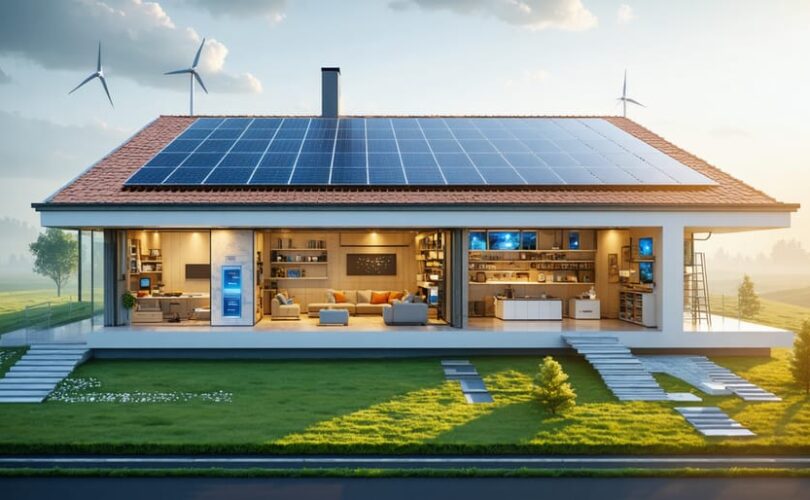
Solar energy storage represents a revolutionary advancement in renewable power technology, transforming how we capture and utilize the sun’s abundant energy. As the world shifts towards sustainable solutions, understanding how solar panels store energy has become crucial for both energy independence and environmental conservation. This sophisticated system enables households and businesses to maintain power supply even when the sun isn’t shining, effectively addressing one of solar energy’s primary challenges: intermittency.
Modern solar storage solutions combine cutting-edge battery technology with intelligent energy management systems, creating a reliable power infrastructure that maximizes renewable energy utilization. These systems capture excess solar power generated during peak sunlight hours, converting it into stored electrical energy that can be accessed during nighttime, cloudy conditions, or grid outages. This breakthrough has revolutionized the renewable energy landscape, making solar power a viable alternative to traditional fossil fuel-based electricity generation.
The integration of advanced storage technologies with solar photovoltaic systems represents a significant step toward achieving energy sustainability and grid resilience. As battery technology continues to evolve and costs decrease, solar energy storage systems are becoming increasingly accessible to a broader range of consumers and businesses.
The Core Components of Solar Energy Storage
Battery Technologies
Several battery technologies play crucial roles in solar energy storage systems, each offering distinct advantages and applications. Lithium-ion batteries dominate the market due to their high energy density, longer cycle life, and decreasing costs. These batteries excel in both residential and commercial applications, providing reliable performance and minimal maintenance requirements.
Lead-acid batteries, while more traditional, remain relevant in solar storage applications due to their cost-effectiveness and established technology. Available in both flooded and sealed varieties, they serve as reliable options for backup power systems, though they typically offer shorter lifespans compared to newer technologies.
Flow batteries represent an emerging technology particularly suited for utility-scale applications. These systems store energy in liquid electrolytes, allowing for independent scaling of power and energy capacity. Their ability to operate for extended periods without significant degradation makes them attractive for large-scale installations.
Sodium-ion batteries are gaining attention as a potential alternative to lithium-ion technology. They offer comparable performance while utilizing more abundant materials, potentially reducing production costs and environmental impact.
Solid-state batteries, though still in development, promise enhanced safety and energy density. These batteries use solid electrolytes instead of liquid ones, potentially eliminating many safety concerns associated with traditional battery technologies while offering improved performance characteristics.
Each technology continues to evolve through ongoing research and development, driving improvements in efficiency, longevity, and cost-effectiveness for solar energy storage applications.

Charge Controllers and Inverters
Charge controllers and inverters are critical components in solar energy storage systems, serving as the power electronics interface between solar panels, batteries, and household appliances. Charge controllers manage the flow of electricity from solar panels to batteries, preventing overcharging and extending battery life through sophisticated charging algorithms. These devices monitor battery voltage, state of charge, and temperature to optimize charging efficiency and protect the storage system.
Modern charge controllers utilize Maximum Power Point Tracking (MPPT) technology, which ensures optimal power harvest from solar panels under varying environmental conditions. This technology can increase charging efficiency by 20-30% compared to traditional controllers, making it an essential feature for maximizing energy storage capacity.
Inverters play an equally crucial role by converting stored DC power from batteries into AC power suitable for household use. These devices come in different configurations, including grid-tied, off-grid, and hybrid inverters, each designed for specific application requirements. Advanced inverters incorporate smart features such as remote monitoring, power quality management, and automatic transfer switching between different power sources.
The integration of these power electronics components requires careful system design to ensure compatibility and optimal performance. Modern charge controllers and inverters often include communication capabilities, allowing them to work together seamlessly while providing system owners with detailed performance data and remote control options.
How Solar Energy Storage Works
Energy Capture and Conversion
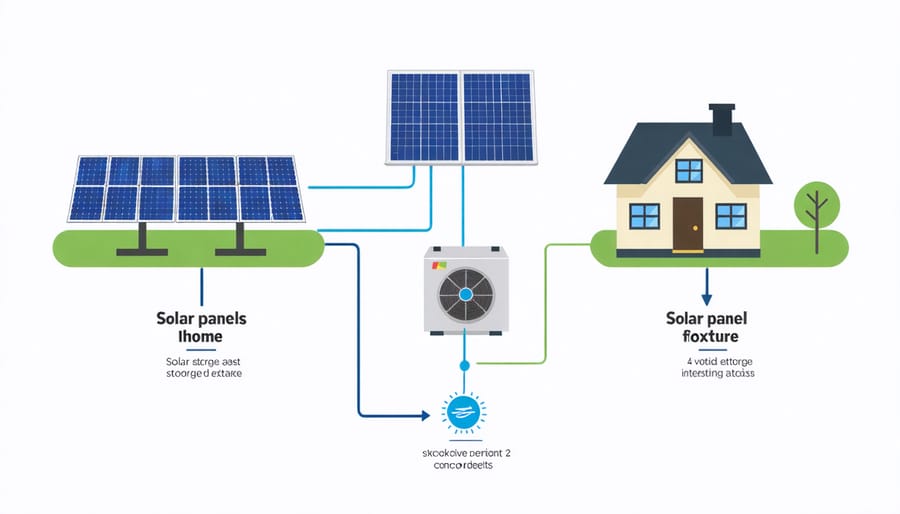
The process of capturing and converting solar energy into storable power involves multiple stages of energy transformation. Solar panels, comprised of photovoltaic cells, initiate this process by absorbing photons from sunlight. These cells contain semiconductor materials, typically silicon, that exhibit the photovoltaic effect when exposed to solar radiation.
When sunlight strikes the photovoltaic cells, it excites electrons in the semiconductor material, creating an electric field. This phenomenon generates direct current (DC) electricity, which must be converted to alternating current (AC) through an inverter for practical use or storage. The conversion efficiency of modern solar panels typically ranges from 15% to 23%, though advanced technologies continue to push these boundaries.
The converted electrical energy can follow multiple paths: immediate consumption, grid feed-in, or storage. For storage purposes, the electricity must often undergo another conversion process. In battery systems, for instance, the AC power is converted back to DC for chemical storage. This conversion chain, while introducing some efficiency losses, is essential for creating a reliable energy reserve.
Energy capture optimization involves several factors, including panel orientation, tracking systems, and environmental conditions. Advanced solar installations may incorporate maximum power point tracking (MPPT) technology, which continuously adjusts the system’s operating conditions to maximize energy harvest. Additionally, modern systems often feature smart monitoring capabilities that analyze conversion efficiency and optimize the energy capture process in real-time.
Understanding these conversion processes is crucial for designing effective solar storage systems and maximizing their performance. The efficiency of each conversion stage directly impacts the overall system effectiveness and the amount of energy available for storage.
Energy Distribution and Management
Energy distribution and management in solar storage systems involves sophisticated control mechanisms that efficiently allocate stored power based on demand patterns and usage requirements. Modern solar storage solutions employ smart inverters and energy management systems (EMS) to maximize your PV system’s power performance through intelligent load balancing and distribution.
These systems typically operate on a hierarchical control structure, with primary controls managing immediate power flow, secondary controls maintaining voltage stability, and tertiary controls optimizing long-term energy utilization. The distribution process begins at the battery management system (BMS), which monitors state-of-charge, temperature, and overall battery health while controlling charge/discharge cycles.
Advanced energy management systems integrate with home automation platforms or building management systems to coordinate power distribution effectively. They analyze real-time consumption data, weather forecasts, and electricity rates to determine optimal times for energy storage or release. This intelligent distribution ensures power availability during peak demand periods while maintaining grid stability.
The system prioritizes critical loads during power outages, automatically redirecting stored energy to essential circuits. During normal operation, it manages power flow between multiple sources – solar panels, battery storage, and grid connection – ensuring seamless transitions and optimal energy utilization.
Modern distribution systems also incorporate demand response capabilities, allowing participation in grid services and energy markets. This feature enables system owners to contribute to grid stability while potentially generating additional revenue through energy arbitrage and ancillary services.
Benefits of Integrated Storage Solutions
Grid Independence
Grid independence through solar energy storage represents a significant advancement in renewable energy adoption, offering property owners unprecedented control over their power consumption and generation. By implementing grid-connected battery systems, users can significantly reduce their reliance on traditional utility infrastructure while maintaining reliable power access.
This increased autonomy provides multiple advantages, including protection against grid outages, optimization of energy consumption patterns, and potential cost savings through strategic power management. During peak demand periods, stored solar energy can be utilized instead of drawing from the grid, effectively reducing electricity bills and minimizing strain on the broader power network.
Furthermore, grid independence enhances energy security by creating a buffer against utility price fluctuations and service disruptions. Property owners can maintain critical operations during blackouts, ensuring continuous power supply to essential equipment and systems. This reliability factor is particularly valuable for businesses and facilities where uninterrupted power supply is crucial.
The ability to store and manage solar energy independently also contributes to grid stability by reducing peak demand stress and supporting the integration of renewable energy sources into existing power infrastructure. This symbiotic relationship between storage systems and the grid represents a crucial step toward a more resilient and sustainable energy future.
Economic Advantages
Solar energy storage systems offer substantial economic advantages that extend beyond initial environmental benefits. By storing excess solar power generated during peak production hours, property owners can significantly reduce their reliance on grid electricity during expensive peak demand periods. This practice, known as peak shaving, can result in considerable cost savings on utility bills.
The financial benefits become particularly evident through net metering programs, where excess stored energy can be sold back to the grid, creating an additional revenue stream. Moreover, energy storage systems help protect against rising electricity costs by providing price stability and reducing exposure to future utility rate increases.
For businesses and industrial facilities, solar storage solutions can dramatically decrease demand charges, which often constitute a significant portion of commercial electricity bills. The stored energy can be strategically deployed during high-demand periods, effectively lowering operational costs.
Investment in solar storage systems often qualifies for various financial incentives, including federal tax credits, state rebates, and renewable energy certificates. When combined with the declining costs of battery technology and solar components, these incentives significantly improve the return on investment timeline.
The economic advantages extend to grid independence and resilience. By reducing vulnerability to power outages and grid disruptions, storage systems help avoid costly business interruptions and potential equipment damage, providing both immediate and long-term financial benefits.
Future Developments in Solar Storage
The landscape of solar energy storage is rapidly evolving, with several solar storage breakthroughs reshaping the industry’s future. Advanced battery technologies, particularly solid-state batteries, are emerging as promising alternatives to traditional lithium-ion systems. These innovations offer higher energy density, improved safety features, and longer operational lifespans, addressing key limitations of current storage solutions.
Hydrogen storage systems are gaining traction as a viable long-term storage option. Through electrolysis powered by solar energy, excess electricity can be converted into hydrogen, stored indefinitely, and later reconverted to electricity through fuel cells. This technology shows particular promise for seasonal energy storage and grid-scale applications.
Flow batteries represent another significant development, offering scalable capacity and extended cycle life. Unlike conventional batteries, flow batteries store energy in liquid electrolytes, allowing for independent scaling of power and energy capacity. This flexibility makes them particularly suitable for large-scale solar installations and microgrids.
Thermal energy storage systems are evolving to complement solar photovoltaic installations. Advanced phase-change materials and molten salt technologies are becoming more efficient and cost-effective, enabling better integration of solar thermal and electrical systems.
Artificial intelligence and machine learning are revolutionizing storage management systems. Smart algorithms optimize charging cycles, predict maintenance needs, and enhance overall system efficiency. These developments are crucial for maximizing the value of stored solar energy and reducing operational costs.
Research institutions are also exploring novel materials for energy storage, including metal-organic frameworks and advanced carbon structures. These materials could potentially offer breakthrough capabilities in energy density and charge-discharge efficiency.
Integration with emerging smart grid technologies is becoming increasingly sophisticated, enabling better demand response and grid stability. Virtual power plants, which coordinate distributed storage resources, are becoming more prevalent, offering new possibilities for energy management and grid services.
Solar energy storage has emerged as a critical component in the transition toward a sustainable energy future. Throughout this exploration of solar storage technologies, we’ve seen how various systems, from traditional batteries to innovative thermal solutions, enable efficient capture and utilization of solar power. The integration of these storage solutions with photovoltaic systems has transformed intermittent solar generation into a reliable, round-the-clock power source.
The continued advancement of storage technologies promises even greater efficiency and cost-effectiveness. Research developments in solid-state batteries, flow batteries, and hybrid systems indicate a future where solar storage becomes more accessible and practical for both residential and commercial applications. Additionally, the declining costs of battery technology, coupled with improving energy density and longer lifespans, are making solar storage increasingly viable for widespread adoption.
Looking ahead, the solar storage sector is poised for significant growth, driven by technological innovation, supportive policies, and growing environmental awareness. The integration of artificial intelligence and smart grid technologies will further enhance storage system efficiency and grid stability. As global energy demands continue to rise and climate concerns intensify, solar energy storage will play an increasingly vital role in our energy infrastructure.
For industry professionals and environmentally conscious consumers alike, understanding and implementing solar storage solutions represents not just an investment in technology, but a commitment to sustainable energy independence and environmental stewardship.


