The economic circular flow model stands as a fundamental framework for understanding the intricate relationships between households, businesses, and markets in modern economies. As resources, goods, and money continuously cycle through the economic system, this model illuminates how different sectors interact to create sustainable economic activity. In its simplest form, the model demonstrates two primary flows: the physical flow of goods and services, and the monetary flow of payments and income.
Understanding this cyclical nature becomes increasingly critical as economies worldwide shift toward sustainable practices and resource optimization. The model reveals how expenditures from one sector become income for another, creating an interconnected network of economic activities that drive growth and development. For instance, household spending on goods becomes business revenue, which in turn funds wages that flow back to households.
This continuous circulation of economic activity not only explains basic market functions but also provides crucial insights for policymakers, businesses, and economists in designing effective strategies for sustainable economic development. As we face growing environmental challenges and resource constraints, the circular flow model offers valuable perspectives on achieving economic efficiency while maintaining ecological balance.
Understanding the Economic Circular Flow in Solar PV
Traditional Linear vs. Circular PV Economics
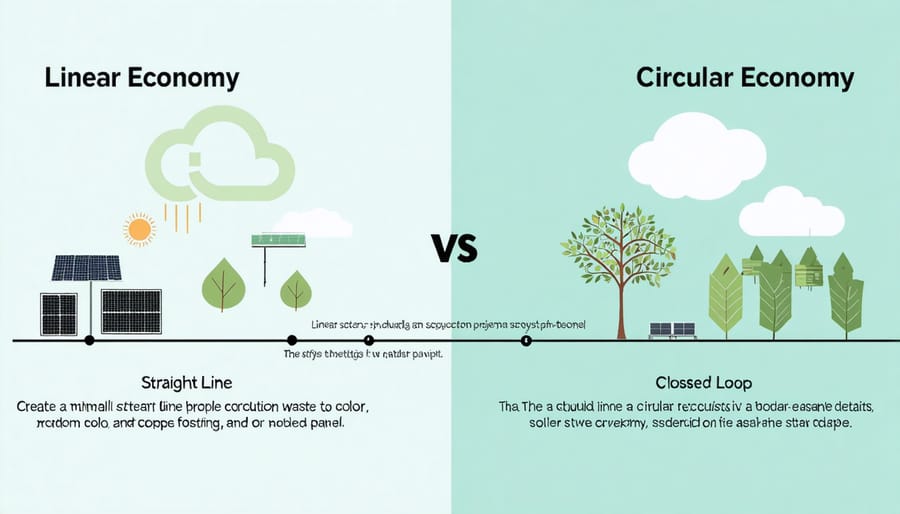
The traditional linear economic model in the photovoltaic industry follows a take-make-dispose approach, where raw materials are extracted, transformed into solar panels, used until end-of-life, and ultimately discarded. This model, while historically prevalent, creates significant environmental impact and economic inefficiencies throughout the solar panel lifecycle.
In contrast, the circular PV economy emphasizes value retention through strategic recovery and reuse of materials. This approach incorporates design for recyclability, extended producer responsibility, and efficient recycling processes. By implementing circular principles, manufacturers can recover valuable materials like silver, silicon, and aluminum, reducing raw material costs and environmental impact.
The circular model also creates new revenue streams through refurbishment, remanufacturing, and material recovery services. Economic benefits include reduced production costs, decreased dependency on raw material imports, and creation of local jobs in recycling and remanufacturing sectors. Additionally, this approach helps address growing concerns about solar panel waste management while supporting sustainable industry growth.
Key Stakeholders in the PV Circular Economy
The PV circular economy operates through a dynamic network of interconnected stakeholders, each playing crucial roles in maximizing resource efficiency and minimizing waste. Manufacturers serve as primary stakeholders, responsible for designing solar panels with recyclability in mind and implementing sustainable production practices. They increasingly adopt design-for-recycling principles and invest in research for more environmentally friendly materials.
Consumers, including both residential and commercial solar installers, drive market demand and influence manufacturing decisions through their purchasing choices. Their awareness of end-of-life management options and willingness to participate in take-back programs significantly impacts the circular economy’s success.
Recyclers form the critical link in material recovery, developing specialized processes to extract valuable materials from decommissioned panels. They work closely with manufacturers to improve recycling efficiency and provide feedback on design modifications that could enhance recyclability.
Regulators and policymakers establish frameworks governing PV waste management, extended producer responsibility, and recycling standards. Their policies create incentives for circular practices and ensure compliance with environmental regulations. Industry associations and research institutions contribute by developing best practices, conducting studies, and facilitating knowledge exchange among stakeholders.
Value Recovery Streams in Solar PV Recycling
Material Recovery Economics
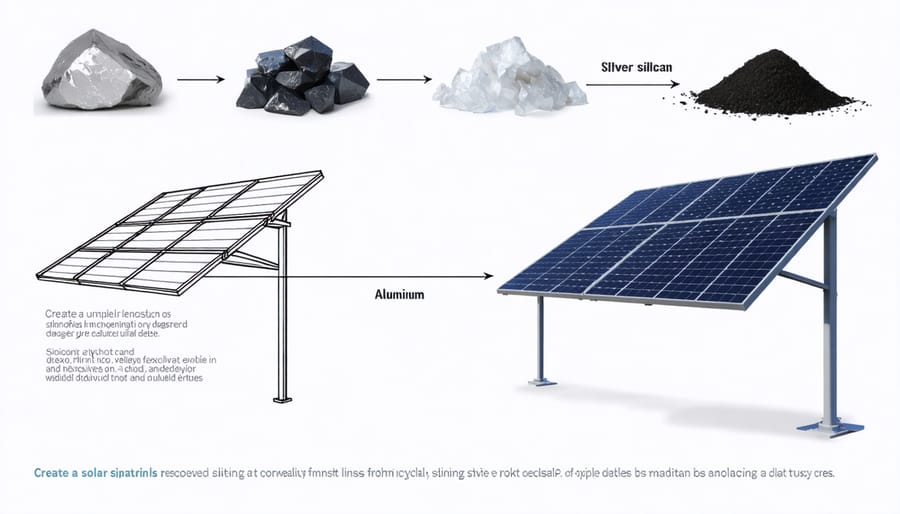
The economic viability of material recovery in the circular economy model heavily depends on the market value of recoverable materials and the efficiency of extraction processes. The PV module recycling process yields several valuable materials, including silver, aluminum, copper, and high-grade silicon, which can be reintegrated into manufacturing streams.
Current market analysis indicates that recovered silver commands the highest value per unit weight, contributing significantly to recycling revenue streams. Aluminum frames and copper wiring, while less valuable by weight, provide stable secondary income due to their consistent market demand and established recycling infrastructure. High-purity silicon recovery, though technically challenging, offers substantial economic potential when properly refined.
The economics of material recovery are influenced by several factors: processing costs, technology efficiency, market demand, and transportation logistics. Advanced automated separation technologies have substantially improved recovery rates while reducing operational costs. Market research suggests that as recycling volumes increase and technologies mature, the cost-per-unit of material recovery continues to decrease, enhancing overall economic viability.
Investment in recycling infrastructure demonstrates positive returns when operating at scale, particularly in regions with high solar PV installation density. Analysis of current recovery operations shows that facilities processing more than 10,000 tons annually achieve optimal economic efficiency. This scale allows for better negotiation of material prices and more efficient resource utilization.
The economic benefits extend beyond direct material value, incorporating reduced environmental compliance costs and potential government incentives for sustainable practices. As regulatory frameworks evolve to support circular economy initiatives, the financial advantages of material recovery continue to improve.
Secondary Market Opportunities
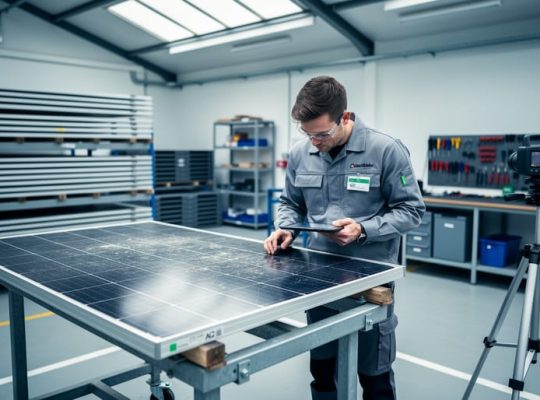
The secondary market for photovoltaic components presents significant economic opportunities within the circular flow model. Refurbishment and resale of solar panels, inverters, and mounting systems create additional value streams while extending product lifecycles. Professional refurbishment facilities can restore partially degraded panels to approximately 85-90% of their original efficiency, making them viable alternatives for budget-conscious consumers and specific applications.
These refurbished components find particular demand in developing markets, rural electrification projects, and temporary installations where brand-new equipment may not be cost-effective. The process typically involves thorough testing, repair of minor defects, replacement of degraded components, and recertification to ensure safety and performance standards are met.
The emergence of specialized marketplaces and trading platforms has facilitated the growth of this secondary market. These platforms connect sellers of used or decommissioned equipment with potential buyers, creating a more efficient market ecosystem. Quality assurance protocols and standardized testing procedures have helped build trust in refurbished products.
From an economic perspective, the secondary market contributes to job creation in testing, repair, and logistics sectors. It also helps reduce the overall cost of solar adoption by providing more affordable options to end-users. Additionally, manufacturers can participate in this market by offering certified refurbishment services or establishing buy-back programs, creating new revenue streams while maintaining control over product quality.
The growth of this secondary market aligns with circular economy principles by maximizing resource utilization and reducing waste. As the industry matures, standardization of refurbishment processes and quality metrics will likely further strengthen this market segment.
Implementation Challenges and Solutions
Economic Barriers
The implementation of a circular economic model faces several significant financial barriers that require strategic solutions. Initial investment costs for establishing recycling facilities and developing reverse logistics systems represent substantial capital requirements. Companies often struggle with the high operational expenses associated with collecting, transporting, and processing end-of-life products within the circular flow.
Market uncertainty poses another challenge, as fluctuating material prices can impact the economic viability of recycling operations. The cost of implementing new technologies and processes for material recovery often exceeds the immediate financial returns, creating hesitation among stakeholders to commit resources. Additionally, the absence of economies of scale in many recycling operations leads to higher per-unit costs compared to traditional linear production models.
To address these challenges, various solutions have emerged. Government incentives and tax benefits can help offset initial investment costs. Public-private partnerships are proving effective in sharing financial risks and resources. The development of innovative financing mechanisms, such as green bonds and impact investing, provides alternative funding sources for circular initiatives.
Companies can also improve economic viability through strategic planning and optimization of reverse logistics networks. Implementing advanced tracking systems and predictive analytics helps reduce operational costs and improve resource recovery efficiency. Furthermore, establishing long-term contracts with suppliers and end-users can provide market stability and ensure consistent material flows, making the circular model more economically sustainable.
Technical and Logistical Considerations
Implementing the economic circular flow model presents several significant technical and logistical challenges that organizations must carefully address. The primary consideration is establishing robust infrastructure for data collection and monitoring across all economic activities within the system. This requires sophisticated tracking systems and standardized measurement protocols to ensure accurate representation of resource flows.
Integration of existing economic systems with circular principles demands substantial technological upgrades and process modifications. Organizations often face challenges in adapting their legacy systems to accommodate circular economy metrics and reporting requirements. Furthermore, coordinating between different stakeholders – including producers, consumers, and regulatory bodies – requires advanced communication platforms and standardized protocols.
Data security and privacy concerns emerge as critical considerations, particularly when sharing sensitive economic information across the value chain. Organizations must implement robust cybersecurity measures while maintaining transparency in their circular flow reporting.
Resource allocation presents another significant challenge, as organizations must balance operational efficiency with circular economy principles. This includes managing inventory levels, optimizing distribution networks, and implementing reverse logistics systems for material recovery and recycling.
The transition also requires substantial investment in employee training and development to ensure proper understanding and implementation of circular economy principles. Organizations must develop comprehensive training programs and establish clear guidelines for measuring and reporting circular flow metrics while maintaining operational effectiveness.
Future Outlook and Recommendations
Emerging Technologies and Innovations
The circular economy model is being revolutionized by emerging technologies that enhance resource efficiency and waste reduction. Innovative recycling technologies are transforming how businesses approach material recovery and reuse, particularly in industries with complex supply chains.
Artificial Intelligence and Machine Learning algorithms are optimizing resource allocation and waste tracking systems, enabling real-time monitoring of material flows throughout the economic cycle. These smart systems can predict maintenance needs, identify recycling opportunities, and maximize resource utilization across various sectors.
Blockchain technology is enhancing transparency and traceability in circular supply chains, allowing stakeholders to verify the authenticity and sustainability credentials of materials and products. This digital infrastructure supports better decision-making and accountability in circular business models.
Internet of Things (IoT) sensors and devices are facilitating the implementation of product-as-a-service models, where manufacturers maintain ownership of products while customers pay for their use. This shift supports better maintenance, repair, and eventual recycling of products.
Advanced manufacturing techniques, including 3D printing and modular design, are enabling the production of easily repairable and recyclable products. These technologies reduce material waste during manufacturing and simplify end-of-life processing, contributing to a more efficient circular economy.
Digital platforms are also emerging to facilitate sharing economy initiatives and secondary material marketplaces, creating new opportunities for resource optimization and value recovery in the circular economic flow.
Policy and Industry Guidelines
Effective implementation of the economic circular flow model requires a robust regulatory framework and adherence to industry guidelines. Governments worldwide are establishing comprehensive solar panel recycling regulations to ensure sustainable management of resources and waste. These policies typically mandate extended producer responsibility (EPR), requiring manufacturers to handle their products’ end-of-life disposal and recycling.
Industry best practices emphasize the importance of design for circularity, incorporating considerations for disassembly, reuse, and recycling from the product development stage. Companies are expected to maintain detailed documentation of material flows, implement reverse logistics systems, and establish partnerships with certified recycling facilities.
Key policy instruments include financial incentives for circular business models, mandatory recycling targets, and standardization of recycling processes. The European Union’s WEEE Directive serves as a model framework, setting minimum recovery rates and establishing collection schemes for end-of-life products.
Organizations must also comply with reporting requirements, demonstrating their adherence to circular economy principles through environmental impact assessments and sustainability reports. Industry associations provide guidelines for material recovery, quality standards for recycled components, and certification programs to ensure compliance with circular economy objectives.
The implementation of circular economy principles in the solar PV industry represents a crucial step toward sustainable renewable energy development. Throughout this analysis, we have explored how the economic circular flow model can transform traditional linear production patterns into regenerative cycles that maximize value and minimize waste. The adoption of these principles offers multiple benefits, including reduced raw material consumption, decreased environmental impact, and enhanced economic opportunities through recycling and remanufacturing processes.
The success of circular economy adoption in the solar PV sector depends on coordinated efforts among manufacturers, installers, recyclers, and policymakers. By establishing robust reverse logistics systems, implementing design-for-recycling strategies, and developing innovative business models, the industry can effectively manage the growing volume of end-of-life panels while creating new value streams.
Looking ahead, the transition to a circular economy in solar PV manufacturing and disposal will require continued technological innovation, supportive regulatory frameworks, and increased stakeholder awareness. Investment in research and development, coupled with standardization of recycling processes, will be essential for scaling up circular solutions. As the solar PV industry continues to grow, embracing circular economy principles becomes not just an environmental imperative but a strategic necessity for long-term sustainability and economic viability.
The future of solar energy depends on our ability to close the loop on resource consumption while maintaining the sector’s role in clean energy transition. Through collective action and commitment to circular principles, the solar PV industry can lead by example in sustainable industrial practices.