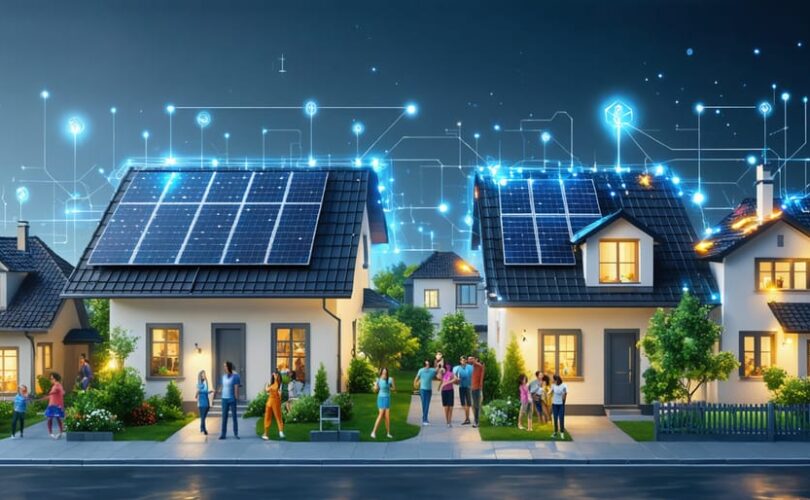
Solar power sharing revolutionizes community energy access by enabling multiple households, businesses, and organizations to collectively harness and distribute clean energy through innovative distribution networks. Through community solar co-ops and advanced grid integration systems, participants can significantly reduce their carbon footprint while sharing both the costs and benefits of renewable energy infrastructure. This democratized approach to solar power deployment addresses traditional barriers like high initial investment costs and limited roof space, making sustainable energy accessible to a broader demographic including renters and low-income households. By leveraging smart metering technology and blockchain-based energy trading platforms, modern solar sharing networks optimize power distribution, maximize return on investment, and create resilient local energy ecosystems that benefit entire communities while accelerating the transition to renewable energy sources.
Understanding Community Solar Power Sharing Platforms
Technical Infrastructure
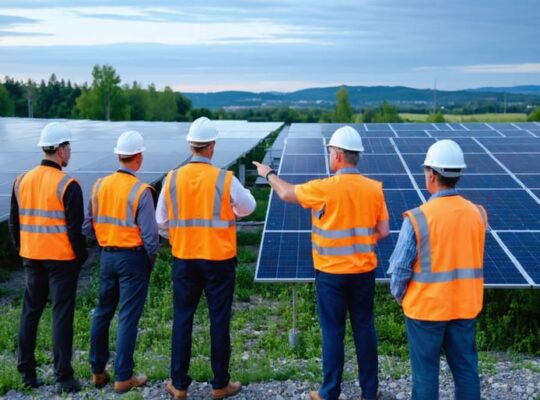
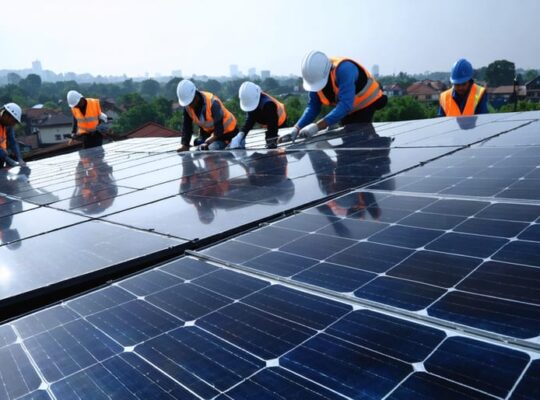
The foundation of successful solar power sharing relies on both physical and digital infrastructure components working in harmony. The physical infrastructure primarily consists of solar panel arrays, inverters, smart meters, and grid connection equipment. These installations are typically mounted on dedicated land or rooftop spaces, with advanced monitoring systems to track energy production and distribution.
Digital infrastructure plays an equally crucial role, incorporating smart grid technology, energy management systems, and automated billing platforms. The system utilizes sophisticated software that monitors real-time energy generation, manages distribution among participants, and handles financial transactions. Advanced metering infrastructure (AMI) enables bi-directional communication between utilities and consumers, facilitating precise energy allocation and consumption tracking.
Communication networks form the backbone of this infrastructure, enabling seamless data exchange between components. Secure cloud-based platforms store and process operational data, while blockchain technology is increasingly being implemented to ensure transparent and tamper-proof energy trading records. The infrastructure also includes backup systems and redundancy measures to maintain service reliability during maintenance or unexpected outages.
Regular maintenance protocols and system upgrades ensure optimal performance and longevity of both physical and digital components, maximizing the community’s solar sharing potential.
Energy Distribution Networks
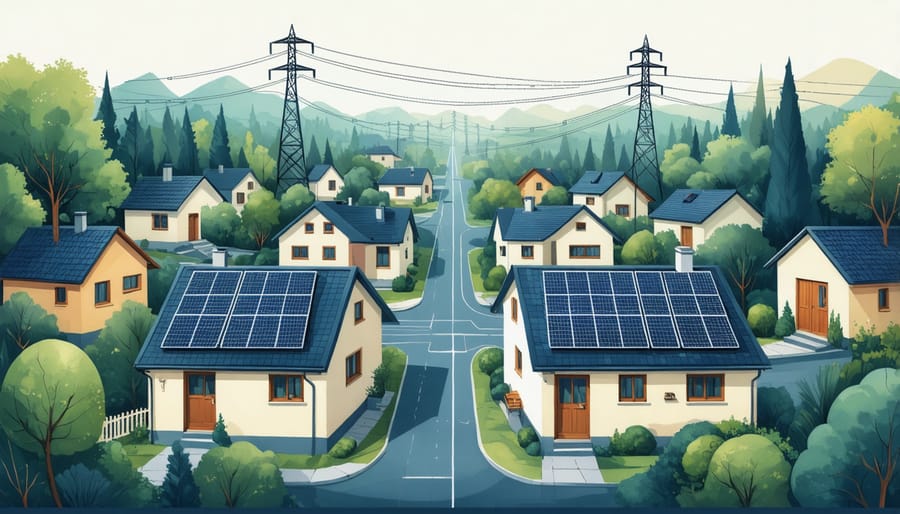
Energy distribution networks in solar power sharing systems utilize advanced smart grid technology to efficiently allocate generated electricity among community participants. These networks employ bi-directional power flow mechanisms, allowing excess energy from individual solar installations to be distributed to other members when needed. The system relies on sophisticated metering infrastructure that tracks energy production, consumption, and sharing in real-time.
Modern distribution networks incorporate automated switching systems and load balancing mechanisms to ensure optimal power flow and maintain grid stability. Virtual net metering enables accurate accounting of shared energy credits, while intelligent control systems manage peak demand periods and regulate power quality.
The physical infrastructure typically consists of interconnected power lines, transformers, and distribution panels specifically configured for community solar arrangements. These components are integrated with communication systems that enable remote monitoring and management. Energy storage solutions, such as community-scale batteries, can be incorporated to enhance distribution efficiency and provide backup power during low generation periods.
To maintain reliability, these networks employ protective devices and fault detection systems, ensuring safe and continuous power distribution among participating members.
Benefits of Community Solar Sharing
Cost Savings and ROI
Participating in solar power sharing initiatives offers substantial financial advantages through economies of scale and collective purchasing power. Initial studies show that participants typically save 10-30% on their electricity bills compared to traditional utility rates. These savings are amplified through government solar incentives and tax benefits available to community solar projects.
The return on investment (ROI) for solar sharing participants manifests in multiple ways. First, subscribers benefit from reduced upfront costs, as the financial burden of installation and maintenance is distributed across the community. Second, reducing energy costs through solar sharing typically yields monthly savings between $20-100 for residential participants, depending on system size and local utility rates.
Long-term financial benefits include protection against rising utility costs, with most participants experiencing a break-even point within 5-7 years. Analysis of existing projects shows that community solar subscribers can achieve lifetime savings of $5,000-15,000 over 20 years. Additionally, property owners may see increased real estate values, with studies indicating solar-ready homes commanding premium prices in many markets.
For commercial participants, the financial advantages are even more pronounced, with some businesses reporting annual energy cost reductions of 20-40% through solar sharing programs, leading to significant operational cost savings and improved bottom-line performance.
Environmental Impact
Solar power sharing initiatives demonstrate significant environmental benefits through substantial reductions in greenhouse gas emissions and carbon footprint. Studies indicate that a typical community solar project can offset approximately 1,500-2,000 metric tons of CO2 emissions annually, equivalent to removing 300-400 cars from the road.
The environmental impact extends beyond carbon reduction. By centralizing solar installations for multiple users, these projects optimize land use efficiency compared to individual rooftop installations. This approach minimizes habitat disruption and preserves natural landscapes while maximizing energy generation potential.
Community solar installations also contribute to improved air quality by reducing reliance on fossil fuel-based power generation. Research shows that every megawatt-hour of solar electricity generated prevents the emission of approximately 0.93 metric tons of CO2, along with significant reductions in sulfur dioxide, nitrogen oxides, and particulate matter.
The sustainability benefits compound through the sharing model’s efficiency. Shared solar facilities typically achieve higher energy conversion rates due to optimal positioning and professional maintenance, resulting in greater environmental returns per installed panel. Additionally, these projects often incorporate sustainable land management practices, such as pollinator-friendly vegetation and water conservation measures.
From a lifecycle perspective, community solar projects demonstrate superior environmental performance through economies of scale in manufacturing, installation, and eventual recycling of components, further reducing the overall ecological footprint of solar energy adoption.
Implementation Strategies
Planning and Assessment
Effective solar power sharing initiatives begin with comprehensive assessment of community needs and resources. The planning phase requires thorough evaluation of solar potential, infrastructure capacity, and participant demographics. Key considerations include available roof or ground space, existing electrical infrastructure, and local utility regulations.
A successful implementation strategy incorporates community solar education initiatives to ensure participant understanding and engagement. Project planners should conduct feasibility studies addressing technical specifications, financial modeling, and regulatory compliance. This includes analyzing solar irradiance data, conducting structural assessments, and evaluating grid integration requirements.
Essential planning elements encompass:
– Site assessment and environmental impact studies
– Financial modeling and ROI projections
– Participant qualification criteria
– Equipment specifications and procurement strategy
– Installation timeline and maintenance schedules
– Legal and regulatory compliance documentation
Professional assessment tools and methodologies should be employed to determine optimal system size, energy distribution mechanisms, and fair cost allocation among participants. Regular stakeholder meetings and transparent communication channels ensure community involvement throughout the planning process, leading to more sustainable and successful implementations.
Regulatory Compliance
Solar power sharing initiatives must comply with various regulatory frameworks at federal, state, and local levels. The primary regulations include interconnection standards set by the Federal Energy Regulatory Commission (FERC) and state public utility commissions, which govern how shared solar systems connect to the power grid.
Project developers must obtain necessary permits, including construction permits, electrical permits, and environmental impact assessments. Many jurisdictions require specific zoning approvals for community solar installations, particularly in residential areas. Additionally, developers must ensure compliance with local building codes and safety standards.
State-specific renewable energy policies, such as net metering regulations and renewable portfolio standards, significantly impact project viability. Some states have implemented specific community solar legislation that defines ownership structures, subscription models, and consumer protection measures.
Tax implications and securities regulations must be carefully considered when structuring shared solar programs. Projects must comply with Securities and Exchange Commission (SEC) requirements if the ownership model involves selling securities to participants.
Insurance requirements typically include general liability coverage, property insurance, and professional liability insurance. Maintenance agreements and operational protocols must align with utility requirements and local regulations. Regular compliance audits and documentation maintenance are essential for ongoing regulatory adherence and project success.
Technology and Equipment Requirements
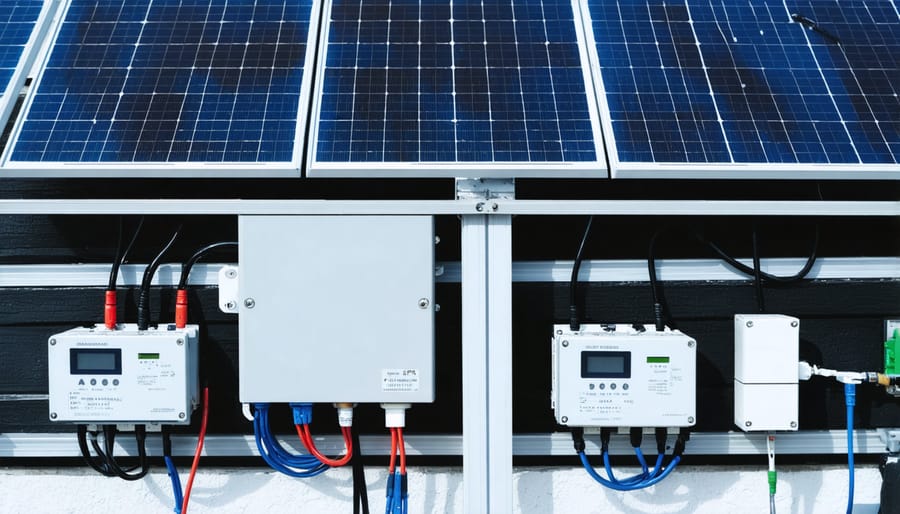
Implementing an effective solar power sharing system requires specific technological components and monitoring equipment to ensure optimal performance and fair distribution. The foundation of any solar sharing initiative is a well-designed photovoltaic (PV) system, which typically includes high-efficiency solar panels, inverters, and smart meters.
The core components begin with premium-grade solar panels, preferably with efficiency ratings above 20% to maximize energy generation within limited space. Modern monocrystalline or bifacial panels are recommended for their superior performance and longevity. These panels should be coupled with grid-tied inverters that can handle the system’s capacity while maintaining high conversion efficiency.
Smart metering infrastructure plays a crucial role in power sharing arrangements. Advanced metering systems must be capable of bi-directional energy measurement, real-time monitoring, and data logging. These meters should feature remote reading capabilities and integration with energy management platforms for accurate billing and credit distribution.
Energy management systems (EMS) serve as the technological backbone of power sharing operations. These systems should include:
– Real-time monitoring and reporting capabilities
– Automated billing and credit allocation features
– Load balancing algorithms
– Remote system control functionality
– Data analytics and performance optimization tools
Communication infrastructure is equally important, requiring secure internet connectivity and backup systems to ensure continuous data transmission. A robust network enables real-time monitoring, automatic fault detection, and remote troubleshooting capabilities.
Storage solutions, while optional, can significantly enhance sharing capabilities. Modern battery systems with high cycle life and advanced battery management systems (BMS) allow for more flexible energy distribution and improved grid stability.
Quality control equipment, including thermal imaging cameras and power quality analyzers, is essential for system maintenance and performance verification. Regular monitoring ensures optimal operation and helps identify potential issues before they affect system performance.
All equipment must comply with relevant safety standards and grid connection requirements, including proper isolation mechanisms and surge protection devices. Regular calibration and maintenance of monitoring equipment ensure accurate energy accounting and fair distribution among participants.
Community solar sharing stands at the forefront of renewable energy innovation, offering a sustainable solution for widespread solar adoption. The demonstrated benefits of shared solar installations – from reduced costs and increased accessibility to improved grid resilience and environmental impact – underscore their vital role in our energy future. As technology advances and regulatory frameworks evolve, we can expect to see more sophisticated sharing platforms, enhanced storage solutions, and streamlined participation models. The growing success of community solar projects worldwide provides compelling evidence that collaborative approaches to renewable energy are not just viable but essential for achieving clean energy goals. Looking ahead, the continued expansion of solar power sharing will likely accelerate the transition to renewable energy while fostering more resilient and sustainable communities.