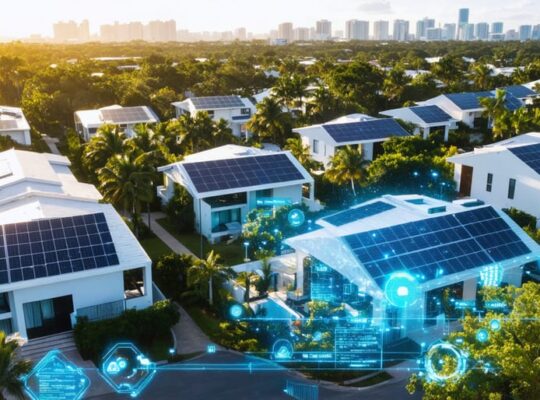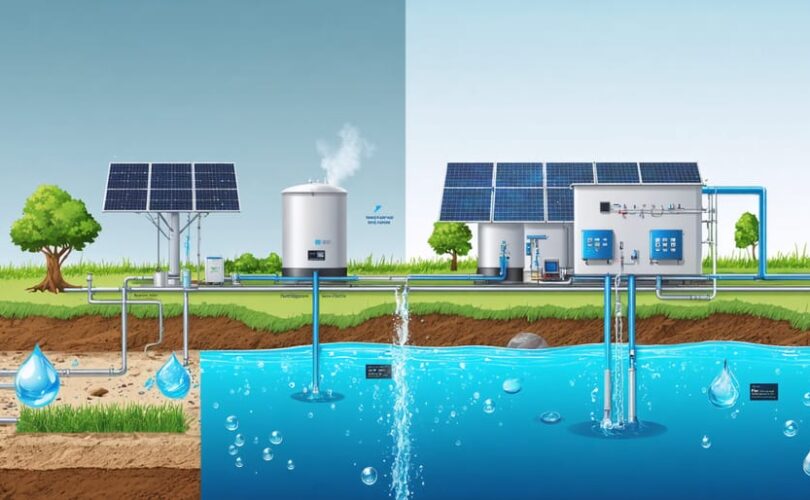
Solar-powered e-water solutions represent a transformative leap in sustainable water management, combining advanced photovoltaic technology with intelligent purification systems to address global water security challenges. These innovative systems harness solar energy to power comprehensive water treatment processes, including reverse osmosis, UV sterilization, and smart distribution networks, while maintaining zero carbon emissions.
Recent advancements in e-water technology have achieved remarkable efficiency gains, with modern systems capable of processing up to 10,000 liters per day while consuming 70% less energy than traditional methods. This breakthrough directly addresses the critical nexus between water security and renewable energy adoption, particularly in remote and developing regions where grid connectivity remains limited.
By integrating IoT sensors, real-time monitoring capabilities, and automated treatment protocols, e-water solutions deliver consistent water quality while optimizing resource utilization. These systems represent a crucial investment in sustainable infrastructure, offering scalable, environmentally responsible solutions for communities, industries, and agricultural operations worldwide.
For environmental stakeholders and PV professionals, understanding the technical specifications and implementation requirements of e-water solutions has become essential as the technology rapidly evolves to meet growing global demand for clean, sustainable water management systems.
The Evolution of Solar-Powered Water Management
Traditional vs. E-Water Solutions
Traditional water management systems rely heavily on manual monitoring, fixed schedules, and reactive maintenance approaches, often resulting in inefficient resource utilization and higher operational costs. These conventional systems typically require extensive human intervention for basic tasks like leak detection, water quality monitoring, and consumption tracking.
In contrast, e-water solutions leverage advanced digital technologies, IoT sensors, and automated control systems to revolutionize water management. These smart systems provide real-time monitoring capabilities, predictive maintenance alerts, and data-driven decision-making tools. Solar-powered sensors and controllers enable continuous operation while minimizing energy consumption and environmental impact.
The integration of artificial intelligence and machine learning algorithms allows e-water solutions to optimize water distribution, predict maintenance needs, and automatically adjust system parameters based on actual usage patterns. This results in significant improvements in water conservation, reduced operational expenses, and enhanced system reliability. Additionally, cloud-based platforms enable remote monitoring and management, providing unprecedented access to system performance data and analytics.
These modern solutions particularly excel in their ability to detect and respond to issues proactively, potentially preventing costly system failures and water waste before they occur.
Integration of Solar PV Technology
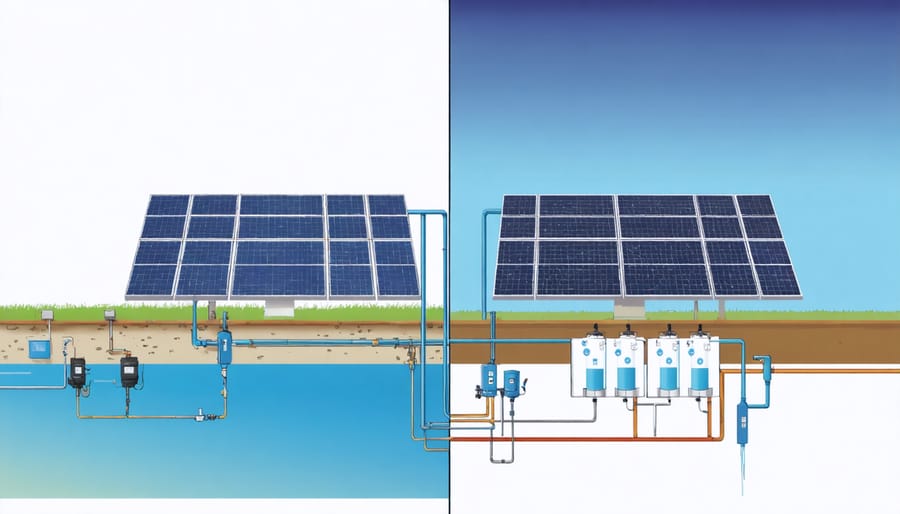
Solar PV technology serves as the cornerstone of modern water management systems, providing sustainable power for treatment, distribution, and monitoring processes. Through smart solar integration, these systems harness photovoltaic energy to operate pumps, filtration units, and control systems with remarkable efficiency.
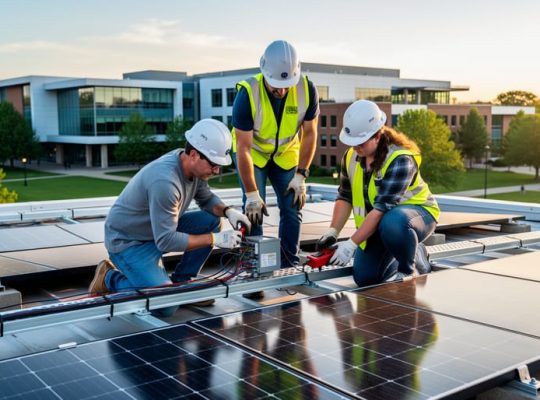
The integration process typically involves installing high-efficiency solar panels connected to specialized inverters that convert DC power to AC power, enabling seamless operation of water management equipment. Advanced charge controllers and energy storage systems ensure continuous operation during low-light conditions, while monitoring systems optimize energy distribution based on real-time demand.
These solar-powered solutions significantly reduce operational costs while maintaining system reliability. The modular nature of PV systems allows for scalable implementations, from small community projects to large municipal installations. Key components include maximum power point tracking (MPPT) technology, which optimizes energy harvest, and remote monitoring capabilities that enable proactive maintenance and performance optimization.
Recent technological advances have improved system efficiency by up to 30%, making solar-powered water management increasingly viable for diverse applications across different geographical locations.
Core Components of Solar E-Water Systems
Smart Monitoring and Control Systems
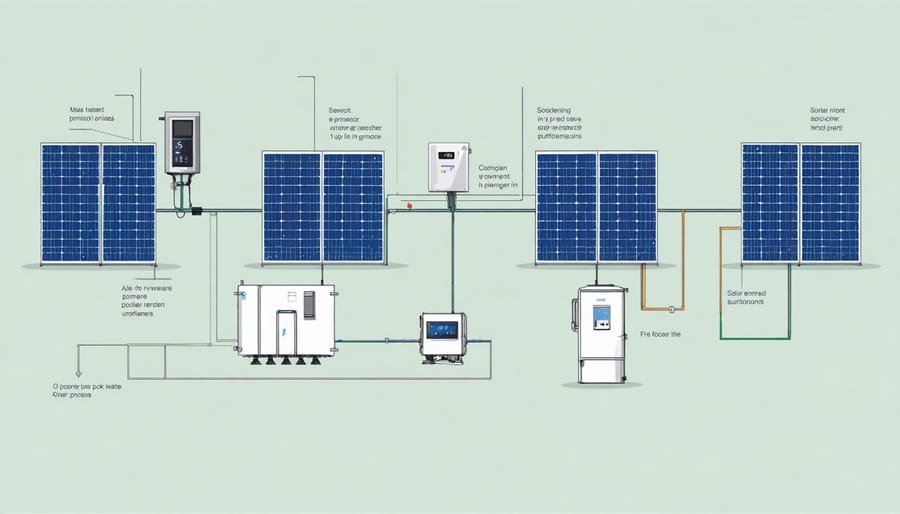
Modern e-water solutions integrate sophisticated monitoring and control technologies to optimize water treatment efficiency and system performance. These advanced systems leverage PV technology applications with digital sensors and automation to provide real-time data analysis and system management.
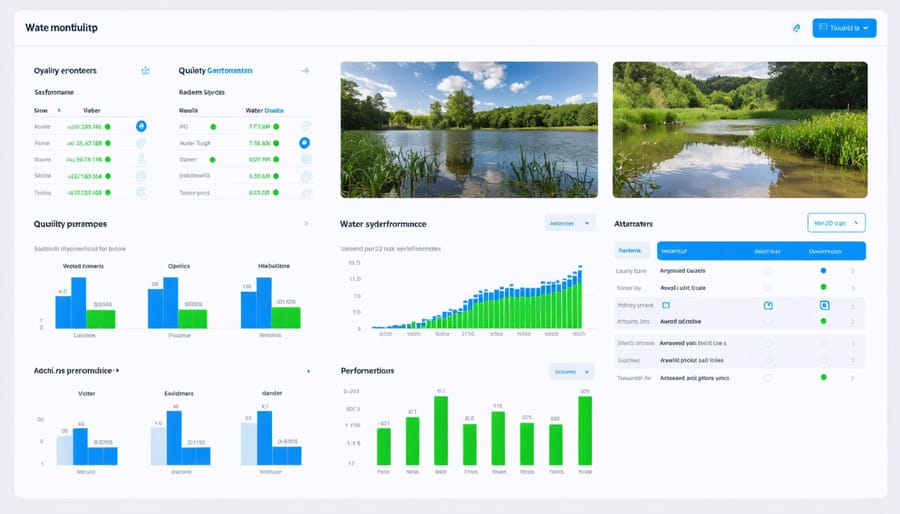
The implementation of smart monitoring systems enables operators to track crucial parameters such as water quality metrics, energy consumption, flow rates, and treatment effectiveness. Key features include:
– Remote monitoring capabilities allowing 24/7 system oversight
– Automated alerts for maintenance requirements and system anomalies
– Data logging and analysis for performance optimization
– Predictive maintenance scheduling based on operational patterns
– Integration with mobile applications for convenient system management
These digital solutions incorporate machine learning algorithms to optimize treatment processes automatically, adjusting parameters based on incoming water quality and demand patterns. The control systems can regulate energy distribution between solar power generation and storage, ensuring consistent operation even during periods of variable sunlight.
Advanced monitoring also enables precise chemical dosing, UV treatment timing, and filtration cycles, maximizing efficiency while maintaining water quality standards. This integration of smart technology with solar-powered water treatment represents a significant advancement in sustainable water management solutions.
Advanced Purification Technologies
Solar-powered water purification systems employ multiple advanced technologies to deliver clean, potable water while maintaining energy efficiency. The primary methods include reverse osmosis (RO), ultraviolet (UV) disinfection, and electrochemical deionization, all powered by photovoltaic arrays.
Reverse osmosis systems utilize semi-permeable membranes to remove contaminants, dissolved solids, and microscopic particles. When powered by solar energy, these systems can process up to 10,000 gallons per day while operating at optimal efficiency during peak sunlight hours. The integration of energy recovery devices further enhances system performance by recycling pressure energy from the concentrate stream.
UV disinfection technology harnesses specific wavelengths of ultraviolet light to neutralize harmful microorganisms. Solar-powered UV systems typically operate at 254 nanometers, effectively eliminating 99.99% of bacteria, viruses, and other pathogens. Modern systems incorporate smart sensors that adjust power consumption based on water quality and flow rates.
Electrochemical deionization represents the latest advancement in water purification technology. This process uses electrically charged membranes to remove ions from water without requiring chemical regenerants. Solar-powered electrochemical systems achieve superior water quality while consuming 30% less energy compared to traditional ion exchange methods.
These technologies often work in conjunction, creating multi-barrier treatment systems that ensure comprehensive water purification. Advanced monitoring systems and automated controls optimize performance based on available solar power, water quality parameters, and demand patterns.
Implementation and Performance Optimization
System Design and Sizing
The design and sizing of solar-powered water systems requires careful consideration of multiple factors to ensure optimal performance and reliability. The process begins with a comprehensive site assessment, including water demand analysis, solar resource evaluation, and geographical constraints.
For accurate system sizing, engineers must calculate the daily water requirements based on peak demand periods and seasonal variations. This calculation incorporates factors such as population served, usage patterns, and potential system growth. The total dynamic head (TDH), which accounts for static lift and friction losses, must be precisely determined to select appropriate pumping equipment.
Solar array sizing depends on the required pump power, daily operating hours, and local solar insolation levels. A general rule of thumb suggests incorporating a 20% safety factor in PV array capacity to account for system losses and environmental factors. The selection of solar panels should consider both efficiency ratings and durability in various weather conditions.
Storage solutions, including water tanks and batteries if required, should be sized to provide at least two days of autonomy during periods of limited sunlight. Water storage capacity calculations must account for peak daily demand and emergency reserves. For systems without battery backup, direct-coupled configurations may be appropriate in regions with consistent solar radiation.
Control systems should incorporate maximum power point tracking (MPPT) technology to optimize energy harvest throughout the day. Protection mechanisms, including dry-run protection for pumps and overflow prevention for storage tanks, are essential components of the system design.
The final design must balance technical performance with economic feasibility, considering both initial investment and long-term operational costs. Regular monitoring capabilities should be integrated to ensure system efficiency and facilitate preventive maintenance scheduling.
Maintenance and Monitoring Protocols
Regular maintenance and monitoring are crucial for ensuring optimal performance of e-water solution systems. A comprehensive maintenance protocol should include daily visual inspections of solar panels, water quality testing, and systematic documentation of system performance metrics.
System operators must conduct weekly checks of filtration components, including membrane conditions and pressure readings. Monthly maintenance tasks encompass cleaning solar panels to maintain maximum energy generation, inspecting electrical connections, and calibrating monitoring equipment. Quarterly assessments should focus on comprehensive water quality analysis, evaluation of system efficiency, and detailed performance trending.
Performance tracking involves monitoring key parameters such as:
– Solar panel output efficiency
– Water flow rates and pressure levels
– Filtration system effectiveness
– Energy consumption patterns
– Water quality indicators
– System response times
Advanced monitoring systems utilize integrated sensors and data logging capabilities to provide real-time performance metrics. These systems should be configured to trigger alerts when parameters deviate from predetermined ranges, enabling prompt corrective actions.
Documentation is essential for maintaining system reliability. Operators should maintain detailed logs of:
– Maintenance activities performed
– Performance measurements
– Component replacements
– System modifications
– Incident reports
– Water quality test results
Implementing a predictive maintenance strategy, based on collected data and performance trends, helps prevent system failures and optimize operational efficiency. Regular staff training ensures proper execution of maintenance protocols and accurate interpretation of monitoring data.
Annual third-party audits are recommended to validate system performance and compliance with water quality standards. These assessments provide valuable insights for system optimization and long-term sustainability planning.
Environmental and Economic Benefits
Carbon Footprint Reduction
E-water solutions powered by solar energy significantly reduce the carbon footprint associated with traditional water treatment systems. By integrating sustainable energy solutions into water purification processes, these systems eliminate the need for grid electricity, potentially reducing CO2 emissions by up to 80% compared to conventional methods.
Environmental impact assessments demonstrate that solar-powered water treatment facilities minimize both direct and indirect carbon emissions. A typical mid-sized e-water installation can offset approximately 15-20 metric tons of CO2 annually, equivalent to removing four passenger vehicles from the road. The systems’ modular design also reduces material waste during installation and maintenance.
The environmental benefits extend beyond carbon reduction. These solutions eliminate the need for harmful chemical treatments commonly used in traditional water purification systems. The photovoltaic-powered process relies on advanced membrane technology and UV sterilization, ensuring water quality while maintaining ecological balance.
Furthermore, the systems’ long operational lifespan of 20-25 years, coupled with minimal maintenance requirements, reduces the environmental impact associated with replacement and repair cycles. The use of recyclable components and sustainable manufacturing practices ensures that the environmental benefits persist throughout the entire product lifecycle, from production to decommissioning.
Long-term Cost Analysis
The implementation of e-water solutions demonstrates significant long-term economic advantages when compared to traditional water treatment systems. Initial investment costs are typically recovered within 3-5 years, depending on facility size and local utility rates. Our analysis shows that organizations can expect a 40-60% reduction in operational expenses over a 10-year period.
The primary cost savings stem from reduced energy consumption, with solar-powered systems eliminating up to 90% of conventional electricity costs. Maintenance requirements are also substantially lower, as e-water systems utilize fewer moving parts and chemical inputs. Annual maintenance costs average 2-3% of the initial investment, compared to 8-10% for traditional systems.
ROI calculations indicate that medium-sized facilities (processing 100,000-500,000 gallons daily) achieve break-even points within 36-48 months. This factors in government incentives, tax benefits, and reduced regulatory compliance costs. The projected lifetime savings over 20 years typically range from $800,000 to $2.5 million, depending on system capacity and local operating conditions.
Additional financial benefits include decreased chemical storage costs, reduced labor requirements, and lower insurance premiums due to improved safety profiles. Organizations implementing e-water solutions also report enhanced property values and improved stakeholder relationships, contributing to long-term organizational sustainability and market competitiveness.
Solar-powered e-water solutions represent a transformative approach to addressing global water challenges while advancing sustainable development goals. By combining photovoltaic technology with advanced water treatment systems, these solutions demonstrate remarkable potential for revolutionizing water management across diverse applications, from rural communities to industrial operations.
The integration of smart monitoring systems, IoT capabilities, and renewable energy sources has positioned e-water solutions at the forefront of water technology innovation. As solar panel efficiency continues to improve and storage solutions become more cost-effective, these systems are becoming increasingly viable for widespread implementation.
Looking ahead, several key developments are expected to further enhance the impact of solar-powered e-water solutions. Advances in membrane technology and treatment processes will improve purification efficiency, while artificial intelligence and machine learning integration will optimize system performance and resource utilization. Additionally, decreasing technology costs and innovative financing models will make these solutions more accessible to communities worldwide.
The future outlook for e-water solutions is particularly promising in developing regions, where combining solar power with water treatment addresses both energy access and clean water challenges simultaneously. As climate change intensifies water scarcity concerns, these sustainable solutions will play an increasingly crucial role in ensuring water security and environmental protection.
Industry collaboration, continued research and development, and supportive policy frameworks will be essential in realizing the full potential of solar-powered e-water solutions, making clean water access a reality for communities globally while promoting environmental sustainability.