Solar photovoltaic systems are undergoing a revolutionary transformation through the integration of Internet of Things (IoT) technology, creating what industry experts call the “solar system internet.” This sophisticated network enables real-time monitoring, predictive maintenance, and automated optimization of solar installations across entire regions. By connecting solar panels, inverters, and energy storage systems through secure communication protocols, operators can now harness data analytics to maximize energy production while minimizing operational costs.
The convergence of renewable energy and digital technology represents a crucial advancement in our journey toward a more sustainable and efficient energy future. Smart solar systems equipped with IoT sensors continuously transmit performance metrics, environmental data, and system health indicators to centralized management platforms. This real-time intelligence allows facility managers and energy providers to respond instantly to changing conditions, predict potential issues before they occur, and optimize energy distribution across the grid.
As solar installations continue to proliferate globally, this interconnected infrastructure becomes increasingly vital for managing distributed energy resources effectively. The solar system internet isn’t just about monitoring individual installations – it’s about creating a responsive, intelligent energy ecosystem that can adapt to changing demands while maintaining optimal performance and reliability.
The Evolution of Smart Solar Systems
From Traditional to Connected Solar Arrays
Traditional solar arrays operate as standalone systems, focusing solely on the basic solar energy conversion process. While effective, these conventional setups lack real-time monitoring capabilities and adaptive performance features. In contrast, connected solar arrays leverage Internet of Things (IoT) technology to transform into intelligent, responsive systems.
Modern IoT-enabled solar installations incorporate advanced sensors, data analytics, and network connectivity to optimize energy production and system maintenance. These smart arrays continuously monitor environmental conditions, panel performance, and electrical output parameters. The integration of communication modules enables remote monitoring, predictive maintenance, and automated performance adjustments.
The key differentiator lies in data utilization. While traditional systems rely on periodic manual inspections, connected arrays provide instantaneous insights through cloud-based platforms. This enables system operators to identify efficiency losses, predict potential failures, and implement corrective measures proactively. The result is enhanced system reliability, improved energy yield, and reduced operational costs through intelligent asset management and optimized maintenance schedules.
Key Components of IoT-Enabled Solar Systems
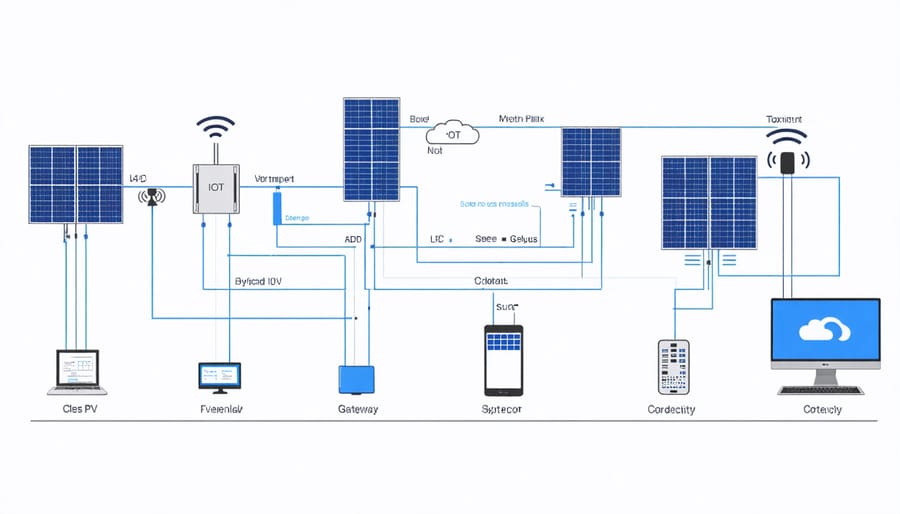
IoT-enabled solar systems comprise several interconnected components that work together to create a smart monitoring and control infrastructure. At the core are smart sensors that measure critical parameters such as voltage, current, temperature, and irradiance levels. These sensors continuously collect real-time data from various points across the solar installation.
Data communication gateways serve as the bridge between the physical solar components and the digital monitoring platform. These gateways typically utilize protocols like Modbus, MQTT, or REST APIs to ensure reliable data transmission. The system incorporates microcontrollers or industrial-grade computers that process the collected data and execute control commands.
Cloud platforms form the backbone of data storage and analysis, enabling remote monitoring capabilities and advanced analytics. These platforms typically include databases, web servers, and application interfaces that facilitate seamless data access and visualization.
Smart inverters with built-in communication capabilities play a crucial role by converting DC power to AC while providing detailed performance metrics. Additionally, weather stations integrated into the system supply environmental data that helps predict energy generation and optimize system performance.
The entire setup is secured through encryption protocols and authentication mechanisms to protect against unauthorized access and cyber threats.
Real-Time Monitoring and Data Analytics
Performance Metrics and Monitoring Parameters
Performance monitoring in solar system internet infrastructure relies on several critical metrics that ensure optimal system operation and energy production. Key indicators include real-time power output, conversion efficiency, and system availability rates. Modern AI-powered monitoring systems continuously track these parameters, providing comprehensive performance analytics.
Essential monitoring parameters encompass DC voltage levels, current flow, inverter efficiency, and grid interaction metrics. System operators typically focus on specific performance ratios (PR) that compare actual energy yield against theoretical maximum output. Temperature coefficients and irradiance measurements are also crucial for accurate performance assessment.
Data acquisition systems collect information at predetermined intervals, typically ranging from seconds to minutes, enabling precise temporal analysis of system behavior. Key performance indicators (KPIs) include:
– Energy yield (kWh/kWp)
– System efficiency (%)
– Grid stability metrics
– Component-level performance
– Environmental impact indicators
Advanced monitoring platforms integrate weather data correlation, predictive maintenance alerts, and automated fault detection mechanisms. These systems maintain detailed logs of performance variations, enabling operators to optimize system operation and promptly address potential issues. Regular performance benchmarking against industry standards ensures systems maintain peak efficiency throughout their operational lifetime.

Predictive Maintenance and Fault Detection
IoT-enabled predictive maintenance represents a significant advancement in solar PV system management, leveraging real-time data analysis and machine learning algorithms to anticipate potential equipment failures before they occur. Through a network of strategically placed sensors, these systems continuously monitor critical parameters such as voltage fluctuations, temperature variations, and power output efficiency.
The integration of digital twin technology enables system operators to create virtual replicas of physical installations, facilitating comprehensive performance analysis and optimization. This approach allows for the identification of degradation patterns and efficiency losses that might otherwise go unnoticed in traditional maintenance schedules.
Advanced analytics platforms process the collected data to generate actionable insights, enabling maintenance teams to schedule interventions precisely when needed. This proactive approach significantly reduces system downtime, optimizes maintenance costs, and extends equipment lifespan. The system can detect subtle variations in performance metrics that may indicate emerging issues, such as panel degradation, inverter malfunctions, or connection problems.
Furthermore, automated fault detection algorithms can distinguish between temporary environmental factors and genuine system issues, minimizing false alarms while ensuring critical problems are promptly addressed. This intelligent monitoring system also maintains detailed performance histories, enabling trend analysis and supporting data-driven decisions for system upgrades and modifications.
System Integration and Network Architecture
Communication Protocols and Standards
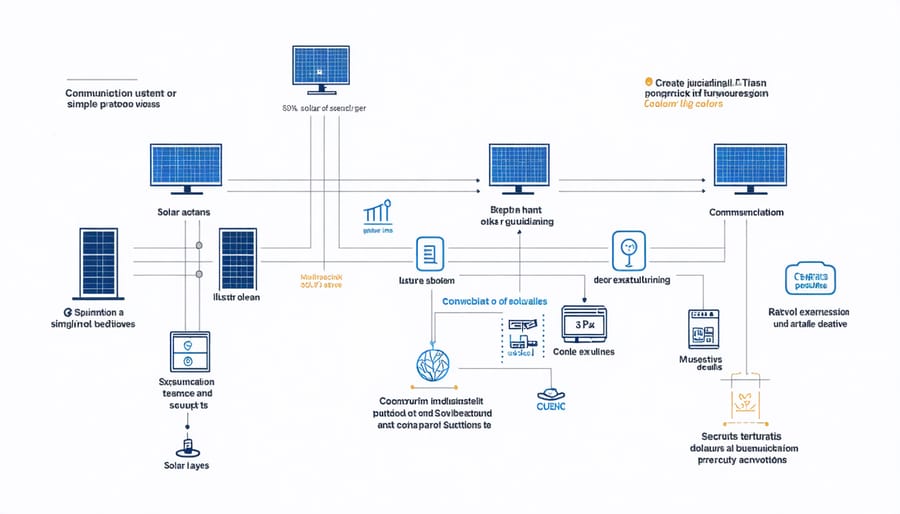
Solar IoT systems rely on several standardized communication protocols to ensure reliable data transmission and system interoperability. The primary protocols used include Modbus TCP/IP, which serves as the backbone for device-to-device communication within solar installations. This protocol enables seamless integration between inverters, meters, and monitoring systems while maintaining robust data security.
For wireless communication, systems typically employ either WiFi (IEEE 802.11) or cellular networks (4G/5G), depending on installation requirements and site conditions. Many modern solar installations also utilize low-power wide-area network (LPWAN) technologies such as LoRaWAN or Sigfox, particularly for remote monitoring applications where power consumption is a critical consideration.
The SunSpec Alliance protocols have emerged as industry standards, providing a common language for solar and storage devices to communicate. These protocols ensure compatibility across different manufacturers’ equipment and facilitate system integration. Additionally, MQTT (Message Queuing Telemetry Transport) protocol is widely implemented for its lightweight nature and efficient message distribution in IoT networks.
Data encryption standards, including TLS 1.3 and AES-256, are employed to protect sensitive system information during transmission. These security protocols, combined with regular firmware updates and certificate management, ensure the integrity and confidentiality of solar system communications while maintaining optimal performance and reliability.
Security Considerations and Best Practices
Securing connected solar PV systems requires a multi-layered approach to protect against cyber threats and unauthorized access. Implementation of robust encryption protocols, particularly for data transmission between monitoring devices and central management systems, is essential. Industry-standard SSL/TLS encryption, along with secure authentication mechanisms, helps safeguard sensitive system information and operational data.
Access control measures should include strong password policies, multi-factor authentication, and role-based permissions to ensure only authorized personnel can modify system settings. Regular security audits and vulnerability assessments help identify potential weaknesses in the network infrastructure.
Modern solar installations increasingly utilize blockchain security solutions to enhance data integrity and establish tamper-proof records of energy production and consumption. This technology provides an additional layer of protection for energy trading and system monitoring.
Best practices include maintaining updated firmware across all connected devices, implementing network segmentation to isolate critical components, and establishing comprehensive incident response procedures. Regular staff training on cybersecurity awareness and proper documentation of security protocols are crucial for maintaining system integrity.
Backup systems should be implemented to ensure continuous monitoring capabilities during network outages, with offline storage solutions for critical data retention. Regular testing of security measures and disaster recovery procedures helps ensure system resilience against emerging threats.
Benefits and Future Implications
Operational Efficiency and Cost Savings
The integration of internet connectivity with solar PV systems delivers substantial operational efficiencies and cost savings across multiple dimensions. Remote monitoring and automated management significantly reduce the need for on-site maintenance visits, resulting in up to 30% lower maintenance costs compared to traditional solar installations. Real-time performance tracking enables immediate detection of underperforming panels or system anomalies, allowing for swift interventions that minimize energy losses and maximize system uptime.
Data-driven predictive maintenance algorithms analyze historical performance patterns to anticipate potential issues before they escalate into costly problems. This proactive approach extends equipment lifespan and maintains optimal energy production efficiency throughout the system’s operational lifetime. Studies indicate that connected solar systems achieve 15-20% higher overall efficiency rates compared to non-connected counterparts.
The economic benefits extend to energy management and grid integration. Smart inverters and monitoring systems optimize power output based on real-time consumption patterns and grid demands, potentially increasing revenue through improved feed-in tariff utilization. Additionally, automated reporting and compliance monitoring reduce administrative overhead while ensuring regulatory requirements are consistently met.
For large-scale installations, centralized management platforms enable operators to oversee multiple sites simultaneously, dramatically improving staff productivity and reducing operational costs. The aggregated data collection also provides valuable insights for system optimization and future deployment planning, creating a continuous improvement cycle that enhances both technical performance and financial returns.
These efficiency gains typically result in a 20-25% reduction in total operational costs over the system’s lifetime, while simultaneously improving energy yield by up to 10% through optimized performance management.
Future Developments and Industry Trends
The solar system internet landscape is rapidly evolving, with several groundbreaking developments on the horizon. Artificial Intelligence and Machine Learning algorithms are becoming increasingly sophisticated in their ability to optimize solar energy production and storage. These advanced systems can predict weather patterns, energy consumption trends, and equipment maintenance needs with unprecedented accuracy.
Edge computing is emerging as a crucial technology for solar IoT implementations, enabling faster data processing and reduced latency in system responses. This advancement is particularly significant for remote solar installations where real-time monitoring and quick decision-making are essential.
5G network integration is set to revolutionize solar system connectivity, offering higher bandwidth and lower latency for data transmission. This enhancement will enable more sophisticated monitoring capabilities and support for a larger number of connected devices within solar installations.
Blockchain technology is gaining traction for secure energy trading and certification of renewable energy credits. This development is particularly relevant for community solar projects and peer-to-peer energy trading platforms, where transparent and secure transaction records are essential.
Industry experts anticipate the emergence of self-healing networks that can automatically detect and resolve connectivity issues, reducing system downtime and maintenance costs. Additionally, advanced battery storage systems with integrated IoT capabilities are being developed to optimize energy storage and distribution.
The trend toward standardization of solar IoT protocols is expected to continue, facilitating better interoperability between different manufacturers’ components and systems. This standardization will likely lead to more cost-effective solutions and easier system integration for solar installations of all sizes.
Energy forecasting capabilities are also expected to improve significantly, incorporating data from multiple sources to provide more accurate predictions of solar energy generation and grid demand patterns.
The integration of IoT technology with solar PV systems represents a significant advancement in renewable energy management and optimization. Through the implementation of smart monitoring, data analytics, and automated control systems, solar installations can now achieve unprecedented levels of efficiency and reliability. The marriage of internet connectivity and solar power generation has opened new possibilities for remote management, predictive maintenance, and enhanced system performance.
The benefits of this technological convergence extend beyond operational improvements. Real-time monitoring and data collection enable system owners and operators to make informed decisions, optimize energy production, and reduce maintenance costs. Furthermore, the integration of IoT solutions facilitates better grid integration, enhanced energy storage management, and improved overall system reliability.
As the renewable energy sector continues to evolve, the role of IoT in solar PV systems will become increasingly crucial. Organizations implementing these technologies are better positioned to meet sustainability goals, reduce operational costs, and maximize return on investment. The data-driven insights provided by IoT solutions also contribute to the continuous improvement of system design and performance optimization strategies.
Looking ahead, the continued development of IoT technologies will further enhance the capabilities of solar PV systems, making them more efficient, reliable, and cost-effective. This technological integration represents not just an improvement in current operations, but a fundamental shift in how we approach solar energy management and optimization.