Revolutionizing portable power solutions, 9V solar panel energy storage systems represent a critical advancement in compact renewable energy technology. These integrated systems combine efficient photovoltaic cells with rechargeable battery storage, enabling continuous power delivery for small electronic devices and emergency applications. By harnessing solar energy through specialized monocrystalline or polycrystalline panels, these units efficiently convert sunlight into a stable 9V output while storing excess energy in attached lithium-ion or nickel-metal hydride batteries. The convergence of miniaturized solar technology and advanced energy storage capabilities addresses the growing demand for sustainable, off-grid power solutions in both consumer and professional applications. As the renewable energy sector continues to evolve, these compact systems demonstrate how sophisticated power management and storage technologies can be effectively scaled down without compromising performance or reliability.
Understanding 9V Solar Panel Systems
Technical Specifications and Components
The 9V solar panel with integrated battery system combines advanced photovoltaic technology with energy storage capabilities. These panels typically utilize monocrystalline or polycrystalline silicon cells, achieving solar panel efficiency ratings between 15-20% under optimal conditions. The standard dimensions measure approximately 15cm x 9cm, making them suitable for compact applications.
The photovoltaic array consists of series-connected cells that generate the nominal 9V output, with actual voltage often ranging between 9.6V to 10.8V to accommodate charging requirements. The integrated battery system typically employs lithium-ion or lithium polymer technology, offering capacities from 600mAh to 2000mAh, depending on the model.
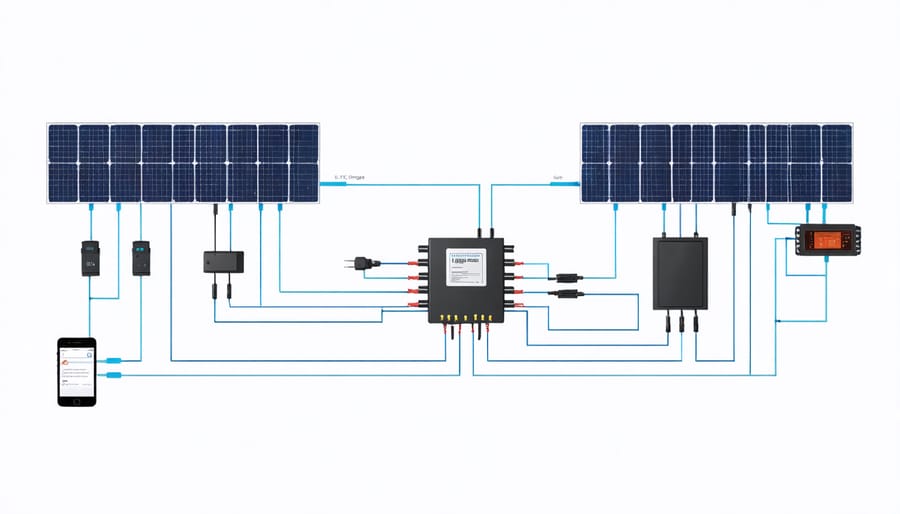
Key components include:
– Charge controller circuit for battery protection
– Voltage regulator maintaining stable 9V output
– Blocking diode preventing reverse current flow
– LED indicators for charging status
– UV-resistant encapsulation material
The system incorporates maximum power point tracking (MPPT) technology to optimize power conversion, achieving charging efficiencies up to 85%. Temperature compensation circuits protect the battery during extreme conditions, while overcurrent and short-circuit protection mechanisms ensure safe operation. The panels typically feature IP65 water resistance rating and tempered glass covering with anti-reflective coating to enhance light absorption.
Integrated Battery Storage Solutions
Selecting the appropriate battery storage solution is crucial for maximizing the efficiency of 9V solar panel systems. Lead-acid batteries, while cost-effective, are gradually being replaced by more advanced lithium-ion alternatives due to their superior energy density and longer lifecycle. The typical storage capacity for these systems ranges from 2000mAh to 10000mAh, depending on the specific application requirements.
The charging mechanism employs a sophisticated charge controller that prevents overcharging and deep discharge, ensuring optimal battery performance and longevity. Modern systems incorporate Maximum Power Point Tracking (MPPT) technology, which enhances charging efficiency by up to 30% compared to traditional charging methods.
For 9V applications, specialized lithium polymer (Li-Po) batteries offer an excellent balance between size and capacity. These batteries feature integrated protection circuits that monitor voltage levels and temperature during both charging and discharging cycles. The nominal voltage of these storage solutions typically ranges from 7.4V to 8.4V, providing stable output for various electronic devices.
The charging time varies depending on solar panel efficiency and environmental conditions, but most systems achieve full charge within 6-8 hours of optimal sunlight exposure. Advanced battery management systems (BMS) monitor cell balancing and protect against thermal runaway, ensuring safe and reliable operation throughout the battery’s service life.
Applications and Implementation
Small-Scale Power Solutions
9V solar panels with integrated battery systems play a crucial role in powering small-scale electronic devices and IoT applications. These compact power solutions are particularly effective for environmental sensors, weather stations, and remote monitoring systems that require consistent but modest power supply. The combination of a 9V solar panel and battery storage provides reliable operation even during periods of limited sunlight.
In IoT deployments, these systems commonly power wireless sensors for agricultural monitoring, tracking soil moisture levels, and environmental conditions. The 9V configuration is especially suitable for devices that operate intermittently or require burst transmission capabilities, such as motion sensors and security cameras.
For portable electronics, these solar solutions offer sustainable charging options for devices like LED lights, small radios, and educational electronic kits. The integrated battery storage ensures continuous power availability, making them ideal for outdoor recreational activities and emergency preparedness kits.
Many modern smart home devices leverage 9V solar-battery combinations for outdoor applications. Examples include garden lighting systems, automated irrigation controllers, and doorbell cameras. These applications benefit from the system’s ability to maintain steady voltage output while requiring minimal maintenance.
The emergence of energy-efficient microcontrollers and sensors has further expanded the potential applications, enabling longer operating times and improved reliability in various environmental conditions. This has made 9V solar-battery systems increasingly popular in DIY electronics projects and professional IoT installations.
Installation Best Practices
To ensure optimal performance of your 9V solar panel with battery system, follow these essential installation steps and best practices:
Begin by selecting an installation location that receives maximum sunlight exposure throughout the day. The panel should face true south (in the Northern Hemisphere) or true north (in the Southern Hemisphere) at an angle approximately equal to your geographical latitude.
Mount the solar panel securely using corrosion-resistant brackets and ensure proper weatherproofing. Install the charge controller in a protected environment, maintaining adequate ventilation to prevent overheating. Position the battery in a temperature-controlled space, avoiding direct exposure to elements.
Implement proper wire management by using appropriately sized cables to minimize power losses. Maintain minimum wire lengths between components and use weather-resistant connectors. Install blocking diodes to prevent reverse current flow during non-generating hours.
Regular maintenance is crucial for system longevity:
– Clean the panel surface monthly using non-abrasive materials
– Check all electrical connections quarterly
– Monitor battery voltage levels weekly
– Inspect mounting hardware bi-annually
– Test charge controller functionality every three months
For safety considerations, install appropriate fusing between the panel and charge controller, and between the controller and battery. Ensure proper grounding of all system components to prevent electrical hazards.
Document all installation parameters and maintenance activities for future reference. This helps track system performance and troubleshoot potential issues effectively.
Performance Optimization
To maximize system efficiency in 9V solar panel systems with integrated battery storage, several key strategies should be implemented. Proper panel orientation and tilt angles must be maintained to optimize solar exposure throughout the day. Regular cleaning and maintenance of the panel surface prevents dust and debris accumulation that can reduce conversion efficiency.
Temperature management plays a crucial role in system performance. Installing panels with adequate ventilation and implementing thermal regulation measures helps maintain optimal operating temperatures, as elevated temperatures can significantly decrease both panel efficiency and battery life.
charge controllers should be properly calibrated to prevent overcharging and deep discharging of the battery. implementing a Maximum Power Point Tracking (MPPT) charge controller can increase charging efficiency by 15-30% compared to traditional controllers.
Battery maintenance is equally important for long-term performance. Regular voltage monitoring, proper storage conditions, and adherence to recommended charge-discharge cycles can extend battery lifespan. Using high-quality battery materials and ensuring proper insulation from environmental factors prevents premature degradation.
System monitoring and data logging enable proactive maintenance and performance optimization. Regular performance reviews help identify efficiency drops early, allowing for timely interventions and adjustments to maintain peak system operation.
Advanced Features and Innovation
Smart Charging Technologies
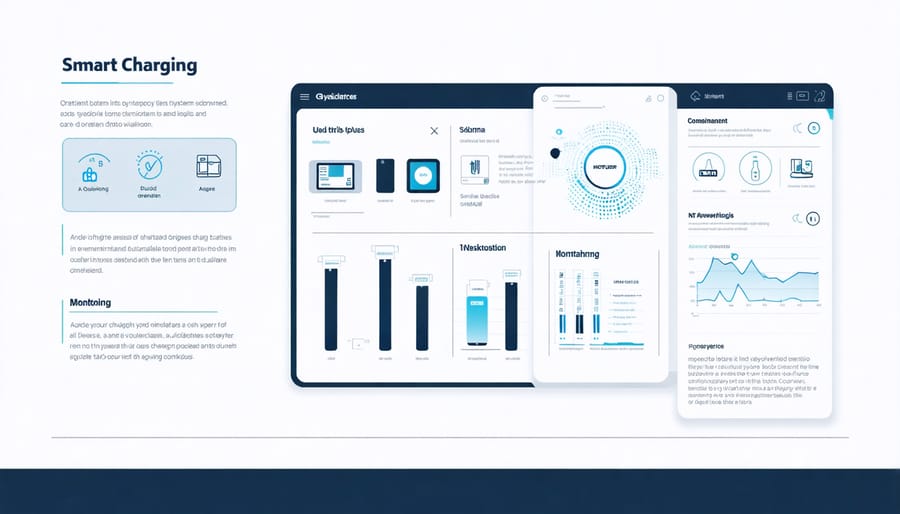
Modern 9V solar panel systems incorporate sophisticated smart charging technology that optimizes battery performance and extends system longevity. These intelligent charging systems utilize microcontrollers and advanced algorithms to monitor multiple parameters, including voltage levels, charging current, temperature, and state of charge.
The charging process typically involves three distinct stages: bulk charging, absorption, and float maintenance. During bulk charging, the system delivers maximum current to rapidly charge the battery up to approximately 80% capacity. The absorption phase then maintains a constant voltage while gradually reducing current to complete the charging cycle. Finally, the float stage prevents self-discharge while protecting against overcharging.
Temperature compensation is a crucial feature of these smart systems, automatically adjusting charging parameters based on ambient conditions. This prevents damage to the battery during extreme temperature variations and ensures optimal charging efficiency across different environmental conditions.
Real-time monitoring capabilities enable users to track system performance through digital interfaces or mobile applications. Key metrics such as power generation, consumption patterns, and battery health are continuously logged and analyzed. This data helps identify potential issues before they become critical and allows for preventive maintenance scheduling.
Protection mechanisms are integrated to guard against common failure modes, including:
– Overcharge protection
– Deep discharge prevention
– Short circuit protection
– Reverse polarity protection
– Temperature-based cutoff
Advanced systems may also incorporate Maximum Power Point Tracking (MPPT) technology, which optimizes the match between the solar panel and battery characteristics, improving overall charging efficiency by up to 30% compared to traditional charging methods. This sophisticated control ensures maximum energy harvest from the solar panel while maintaining safe and efficient battery charging operations.
Future Developments
The landscape of 9V solar panel and battery technology is rapidly evolving, with several promising developments on the horizon. Researchers are actively pursuing advanced photovoltaic materials that could significantly improve the efficiency of small-scale solar panels, potentially increasing conversion rates by up to 30% compared to current technologies.
Emerging solid-state battery technology presents particularly exciting possibilities for integrated solar storage systems. These batteries promise higher energy density, improved safety, and longer lifecycle compared to traditional lithium-ion solutions. Several manufacturers are already developing prototypes that could revolutionize compact solar storage within the next five years.
Miniaturization continues to drive innovation in this sector, with new manufacturing techniques enabling the development of ultra-thin solar cells and compact battery solutions. These advancements are particularly relevant for portable electronics and IoT devices that require reliable, sustainable power sources.
Smart integration technologies are becoming increasingly sophisticated, with new monitoring systems and power management solutions being developed specifically for small-scale solar applications. These systems utilize artificial intelligence and machine learning algorithms to optimize charging cycles and extend battery life while maximizing solar energy capture.
Flexible solar technology is another area showing remarkable progress, with researchers developing bendable and rollable solar panels that maintain the capability to charge 9V batteries. This flexibility could dramatically expand the application possibilities for integrated solar charging systems.
Environmental considerations are also shaping future developments, with manufacturers focusing on more sustainable materials and production methods. Bio-based components and recycled materials are being incorporated into both solar panels and battery designs, reducing the environmental impact while maintaining performance standards.
The integration of wireless charging capabilities with solar-powered systems is another emerging trend, potentially eliminating the need for physical connections between panels and batteries. This development could significantly improve the convenience and versatility of 9V solar charging solutions.
The integration of 9V solar panel systems with battery storage represents a significant advancement in small-scale renewable energy solutions. These compact yet efficient systems have demonstrated remarkable versatility across various applications, from powering IoT devices to supporting educational initiatives and DIY projects. Their success in providing reliable, sustainable power has established a strong foundation for future innovations in portable solar technology.
As we look ahead, the continued development of more efficient photovoltaic materials and advanced battery technologies promises to enhance the capabilities of these systems further. Improvements in energy density, charging efficiency, and overall system durability will likely expand their practical applications while reducing costs. The growing emphasis on renewable energy solutions and environmental sustainability suggests an increasingly important role for these integrated solar-battery systems.
The accessibility and scalability of 9V solar panel systems make them particularly valuable for introducing new audiences to renewable energy concepts. Their practical implementation in educational settings and community projects has helped foster greater understanding and adoption of solar technology. This educational impact, combined with ongoing technological advancements, positions these systems as crucial components in the broader transition toward sustainable energy solutions.
The future of 9V solar panel systems with integrated battery storage appears promising, with potential applications expanding beyond current use cases. As technology continues to evolve and environmental concerns drive innovation, these systems will likely play an increasingly vital role in meeting small-scale energy needs while contributing to global sustainability goals.