The solar energy revolution has created an unintended consequence: a mounting wave of photovoltaic waste requiring specialized recycling infrastructure. As panels installed during the early 2000s reach their 25-30 year lifespan, the International Renewable Energy Agency projects global solar waste will exceed 78 million metric tons by 2050. E-waste and solar recycling centers have emerged as critical facilities bridging renewable energy’s promise with sustainable waste management, recovering valuable materials like silicon, silver, copper, and aluminum that would otherwise burden landfills with toxic heavy metals including lead and cadmium.
These specialized centers employ advanced thermal, mechanical, and chemical processing techniques to dismantle and separate photovoltaic components, achieving recovery rates exceeding 95% for glass and aluminum frames while extracting precious metals worth billions in raw material value. Unlike conventional electronics recycling, solar panel processing requires unique delamination procedures to separate encapsulants from semiconductor materials without compromising material purity for remanufacturing.
The convergence of environmental responsibility and economic opportunity has positioned solar recycling as both an ecological imperative and a burgeoning industry sector. Understanding these facilities’ operational frameworks, technological capabilities, and regulatory requirements equips stakeholders—from renewable energy professionals to policymakers—with essential knowledge for developing circular economy solutions. This examination explores how e-waste and solar recycling centers function, their role in sustainable photovoltaic lifecycle management, and the pathways they create for environmental stewardship within the renewable energy landscape.
The Growing Solar E-Waste Challenge
What Makes Solar Panels Different from Traditional E-Waste
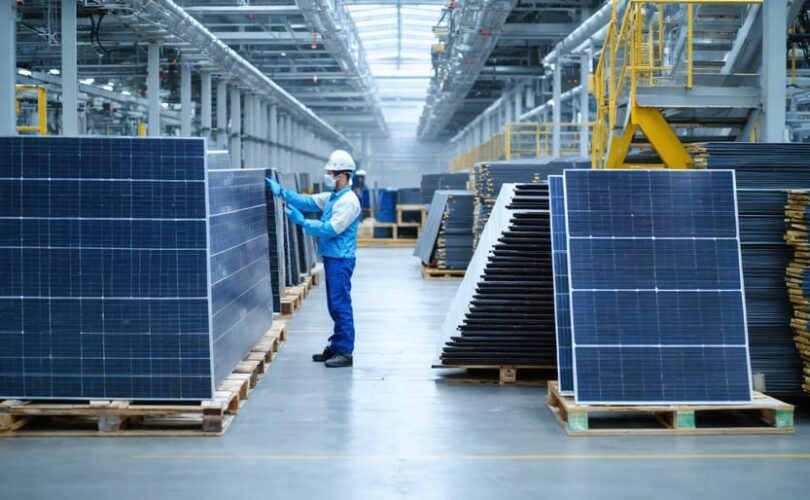
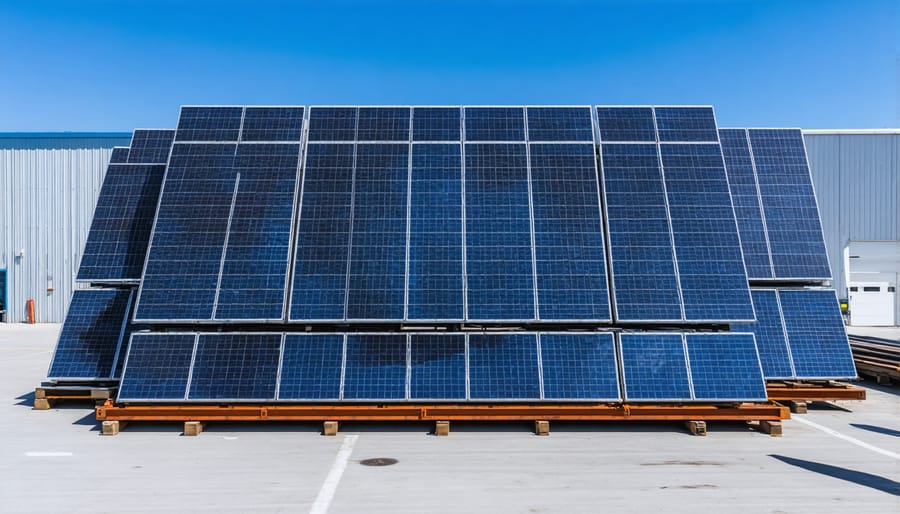
Photovoltaic modules present a unique challenge in the waste management landscape due to their complex, multi-layered composition that distinguishes them from conventional electronic waste. Unlike typical e-waste items such as computers or mobile phones, solar panels consist primarily of tempered glass (approximately 75% by weight), semiconductor materials like crystalline silicon or thin-film compounds, aluminum frames, copper wiring, and various polymers including ethylene-vinyl acetate (EVA) encapsulants. These components are bonded together using industrial adhesives and laminates designed to withstand decades of outdoor exposure, making disassembly particularly challenging.
Standard e-waste recycling facilities typically focus on shredding and separating plastics, metals, and circuit boards through mechanical processes. However, these conventional methods prove inadequate for solar panels, often resulting in contaminated glass cullet with minimal recovery value and the loss of high-purity silicon and precious metals embedded within the modules. The laminated structure requires specialized thermal, chemical, or mechanical separation techniques to effectively delaminate layers without compromising material quality.
The economic incentive for specialized solar recycling becomes evident when considering recoverable materials. A single panel can yield high-grade glass suitable for new manufacturing applications, refined silicon for semiconductor industries, aluminum and copper with significant market value, and trace amounts of silver—one of the most valuable components at approximately 20 grams per panel. Advanced recycling processes can recover up to 95% of these materials, transforming end-of-life modules from environmental liabilities into valuable secondary resources that support circular economy principles within the renewable energy sector.

The 25-Year Time Bomb
The solar industry faces a significant challenge on the horizon: the first generation of photovoltaic installations is approaching the end of their operational lifespan. Most solar panels manufactured and installed during the early 2000s boom were designed with a 25-30 year service life. This means that installations from the late 1990s and early 2000s are now entering their decommissioning phase, creating an unprecedented wave of end-of-life materials.
Industry projections indicate that by 2030, approximately 1.7 million metric tons of solar panel waste will require processing globally, escalating to 60-78 million metric tons by 2050. The United States alone installed over 3 gigawatts of solar capacity between 2000 and 2010, representing millions of panels that will need responsible disposal within the next decade. This impending surge has prompted specialized e-waste and solar recycling centers to develop scalable processing capabilities.
Understanding this timeline is crucial for photovoltaic professionals and industry stakeholders planning infrastructure investments. Universities collaborating with recycling facilities are already conducting research to optimize recovery processes, ensuring the industry can manage this “silver tsunami” of retired panels while maintaining environmental integrity and resource recovery efficiency.
How Solar-Powered Recycling Centers Close the Loop
Energy Requirements for PV Module Recycling
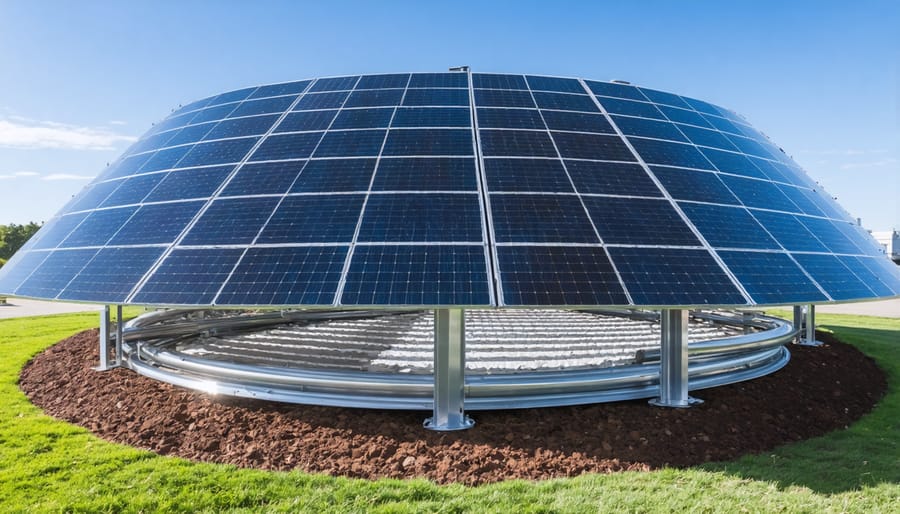
Recycling photovoltaic modules requires substantial energy inputs across three primary treatment methods, each designed to maximize material recovery while minimizing environmental impact. Understanding these energy requirements is essential for evaluating the overall sustainability of solar panel recycling operations.
**Thermal treatment** represents the most energy-intensive approach, utilizing temperatures between 400-600°C to decompose the encapsulant layer—typically ethylene vinyl acetate (EVA)—that binds solar cells to glass substrates. This pyrolysis process consumes approximately 1,200-1,500 kWh per ton of processed modules but enables high-purity silicon recovery rates exceeding 95%. Advanced facilities equipped with heat recovery systems can reduce net energy consumption by 30-40%.
**Mechanical processing** offers a more energy-efficient alternative, consuming roughly 200-400 kWh per ton. This method employs sequential crushing, grinding, and electrostatic separation to isolate different materials. While mechanical treatment requires less energy, it typically achieves lower material purity levels and may necessitate additional refining steps for recovered silicon and metals.
**Chemical treatment** utilizes solvents and acids to dissolve encapsulants and separate cell components, consuming approximately 500-800 kWh per ton. This approach allows for selective material extraction and high-purity recovery but generates chemical waste streams requiring proper treatment and disposal.
Research collaborations between recycling centers and universities are actively developing hybrid processes that combine these methods to optimize energy efficiency while maximizing material recovery. These innovations aim to reduce the energy payback period and enhance the circular economy benefits of photovoltaic recycling operations.
The Self-Sustaining Model
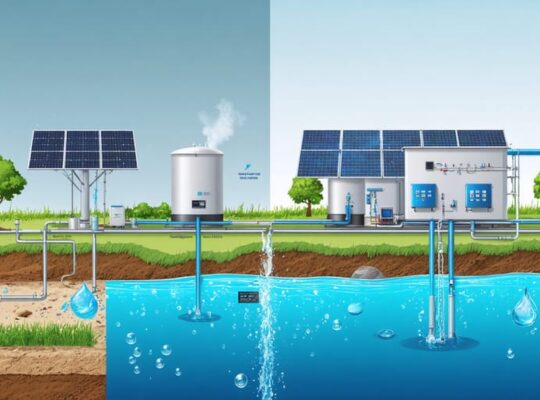
Solar-powered e-waste and solar panel recycling facilities represent a paradigm shift in sustainable industrial operations. By integrating photovoltaic systems into their infrastructure, these centers demonstrate the practical scalability of renewable energy applications beyond traditional solar-powered residential systems.
The self-sustaining model delivers measurable environmental and economic benefits. On-site solar arrays typically generate 60-80% of a facility’s energy requirements, substantially reducing grid dependency and operational expenses. This energy autonomy translates to lower processing costs per kilogram of recycled material, improving overall profitability while decreasing carbon emissions by approximately 40-50% compared to conventional grid-powered facilities.
Universities collaborating with these centers utilize them as living laboratories, studying energy efficiency metrics and circular economy principles. Research data collected from operational facilities provides valuable insights into optimizing industrial renewable energy integration, informing future facility designs and policy recommendations.
The financial viability becomes increasingly compelling as solar technology costs decline. Facilities typically achieve return on investment within 5-7 years, after which energy generation represents pure cost savings. This model proves particularly advantageous in regions with high electricity rates or favorable net metering policies, demonstrating that environmental responsibility and economic sustainability can coexist harmoniously in industrial settings, setting precedents for other manufacturing and processing sectors.
Core Technologies in Solar E-Waste Recycling
Mechanical Separation Techniques
Mechanical separation forms the foundation of solar panel recycling, employing physical processes to efficiently dismantle photovoltaic modules into their constituent materials. The procedure begins with **crushing and shredding**, where specialized equipment breaks down panels into smaller fragments while minimizing contamination between material streams. Industrial shredders equipped with adjustable blades process entire modules, separating the laminated layers and liberating valuable components.
Following initial size reduction, **sieving techniques** categorize materials based on particle dimensions. Multi-stage screening systems employ different mesh sizes to isolate glass cullet, aluminum frame pieces, and junction box components. This graduated approach ensures optimal separation efficiency, with typical systems achieving 95% purity rates for aluminum recovery and 85-90% for glass fractions.
**Magnetic and eddy current separation** complement mechanical processes by extracting ferrous metals and non-ferrous materials like copper wiring. Advanced facilities integrate optical sorting technologies that identify material types through spectral analysis, further refining output quality. These mechanical techniques process approximately 10-15 panels per hour per line, establishing the throughput capacity necessary for commercial-scale operations while maintaining environmental standards that align with contemporary waste management regulations.
Thermal and Chemical Recovery Methods
Thermal and chemical recovery methods represent advanced techniques for extracting valuable materials from end-of-life solar panels. Thermal processing involves controlled heating at temperatures between 400-600°C to decompose and remove encapsulation materials like ethylene vinyl acetate (EVA), which binds the photovoltaic cells to protective glass layers. This pyrolysis process separates components without damaging the underlying silicon wafers or metallic elements.
Following thermal treatment, chemical recovery utilizes acid and alkali solutions to selectively dissolve and extract high-value materials. Hydrofluoric acid etching removes anti-reflective coatings, while nitric acid solutions recover silver from electrical contacts—a critical process given that each panel contains approximately 20 grams of this precious metal. Advanced hydrometallurgical techniques then extract silicon, copper, and aluminum through targeted leaching processes.
Research institutions collaborating with recycling facilities have developed innovative electrolysis methods that achieve 95% recovery rates for semiconductor-grade silicon. These combined thermal-chemical approaches significantly reduce environmental impact compared to landfilling while recovering materials valued at $15-20 per panel. Educational programs now incorporate these methodologies, preparing professionals to optimize recovery efficiency and meet emerging circular economy standards within the renewable energy sector.
Recovery Rates and Material Purity
Modern solar panel recycling facilities achieve impressive material recovery rates, with glass recovery reaching 90-95% and aluminum frames at approximately 95%. Silicon wafer recovery stands at 85%, while precious metals like silver and copper can be recovered at rates between 80-90% when advanced techniques are employed. However, achieving remanufacturing-grade purity remains challenging—recovered silicon must meet semiconductor-grade specifications of 99.9999% purity to be suitable for new photovoltaic cells.
The quality standards mirror those established by SEMI PV Group specifications, requiring rigorous testing and refinement processes. Through collaborative research with universities, recycling centers are developing improved separation techniques that enhance material purity while reducing processing costs. These educational partnerships focus on closed-loop manufacturing systems where recovered materials directly feed back into solar panel production, reducing dependency on virgin materials and lowering the carbon footprint of new PV products.
Economic Viability and Material Value
High-Value Materials in Solar Panels
Solar panels contain valuable materials that make recycling economically viable. A standard crystalline silicon panel contains approximately 3-15 grams of silver, which currently trades at $24-31 per ounce, representing significant recovery potential across thousands of panels. Silicon wafers comprise roughly 47% of panel weight, though their recycled value remains lower at $1-3 per kilogram due to purity requirements for reuse.
Copper content varies by panel type, ranging from 0.5-1.5 kilograms per panel, with copper prices averaging $4 per pound. The aluminum frames contribute additional value at approximately 15-20 kilograms per residential panel, currently worth $1 per pound in recycled form.
Thin-film technologies like CIGS panels contain indium, gallium, and selenium—materials with substantial market premiums. Indium prices reach $200-400 per kilogram, while gallium commands $300-500 per kilogram, though quantities per panel remain small. Cadmium telluride panels contain recoverable tellurium, valued at $50-80 per kilogram.
Research collaborations with universities have demonstrated that comprehensive material recovery can offset 60-70% of recycling operational costs, making specialized e-waste facilities increasingly economically sustainable while preventing valuable resources from entering landfills.
Cost-Benefit Analysis for Recycling Operations
A comprehensive cost-benefit analysis reveals that recycling operations can achieve profitability through multiple revenue streams. Material recovery generates primary income, with silicon, silver, copper, and aluminum extracted from solar panels commanding significant market value—recovered silver alone can yield $20-30 per panel. Glass recovery, though lower in per-unit value, provides volume-based returns due to its 75% composition in crystalline silicon panels.
Operational expenses include collection logistics, sorting infrastructure, and specialized processing equipment. However, these costs are offset by landfill diversion credits in jurisdictions with extended producer responsibility (EPR) legislation. Facilities can earn $0.50-2.00 per pound through compliance programs, similar to models established for industrial solar applications.
Academic partnerships further enhance economic viability through research grants and workforce development programs. Universities provide technical expertise while facilities offer practical training environments, reducing operational costs by 15-20%. Additionally, regulatory compliance benefits include avoiding penalties for improper disposal and maintaining certification standards. Facilities achieving 95% material recovery rates typically reach break-even within 3-5 years, with increasing profitability as solar panel waste volumes grow exponentially through 2050.
Regulatory Landscape and Industry Standards
Global Regulatory Frameworks
Regulatory frameworks for solar panel and electronic waste recycling vary significantly across global markets, creating both challenges and opportunities for the industry. The European Union leads with its comprehensive Waste Electrical and Electronic Equipment (WEEE) Directive, which since 2012 has classified solar panels as electronic waste requiring mandatory collection and recycling. EU member states must achieve collection rates of 65% and recovery rates of 80% for photovoltaic modules, with producers bearing financial responsibility for end-of-life management.
In contrast, the United States lacks federal solar-specific e-waste legislation, resulting in a patchwork of state-level initiatives. Washington became the first state to mandate solar panel recycling in 2017, followed by California’s universal waste regulations. This fragmented approach creates compliance complexities for manufacturers and recyclers operating across state lines.
Asian markets present diverse regulatory landscapes. Japan incorporated solar panels into its Home Appliance Recycling Law, while China introduced Extended Producer Responsibility policies targeting renewable energy equipment. India’s E-Waste Management Rules are gradually expanding to encompass solar components. These evolving frameworks reflect growing recognition that effective solar e-waste management requires coordinated policy approaches, creating opportunities for educational programs and university collaborations to train professionals in navigating international regulatory environments.
Certification and Quality Standards
As the solar recycling industry matures, several certification frameworks are establishing critical benchmarks for facility operations and material recovery quality. The R2 (Responsible Recycling) and e-Stewards certifications, traditionally applied to electronics recycling, now extend to photovoltaic waste management, ensuring ethical processing and proper handling of hazardous materials like cadmium and lead. The International Electrotechnical Commission (IEC) has introduced IEC 62933 standards specifically addressing quality metrics for recovered silicon, silver, and rare earth elements from PV modules.
Recycling centers pursuing excellence increasingly adopt ISO 14001 environmental management systems alongside emerging certifications like the Solar Energy Industries Association (SEIA) National PV Recycling Program criteria. These standards verify minimum recovery rates—typically 95% by weight for crystalline silicon panels—and establish purity thresholds for secondary raw materials entering manufacturing supply chains. Universities collaborating with certified facilities help validate these quality benchmarks through independent testing, while educational programs train professionals in compliance protocols. For consumers and businesses selecting recycling partners, third-party certifications provide essential assurance that end-of-life solar equipment receives environmentally responsible treatment meeting international best practices.
Integration with Broader Waste Management Systems
Successful solar panel recycling depends heavily on seamless integration with existing waste management infrastructure. Rather than operating in isolation, specialized solar recycling centers achieve optimal efficiency by coordinating with established e-waste collection networks, municipal recycling programs, and regional logistics systems.
Many facilities partner with electronics recycling centers to leverage their existing collection points, transportation routes, and sorting capabilities. This collaboration reduces infrastructure costs while providing convenient drop-off locations for consumers and businesses disposing of end-of-life panels. Municipal solid waste programs increasingly incorporate photovoltaic modules into their collection schedules, treating them as special recyclables alongside other electronic waste streams.
Logistics coordination proves essential for managing the bulky, fragile nature of solar panels. Successful programs establish reverse logistics networks that consolidate panels from distributed collection sites before transport to centralized recycling facilities. This approach minimizes transportation costs and environmental impact while ensuring proper handling throughout the collection chain.
Universities play a vital role in this integration, conducting research on optimized collection models and offering educational programs that train the next generation of recycling professionals in coordinated waste management strategies. Academic partnerships help identify best practices for material flow analysis and system design.
Regional consolidation hubs have emerged as effective intermediaries, where initial sorting and preparation occur before materials reach specialized recycling facilities. This tiered approach balances accessibility with processing efficiency, creating scalable solutions that adapt to growing volumes of retired solar equipment while maintaining economic viability.
Educational Pathways for PV Recycling Professionals
Skills and Knowledge Required
Operating an e-waste and solar recycling center demands a unique blend of interdisciplinary expertise that spans multiple technical and strategic domains. Professionals in this field must possess comprehensive knowledge of photovoltaic system design and PV technology innovation, enabling them to identify valuable components within decommissioned panels and electronics.
Materials science competency is essential for understanding silicon crystalline structures, semiconductor properties, and the chemical composition of various panel generations. This knowledge directly informs extraction and purification processes. Environmental engineering principles guide proper handling of hazardous materials, ensuring compliance with regulatory frameworks while minimizing ecological impact throughout the recycling workflow.
Circular economy expertise has become increasingly critical as the industry shifts toward sustainable business models. Professionals must understand reverse logistics, life-cycle assessment methodologies, and closed-loop manufacturing systems. Many facilities now collaborate with universities to develop educational program offerings that cultivate these specialized competencies, preparing the next generation of recycling professionals.
Additional valuable skills include quality control procedures, automated sorting system operations, and supply chain management specific to recovered materials markets, ensuring economic viability alongside environmental stewardship.
The solar energy industry stands at a critical juncture. Within the next decade, millions of tons of photovoltaic panels will reach end-of-life, presenting either an environmental crisis or an unprecedented opportunity to demonstrate leadership in sustainable manufacturing. The time to build robust recycling infrastructure is now—not when landfills overflow with decommissioned modules containing recoverable silicon, silver, and rare materials.
Developing comprehensive solar recycling capabilities requires a multi-stakeholder approach. The photovoltaic sector has the unique opportunity to pioneer circular economy practices that other industries can emulate, transforming waste streams into valuable resource loops. This transition depends fundamentally on education—training the next generation of engineers, technicians, and entrepreneurs in advanced recycling technologies and sustainable design principles.
Academic institutions, research centers, and industry leaders must collaborate to develop specialized programs addressing solar recycling challenges. Universities partnering with recycling facilities can provide students with hands-on experience in materials recovery, enabling them to innovate solutions for improved efficiency and cost-effectiveness.
We call upon PV professionals, researchers, policymakers, and environmental advocates to actively engage with recycling solutions. Whether through advancing recovery technologies, supporting legislative frameworks, or incorporating recyclability into panel design, every stakeholder has a role in building a truly sustainable solar future. The solar revolution must include responsible end-of-life management—the industry’s credibility and environmental legacy depend on it.