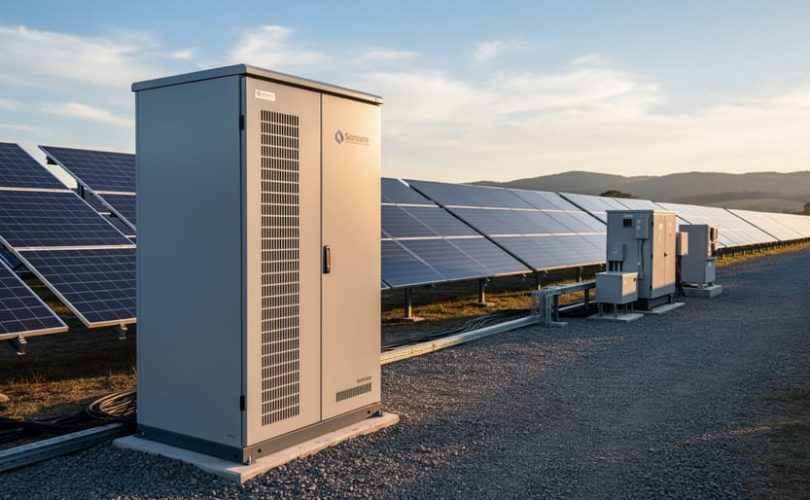
The photovoltaic industry stands at a technological crossroads where energy storage capability will determine the viability of solar power systems for the next generation. Solid-state battery technology represents the most significant advancement in energy storage since lithium-ion batteries revolutionized consumer electronics three decades ago. Unlike conventional batteries that rely on liquid electrolytes, solid-state batteries utilize solid ionic conductors, eliminating many safety concerns while dramatically increasing energy density and cycle life. This fundamental architectural shift promises to solve the intermittency challenge that has long constrained solar energy adoption at scale.
For PV professionals, understanding solid-state battery integration is no longer optional. These batteries offer energy densities exceeding 400 Wh/kg, nearly double that of current lithium-ion technology, enabling smaller footprints for residential and commercial installations. The absence of flammable liquid electrolytes eliminates thermal runaway risks, a critical consideration for building-integrated photovoltaic systems. Operating temperature ranges from -30°C to 100°C expand deployment possibilities across diverse climate zones. Cycle life projections surpass 10,000 charge-discharge cycles, aligning perfectly with the 25-30 year operational lifespan of modern solar panels.
The convergence of solid-state technology with photovoltaic systems creates unprecedented opportunities for grid independence, peak demand management, and renewable energy reliability. However, current manufacturing costs and production scalability remain significant barriers to widespread commercial deployment. This analysis examines the technical mechanisms, integration pathways, and timeline projections that will shape the industry’s transition to solid-state energy storage solutions.
The Energy Storage Problem in Modern PV Systems
Despite the rapid advancement of photovoltaic technology, energy storage remains a critical bottleneck preventing optimal solar deployment. Current lithium-ion batteries, while dominant in the market, present several substantial limitations that hinder the full potential of residential and commercial solar installations.
The degradation challenge stands at the forefront of these limitations. Lithium-ion batteries typically experience capacity fade of 2-3% annually, resulting in diminished storage capabilities over time. This degradation accelerates under the demanding charge-discharge cycles characteristic of solar applications, where batteries may cycle daily or even multiple times per day in hybrid PV systems. After 7-10 years, replacement becomes necessary, adding significant lifecycle costs that undermine the economic case for solar-plus-storage systems.
Safety concerns further complicate adoption. Lithium-ion technology employs flammable liquid electrolytes that pose fire and thermal runaway risks, particularly when installed in residential settings. Several high-profile incidents have heightened regulatory scrutiny and insurance requirements, creating additional barriers for homeowners and businesses considering battery integration.
Temperature sensitivity represents another critical constraint. Lithium-ion batteries perform optimally within narrow temperature ranges, typically between 15-35 degrees Celsius. Performance degrades substantially outside this window, and extreme temperatures accelerate capacity loss. This limitation proves particularly problematic for solar installations in regions experiencing temperature extremes, requiring costly thermal management systems that increase installation complexity and ongoing maintenance demands.
The cost barrier remains perhaps the most significant obstacle to widespread adoption. While lithium-ion battery prices have declined considerably, storage systems still represent 30-50% of total solar installation costs. For many potential adopters, this investment substantially extends payback periods, making solar-plus-storage financially unviable compared to grid-tied systems without storage.
These combined limitations underscore the urgent need for next-generation storage solutions that can unlock the full potential of photovoltaic technology in diverse applications and geographic contexts.
What Makes Solid-State Batteries Different
The Electrolyte Revolution
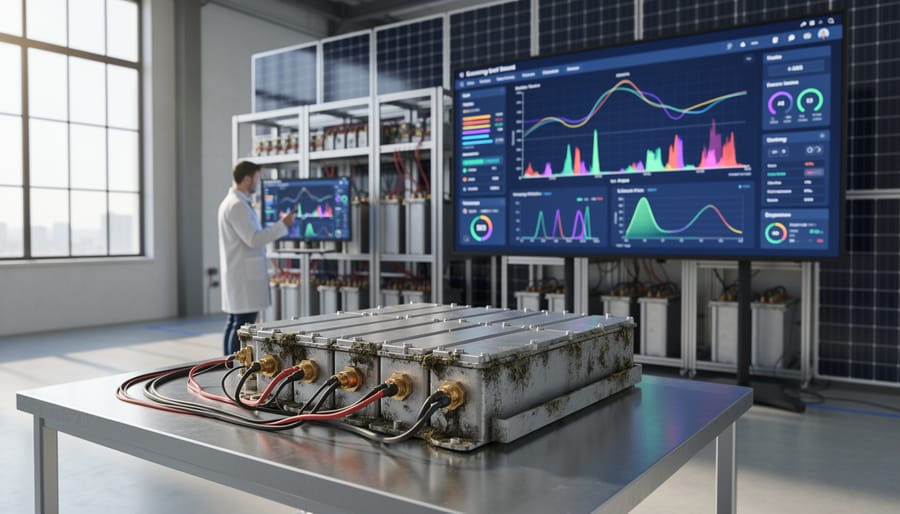
Traditional lithium-ion batteries rely on liquid electrolytes to transport ions between electrodes, but this design introduces significant vulnerabilities. Liquid electrolytes are flammable, prone to leakage, and require complex containment systems that add weight and cost. Solid-state batteries fundamentally reimagine this architecture by replacing liquid electrolytes with solid materials, creating a paradigm shift in energy storage safety and performance.
Three primary material categories dominate solid electrolyte development. Ceramic electrolytes, particularly lithium lanthanum zirconium oxide variants, offer exceptional ionic conductivity and thermal stability, making them ideal for high-temperature photovoltaic applications where ambient conditions fluctuate significantly. Polymer electrolytes provide flexibility and easier manufacturing integration, though they typically exhibit lower conductivity at room temperature. Sulfide-based electrolytes represent a compelling middle ground, combining high ionic conductivity with improved processability compared to ceramics, though moisture sensitivity remains a research challenge.
This transition to solid electrolytes delivers transformative benefits for PV systems integration. The elimination of flammable liquids drastically reduces fire risk in residential and commercial installations, addressing a critical safety concern for rooftop solar arrays. Solid electrolytes enable higher operating temperatures without degradation, crucial for solar installations exposed to extreme environmental conditions. The solid interface also prevents dendrite formation, microscopic lithium structures that cause short circuits in conventional batteries, thereby extending system lifespan significantly.
Similar to nanotechnology advances in photovoltaic materials, solid electrolyte development requires precise engineering at the molecular level. Universities worldwide are collaborating with industry partners to optimize these materials, with research programs focusing on reducing interfacial resistance and improving manufacturing scalability. These developments position solid-state technology as the foundation for next-generation solar energy storage systems.

Key Performance Advantages
Solid-state batteries represent a significant leap forward in energy storage performance, offering compelling advantages that position them among the most promising emerging solar innovations for photovoltaic system integration.
Energy density improvements stand at the forefront of these advantages. Solid-state batteries deliver approximately 2-2.5 times higher energy density than conventional lithium-ion batteries, enabling more compact storage solutions that occupy less physical space while storing greater amounts of solar-generated electricity. This translates directly to enhanced system efficiency and reduced installation footprint for residential and commercial applications.
Charging capabilities represent another transformative benefit. These batteries can accept charge rates up to three times faster than liquid electrolyte alternatives, reducing charging times from hours to minutes in optimal conditions. For solar installations, this means more efficient capture of peak generation periods and improved load balancing during high-production windows.
Extended cycle life dramatically improves long-term economics. While traditional lithium-ion batteries typically endure 1,000-3,000 charge cycles before significant degradation, solid-state variants demonstrate potential for 10,000 cycles or more, substantially reducing replacement frequency and lifetime system costs.
Temperature tolerance expands operational parameters significantly. Solid-state batteries maintain stable performance across temperature ranges from -30°C to 100°C, compared to the narrower 0°C to 45°C window of conventional batteries. This wider tolerance proves particularly valuable for installations in extreme climates or locations experiencing significant seasonal variations.
The enhanced safety profile eliminates risks associated with liquid electrolyte leakage and thermal runaway events. The solid electrolyte is non-flammable and chemically stable, reducing fire hazards and simplifying safety requirements for residential deployments. This inherent stability also permits closer integration with solar arrays without extensive safety buffer zones.
Integration Advantages for Solar Applications
Thermal Management and Panel Compatibility
Solid-state batteries demonstrate superior thermal stability compared to conventional lithium-ion systems, fundamentally transforming installation possibilities for photovoltaic applications. Unlike liquid electrolyte batteries that risk thermal runaway and require extensive cooling infrastructure, solid electrolytes maintain structural integrity across wider temperature ranges—typically operating efficiently between -20°C and 60°C without performance degradation.
This enhanced thermal resilience eliminates the need for complex battery management systems with active cooling components, reducing both installation complexity and ongoing maintenance requirements. For PV system integrators, this translates to simplified designs and lower balance-of-system costs. The reduced cooling demand particularly benefits off-grid and residential installations where space constraints and energy efficiency are paramount.
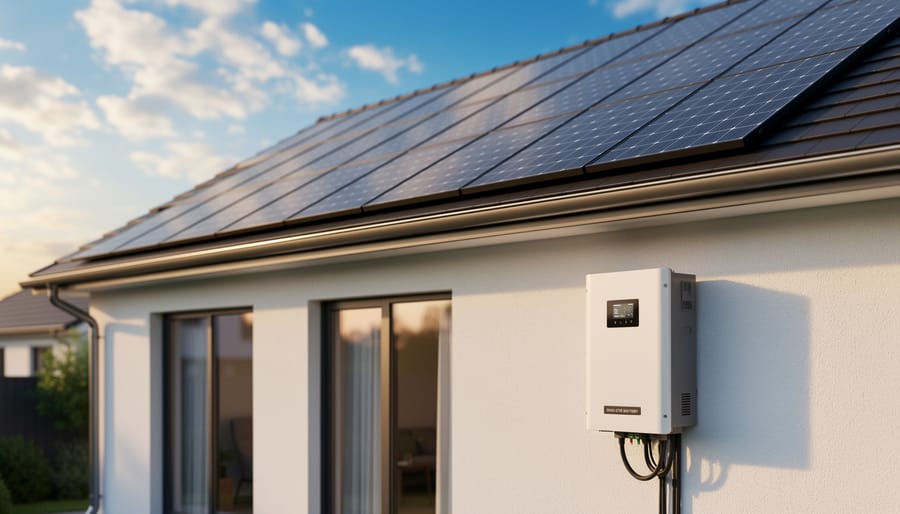
The improved thermal characteristics enable direct integration with solar panel arrays, including rooftop mounting configurations previously unsuitable for conventional battery systems. Solid-state technology withstands the elevated temperatures common in solar installations—where panels can exceed 65°C under peak sunlight—without compromising safety or longevity. This compatibility allows for compact, space-efficient designs that minimize electrical losses through shorter cable runs between generation and storage.
Research collaborations between battery manufacturers and universities continue advancing thermal management optimization, exploring innovative integration approaches such as panel-laminated storage systems. These developments promise future installations where energy generation and storage function as unified systems, dramatically simplifying deployment while maximizing space utilization. For renewable energy professionals, understanding these thermal advantages is essential when evaluating long-term system architecture and planning for technology adoption timelines.
Space Efficiency and System Design
Solid-state batteries deliver significantly higher energy density compared to conventional lithium-ion alternatives, typically achieving 300-500 Wh/kg versus 150-250 Wh/kg for traditional battery chemistries. This advancement translates directly into reduced footprint requirements for energy storage installations, a critical advantage for space-constrained applications. In residential rooftop solar configurations, where available area competes between panel placement and battery storage, solid-state technology enables homeowners to store equivalent or greater energy capacity within substantially smaller enclosures.
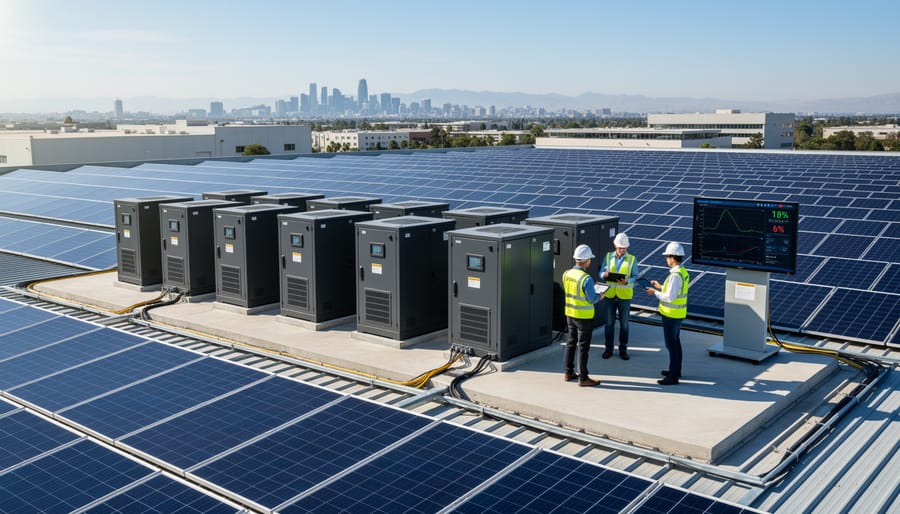
Urban environments particularly benefit from this spatial efficiency. Commercial buildings integrating distributed solar systems often face severe space limitations for equipment rooms and mechanical areas. Solid-state batteries can reduce storage system volume by 30-40%, freeing valuable real estate for other building functions while maintaining robust energy independence. This compact design also simplifies installation logistics in retrofit applications where existing structures present architectural constraints.
For multi-unit residential developments and community solar projects, reduced battery footprint enables optimized system design that accommodates regulatory setbacks and aesthetic requirements. The technology supports higher capacity installations within existing spatial allocations, effectively increasing the economic viability of solar-plus-storage projects in premium urban locations where land costs substantially impact project feasibility and return on investment calculations.
Lifespan Alignment with Solar Equipment
One of solid-state batteries’ most compelling advantages for solar applications is their exceptional cycle life, which creates unprecedented alignment with photovoltaic system economics. While conventional lithium-ion batteries typically deliver 3,000 to 6,000 cycles before significant capacity degradation, solid-state technology demonstrates potential for 10,000 to 15,000+ cycles, translating to operational lifespans of 15-20 years or more under typical daily cycling conditions.
This extended longevity fundamentally transforms the economics of solar-plus-storage systems. Modern photovoltaic modules are warrantied for 25-30 years, yet current battery solutions often require replacement after just 7-10 years of operation. This mismatch creates a substantial hidden cost in total system ownership, requiring homeowners and businesses to budget for mid-life battery replacement—a significant capital expenditure that diminishes overall return on investment.
Solid-state batteries bridge this gap, offering the possibility of single-installation battery systems that serve the entire productive life of the solar array. Research partnerships between battery manufacturers and universities are currently validating real-world performance data, with early results supporting these longevity projections. For system designers and installers, this alignment simplifies long-term maintenance planning and reduces lifecycle costs, making solar-plus-storage solutions more economically attractive to a broader market segment. The improved economics particularly benefit commercial installations where replacement logistics and downtime carry additional costs beyond the battery hardware itself.
Current Technical Challenges and Development Status
Despite solid-state battery technology’s tremendous promise for photovoltaic systems, several significant obstacles currently prevent immediate widespread commercial deployment. Understanding these challenges provides realistic expectations for industry stakeholders and researchers pursuing integration opportunities.
Manufacturing scalability remains the most pressing concern. Current solid-state battery production relies heavily on laboratory-scale processes that prove difficult to replicate at industrial volumes. Traditional lithium-ion battery manufacturing benefits from decades of refinement and established supply chains, while solid-state alternatives require entirely new production infrastructure. The deposition of uniform solid electrolyte layers, particularly thin-film variants measuring only micrometers thick, demands precision equipment and controlled environments that substantially increase capital expenditure requirements.
Material costs present another formidable barrier. Many promising solid electrolytes incorporate expensive raw materials, including rare earth elements and specialized ceramics. Sulfide-based electrolytes, while offering excellent ionic conductivity, remain moisture-sensitive and require protective atmospheres during manufacturing. Oxide electrolytes demonstrate superior stability but demand high-temperature sintering processes that consume significant energy and limit substrate compatibility.
Interface resistance between solid electrolyte and electrode materials continues to challenge researchers. Unlike liquid electrolytes that conform naturally to electrode surfaces, solid-solid interfaces create contact impedance that reduces overall battery performance. Maintaining intimate contact throughout charge-discharge cycles, especially as materials expand and contract, requires innovative engineering solutions. Universities collaborating on solid-state research are exploring various interface modification techniques, including buffer layers and surface treatments, though commercially viable approaches remain under development.
Dendrite formation, ironically one of the problems solid-state technology was intended to solve, persists under certain operating conditions. While solid electrolytes theoretically prevent lithium dendrite growth, microscopic defects and grain boundaries in ceramic electrolytes can provide pathways for metal penetration during rapid charging or extended cycling.
Realistic timeline projections suggest limited commercial availability for specialized photovoltaic applications within three to five years, with broader market penetration unlikely before 2030-2035. Early adoption will likely focus on premium stationary storage systems where performance advantages justify higher costs. Educational programs addressing these technological gaps are essential for preparing the workforce to navigate this transitional period effectively.
Real-World Pilot Projects and Industry Movement
The solid-state battery sector is transitioning from laboratory research to commercial-scale deployment, with several significant pilot projects demonstrating real-world viability for energy storage applications. Toyota, a pioneer in this technology, has announced plans to launch vehicles equipped with solid-state batteries by 2027-2028, with parallel development of stationary energy storage systems. Their partnership with Panasonic has accelerated production capabilities, establishing manufacturing facilities designed to scale from prototype to mass production.
QuantumScape, backed by Volkswagen and other major investors, has made substantial progress in developing ceramic separator technology for lithium-metal solid-state batteries. The company recently shipped prototype cells to automotive partners for testing, representing a crucial step toward commercial deployment. Their technology demonstrates energy density improvements of 50-80% compared to conventional lithium-ion batteries, making them particularly attractive for grid-scale solar energy storage where space constraints affect system economics.
In the residential solar storage market, Solid Power has partnered with BMW and Ford to develop sulfide-based solid-state batteries. The company has begun producing 20 ampere-hour cells at their pilot production line in Colorado, with energy storage applications as a primary target market alongside electric vehicles. These cells offer improved safety profiles that could simplify installation requirements and reduce cooling system costs in photovoltaic applications.
Samsung SDI and LG Energy Solution have both announced dedicated solid-state battery development programs, with Samsung demonstrating prototype cells featuring over 900 watt-hours per liter energy density. Both manufacturers are collaborating with universities including MIT and Stanford to address remaining technical challenges in manufacturing scalability and cycle life optimization.
European initiatives include collaboration between Northvolt and academic institutions to develop sustainable solid-state battery manufacturing processes, emphasizing reduced environmental impact throughout the production lifecycle. These partnerships aim to establish regional supply chains that support both electric vehicle and renewable energy storage markets, with commercial deployment targeted for the late 2020s.
Economic Implications for PV System Owners
The economic landscape for photovoltaic system owners stands poised for significant transformation as solid-state battery technology transitions from laboratory development to commercial reality. Current cost projections suggest that solid-state batteries will initially command a 30-50% premium over conventional lithium-ion systems, though this premium is expected to narrow substantially as manufacturing scales beyond 2028. For residential installations, this translates to an estimated additional upfront investment of $3,000-$5,000 for a typical 10-15 kWh storage system, positioning solid-state technology as a premium option in the near term.
However, the financial calculus extends well beyond initial capital expenditure. The enhanced cycle life of solid-state batteries, potentially exceeding 10,000 cycles compared to 6,000 for conventional alternatives, fundamentally alters return on investment timelines. Residential system owners could see payback periods reduced from 10-12 years to 7-9 years when factoring in extended warranties, reduced replacement costs, and improved round-trip efficiency gains of 5-8%. Commercial applications demonstrate even more compelling economics, particularly for facilities with demand charge exposure, where the superior power density enables more effective peak shaving strategies.
Utility-scale deployments present the most nuanced economic scenario. While the absolute cost differential remains substantial at megawatt-hour scale, the operational advantages become increasingly material. Reduced cooling requirements can decrease auxiliary power consumption by 15-20%, while enhanced safety profiles may lower insurance premiums and reduce spacing requirements between battery units, effectively increasing energy density per acre of deployment.
Academic research from university partnerships suggests that total cost of ownership parity with lithium-ion systems could arrive between 2030-2032 for residential applications, with commercial and utility segments following within 24-36 months. Early adopters in markets with high electricity rates, generous storage incentives, or frequent grid outages will likely achieve positive returns earliest, while mainstream adoption awaits manufacturing maturation and demonstrated field reliability across diverse climate conditions.
What This Means for Photovoltaic Professionals
For professionals navigating the photovoltaic sector, solid-state battery integration represents both an opportunity and a professional development imperative. The convergence of advanced energy storage with solar installations will fundamentally reshape system design methodologies and technical competencies required in the field.
Immediate skill development should focus on electrochemistry fundamentals, particularly understanding solid electrolyte behavior and thermal management principles specific to solid-state systems. Unlike conventional lithium-ion batteries, these technologies demand different safety protocols and handling procedures. PV professionals should pursue continuing education courses addressing battery management system integration, DC coupling optimization, and the unique charge-discharge characteristics of solid-state chemistries. Many technical colleges and industry associations now offer specialized certifications in advanced energy storage systems that complement existing solar credentials.
System design practices will evolve significantly as solid-state batteries enable higher voltage configurations and more compact installations. Professionals must familiarize themselves with updated electrical codes and standards governing these systems, as regulatory frameworks continue adapting to emerging technologies. Understanding inverter compatibility, string sizing calculations for high-density storage arrays, and thermal management requirements will become essential competencies.
Collaboration opportunities with universities and research institutions provide valuable exposure to cutting-edge developments. Participating in pilot programs or demonstration projects offers hands-on experience with revolutionary solar technologies before widespread market adoption.
Forward-thinking professionals should also develop proficiency in lifecycle analysis tools and recycling protocols specific to solid-state systems. As environmental stewardship remains central to renewable energy’s value proposition, expertise in sustainable battery disposal and material recovery will differentiate industry leaders. Engaging with manufacturer training programs and industry webinars ensures professionals remain current as technology commercialization accelerates over the coming decade.
Solid-state battery technology represents a pivotal advancement in energy storage that promises to transform photovoltaic system performance and reliability. While widespread commercial deployment remains 5-10 years away for most applications, the trajectory is clear: enhanced safety, superior energy density, and extended operational lifespans will redefine what solar installations can achieve. For photovoltaic professionals, staying informed about these developments is not optional but essential for maintaining competitive advantage and providing clients with forward-looking solutions.
We encourage aspiring professionals and industry stakeholders to engage actively with this evolving technology through continued education. Universities and research institutions are expanding collaborative programs focused on solid-state battery integration with renewable systems, offering valuable opportunities for hands-on learning and innovation. As manufacturers scale production and costs decline, early adopters who understand the technology’s capabilities and limitations will be positioned to capitalize on emerging opportunities.
The renewable energy landscape continues evolving rapidly, and solid-state batteries represent just one piece of a broader transformation in grid-scale and distributed storage solutions. By maintaining awareness of technological advances and participating in professional development opportunities, you can contribute meaningfully to the sustainable energy transition while building expertise in technologies that will shape the industry’s future.