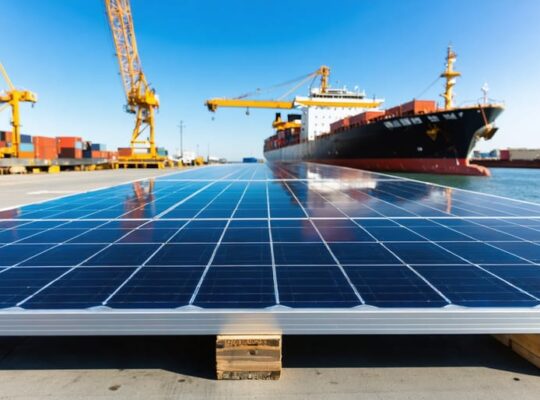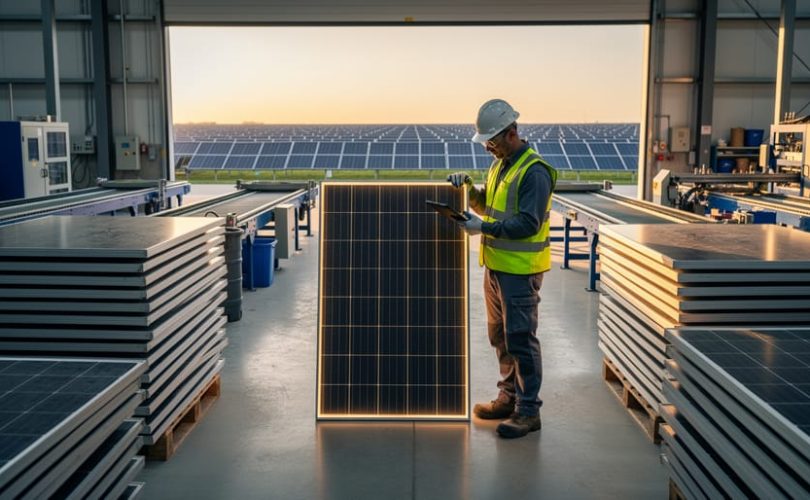
The solar industry faces a mounting economic paradox: photovoltaic installations are proliferating at unprecedented rates, yet the infrastructure to manage end-of-life panels remains critically underdeveloped. With approximately 78 million metric tons of solar waste projected by 2050, the economics of solar panel recycling have emerged as a defining challenge for industry sustainability and profitability.
Current recycling economics reveal stark realities. Processing costs range from $15 to $45 per panel, while recovered materials typically yield only $2 to $4 in immediate value. This unfavorable cost-benefit ratio has historically relegated solar recycling to regulatory compliance rather than business opportunity. However, market dynamics are shifting dramatically as virgin material prices surge and technological innovations reduce processing expenses by 30-40%.
The circular economy framework transforms these economics fundamentally. European markets demonstrate that Extended Producer Responsibility policies can achieve 85% collection rates while reducing disposal costs by half. Meanwhile, emerging technologies in automated disassembly and hydrometallurgical processing are recovering 95% of materials—including high-value silver, silicon, and rare earth elements—creating revenue streams that offset collection and processing investments.
For industry stakeholders, understanding these economics is no longer optional. Material security concerns, regulatory pressures, and corporate sustainability commitments are converging to make solar recycling infrastructure essential. Companies that establish early positions in this market are capturing competitive advantages through vertical integration, reduced supply chain risks, and enhanced brand value.
This comprehensive analysis examines the complete economic landscape of solar panel recycling: current cost structures, emerging business models, policy mechanisms driving profitability, technological innovations reducing expenses, and strategic opportunities for stakeholders across the photovoltaic value chain. The transition from waste management expense to circular economy asset has begun.
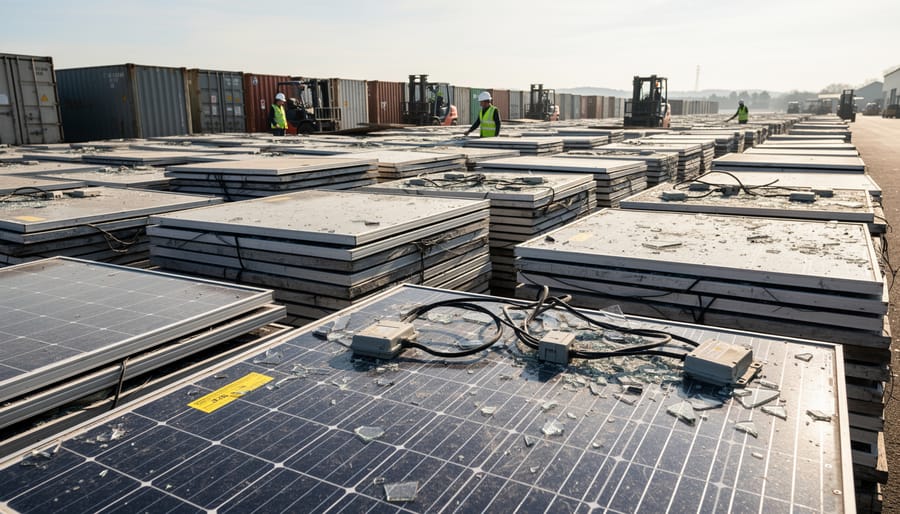
The Solar Waste Challenge: Understanding the Scale
What Makes Solar Panels Difficult to Recycle
Solar panels contain multiple valuable materials, yet their complex layered construction creates significant recycling challenges that directly impact economic viability. A typical crystalline silicon panel consists of approximately 76% glass, 10% polymer encapsulant, 8% aluminum frame, 5% silicon cells, 1% copper wiring, and trace amounts of silver and other metals. While this composition suggests substantial material recovery potential, the technical reality proves considerably more complicated.
The primary obstacle lies in the separation process itself. Panel manufacturers laminate silicon cells between layers of ethylene-vinyl acetate polymer and tempered glass, creating extremely strong bonds designed to withstand decades of environmental exposure. Breaking these bonds without damaging the underlying materials requires energy-intensive thermal, chemical, or mechanical processes. Each method presents distinct cost challenges: thermal delamination consumes significant energy, chemical treatments generate hazardous waste requiring disposal, and mechanical separation risks contaminating high-value materials with glass fragments.
Silicon cell recovery presents additional complexity. The cells contain minimal amounts of high-value materials like silver contact points and copper interconnects, but extracting these requires precision processes that often cost more than the recovered material’s market value. Furthermore, the silicon itself has typically degraded after 25-30 years of operation, reducing its reprocessing value compared to manufacturing-grade silicon.
The aluminum frame represents the most economically straightforward component to recover, yet even this requires labor-intensive manual removal before automated processing can begin. These cumulative technical barriers explain why conventional recycling methods struggle to achieve positive economic returns without policy intervention or advance recycling fees.
Current Disposal Methods and Their Hidden Costs
Currently, the solar industry faces two primary disposal pathways: landfilling and recycling. Landfilling represents approximately 90% of end-of-life solar panel disposal globally, costing between $1-2 per panel. While seemingly economical in the short term, this approach carries significant hidden costs. Landfilled panels occupy valuable space, potentially leach hazardous materials like lead and cadmium into groundwater, and forfeit the recovery of valuable materials worth an estimated $15 billion by 2050.
Recycling, though currently more expensive at $12-25 per panel, offers substantial long-term value. Each panel contains approximately 15-20 grams of silver, copper wiring, aluminum frames, and high-purity silicon—materials that retain considerable market value. The European Union’s WEEE Directive mandates 85% recovery rates, demonstrating regulatory momentum that will likely expand globally. Companies ignoring these trends face mounting compliance costs and potential market exclusion.
The true cost of inaction extends beyond lost materials. Manufacturers without established take-back programs risk reputational damage and future liability exposure as environmental regulations tighten. Conservative estimates suggest that recovering materials from retired panels could offset recycling costs by 40-60% once economies of scale develop. Furthermore, the growing secondary materials market presents revenue opportunities for forward-thinking organizations.
Academic research from leading universities increasingly demonstrates that investing in circular economy infrastructure today mitigates future environmental remediation costs while positioning companies as industry leaders in sustainable practices. Educational programs training photovoltaic professionals in recycling technologies are becoming essential for long-term competitiveness.
The Economics of Solar Panel Recycling: Breaking Down the Numbers
Current Recycling Costs per Panel
The financial burden of solar panel recycling remains a significant consideration for the industry, with current costs ranging from $12 to $25 per panel depending on various operational and geographic factors. This cost structure encompasses three primary components that collectively determine the economic feasibility of recycling operations.
Collection and transportation expenses typically account for 30-40% of total recycling costs, varying substantially based on collection point density and distance to processing facilities. In regions with concentrated solar installations, such as California or Germany, logistics costs trend toward the lower end at approximately $4-6 per panel. Conversely, rural or dispersed installations can push transportation costs to $8-10 per panel, particularly when dealing with residential rooftop systems requiring individual collection.
Processing costs constitute the largest expense category, representing 50-60% of total recycling expenditures. Mechanical recycling methods, which involve crushing and separating panel components, generally cost $8-12 per panel but recover only 60-70% of materials with limited purity. Thermal processing techniques increase costs to $12-18 per panel while achieving superior material recovery rates of 85-95% and higher-grade recyclates suitable for manufacturing applications. Advanced chemical delamination processes, though capable of recovering 95% of materials including high-purity silicon, currently command premium prices of $15-20 per panel due to reagent costs and specialized equipment requirements.
Regional variations significantly impact overall economics. European facilities benefit from established collection infrastructure and regulatory mandates under the WEEE Directive, achieving costs of $12-18 per panel. North American operations, facing less mature collection networks and lower recycling volumes, typically incur costs of $18-25 per panel. Asian markets demonstrate the widest variance, ranging from $10-22 per panel depending on environmental compliance standards and labor costs.
Revenue from Recovered Materials
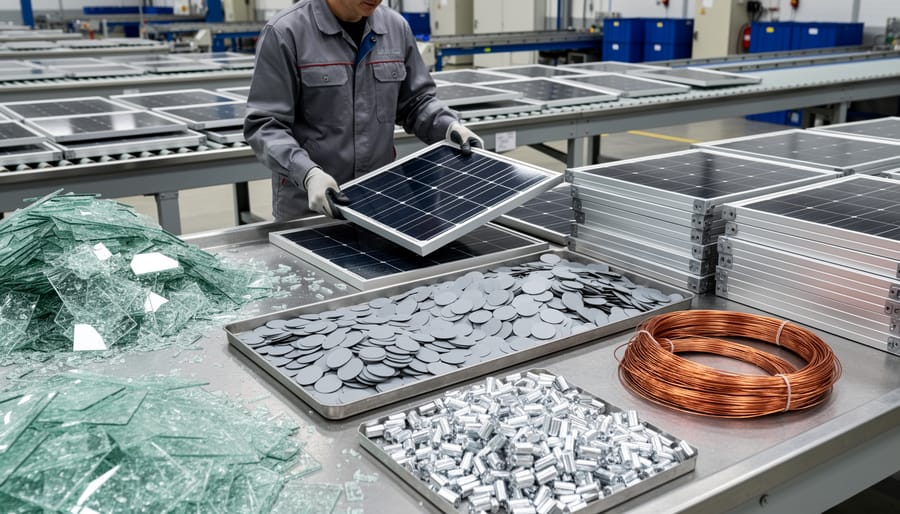
The recovery of valuable materials from end-of-life solar panels presents a compelling economic opportunity that strengthens the business case for recycling infrastructure. Each decommissioned photovoltaic module contains multiple materials with established market value, including glass (approximately 75% by weight), aluminum frames (10%), silicon wafers (5%), copper wiring (1%), and small quantities of silver and other metals.
At the basic recycling level, which primarily involves mechanical separation and material recovery, facilities can generate revenue between $2 and $4 per panel. This process focuses on extracting easily accessible materials like aluminum frames and glass cullet. The aluminum alone can yield $0.50 to $1.50 per panel depending on current commodity prices, while recycled glass provides modest returns of $0.10 to $0.30 per panel when sold for secondary applications in construction materials or glass fiber production.
Advanced recycling methods employing thermal, chemical, or combined processes significantly enhance revenue potential, reaching $12 or more per panel. These sophisticated techniques enable recovery of high-value materials that basic methods cannot extract efficiently. Silicon recovered through advanced processing can fetch $1 to $3 per panel when refined for reuse in new solar cells or semiconductor applications. Silver, though present in minute quantities (approximately 0.1 grams per panel), commands premium prices exceeding $700 per kilogram, contributing $1 to $2 per panel to total recovery value. Copper extraction adds another $0.50 to $1.50 per panel.
The economic viability of material recovery directly impacts solar investment returns across the industry value chain. As recycling technologies mature and processing volumes increase, economies of scale will further improve profitability margins. Current market dynamics suggest that facilities processing over 100,000 panels annually can achieve positive cash flow with advanced recovery systems, particularly when coupled with supportive policy frameworks and extended producer responsibility programs.
Circular Economy Models for Solar PV
Design for Circularity: Making Panels Easier to Recycle
Designing solar panels for circularity represents a fundamental shift in manufacturing philosophy that directly impacts recycling economics. Forward-thinking manufacturers like Mose Solar are pioneering design-for-disassembly principles that significantly reduce end-of-life processing costs while maximizing material recovery rates.
The primary barrier to efficient solar panel recycling lies in the lamination process, where ethylene-vinyl acetate encapsulants bond components together. Traditional panels require energy-intensive thermal or chemical separation methods, which can account for 40-60% of recycling costs. By implementing reduced-adhesive designs and mechanical fastening systems, manufacturers can enable non-destructive disassembly, allowing recyclers to separate aluminum frames, junction boxes, and glass layers without expensive delamination equipment.
Material selection plays an equally critical role in circular design. Replacing traditional silver contacts with copper alternatives not only reduces material costs but also simplifies recovery processes, as copper has established recycling infrastructure. Similarly, standardizing frame dimensions and connection systems creates economies of scale in collection and processing operations.
Modular component architecture offers additional economic advantages. Panels designed with replaceable junction boxes, bypass diodes, and even cell-level modularity extend operational lifespans and create secondary markets for refurbished components. This approach transforms recycling from a pure cost center into a potential revenue stream, as functional modules retain significant value.
Mose Solar collaborates extensively with universities to research next-generation recyclable materials, including water-soluble encapsulants and bio-based polymers. These innovations, combined with comprehensive educational programs for installers and recyclers, position design-for-circularity as both an environmental imperative and an economically viable strategy that enhances long-term industry sustainability.
Extended Producer Responsibility and Take-Back Programs
Extended Producer Responsibility (EPR) policies are rapidly reshaping the economic landscape of solar panel manufacturing and end-of-life management worldwide. These regulatory frameworks mandate that manufacturers bear financial and operational responsibility for their products throughout the entire lifecycle, including collection, recycling, and proper disposal. The European Union leads this movement through the Waste Electrical and Electronic Equipment (WEEE) Directive, which requires solar manufacturers to finance take-back programs and achieve specific recycling targets. This policy has fundamentally altered cost structures, with compliance expenses estimated between 0.50 to 1.50 euros per panel sold.
In the United States, EPR adoption remains fragmented, with Washington State pioneering legislation requiring manufacturers to provide free take-back programs for residents. California is actively developing similar frameworks, while industry groups like the Solar Energy Industries Association have established voluntary programs to preempt mandatory regulations. These initiatives demonstrate how proactive compliance can reduce future regulatory burdens and associated costs.
Manufacturer take-back programs present both challenges and opportunities. Companies like First Solar have integrated reverse logistics into their business models, recovering valuable materials and reducing virgin resource dependency. Economic analysis indicates that well-designed take-back systems can reduce net recycling costs by 15-25 percent through economies of scale and material recovery revenues. However, smaller manufacturers face disproportionate financial pressures, often collaborating through Producer Responsibility Organizations to share infrastructure and reduce per-unit costs.
The economic implications extend beyond compliance expenses. Companies with robust EPR programs gain competitive advantages through enhanced brand reputation, access to secondary materials markets, and reduced exposure to future liability claims. Research partnerships with universities have yielded innovations in collection logistics and processing efficiency, further improving program economics. As global solar capacity expands, EPR frameworks will increasingly influence manufacturer profitability and strategic planning.
Emerging Technologies Changing the Recycling Economics
Thermal and Chemical Processing Advances
Modern thermal and chemical processing techniques have revolutionized solar panel recycling economics by achieving material recovery rates exceeding 95%. These advanced methods employ controlled pyrolysis at temperatures between 400-600°C to separate encapsulant materials, followed by chemical treatments using hydrofluoric acid or electrochemical processes to extract high-purity silicon.
The economic advantage becomes clear when examining cost-benefit ratios. Traditional mechanical recycling recovers approximately 80% of materials at processing costs of $12-15 per panel. In contrast, advanced thermal-chemical processes, while requiring initial capital investments of $5-8 million for industrial-scale facilities, reduce per-panel processing costs to $8-10 while recovering 95-98% of materials including silicon wafers, silver, copper, and aluminum.
Silicon purification techniques represent a particularly promising development. Researchers at leading universities have demonstrated that recycled silicon can achieve 99.9999% purity levels comparable to virgin material, commanding market prices of $15-20 per kilogram versus $25-30 for newly manufactured silicon. This 40% cost differential creates compelling economics for manufacturers integrating recycled materials into production lines.
The payback period for facilities implementing these advanced systems typically ranges from 4-6 years, with profit margins improving as processing volumes scale. Annual processing capacities of 10,000+ panels enable operators to achieve break-even economics while contributing significantly to circular economy objectives within the photovoltaic industry.
Automated Disassembly and AI Sorting
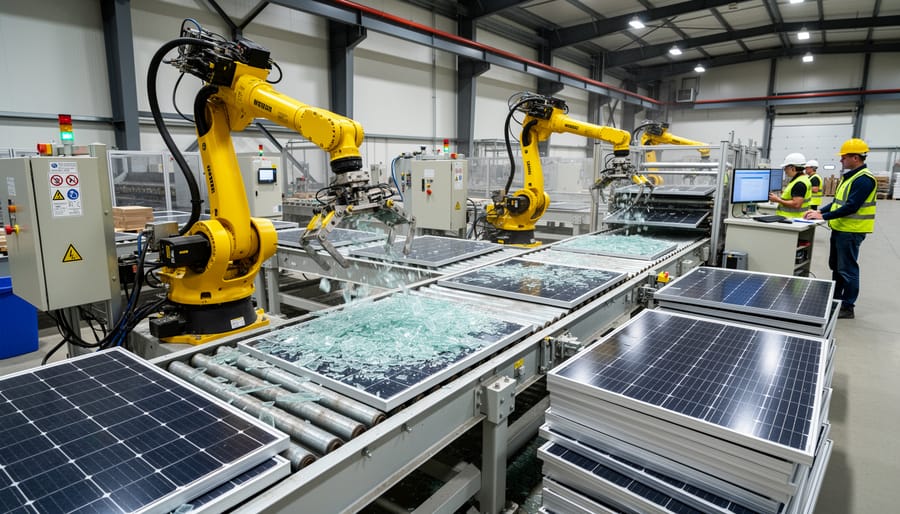
The integration of automated disassembly systems and artificial intelligence is revolutionizing solar panel recycling economics by significantly reducing operational costs while improving recovery rates. Traditional manual disassembly processes are labor-intensive and costly, often requiring 15-20 minutes per panel. Advanced robotics now complete this process in under three minutes, dramatically lowering labor expenses that typically represent 30-40% of recycling facility operating costs.
AI-powered sorting technologies utilize machine learning algorithms and computer vision to identify and separate different materials with unprecedented accuracy. These systems can distinguish between aluminum frames, junction boxes, glass types, and semiconductor materials at speeds exceeding 1,000 panels per day per unit. The precision of AI sorting has improved material purity rates from approximately 85% with manual methods to over 95%, directly impacting the resale value of recovered commodities.
Research partnerships between recycling facilities and universities have accelerated the development of these technologies. Several institutions now offer specialized training programs in automated recycling systems, addressing the industry’s growing need for technicians skilled in operating and maintaining this equipment. As capital costs for automation decrease and efficiency gains compound, facilities implementing these technologies report 25-35% improvements in overall processing economics, making large-scale recycling increasingly viable even in competitive commodity markets.
Business Models and Market Opportunities
The Growing Solar Recycling Market
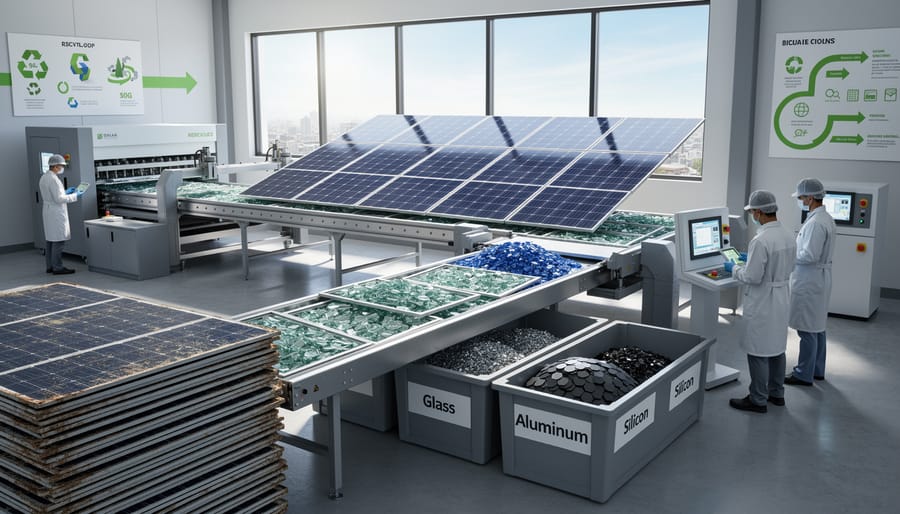
The solar panel recycling market represents a significant economic opportunity as the first wave of installed systems approaches end-of-life. Industry analysts project the global solar recycling market will reach $2.7 billion by 2030, driven by the estimated 78 million metric tons of photovoltaic waste expected by 2050. This emerging sector is attracting both specialized recycling firms and established waste management companies seeking to capitalize on valuable material recovery.
Key players in the market include Veolia (France), ROSI Solar (Germany), and Trina Solar (China), each developing proprietary processes to maximize material recovery rates and economic returns. European companies currently lead the field, benefiting from stringent WEEE Directive requirements that mandate producer responsibility for panel disposal. Meanwhile, emerging players in North America and Asia are establishing regional processing facilities to serve growing markets.
Geographic hotspots for recycling operations align closely with mature solar markets and supportive policy frameworks. The European Union dominates current capacity, with Germany, France, and Italy hosting the most advanced facilities. China is rapidly expanding its recycling infrastructure to address its massive domestic installation base, while the United States is seeing growing activity in California, Texas, and Arizona. These regional hubs are developing specialized expertise in thermal, mechanical, and chemical processing techniques that directly impact solar energy economics by reducing material costs and creating circular supply chains for manufacturers.
Integration Opportunities for Solar Manufacturers
Solar manufacturers face significant economic opportunities through strategic vertical integration and circular economy practices. Companies that establish control over multiple stages of the value chain—from raw material sourcing through end-of-life recycling—can capture greater profit margins while reducing exposure to supply chain volatility.
Vertical integration enables manufacturers to internalize recycling operations, transforming what was once a disposal cost into a revenue-generating material recovery center. By processing retired panels in-house, companies secure access to high-purity silicon, silver, copper, and other valuable materials at costs substantially below virgin material prices. This approach reduces dependence on imported raw materials while stabilizing long-term production costs.
Creating closed-loop manufacturing systems represents the next evolution in sustainable solar production. Manufacturers can design panels with disassembly and material recovery in mind, using standardized components that simplify recycling processes. This design-for-circularity approach, combined with solar market growth, creates competitive advantages as regulatory frameworks increasingly favor circular business models.
Incorporating recycled materials into new panel production delivers measurable economic benefits. Research indicates that using recycled silicon can reduce manufacturing energy consumption by 80-90 percent compared to producing virgin polysilicon. Similarly, recovered silver and copper maintain performance characteristics while offering cost savings of 30-50 percent.
Forward-thinking manufacturers are partnering with universities to develop advanced separation technologies and establish educational programs that train the next generation of circular economy specialists. These collaborations accelerate innovation while building the skilled workforce necessary to scale recycling operations effectively.
Policy and Regulatory Landscape
Global Regulatory Frameworks
The regulatory landscape governing solar panel end-of-life management is rapidly evolving, creating both compliance obligations and economic implications for manufacturers and recyclers. The European Union’s Waste Electrical and Electronic Equipment (WEEE) Directive stands as the most comprehensive framework, mandating that producers finance collection, treatment, and recycling of photovoltaic modules. Since 2012, solar panels have been classified under WEEE Category 4, requiring minimum collection rates of 65% and recovery rates of 80% by weight, with specific recycling targets of 85% for glass-based modules.
In the United States, regulatory approaches vary significantly by state. Washington became the first state to implement producer responsibility legislation in 2017, followed by California’s solar panel recycling requirements. These solar energy policy changes establish extended producer responsibility schemes that shift end-of-life costs to manufacturers, fundamentally altering the economic calculations for market participants.
International standards are also emerging, with the International Renewable Energy Agency (IRENA) developing guidelines for sustainable panel disposal. These frameworks create compliance costs ranging from $15-25 per module but simultaneously drive innovation in recycling technologies. Understanding these regulatory requirements is essential for accurately forecasting lifecycle costs and developing competitive business strategies in increasingly regulated markets.
Incentives and Financial Support Programs
Government incentives play a pivotal role in advancing solar panel recycling infrastructure. Many countries now offer substantial tax credits and subsidies to offset the initial capital investments required for recycling facilities. The U.S. Investment Tax Credit, for instance, extends benefits to recycling operations integrated with solar manufacturing, while the European Union’s Horizon Europe program allocates significant research grants toward circular economy innovations. These financial mechanisms directly influence solar panel economics by reducing operational costs and improving profit margins for recycling ventures.
Educational institutions collaborating with industry leaders increasingly access specialized funding streams for pilot programs and technology development. Feed-in tariffs and extended producer responsibility schemes in countries like Germany and Japan create mandatory frameworks that ensure consistent material flow to recycling centers, enhancing business predictability. Research grants from government agencies enable breakthrough technologies in material recovery, making processes more cost-effective. Combined, these programs transform recycling from a regulatory burden into an economically attractive proposition, accelerating market growth and technological advancement.
Educational Implications for PV Professionals
The transition toward a circular economy in the photovoltaic industry requires a new generation of professionals equipped with specialized knowledge in sustainability practices and end-of-life management. As recycling becomes increasingly central to solar panel economics, educational programs must evolve to address these emerging industry needs.
Aspiring photovoltaic professionals should prioritize training that encompasses the full lifecycle of solar installations, from manufacturing and installation to decommissioning and material recovery. Understanding the economic drivers behind panel recycling, including material value recovery, regulatory compliance costs, and extended producer responsibility frameworks, will become essential competencies. Professionals who can navigate both the technical and financial aspects of circular economy models will find themselves well-positioned in an evolving job market.
Mose Solar’s educational initiatives reflect this industry shift by integrating comprehensive sustainability training into professional development programs. Our curriculum emphasizes practical knowledge in reverse logistics, material separation technologies, and economic modeling for recycling operations. Participants gain hands-on experience with lifecycle assessment methodologies and learn to evaluate the financial viability of various end-of-life management strategies.
Through collaborations with universities, we develop coursework that bridges academic research and industry practice. These partnerships ensure that emerging professionals understand current recycling technologies, market dynamics for recovered materials, and policy frameworks shaping circular economy implementation. Students learn to assess the total cost of ownership for solar installations, incorporating decommissioning expenses and potential revenue from material recovery into project economics.
The renewable energy sector increasingly values professionals who can demonstrate competency in sustainable practices alongside traditional technical skills. By investing in education that addresses circular economy principles, aspiring photovoltaic professionals position themselves as valuable contributors to an industry committed to both environmental responsibility and economic viability.
The economic landscape of solar panel recycling presents both significant challenges and emerging opportunities. While current recycling processes face cost-competitive pressures compared to virgin material extraction, the trajectory is shifting favorably. Advanced separation technologies, automated sorting systems, and hydrometallurgical processes are progressively reducing processing costs while improving material recovery rates. Combined with rising raw material prices and anticipated regulatory mandates requiring producer responsibility, the business case for recycling continues strengthening.
Policy frameworks play a decisive role in accelerating economic viability. Extended Producer Responsibility programs, landfill restrictions, and recycling subsidies create market conditions where circular economy models become financially sustainable. Countries implementing comprehensive photovoltaic waste regulations demonstrate that supportive policy architecture can transform recycling from cost center to value creation opportunity.
For industry stakeholders, the imperative is clear: proactive investment in recycling infrastructure and circular design principles will determine competitive positioning in tomorrow’s solar market. Manufacturers adopting design-for-recycling principles, installers developing takeback programs, and recyclers implementing efficient processing facilities will capture value while meeting environmental obligations.
Aspiring professionals should recognize that expertise in circular solar economy represents a critical skill gap and career opportunity. Universities and industry leaders are collaborating to develop educational programs addressing recycling technologies, reverse logistics, and sustainable business models. By building competencies in these emerging areas, professionals position themselves at the forefront of an essential industry transition.
The economic case for solar panel recycling, though currently challenging, grows stronger daily. Strategic action today builds the sustainable solar economy of tomorrow.