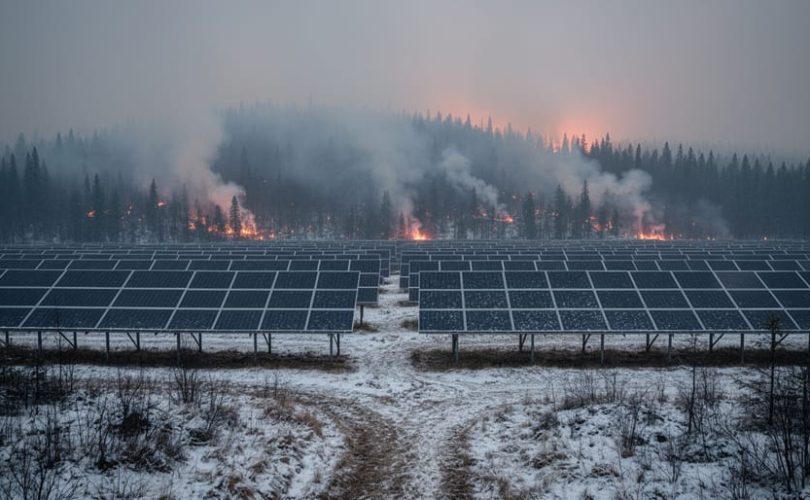
In the Arctic and boreal regions, fires are smoldering beneath snowpack right now—burning through peat and organic soil layers with virtually no visible flame. These “zombie fires” can persist for months underground during winter, only to re-emerge in spring and trigger new wildfire seasons before traditional fire weather even begins. Unlike conventional wildfires that burn intensely for days or weeks, zombie fires create prolonged smoke events that can blanket solar installations with fine particulate matter for extended periods, presenting a distinct challenge for photovoltaic system performance and longevity.
Zombie fire models represent advanced predictive frameworks that combine satellite thermal detection, soil moisture analysis, snowpack depth monitoring, and historical fire data to forecast where these subsurface fires will overwinter and when they’ll resurface. For solar professionals, understanding these models is no longer optional—it’s essential infrastructure planning. As climate change expands the geographic range and frequency of zombie fires across northern latitudes where solar deployment is accelerating, the duration and intensity of smoke-related energy losses are increasing proportionally.
The financial implications are substantial. While a three-day wildfire might reduce panel output by 20-40% temporarily, a zombie fire can produce weeks or months of moderate smoke cover, compounding efficiency losses and accelerating ash-related degradation of anti-reflective coatings and junction boxes. Research collaborations between renewable energy institutions and atmospheric science departments are now mapping smoke plume persistence patterns to help developers assess long-term site viability. This intersection of fire science and photovoltaic engineering demands that today’s solar professionals integrate zombie fire probability into resilience planning, maintenance scheduling, and energy production forecasting models.
Understanding Zombie Fires: The Smoldering Threat Below Ground
What Makes a Fire ‘Zombie’
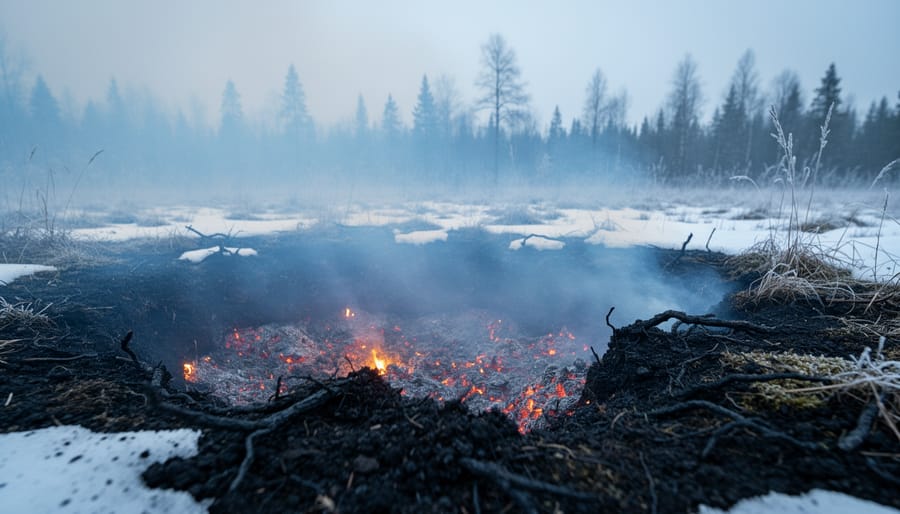
Zombie fires represent a distinct and increasingly concerning form of wildfire that fundamentally differs from conventional surface fires. These fires earn their name through their remarkable ability to persist underground during winter months, remaining dormant beneath snow and frozen soil before reigniting when conditions become favorable in spring. Unlike traditional wildfires that consume surface vegetation and move rapidly across landscapes, zombie fires smolder slowly through underground layers of peat, organic soil, and decomposed plant material accumulated over centuries.
The holdover behavior of zombie fires occurs when surface fires penetrate deep into carbon-rich soil layers, where combustion continues at extremely low temperatures, sometimes barely exceeding 200°C. This underground burning requires minimal oxygen and can persist for months beneath insulating layers of snow and ice. The Arctic and boreal regions, which contain vast deposits of peat and organic matter, are particularly susceptible to this phenomenon. Research indicates that warming temperatures and drying conditions in these northern ecosystems have increased both the frequency and geographic extent of zombie fire occurrences.
The combustion characteristics of peat fires present unique challenges for detection and suppression. These fires spread horizontally and vertically through soil layers at rates of just centimeters per day, making them difficult to locate and extinguish completely. The dense smoke produced by smoldering organic material contains elevated concentrations of particulate matter and can persist for extended periods, creating prolonged atmospheric conditions that significantly impact solar energy infrastructure. For photovoltaic professionals and solar project developers, understanding these distinctive fire behaviors is essential for developing effective resilience strategies.
The Climate Connection: Why We’re Seeing More Zombie Fires
Climate change is fundamentally altering fire behavior in northern latitudes, creating conditions that favor zombie fire persistence. Rising temperatures in boreal regions—warming at twice the global average rate—extend growing seasons while simultaneously drying out organic-rich soils and peatlands that historically remained moist year-round. This transformation enables fires to burrow deep into carbon-dense layers where they can smolder through winter months.
Research conducted in collaboration with universities tracking Arctic temperature trends reveals a direct correlation: for every degree Celsius of warming, the probability of overwinter fire survival increases by approximately 3-5%. Changing precipitation patterns compound this risk, as reduced snowpack and earlier spring melts fail to adequately saturate peat layers, leaving underground fuel sources vulnerable to ignition retention.
The permafrost thaw accelerates these dynamics, exposing previously frozen organic matter and creating drainage pathways that further dry peatlands. These conditions mirror those facilitating zombie forests, where climate-stressed ecosystems become increasingly susceptible to prolonged fire events.
For photovoltaic professionals, understanding this climate connection is essential for long-term infrastructure planning. Regions experiencing increased zombie fire frequency will face extended periods of atmospheric particulate loading, affecting solar irradiance and system performance. Predictive models now incorporate temperature anomalies, soil moisture deficits, and snowpack data to forecast zombie fire probability, enabling proactive resilience strategies for solar installations in affected regions. This knowledge supports climate-adaptive design approaches that account for evolving environmental threats to renewable energy infrastructure.
The Zombie Fire Model: Predicting Extended Smoke Events
Key Variables and Prediction Parameters
Zombie fire prediction models integrate multiple environmental variables to assess the likelihood of holdover combustion events. Understanding these parameters enables photovoltaic system designers and operators to anticipate prolonged smoke and ash exposure that can significantly impact solar generation efficiency.
Soil moisture content serves as a fundamental predictor, as drier organic soils facilitate underground combustion. The model analyzes moisture levels in peat and organic-rich layers where fires can smolder undetected throughout winter months. Organic layer depth directly correlates with fire persistence potential—deeper accumulations of decomposed vegetation provide more fuel for sustained underground burning, often exceeding several feet in boreal and sub-boreal regions.
Winter snowpack characteristics play a critical role in determining whether fires will survive dormant periods. Insufficient snow cover or early snowmelt creates conditions where embers can maintain sufficient oxygen and heat to persist. The model incorporates snowpack depth, density, and duration data from weather stations and satellite observations.
Spring temperatures trigger zombie fire reemergence as warming conditions accelerate combustion rates in smoldering organic matter. Temperature thresholds between 10-15 degrees Celsius often coincide with surface manifestation of holdover fires. Historical fire data provides essential pattern recognition, incorporating previous burn locations, fuel types, and seasonal timing. This temporal analysis helps researchers identify high-risk zones where zombie fires repeatedly occur.
By synthesizing these variables through machine learning algorithms and empirical datasets, prediction models generate probability maps that inform solar installation planning and operational strategies in fire-prone regions.
Geographic Risk Zones for Solar Infrastructure
Understanding where zombie fire risk intersects with solar infrastructure development is essential for strategic planning and risk mitigation. The overlap zones present unique challenges that require careful consideration during site selection and system design phases.
Northern latitude regions, particularly those above 50 degrees North, face the highest zombie fire risk. Canada’s boreal forests, Alaska’s interior regions, and Scandinavia’s peatland-rich areas represent primary concern zones. These regions are experiencing accelerated solar adoption as renewable energy mandates expand, yet they sit atop extensive peat deposits that can sustain smoldering fires through winter months. Research collaborations between universities and industry stakeholders have identified specific hotspots where soil organic content exceeds 30 percent, creating ideal conditions for overwintering combustion.
Russia’s Siberian region presents perhaps the most significant geographic risk zone, with vast peat deposits and increasing solar development in remote communities. Similarly, Scotland’s highland peatlands and northern England’s moorlands combine substantial renewable energy potential with considerable zombie fire vulnerability. In North America, Alaska’s interior and Canada’s Northwest Territories, Alberta, and Saskatchewan provinces show overlapping risk factors.
Peat depth serves as a critical indicator, with deposits exceeding one meter posing elevated risk. Ground temperature monitoring through collaborative research initiatives has revealed that even modest warming trends can trigger conditions conducive to subsurface combustion. Educational programs now emphasize geographic risk assessment as fundamental to solar project planning.
Site selection protocols increasingly incorporate zombie fire probability modeling, utilizing soil composition analysis, historical fire data, and climate projections. Solar developers operating in these risk zones must factor extended smoke exposure periods into performance modeling and implement enhanced monitoring systems. Understanding these geographic vulnerabilities enables proactive resilience measures rather than reactive damage control.
How Zombie Fire Smoke and Ash Differ from Traditional Wildfire Emissions
Extended Duration: The Marathon vs. Sprint Problem
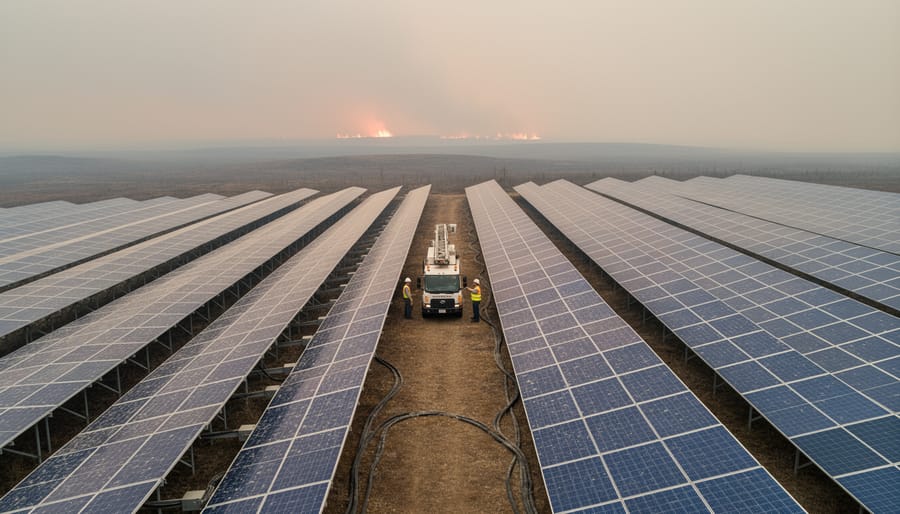
The fundamental difference between zombie fires and conventional wildfires lies not just in their combustion characteristics, but in their temporal footprint. Surface wildfires typically burn intensely for hours to several days, producing concentrated smoke events that, while severe, are relatively brief. In contrast, zombie fires smolder beneath the surface for weeks or even months, generating a persistent plume of smoke and particulate matter that can continue well into autumn and winter months.
This extended duration creates what researchers term a cumulative soiling problem for photovoltaic installations. Where a traditional wildfire might deposit ash over a three-to-five-day period, zombie fires subject solar arrays to continuous particulate deposition over thirty to ninety days or longer. Studies conducted in collaboration with universities in Alaska and northern Canada have documented zombie fire smoke events lasting up to four months in a single season.
The marathon versus sprint analogy proves apt: a solar panel can tolerate short-term efficiency losses from brief smoke exposure, but prolonged particulate accumulation compounds the problem exponentially. Each day of additional smoke deposition adds another layer of light-blocking material, with hygroscopic particles attracting moisture and creating adhesive films that resist natural cleaning by rain or wind.
For solar asset managers and PV professionals, this temporal dimension fundamentally alters maintenance protocols. Traditional wildfire response assumes a discrete cleaning event post-fire. Zombie fire scenarios require ongoing monitoring and potentially multiple interventions throughout an extended smoke season, significantly impacting operational costs and energy production forecasts.
Chemical Composition and Corrosivity Concerns
The chemical profile of zombie fire emissions differs substantially from conventional wildfire smoke, presenting distinct corrosivity challenges for photovoltaic installations. Smoldering peat combustion, characteristic of zombie fires, occurs at lower temperatures (300-600°C) compared to flaming vegetation fires (800-1200°C), resulting in incomplete combustion and fundamentally different chemical byproducts.
Peat fire smoke contains elevated concentrations of organic acids, including formic acid and acetic acid, which can reach pH levels as low as 2.5 when deposited on panel surfaces and combined with moisture. This acidic deposition can gradually degrade anti-reflective coatings and aluminum frames. Research collaborations between solar manufacturers and universities have identified that prolonged exposure to these organic acids accelerates frame corrosion rates by approximately 40% compared to standard atmospheric conditions.
The particulate matter from smoldering peat also exhibits higher carbon content and hygroscopic properties, meaning ash deposits readily absorb atmospheric moisture to form acidic solutions directly on module surfaces. Additionally, zombie fire emissions contain elevated sulfur dioxide and nitrogen oxides, which convert to sulfuric and nitric acids in humid environments.
Unlike ash from flaming fires that often consists of larger, less reactive particles easily removed by wind or rain, peat combustion produces fine particulates (PM2.5) that adhere tenaciously to textured glass surfaces. These submicron particles can penetrate micro-crevices in encapsulant materials, potentially compromising long-term module integrity. Understanding these chemical distinctions is essential for developing appropriate protective strategies and maintenance protocols for solar installations in zombie fire-prone regions.
Impacts on PV System Performance and Longevity
Soiling Losses: Beyond Typical Dust Accumulation
Zombie fires present a unique soiling challenge that extends far beyond typical dust accumulation patterns. Research conducted in collaboration with northern latitude universities reveals that prolonged smoke exposure from smoldering underground fires can reduce solar panel efficiency by 15-40% over weeks or even months of continuous particulate deposition.
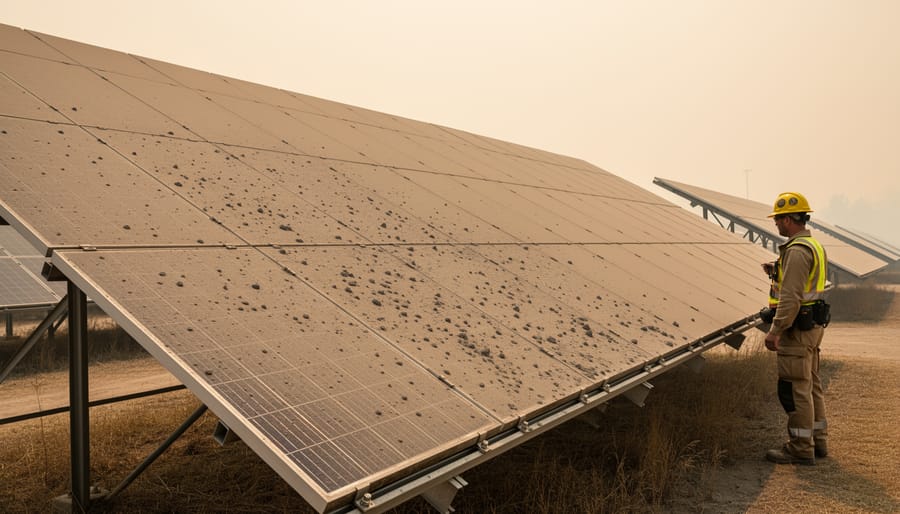
The fine particulate matter from zombie fires, particularly PM2.5 particles measuring less than 2.5 micrometers, creates a persistent film that dramatically reduces light transmission through PV glass. Field studies show transmission losses ranging from 8% in early deposition stages to 25% during prolonged exposure events. Unlike coarse dust particles that settle uniformly, these ultrafine particles adhere tenaciously to module surfaces through electrostatic attraction, resisting natural rainfall removal.
Beyond transmission losses, concentrated particulate accumulation creates thermal gradients across cell surfaces, increasing hot spot formation risks. When smoke particulates settle unevenly, shaded cells within a string can experience reverse bias conditions, generating localized heating that may exceed 85 degrees Celsius. This thermal stress accelerates encapsulant degradation and potential bypass diode failure.
Monitoring data from installations near active zombie fire zones indicates that modules can accumulate 2-4 grams of particulate matter per square meter weekly during active smoldering periods. This accumulation rate significantly exceeds typical environmental soiling baselines, necessitating revised cleaning protocols and performance degradation models specifically calibrated for zombie fire scenarios.
Material Degradation Pathways
Zombie fires present unique degradation challenges for photovoltaic systems due to the chemical composition and extended duration of particulate exposure. Unlike conventional wildfire events that deposit ash briefly, zombie fires can smolder for months, creating persistent contamination conditions that accelerate material deterioration through multiple pathways.
Anti-reflective coatings on solar panels face significant vulnerability to acidic ash compounds. Research conducted through collaborative university studies has documented that ash residue from peat and organic soil combustion contains sulfuric and nitric acid precursors. When these compounds interact with atmospheric moisture, they form acidic solutions with pH levels ranging from 3.5 to 5.2. This acidity gradually etches nano-structured anti-reflective coatings, reducing light transmission efficiency by 2-7% over extended exposure periods. The degradation is particularly pronounced in humid climates where ash remains wet for prolonged intervals.
Encapsulant materials, typically ethylene-vinyl acetate (EVA), experience accelerated photo-oxidation when exposed to both UV radiation and acidic particulates simultaneously. University research partnerships have identified that fine ash particles (PM2.5 and smaller) can penetrate micro-cracks in protective layers, catalyzing polymer chain scission. This process manifests as yellowing or browning of encapsulant materials, progressively diminishing module efficiency. Field observations from zombie fire-affected installations have recorded encapsulant discoloration rates three times higher than baseline degradation models predict.
Frame integrity concerns center on aluminum corrosion acceleration. Acidic ash deposits create localized galvanic cells when combined with morning dew or light precipitation, promoting pitting corrosion at frame junctions and mounting points. Educational program offerings now incorporate these degradation mechanisms into maintenance training curricula, emphasizing the importance of post-exposure inspection protocols that specifically assess structural attachment points for corrosion indicators that could compromise long-term system stability and safety.
Building Resilience: Design and Operational Strategies
Site Assessment Using Zombie Fire Risk Models
Integrating zombie fire risk models into site assessment protocols represents a crucial advancement in solar project planning. These predictive models, developed through collaborative research between renewable energy institutions and universities, analyze historical fire data, soil moisture levels, permafrost degradation patterns, and climate trends to identify regions with elevated zombie fire probability.
When evaluating potential solar installation sites, developers should obtain zombie fire risk scores for candidate locations, prioritizing areas with lower recurring fire potential. Assessment frameworks should incorporate seasonal smoke exposure projections, as zombie fires can smolder through winter and reignite unexpectedly during warmer months, creating extended periods of atmospheric particulate matter that diminish energy production.
Risk assessment teams should examine topographical features, prevailing wind patterns, and proximity to peatlands or boreal forests where subsurface fires most commonly persist. Project feasibility studies must factor in potential maintenance costs associated with increased ash accumulation and extended cleaning cycles in high-risk zones.
Educational programs now include training modules on interpreting zombie fire probability maps and incorporating this data into environmental impact assessments. By systematically evaluating sites through this emerging risk lens, solar professionals can make informed decisions that balance renewable energy goals with long-term operational resilience and financial sustainability.
Material Selection and Protective Technologies
Selecting appropriate materials is fundamental to building resilient PV systems capable of withstanding zombie fire conditions. Anti-reflective coatings with hydrophobic and oleophobic properties significantly reduce ash adhesion and facilitate natural cleaning through precipitation. Tempered glass with enhanced chemical resistance minimizes etching from acidic ash particles, which typically contain elevated sulfur and nitrogen compounds from smoldering peat combustion.
Monocrystalline and bifacial panel designs demonstrate superior performance retention under prolonged smoke exposure compared to conventional polycrystalline modules. The reduced surface area susceptibility in monocrystalline cells limits degradation pathways, while bifacial technology compensates for front-side soiling through rear-side energy capture.
Frame materials warrant careful consideration, as standard aluminum alloys may experience accelerated corrosion under acidic deposition. Anodized aluminum with marine-grade treatment or stainless steel alternatives provide extended longevity in these challenging environments. Junction box enclosures should feature IP68-rated sealing to prevent infiltration of fine particulate matter that characterizes zombie fire emissions.
Emerging nano-coating technologies, developed through university collaborations, show promise in creating self-cleaning surfaces that actively repel ash particles. These photocatalytic coatings initiate oxidation reactions under UV exposure, breaking down organic residues before they permanently bond to panel surfaces. For regions with documented zombie fire activity, specifying panels with anti-soiling certifications according to IEC 61724-1 standards ensures baseline performance reliability during extended smoke events.
Monitoring and Maintenance Protocols
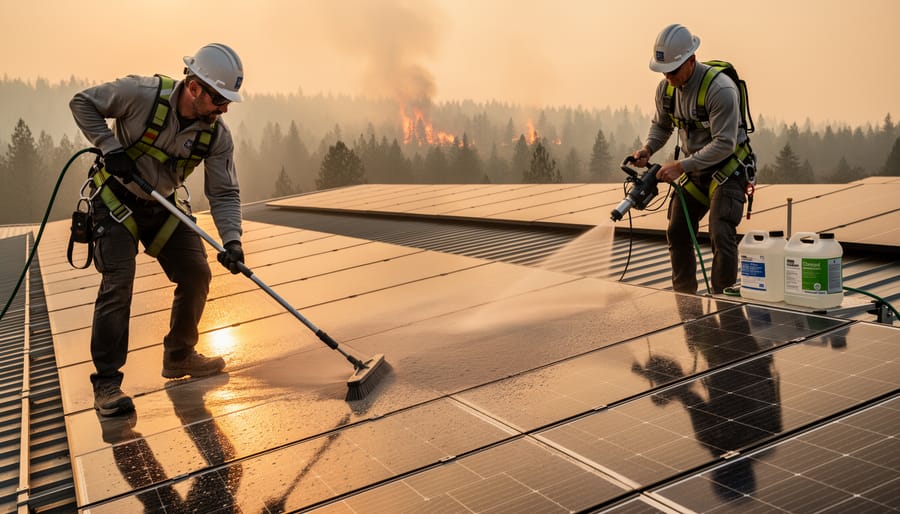
Effective monitoring and maintenance protocols are essential for PV systems in zombie fire-prone regions to maintain optimal performance despite prolonged smoke exposure. Implementing multi-layered detection systems combines satellite-based smoke monitoring with ground-level air quality sensors to provide early warnings of approaching smoke plumes, typically 24-72 hours before significant transmission losses occur. These systems should integrate with automated cleaning schedules that increase frequency from monthly to weekly intervals during active fire seasons.
Rapid response protocols must include pre-positioned cleaning equipment and trained personnel who can deploy within hours of smoke event detection. Establishing cleaning thresholds based on transmission loss percentages—typically initiating intervention at 15-20 percent degradation—prevents compounding losses that can exceed 40 percent if left unaddressed. Regular monitoring of soiling patterns through spectral reflectance measurements enables predictive maintenance scheduling rather than reactive approaches.
Collaboration with university research programs has demonstrated that systems employing real-time performance monitoring coupled with environmental stress adaptation strategies achieve 25-30 percent better performance retention during extended smoke events. Documentation protocols should track cleaning interventions, weather conditions, and performance metrics to refine response strategies and inform future system designs in comparable environments.
Research Frontiers and Future Developments
Academic-Industry Partnerships Advancing Knowledge
Understanding the intersection of zombie fires and photovoltaic performance requires robust scientific research that bridges academic inquiry with industry application. Leading universities are now establishing dedicated research programs to study how prolonged smoke exposure and ash deposition affect solar panel efficiency, durability, and energy output. These programs employ sophisticated modeling techniques, real-world field testing, and controlled laboratory simulations to quantify transmission losses, examine particle adhesion patterns, and develop predictive frameworks for system performance during extended smoke events.
Mose Solar actively collaborates with these academic institutions, providing field data from installations in fire-prone regions and supporting research initiatives that advance the industry’s understanding of environmental resilience. This partnership approach ensures that emerging scientific findings translate directly into practical solutions for solar professionals and project developers. By participating in research validation and contributing operational insights, Mose Solar helps refine zombie fire models that inform design specifications, maintenance protocols, and risk assessment methodologies. This commitment to evidence-based practice positions aspiring photovoltaic professionals to make informed decisions when designing systems capable of withstanding the unique challenges posed by smoldering, long-duration fire events in boreal and peatland ecosystems.
Emerging Technologies and Testing Standards
The photovoltaic industry is actively developing specialized testing protocols to evaluate module performance under extended smoke and ash exposure scenarios characteristic of zombie fire events. Unlike traditional wildfire tests that simulate brief, intense thermal events, these emerging standards focus on prolonged particulate deposition, persistent low-light conditions, and chemical degradation from smoldering combustion byproducts. Leading research institutions are collaborating with manufacturers to establish accelerated aging tests that replicate weeks or months of smoke exposure within controlled laboratory environments.
Next-generation resilience technologies include advanced anti-soiling coatings with hydrophobic and oleophobic properties that prevent ash adhesion and facilitate natural cleaning through precipitation. Researchers are also investigating encapsulant materials with enhanced UV stability and chemical resistance to combustion gases. Universities partnering with industry stakeholders are developing comprehensive durability benchmarks that account for the unique chemical composition of zombie fire emissions, which differ significantly from standard atmospheric pollutants. These standardized testing frameworks will enable manufacturers to certify products specifically for high-risk wildfire regions, providing procurement teams with validated performance data for resilience-focused system design.
Understanding zombie fires represents a critical evolution in how photovoltaic professionals must approach system resilience planning. These unique phenomena, which smolder beneath surface layers and reignite across seasons, present challenges that extend far beyond traditional wildfire preparedness. The prolonged smoke emissions, unpredictable timing, and cumulative ash deposition patterns demand specialized strategies that integrate predictive modeling, adaptive maintenance protocols, and enhanced system design considerations.
The zombie fire model provides essential insights into duration, intensity, and geographic distribution of these events, enabling more accurate performance forecasting and risk assessment. For PV systems operating in vulnerable regions, this knowledge translates directly into improved operational continuity and reduced economic losses. The distinction between conventional wildfires and zombie fires is not merely academic—it fundamentally alters how we design protective measures, schedule maintenance interventions, and allocate resources for system protection.
As climate change continues to expand the geographic footprint and seasonal window for zombie fire activity, the renewable energy sector must prioritize education and continuous professional development. Aspiring PV professionals entering the field today will increasingly encounter environmental challenges that previous generations never faced. This reality underscores the importance of comprehensive training programs that incorporate emerging threats into core curricula.
Universities and industry organizations play a vital role in this educational mission, developing coursework and certification programs that address evolving environmental risks. For current and future PV professionals, maintaining technical competence requires commitment to ongoing learning about climate-driven phenomena like zombie fires. The resilience of our renewable energy infrastructure depends not only on engineering innovation but on cultivating a workforce equipped to anticipate, understand, and respond to these complex environmental dynamics. The challenge is significant, but through education, collaboration, and adaptive strategies, the photovoltaic industry can build systems capable of withstanding these persistent threats.