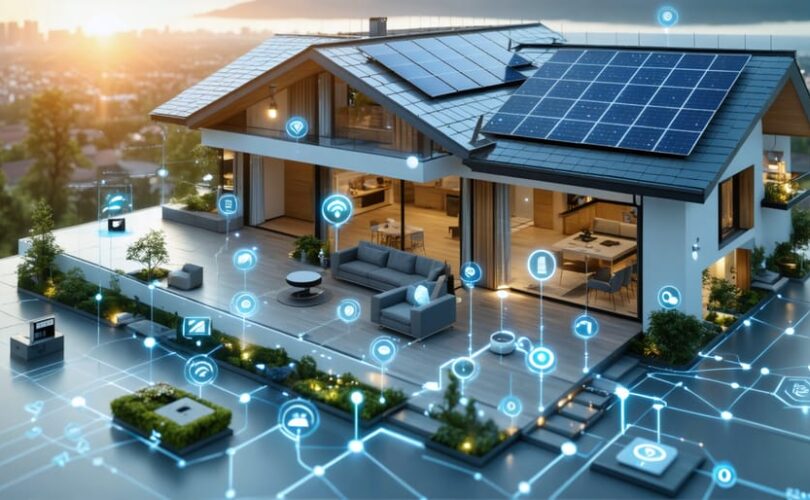
Z-Wave home automation transforms residential energy management by creating a robust, wireless mesh network that seamlessly integrates solar PV systems with smart energy management systems. Operating on a dedicated 908.42 MHz frequency band, this sophisticated protocol enables precise control over household energy consumption while minimizing interference from other wireless devices. Z-Wave’s low-latency communication and AES-128 encryption ensure reliable, secure automation of critical energy management functions, from dynamic load shifting to real-time solar production monitoring. Through standardized device certification and interoperability, Z-Wave technology offers professional integrators and system designers a proven framework for implementing comprehensive residential energy optimization solutions that maximize solar PV efficiency and reduce grid dependency. This advanced automation protocol has emerged as a cornerstone technology for modern smart homes, enabling granular control over energy flows while providing the scalability needed for future system expansion.
Z-Wave Technology Fundamentals for Solar Integration
How Z-Wave Communication Works with Solar Systems
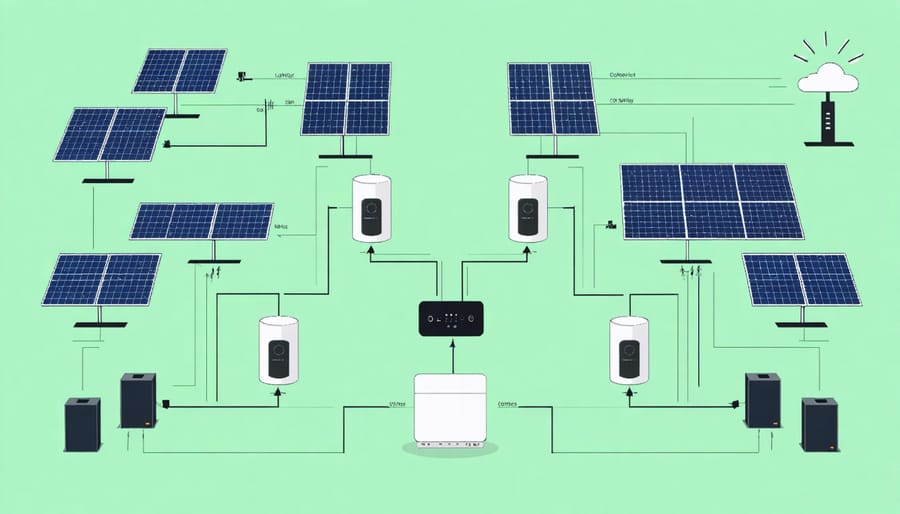
Z-Wave technology integrates seamlessly with solar power systems through a sophisticated mesh networking protocol that enables real-time monitoring and control of energy consumption. The mesh network architecture allows multiple devices to communicate by relaying signals through intermediary nodes, ensuring reliable connectivity throughout the home. Each Z-Wave device acts as both a receiver and a repeater, strengthening the network’s overall performance and range.
When applied to solar systems, Z-Wave devices can monitor power generation, track energy storage levels, and automate load management based on available solar output. The protocol’s low-power consumption characteristics make it particularly suitable for solar applications, as it minimizes the energy overhead of the automation system itself.
The network operates on a dedicated frequency band (908.42 MHz in North America), avoiding interference with Wi-Fi and other wireless protocols. This ensures consistent communication between solar inverters, battery management systems, and smart loads. Z-Wave’s AES-128 encryption provides secure data transmission, protecting sensitive energy consumption data and system controls from unauthorized access.
For optimal solar integration, Z-Wave controllers can orchestrate energy-intensive activities during peak solar production periods, maximizing self-consumption and reducing grid dependency.
Key Benefits of Z-Wave for PV Integration
Z-Wave technology offers several compelling advantages for photovoltaic system integration, making it an ideal choice for solar-powered smart homes. The protocol’s mesh network architecture ensures reliable communication between devices, even in large installations, by allowing signals to hop between nodes until reaching their destination. This approach provides exceptional coverage throughout the property without requiring additional infrastructure.
The protocol’s low-power consumption characteristics align perfectly with energy-efficient solar installations, minimizing the overall power demands of the automation system. Z-Wave devices operate on a standardized frequency band, reducing interference from other wireless technologies and ensuring consistent performance for critical PV monitoring and control functions.
Interoperability stands as a crucial benefit, with Z-Wave devices from different manufacturers working seamlessly together. This compatibility enables homeowners to expand their systems gradually, incorporating new components as needed without concerns about compatibility issues. The protocol’s robust security features, including AES-128 encryption, protect sensitive PV system data and control mechanisms from unauthorized access.
Furthermore, Z-Wave’s certification process ensures that all devices meet strict quality and compatibility standards, providing reliability essential for managing solar energy systems effectively.
Smart Energy Management Components

Essential Z-Wave Devices for Solar Monitoring
Z-Wave compatible devices play a crucial role in solar PV system optimization, offering comprehensive monitoring and control capabilities. The Aeotec Home Energy Meter Gen5 stands out as a fundamental component, providing real-time power consumption data and production metrics through Z-Wave Plus technology. This smart meter integrates seamlessly with existing solar installations, enabling precise tracking of energy flow between the grid and your system.
For granular monitoring, the Qubino Smart Meter offers advanced features including voltage monitoring, power factor measurement, and energy consumption analysis. Its compatibility with major Z-Wave controllers makes it ideal for sophisticated solar setups requiring detailed performance data.
Battery management becomes more efficient with Z-Wave enabled charge controllers like the SmartThings Energy Monitor. These devices help optimize battery storage systems by managing charging cycles and monitoring battery health. They can automatically adjust power distribution based on real-time usage patterns and solar generation capacity.
The RaZberry Pi Hat deserves special mention for its ability to transform a Raspberry Pi into a powerful Z-Wave gateway specifically designed for solar applications. This solution enables advanced monitoring capabilities while maintaining cost-effectiveness.
Essential accessories include Z-Wave compatible current transformers and voltage sensors, which provide accurate measurements for both AC and DC circuits within the solar system. These components ensure precise monitoring of individual circuit loads and overall system performance, enabling proactive maintenance and optimization of energy utilization.
For comprehensive system integration, Z-Wave enabled relay controllers facilitate automated load management, ensuring optimal distribution of solar-generated power across connected devices and storage systems.
Automated Load Management Solutions
Z-wave enabled load management solutions provide sophisticated control over household energy consumption through an interconnected network of smart devices. Smart plugs and switches serve as the foundation of this system, allowing users to monitor and control individual appliances remotely. These devices transmit real-time power consumption data while enabling automated scheduling and demand response capabilities.
Programmable Z-wave thermostats play a crucial role in optimizing HVAC energy usage, which typically accounts for the largest portion of residential energy consumption. These devices learn from usage patterns and automatically adjust temperature settings based on occupancy, time of day, and external weather conditions. When integrated with solar PV systems, these thermostats can shift heavy loads to periods of peak solar production.
Advanced load management systems utilize Z-wave controllers to orchestrate multiple devices simultaneously. For example, during periods of low solar generation, the system can automatically reduce non-essential power consumption by dimming lights, adjusting thermostat settings, and temporarily disabling high-draw appliances. This intelligent load shifting helps maintain optimal balance between energy generation and consumption.
Energy monitoring capabilities through Z-wave devices provide detailed insights into consumption patterns. Users can view real-time and historical usage data through smartphone applications or web interfaces, enabling informed decisions about energy usage. The system can also send alerts when unusual consumption patterns are detected or when devices exceed predetermined power thresholds.
For maximum efficiency, these automated solutions can be programmed to respond to utility price signals, weather forecasts, and solar production data. This creates a dynamic energy management system that optimizes cost savings while maintaining comfort and convenience for household occupants.
Implementation and System Integration
Setting Up Z-Wave Networks for Solar Integration
Integrating Z-Wave networks with solar PV systems requires careful planning and configuration to ensure optimal performance and energy management. Begin by selecting a Z-Wave controller that supports energy monitoring and management features, preferably one with dedicated solar integration capabilities.
Position your Z-Wave controller centrally within your home to maintain reliable communication with all network nodes. For larger installations, consider implementing Z-Wave repeaters strategically to extend network coverage to outdoor solar equipment and remote sensors.
Create a primary network that includes essential devices such as smart meters, inverter monitoring systems, and energy consumption sensors. Configure these devices to report data at appropriate intervals – typically every 5-15 minutes for energy monitoring applications. This granular data collection enables precise solar production and consumption analysis.
Implement automated rules that optimize energy usage based on solar production. For example, configure smart plugs and appliances to activate when solar production is at its peak. Set up notification protocols for system events such as production fluctuations or device malfunctions.
Security is paramount when configuring Z-Wave networks for solar integration. Enable S2 security framework features and regularly update device firmware. Document all network configurations, including device IDs, locations, and automation rules, to facilitate future maintenance and troubleshooting.
For optimal performance, limit the number of hops between the controller and critical solar monitoring devices to no more than four. Regular network health checks and signal strength monitoring ensure reliable communication between all components.
Programming Energy Management Routines
Programming effective energy management routines in Z-Wave home automation systems requires a strategic approach to optimize power consumption across your connected devices. By implementing energy-intelligent home automation, homeowners can create sophisticated scenarios that automatically adjust device behavior based on various triggers and conditions.
Start by establishing baseline schedules for major energy consumers like HVAC systems, water heaters, and lighting. Configure your Z-Wave controller to reduce HVAC usage during peak rate periods and automatically adjust thermostat settings based on occupancy sensors. Program smart switches to turn off non-essential devices during low solar production periods or when electricity rates are highest.
Create conditional rules that respond to real-time energy monitoring data. For example, set up routines that automatically dim lights when solar production decreases or disable high-consumption appliances when approaching your grid power threshold. Implement scene controllers that can activate pre-configured energy-saving modes with a single command.
Advanced energy management scenarios should include weather-responsive automation. Configure your system to adjust window shades and HVAC settings based on temperature and sunlight data, maximizing passive solar benefits while minimizing active cooling requirements. Integration with smart meters enables dynamic load shifting, automatically scheduling energy-intensive tasks during periods of surplus solar production or lower utility rates.
Monitoring and Analytics Tools
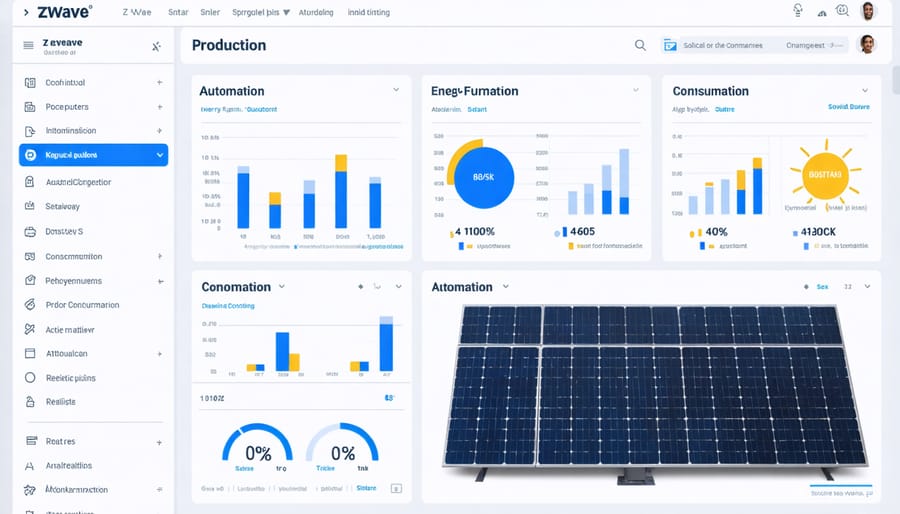
Effective monitoring and analytics tools are essential components of a Z-Wave home automation system, providing valuable insights into device performance, energy consumption, and system efficiency. Modern Z-Wave hubs integrate sophisticated monitoring dashboards that display real-time data and historical trends of connected devices.
Leading platforms like Home Assistant and Hubitat offer comprehensive analytics features that track device status, communication quality, and network health. These tools enable users to monitor signal strength between devices, identify potential interference issues, and optimize device placement for better network performance.
Energy monitoring capabilities are particularly valuable, allowing homeowners to track power consumption patterns of Z-Wave devices and identify opportunities for energy savings. Advanced analytics tools can generate detailed reports on device usage patterns, automation rule effectiveness, and system response times.
Security monitoring features provide alerts for unauthorized access attempts, device tampering, and network anomalies. Many platforms incorporate machine learning algorithms to detect unusual patterns and potential security threats, ensuring system integrity.
For troubleshooting purposes, these tools maintain detailed logs of device communications, command execution, and system events. This historical data proves invaluable when diagnosing issues or optimizing automation routines. Some platforms also offer predictive maintenance capabilities, alerting users to potential device failures before they occur based on performance metrics and usage patterns.
Future-Proofing Your Smart Solar Home
Upcoming Z-Wave Innovations for Solar Integration
Recent advancements in Z-Wave technology are set to transform solar energy integration through enhanced device compatibility and improved energy management capabilities. The Z-Wave Alliance has announced new specifications that will enable seamless communication between solar inverters, battery storage systems, and home automation networks. These innovations align with broader trends in digital innovation in solar technology, particularly in energy optimization and monitoring.
Key developments include enhanced power monitoring protocols, automated load balancing features, and improved security standards specific to renewable energy systems. The upcoming Z-Wave 800 series chipsets will offer extended range capabilities and reduced power consumption, making them ideal for large-scale solar installations. Additionally, new firmware updates will introduce advanced energy forecasting algorithms that optimize solar power utilization based on historical usage patterns and weather data.
These innovations will enable homeowners to achieve greater control over their solar investments while maximizing energy efficiency through intelligent automation routines.
Scaling Your System
When expanding your Z-Wave home automation system, follow a structured approach to ensure optimal performance and reliability. Begin by assessing your current network’s capacity and identifying strategic locations for additional devices. Add controllers and repeaters strategically to maintain strong signal strength throughout your property.
Consider implementing a hierarchical control structure with primary and secondary controllers to manage larger networks effectively. Each new device should be positioned within range of at least two other Z-Wave devices to ensure redundant communication paths. For extensive properties, incorporate dedicated repeaters at key intervals to maintain network stability.
Monitor your network’s performance as you add devices, paying attention to response times and reliability. Most Z-Wave networks can support up to 232 devices, but practical limitations often suggest keeping the network below 100 devices for optimal performance. Regularly update device firmware and controller software to ensure compatibility and security as your system grows.
Remember to document all additions and modifications to your network for future reference and troubleshooting purposes.
Z-Wave home automation presents a compelling solution for maximizing the efficiency and functionality of solar PV systems. By integrating Z-Wave technology, system owners can achieve enhanced energy monitoring, automated load management, and optimized power distribution throughout their homes. The mesh network architecture ensures reliable communication between devices, while the standardized protocol guarantees long-term compatibility and system expandability.
The implementation of Z-Wave automation in solar PV installations delivers multiple benefits, including reduced energy waste, improved system performance, and increased return on investment. Real-time monitoring and automated responses to changing environmental conditions ensure optimal energy utilization, while smart scheduling of high-consumption appliances maximizes self-consumption of solar-generated power.
For professionals and homeowners alike, Z-Wave technology represents a strategic investment in future-proof home automation. As the renewable energy sector continues to evolve, the integration of smart home technologies becomes increasingly vital for achieving maximum system efficiency. By implementing Z-Wave automation today, stakeholders position themselves at the forefront of sustainable energy management while creating more intelligent and responsive solar power systems for tomorrow.