
Safety protocols in photovoltaic system installation demand rigorous attention to protect both installers and end-users. Electric shock hazards from high DC voltages require comprehensive arc-flash protection, properly rated personal protective equipment (PPE), and strict lockout-tagout procedures during installation and maintenance. Fall protection systems, including guardrails and personal fall arrest equipment, must be implemented when working at heights exceeding 6 feet (1.8 meters). Structural integrity assessments ensure roof systems can support both static and dynamic loads from PV arrays, while proper grounding and surge protection devices safeguard against lightning strikes and power surges. Emergency response protocols must address unique challenges of solar installations, including rapid shutdown capabilities and clear access paths for first responders. These critical safety measures protect lives, prevent equipment damage, and ensure compliance with international safety standards IEC 62548 and NEC Article 690.
Pre-Installation Safety Assessment
Site Hazard Analysis
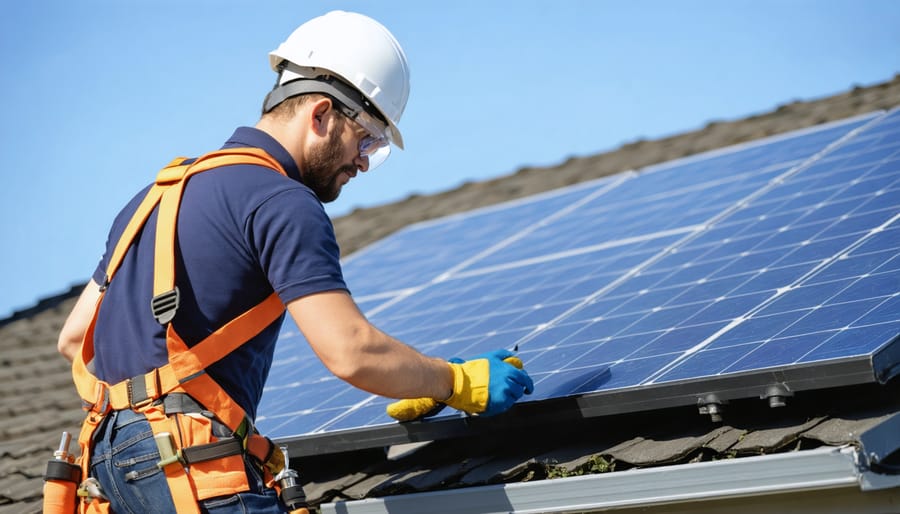
A thorough site hazard analysis is crucial before implementing any solar installation methods. This systematic process involves identifying, documenting, and assessing potential workplace hazards that could affect worker safety during PV system installation and maintenance.
The analysis begins with a comprehensive site survey, examining structural integrity, electrical systems, and environmental conditions. Key areas of focus include roof condition assessment, identification of fall hazards, electrical connection points, and potential interference from nearby structures or vegetation.
Documentation should detail specific hazards such as:
– Structural weaknesses or deterioration
– Access and egress points
– Electrical system conditions
– Weather exposure risks
– Material handling challenges
– Proximity to power lines
– Emergency response accessibility
Each identified hazard must be rated according to severity and probability, allowing for proper prioritization of safety measures. This assessment helps determine necessary personal protective equipment (PPE), required safety protocols, and appropriate emergency response procedures.
Regular updates to the hazard analysis documentation are essential as site conditions change during installation phases. This living document serves as a foundation for worker training, safety briefings, and continuous risk management throughout the project lifecycle.
Equipment Safety Verification
Regular safety equipment verification is essential for ensuring optimal protection during PV installation and maintenance. Begin by inspecting personal protective equipment (PPE) including hard hats, safety glasses, gloves, and fall protection gear for signs of wear, damage, or expiration. Check that all harnesses and lanyards meet OSHA standards and undergo load testing at prescribed intervals.
Examine electrical testing equipment such as multimeters, voltage detectors, and insulation resistance testers for accuracy and calibration status. These instruments should display valid calibration certificates and function properly during preliminary tests. Verify that all insulated tools maintain their protective coating integrity and replace any items showing exposed metal or deterioration.
Assess portable ladders and scaffolding components for structural integrity, ensuring all locking mechanisms, support brackets, and stabilizers function correctly. Inspect ground fault circuit interrupters (GFCIs) and arc-fault detection devices monthly using the test button function.
Document all equipment inspections in a dedicated log, recording dates, findings, and any necessary replacements or repairs. Implement a color-coding or tagging system to clearly identify equipment status – operational, requiring maintenance, or out of service. Establish a regular maintenance schedule aligned with manufacturer recommendations and industry standards.
Store safety equipment in appropriate conditions, protecting it from environmental factors that could compromise its effectiveness. Train personnel on proper equipment inspection procedures and encourage reporting of any safety concerns immediately.
Electrical Safety Protocols
Arc Flash Protection
Arc flash incidents in photovoltaic installations can result in severe injuries or fatalities, making proper protection measures crucial for worker safety. When implementing efficient installation practices, technicians must follow strict arc flash protection protocols.
Personal Protective Equipment (PPE) requirements for arc flash protection include flame-resistant clothing, insulated gloves rated for the appropriate voltage level, and arc-rated face shields. These items must be inspected before each use and replaced if damaged or compromised.
Working distance calculations are essential for determining the appropriate level of PPE. The minimum approach distance varies based on system voltage and potential incident energy levels. Installers should consult the latest NFPA 70E guidelines to determine specific requirements for their installation.
Key preventive measures include:
– De-energizing equipment before maintenance
– Using properly rated tools and test equipment
– Installing arc flash warning labels at potential hazard points
– Maintaining proper insulation and grounding
– Regular inspection of electrical connections and components
Emergency response procedures must be established and clearly communicated to all personnel. This includes maintaining updated arc flash hazard analyses, posting emergency contact information, and ensuring quick access to first aid equipment.
Training programs should incorporate arc flash awareness and protection strategies, with regular updates to reflect new safety standards and industry best practices. Documentation of all training and safety procedures must be maintained for compliance and reference purposes.
By implementing these protective measures and maintaining vigilant awareness of arc flash hazards, installation teams can significantly reduce the risk of electrical accidents while working on PV systems.
Lockout/Tagout Procedures
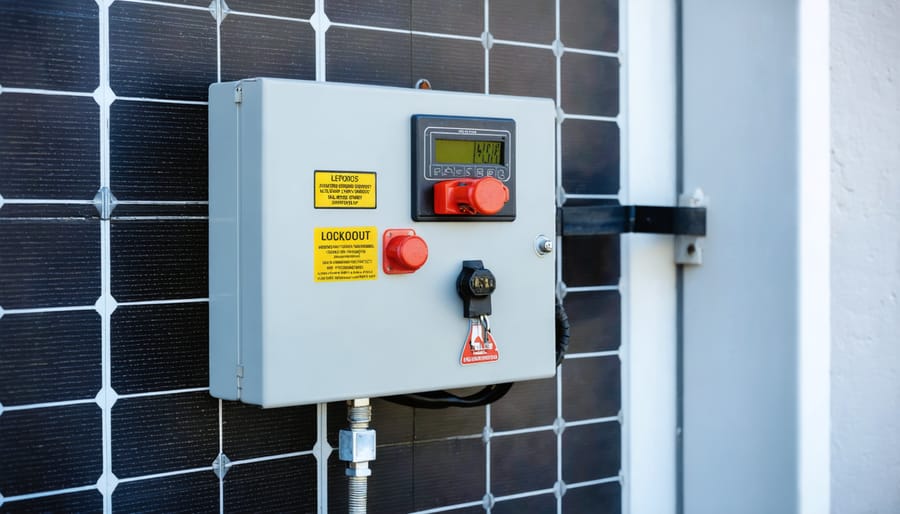
Lockout/Tagout (LOTO) procedures are essential safety protocols that protect workers from electrical hazards during PV system installation and maintenance. The process begins with identifying all potential energy sources, including DC circuits from solar panels and AC connections to the grid. Before commencing work, notify all affected personnel about the shutdown.
First, disconnect and isolate the main AC circuit breaker connecting the PV system to the utility grid. Place a standardized lock on the disconnect switch and attach a clear, dated tag indicating work in progress. Next, disable the DC disconnect switches between the solar array and inverter, following the same locking and tagging procedure.
Verify complete de-energization using a properly rated multimeter to test all circuits. Test both AC and DC sides of the system, and document voltage readings in your safety log. Wait at least five minutes after disconnection to allow capacitors to discharge fully.
Each worker involved must apply their personal lock and identification tag to the energy-isolating devices. Only the person who installed a lock may remove it. In cases where multiple teams are working simultaneously, utilize a group lockout device or hasp that accommodates multiple locks.
Before resuming operations, conduct a thorough inspection of the work area to ensure all tools and temporary grounds are removed. Follow a systematic process for re-energization: remove tags and locks in reverse order of installation, notify all personnel of system restoration, and test system functionality.
Maintain detailed records of all LOTO procedures, including dates, times, and personnel involved. Regular training and periodic audits of LOTO procedures ensure consistent compliance and worker safety.
Fall Protection Systems
Personal Fall Arrest Systems
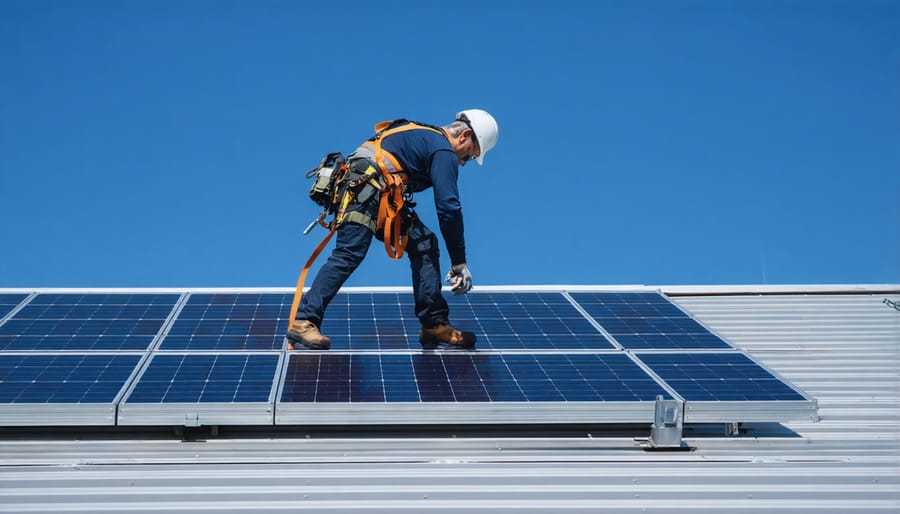
Personal fall arrest systems (PFAS) are critical safety components for photovoltaic installations, particularly during rooftop work. A complete PFAS consists of three essential elements: an anchor point, body harness, and connecting device. The anchor point must support a minimum of 5,000 pounds per worker attached and be installed at or above the worker’s position whenever possible.
Full-body harnesses must be properly fitted and regularly inspected for wear, damage, or deterioration. Pay special attention to webbing, D-rings, buckles, and adjustment mechanisms. Any equipment showing signs of damage, excessive wear, or exposure to fall forces must be immediately removed from service.
The connecting device, typically a shock-absorbing lanyard or self-retracting lifeline, should be selected based on the specific work conditions and fall clearance calculations. Ensure the connecting device is appropriate for the fall distance and maintains a safety factor that prevents contact with lower levels.
Regular inspection and documentation are mandatory. Before each use, workers must perform a visual and tactile inspection of all PFAS components. Annual comprehensive inspections by a competent person must be documented and maintained in safety records. Additionally, workers must receive thorough training in proper PFAS use, inspection procedures, and rescue protocols.
To maintain system integrity, store PFAS equipment in a clean, dry area away from direct sunlight, chemicals, and extreme temperatures. Replace any equipment involved in a fall event, regardless of apparent condition.
Roof Safety Protocols
Working on elevated surfaces demands strict adherence to safety protocols to prevent accidents and ensure worker protection. All rooftop PV installations must begin with a comprehensive structural assessment to verify the roof’s capacity to support both the installation team and solar equipment. Personal fall protection equipment (PFPE), including full-body harnesses, lanyards, and properly rated anchor points, is mandatory for all personnel working at heights above 6 feet (1.8 meters).
Before commencing proper installation procedures, establish clearly marked safe zones and restricted areas on the roof. Install temporary guardrails or warning lines at least 6 feet from the roof edge where permanent fall protection isn’t feasible. Weather monitoring is crucial; suspend work during adverse conditions such as high winds, rain, or when surfaces are slippery.
Maintain organized work areas by securing tools and materials to prevent falling objects. Use appropriate lifting equipment and establish designated material staging areas to minimize manual handling risks. All personnel must complete roof safety training and demonstrate competency in using fall protection systems before accessing the installation area.
Regular safety meetings should address site-specific hazards, emergency procedures, and rescue protocols. Keep emergency contact information readily available and ensure clear communication channels between ground crews and roof teams. Document all safety measures and maintain daily inspection logs of fall protection equipment and anchor points.
Emergency Response Planning
Emergency response planning is a critical component of PV installation safety that requires thorough preparation and clear communication protocols. Every installation team should develop and maintain a comprehensive emergency response plan that addresses various potential scenarios, from electrical accidents to falls and medical emergencies.
The emergency response plan should begin with a detailed site-specific assessment that identifies potential hazards, emergency exit routes, and assembly points. This information must be clearly communicated to all team members and prominently displayed at the work site. The plan should also include up-to-date contact information for emergency services, utility companies, and key project personnel.
Essential elements of an effective emergency response plan include:
– Clear chain of command and responsibilities during emergencies
– Location and proper use of emergency equipment (first aid kits, fire extinguishers, spill containment materials)
– Procedures for system shutdown in emergency situations
– Evacuation protocols and meeting points
– Documentation requirements for incident reporting
Teams should conduct regular emergency response drills to ensure all members understand their roles and can execute procedures efficiently under pressure. These drills should simulate various scenarios, including electrical fires, arc flash incidents, and personal injuries.
For electrical emergencies specifically, workers must know how to:
– Quickly disconnect power sources
– Use appropriate fire suppression equipment for electrical fires
– Provide first aid for electrical burns and shock
– Secure the area to prevent additional injuries
Documentation of emergency procedures should be readily accessible, and all incidents must be thoroughly documented for analysis and future prevention. Post-incident reviews are essential for identifying areas for improvement in both emergency response procedures and overall safety protocols.
Regular updates to the emergency response plan should incorporate lessons learned from drills, actual incidents, and changes in industry best practices or regulations. This ensures the plan remains current and effective in protecting worker safety during PV installation activities.
The implementation of comprehensive safety protocols in photovoltaic installations remains a critical cornerstone of the renewable energy industry. As solar technology continues to evolve and installations become more widespread, maintaining and improving safety standards becomes increasingly vital. The dynamic nature of the PV industry demands constant vigilance and adaptation of safety measures to address emerging challenges and incorporate new best practices.
Industry stakeholders must recognize that safety is not a one-time achievement but an ongoing process requiring regular assessment, updates, and reinforcement. This includes staying current with regulatory changes, technological advancements, and industry standards while maintaining open channels of communication between installers, manufacturers, and safety organizations.
Training programs and certification requirements should be regularly updated to reflect the latest safety protocols and technological developments. Organizations must foster a culture of safety that encourages reporting of near-misses and incidents, leading to continuous improvement of safety procedures. Regular safety audits, equipment inspections, and emergency response drills should remain fundamental components of any PV installation operation.
Looking ahead, the integration of digital safety management systems and real-time monitoring technologies will further enhance our ability to prevent accidents and respond to emergencies effectively. However, these technological advances should complement, not replace, the fundamental principles of careful planning, proper training, and strict adherence to safety protocols that have been proven essential in protecting workers and ensuring the sustainable growth of the PV industry.