Solar panel sustainability represents a critical intersection of renewable energy advancement and environmental stewardship, extending far beyond simple carbon footprint reduction. As global energy demands surge and off-grid solutions become increasingly vital, understanding the complete lifecycle impact of photovoltaic systems emerges as a paramount concern for industry stakeholders and environmental advocates alike.
Modern solar installations demonstrate remarkable progress in manufacturing efficiency, material conservation, and end-of-life management. Recent technological breakthroughs have reduced the energy payback time to less than two years in optimal conditions, while innovative recycling protocols now recover up to 96% of semiconductor materials from decommissioned panels. These achievements signal a transformative shift toward truly sustainable renewable energy infrastructure.
The sustainability equation encompasses crucial factors including raw material sourcing, production energy intensity, operational lifespan, and recycling capabilities. Manufacturing advances have significantly decreased silicon waste, while new thin-film technologies promise further reductions in material consumption. Additionally, emerging circular economy initiatives are revolutionizing end-of-life management, transforming what was once considered electronic waste into valuable recoverable resources.
This comprehensive analysis explores the multifaceted dimensions of solar panel sustainability, examining current best practices, technological innovations, and future directions that will shape the industry’s environmental impact. By understanding these elements, stakeholders can make informed decisions that maximize both energy generation efficiency and ecological responsibility.
Life Cycle Assessment of Solar PV Panels
Raw Material Sourcing and Manufacturing Impact
The production of solar panels begins with the extraction of raw materials, primarily silicon, which requires significant energy input and mining operations. Silicon purification, essential for photovoltaic cell manufacturing, is an energy-intensive process that typically relies on fossil fuels, contributing to the initial carbon footprint of solar panels. Manufacturing facilities utilize substantial amounts of water and chemicals in the production process, particularly during silicon wafer creation and cell fabrication.
Recent technological advances have improved manufacturing efficiency, reducing energy consumption and waste generation. Modern facilities increasingly implement closed-loop water systems and chemical recycling programs to minimize environmental impact. The industry has also made progress in reducing the use of toxic materials, such as lead and cadmium, though these elements remain present in some panel types.
The carbon payback period – the time required for solar panels to offset their manufacturing emissions through clean energy generation – varies by location and production method but typically ranges from 1 to 4 years. This represents a significant improvement from earlier generations of solar technology. Transportation of raw materials and finished products also contributes to the overall environmental impact, though manufacturers are increasingly localizing production to reduce these effects.
To further enhance sustainability, industry leaders are investing in renewable energy-powered manufacturing facilities and developing more efficient production techniques that require fewer raw materials and energy inputs.

Operational Environmental Benefits
Solar panels demonstrate significant environmental benefits during their operational phase, primarily through carbon offset and renewable energy generation. A typical residential solar installation can offset approximately 100,000 pounds of carbon dioxide over its lifetime, equivalent to planting over 2,000 trees. As innovative solar installations continue to evolve, these environmental benefits multiply across different applications and scales.
The operational phase of solar panels represents their most environmentally positive period, with zero direct emissions and minimal maintenance requirements. Studies indicate that most solar installations achieve their carbon payback period within 1-4 years, depending on geographical location and panel efficiency. After this period, the systems generate clean electricity for an additional 21-26 years, resulting in substantial net environmental benefits.
During operation, solar panels offset traditional electricity generation methods, reducing reliance on fossil fuels and decreasing associated environmental impacts such as air pollution, water consumption, and greenhouse gas emissions. Research shows that each kilowatt of solar capacity can prevent the emission of approximately 3,000 pounds of CO2 annually. Additionally, solar installations require minimal water usage during operation, particularly when compared to conventional power generation methods, contributing to water conservation efforts in regions where water scarcity is a concern.
Energy Payback Time (EPBT)
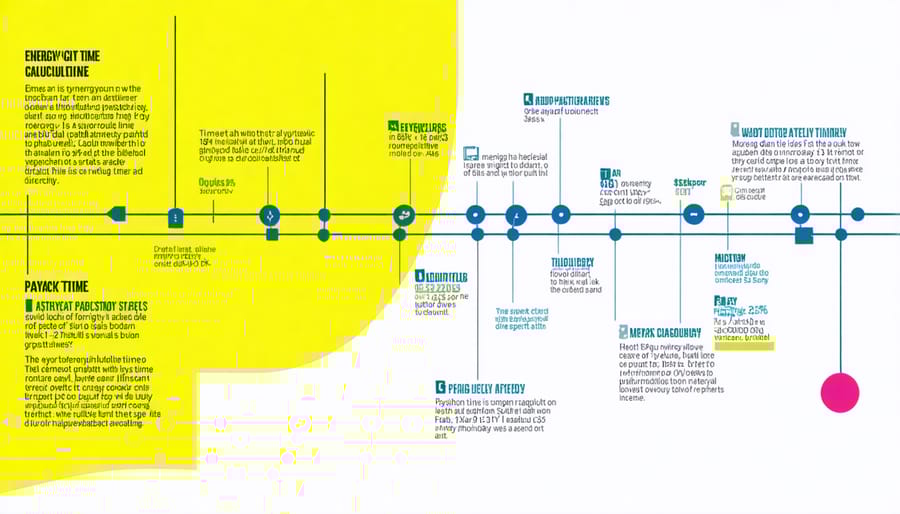
Energy Payback Time (EPBT) represents a crucial metric in evaluating the environmental effectiveness of solar panels, measuring the time required for a photovoltaic system to generate the same amount of energy used in its production, installation, and end-of-life management. Current research indicates that modern solar panels typically achieve energy payback within 1 to 4 years, depending on various factors including geographical location, panel efficiency, and manufacturing processes.
Manufacturing location significantly impacts EPBT calculations. Panels produced in regions with coal-dependent energy grids generally have longer payback periods compared to those manufactured using cleaner energy sources. For instance, solar panels produced in China, where coal dominates the energy mix, may require 2.5-3.5 years for energy payback, while those manufactured in Europe, with its diverse energy portfolio, often achieve payback in 1.5-2.5 years.
Installation conditions also play a vital role in determining EPBT. Panels installed in high-insolation areas like the American Southwest or Mediterranean regions typically achieve faster payback times compared to installations in regions with lower solar radiation. The mounting system and installation method chosen can add between 3-6 months to the overall EPBT.
Technological advancements continue to reduce EPBT through improved manufacturing efficiency and enhanced panel performance. Modern monocrystalline panels demonstrate shorter payback times compared to older polycrystalline technologies, primarily due to higher conversion efficiencies and streamlined production processes. Recent innovations in silicon purification and wafer production have further reduced energy requirements during manufacturing.
Considering that most solar panels have an operational lifespan of 25-30 years, even conservative EPBT estimates of 4 years indicate that panels generate clean energy for over 20 years after achieving energy payback. This represents a significant positive energy return on investment and demonstrates the technology’s vital role in sustainable energy production. The continuous improvement in manufacturing efficiency and panel performance suggests that EPBT will likely continue to decrease, further enhancing the environmental benefits of solar power adoption.
Extending Solar Panel Lifespan
Preventive Maintenance Protocols
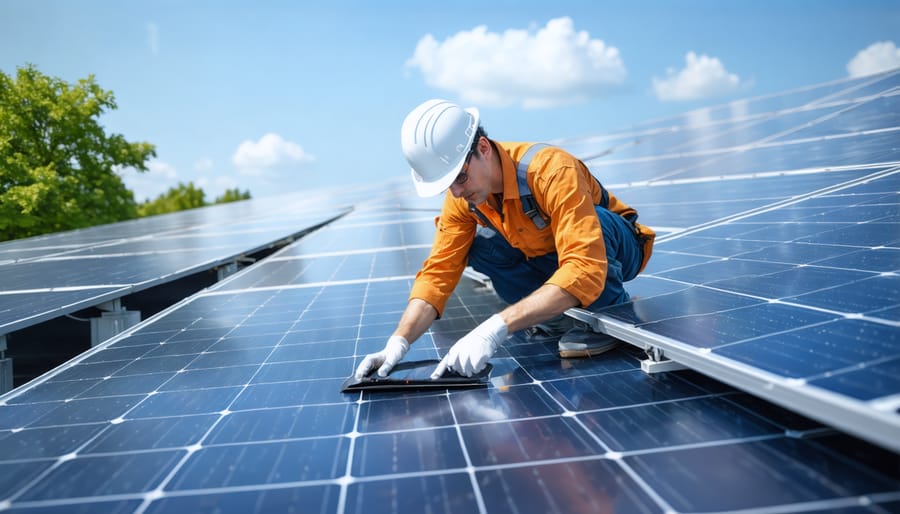
Regular maintenance is crucial for maximizing panel efficiency and extending the operational lifespan of solar installations. A comprehensive preventive maintenance protocol should include quarterly visual inspections for physical damage, debris accumulation, and potential shading issues. Clean panels using deionized water and soft brushes to remove dust, bird droppings, and other contaminants that can reduce energy absorption.
Monitor electrical performance through regular voltage and current measurements, ideally using automated monitoring systems that can detect efficiency drops early. Inspect mounting hardware, wiring connections, and junction boxes annually for signs of corrosion or loose components. Ensure proper calibration of inverters and charge controllers according to manufacturer specifications.
During winter months, implement snow removal procedures using appropriate tools to prevent mechanical damage. Maintain accurate maintenance logs documenting all inspections, cleaning activities, and performance metrics. Schedule professional thermographic inspections every two years to identify potential hot spots or cell degradation.
Address ground settlement issues promptly to maintain optimal panel tilt angles. Replace damaged components immediately using manufacturer-approved parts to prevent system-wide performance degradation. Consider implementing predictive maintenance strategies using data analytics to anticipate potential issues before they impact system performance.
Performance Monitoring Systems
Modern performance monitoring solutions are essential for maintaining optimal solar panel efficiency and preventing premature degradation. These systems utilize advanced sensors and data analytics to track key performance indicators, including power output, voltage fluctuations, and thermal patterns.
Real-time monitoring equipment typically incorporates multiple measurement points, such as irradiance sensors, temperature probes, and power meters. These devices continuously collect data, enabling system operators to identify potential issues before they escalate into serious problems. Advanced monitoring platforms can detect subtle changes in panel performance, indicating the onset of degradation factors like potential-induced degradation (PID), hot spots, or micro-cracks.
String-level monitoring systems compare the performance of different panel groups, helping identify underperforming units that may require maintenance or replacement. Additionally, weather stations integrated into these systems correlate environmental conditions with panel output, providing valuable insights into weather-related degradation patterns.
Machine learning algorithms increasingly play a crucial role in predictive maintenance, analyzing historical performance data to forecast potential failures and optimize maintenance schedules. This proactive approach helps extend panel lifespan and maintain optimal energy production levels throughout the system’s operational life.
The data collected through these monitoring systems also contributes to improving future panel designs and installation practices, creating a feedback loop that enhances overall solar technology sustainability.
End-of-Life Management
Recycling Technologies and Processes
The recycling of solar panels involves several sophisticated processes designed to recover valuable materials while minimizing environmental impact. The primary method currently employed is mechanical recycling, which begins with the removal of the aluminum frame and junction box. The panels then undergo a shredding process, followed by separation of glass, metals, and semiconductor materials.
Thermal processing represents another significant recycling approach, where panels are heated to temperatures exceeding 500°C to separate the encapsulating materials from the silicon cells. This method enables the recovery of high-purity silicon wafers, which can be repurposed for new solar cells or other electronic applications.
Chemical processing techniques utilize various solvents and reactions to extract precious metals and semiconductor materials. Advanced facilities employ hydrometallurgical processes to recover silver, copper, and other valuable metals with recovery rates reaching up to 95%. Some innovative methods also focus on retrieving rare earth elements present in specialized solar cell designs.
Emerging technologies include automated dismantling systems that use robotics and artificial intelligence to optimize the separation process. These systems can process larger volumes of panels while improving material recovery rates. Additionally, some manufacturers have developed specialized recycling processes for their specific panel designs, incorporating closed-loop systems that directly reuse recovered materials in new panel production.
Research institutions and industry partners continue to develop more efficient recycling methods, including novel chemical processes that reduce energy consumption and improve the purity of recovered materials. These advancements are crucial for establishing a sustainable circular economy in the solar industry.
Circular Economy Integration
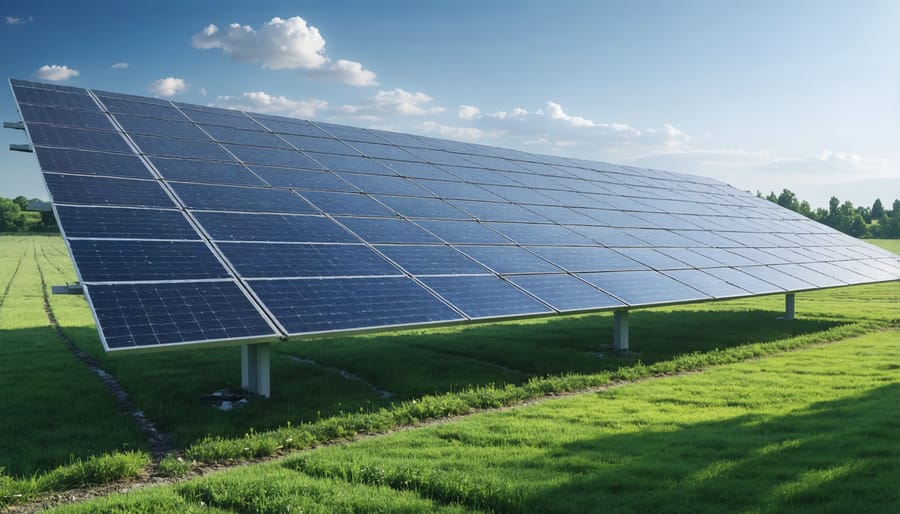
The future of solar panel sustainability lies in embracing circular economy principles, which transform traditional linear production models into closed-loop systems. This approach focuses on maximizing resource efficiency and minimizing waste throughout the entire lifecycle of photovoltaic systems. As the industry moves toward sustainable energy integration, manufacturers are increasingly adopting design-for-recycling strategies that facilitate easier component separation and material recovery.
Advanced recycling technologies are emerging to handle the anticipated surge in end-of-life panels, with automated systems capable of recovering up to 95% of valuable materials. These innovations include thermal separation techniques for silicon recovery and chemical processes for extracting precious metals. Industry leaders are establishing dedicated recycling facilities and developing standardized procedures for material reclamation.
Collaborative initiatives between manufacturers, recyclers, and research institutions are driving innovations in circular design principles. These include modular construction methods, eco-friendly materials, and simplified disassembly processes. The implementation of digital tracking systems and material passports ensures transparent documentation of component origins and recycling potential.
Looking ahead, the industry is moving toward implementing extended producer responsibility programs, where manufacturers take ownership of their products’ entire lifecycle. This approach incentivizes sustainable design choices and establishes robust collection networks for end-of-life panels. Furthermore, emerging business models based on product-as-service concepts are gaining traction, promoting longer product lifespans and more efficient resource utilization.
The success of these circular economy initiatives depends on continued technological advancement, supportive policy frameworks, and market acceptance of recycled materials in new panel production. As these systems mature, they will play a crucial role in ensuring the long-term sustainability of the solar energy sector.
The sustainability of solar panels represents a complex interplay of environmental, economic, and technological factors that continue to evolve as the industry matures. While current manufacturing processes still present certain environmental challenges, significant advancements in production efficiency, material recovery, and recycling technologies are steadily improving the overall sustainability profile of photovoltaic systems.
Research and development efforts are yielding promising results in reducing the carbon footprint of manufacturing processes, with several manufacturers already implementing closed-loop production systems and renewable energy sources in their facilities. The increasing efficiency of solar panels, coupled with longer lifespans and improved durability, has substantially enhanced their environmental value proposition over the past decade.
Looking ahead, the industry is poised for transformative changes. Emerging technologies in recycling and material recovery are expected to significantly reduce waste and enable higher rates of material reuse. The development of new photovoltaic materials and manufacturing techniques promises to further decrease environmental impact while improving performance and cost-effectiveness.
The future outlook for solar panel sustainability is particularly encouraging, with circular economy principles becoming increasingly integrated into product design and end-of-life management strategies. Industry stakeholders, including manufacturers, researchers, and policy makers, are collaborating to establish more robust recycling infrastructure and standardized sustainability metrics.
To maximize the environmental benefits of solar technology, continued focus on research, policy development, and industry collaboration will be essential. As solar adoption continues to accelerate globally, these sustainability improvements will play a crucial role in ensuring that photovoltaic technology remains a truly sustainable solution for our energy future.