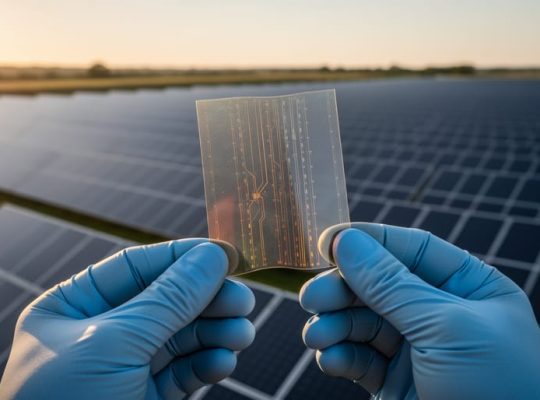
Hybrid perovskites represent one of the most promising breakthroughs in photovoltaic technology, achieving an unprecedented rise in power conversion efficiency from 3.8% to over 25% in just a decade. These remarkable semiconducting materials, combining organic and inorganic components in a crystalline structure, have revolutionized the solar energy landscape by offering a perfect storm of advantages: low-cost production, simple manufacturing processes, and exceptional light-harvesting capabilities. As researchers and industry leaders race to overcome stability challenges and scale up production, hybrid perovskites stand at the frontier of next-generation solar technology, promising to transform renewable energy economics. Their unique ability to be solution-processed at low temperatures, coupled with their tunable bandgap and high defect tolerance, positions them as a game-changing material that could finally make solar power truly cost-competitive with fossil fuels. This transformation comes at a crucial time, as the global community intensifies its search for sustainable energy solutions to address climate change challenges.
The Science Behind Hybrid Perovskites
Chemical Structure and Properties
Hybrid perovskites exhibit a distinctive ABX3 crystal structure, where A represents an organic cation (typically methylammonium or formamidinium), B is a metal cation (usually lead or tin), and X represents halide anions (commonly iodide, bromide, or chloride). This unique arrangement creates a three-dimensional framework that enables exceptional optoelectronic properties, making these materials highly efficient in solar energy conversion.
The incorporation of organic molecules into the traditional perovskite structure results in enhanced flexibility and tunability of material properties. These materials demonstrate remarkable light absorption coefficients, long carrier diffusion lengths, and high charge-carrier mobilities. Recent developments in perovskite quantum dots have further expanded their potential applications.
Key properties include:
– Bandgap tunability (1.2-2.3 eV)
– High absorption coefficients (>104 cm-1)
– Low exciton binding energies
– Defect tolerance
– Solution processability
The ability to fine-tune these properties through compositional engineering makes hybrid perovskites particularly versatile for photovoltaic applications. Their solution-processable nature enables cost-effective manufacturing methods, while their high defect tolerance contributes to excellent performance even with imperfect crystal structures. These characteristics have established hybrid perovskites as promising materials for next-generation solar cells.

Why Hybrid Matters
The hybrid nature of these perovskite materials represents a groundbreaking advancement in solar technology, combining the best properties of organic and inorganic components. The organic molecules provide flexibility in material design and processing, while the inorganic framework ensures structural stability and excellent electronic properties. This unique combination allows for solution processing at low temperatures, making manufacturing more cost-effective compared to traditional silicon-based solar cells.
The organic component’s tunability enables precise control over the material’s bandgap, allowing researchers to optimize light absorption across different parts of the solar spectrum. Additionally, the organic cations contribute to the material’s self-healing properties, helping to repair minor structural defects that naturally occur during operation. This characteristic significantly enhances the material’s long-term stability.
The inorganic framework, typically lead halide, creates efficient charge transport pathways and contributes to the material’s exceptional light absorption capabilities. This synergy between organic and inorganic components results in impressive power conversion efficiencies while maintaining relatively simple and economical production methods, making hybrid perovskites particularly attractive for commercial solar cell applications.
Performance Advantages
Record-Breaking Efficiency
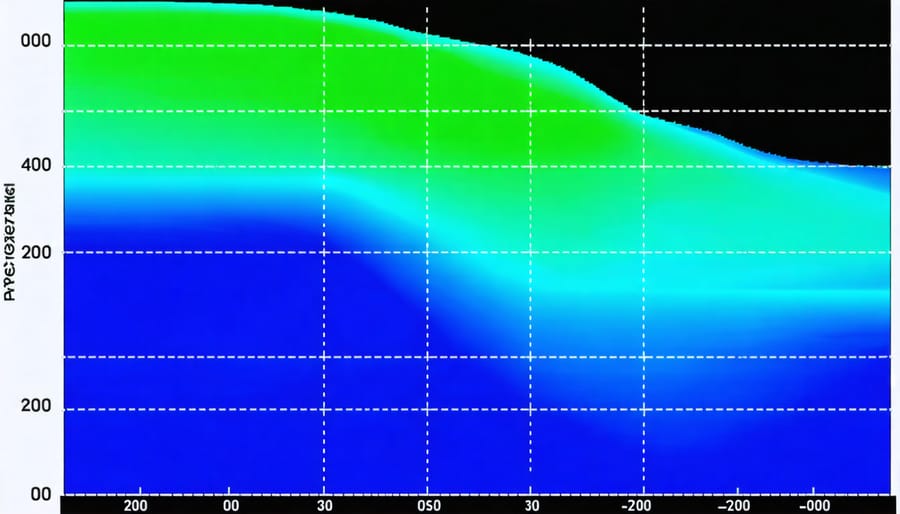
Hybrid perovskites have shattered efficiency records in photovoltaic technology, demonstrating remarkable progress in a relatively short time frame. While traditional solar cells typically achieve efficiencies between 15-20%, perovskite solar cells have rapidly advanced from 3.8% in 2009 to exceeding 25% in recent laboratory settings.
The National Renewable Energy Laboratory (NREL) has certified several milestone achievements, with the current record standing at 25.7% for single-junction perovskite cells. Even more impressive are tandem configurations, where perovskite layers are combined with silicon cells, reaching efficiencies of 29.8%. These achievements represent a significant leap toward the theoretical Shockley-Queisser limit of around 33% for single-junction solar cells.
What makes these efficiency gains particularly noteworthy is the unprecedented speed of improvement. While silicon-based technologies required decades to achieve their current efficiency levels, perovskite solar cells have matched and potentially surpassed these benchmarks in just over a decade. This rapid progress is attributed to the material’s exceptional light-harvesting capabilities, high charge-carrier mobility, and the ability to fine-tune its bandgap through compositional engineering.
Commercial validation of these laboratory results remains a crucial next step, with several companies already demonstrating pilot production lines achieving stable efficiencies above 20%.
Cost-Effectiveness
Hybrid perovskites have emerged as a cost-effective alternative to traditional silicon-based solar cells, offering significant economic advantages in both production and implementation. The primary cost benefit stems from their solution-processable nature, allowing for simple and inexpensive manufacturing methods such as spin coating, blade coating, or spray deposition. These techniques require substantially lower temperatures and less energy-intensive processes compared to conventional silicon solar cell production.
Material costs for hybrid perovskites are notably lower, with raw materials being abundant and relatively inexpensive. The production process doesn’t require the high-purity silicon or complex vacuum systems necessary for traditional photovoltaic manufacturing, reducing capital investment requirements by up to 50%. Recent studies indicate that perovskite solar cell production costs could potentially drop below $0.20 per watt, compared to roughly $0.70 per watt for silicon solar cells.
However, the cost-effectiveness analysis must consider the current limitations in stability and longevity. While initial production costs are lower, the shorter lifespan of perovskite solar cells may impact their long-term economic viability. Research shows that improving stability through better encapsulation methods and material optimization could lead to levelized cost of electricity (LCOE) values competitive with or superior to silicon technology.
The scalability of perovskite production also contributes to their economic appeal, as manufacturers can utilize existing infrastructure with minimal modifications, reducing the barrier to entry for new manufacturers and potentially accelerating market adoption.
Current Challenges
Stability and Durability
Despite their remarkable performance potential, hybrid perovskites face significant stability challenges that currently limit their widespread commercial adoption. These materials are particularly susceptible to environmental factors including moisture, oxygen, heat, and prolonged light exposure. When exposed to these conditions, perovskite structures can degrade rapidly, leading to decreased performance and shortened device lifetimes.
Moisture represents one of the most critical stability issues, as water molecules can easily penetrate the crystal structure, causing decomposition of the organic components. Temperature fluctuations also pose a substantial challenge, with many perovskite compositions showing phase transitions at temperatures within normal operating ranges, affecting their structural integrity and performance.
Research teams worldwide are actively developing solutions to enhance stability. Current approaches include compositional engineering, where researchers modify the chemical makeup to create more robust structures, and interface engineering to better protect the sensitive perovskite layer. Encapsulation techniques using hydrophobic materials and advanced barrier layers have shown promising results in protecting against moisture ingress.
Recent breakthroughs include the development of 2D/3D hybrid structures that demonstrate improved stability while maintaining high efficiency. Additionally, the incorporation of inorganic cations and mixed-halide systems has led to more thermally stable compositions. While significant progress has been made, achieving the 25-year operational lifetime required for commercial viability remains an active area of research and development.
Environmental Considerations
While hybrid perovskites show remarkable potential for advancing solar technology, their environmental implications require careful consideration. A primary concern is the presence of lead in many perovskite formulations, which poses potential risks to both human health and ecosystems. This aspect has prompted researchers to explore lead-free alternatives, though these currently show lower efficiency levels.
The environmental impact of solar production remains a crucial consideration in perovskite development. Unlike traditional silicon-based solar cells, perovskite manufacturing requires lower processing temperatures and less energy-intensive methods, potentially reducing carbon footprint during production.
However, the stability challenges of hybrid perovskites raise concerns about their long-term environmental effects. Material degradation could lead to the release of constituent elements into the environment. Current research focuses on developing effective encapsulation methods and recycling protocols to mitigate these risks. The scientific community continues to work on improving the environmental profile of perovskite solar cells while maintaining their high-performance characteristics.
Future Prospects
Research Developments
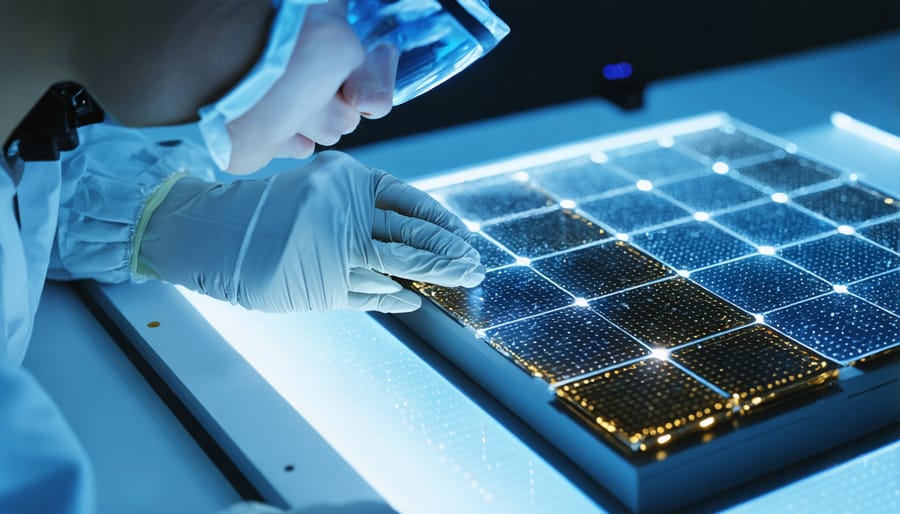
Recent research developments in hybrid perovskites have shown remarkable progress, positioning these materials at the forefront of the future of solar technology. Scientists have achieved significant breakthroughs in addressing stability issues through compositional engineering and interface modifications. Research teams worldwide are exploring mixed-cation perovskites, which combine multiple organic and inorganic components to enhance both efficiency and durability.
A major focus area involves the development of lead-free alternatives, responding to environmental concerns while maintaining high performance. Tin-based perovskites and bismuth-based compounds have emerged as promising candidates, though efficiency levels currently remain below their lead-based counterparts.
Breakthrough possibilities are emerging in tandem cell configurations, where perovskite layers are combined with traditional silicon cells. These arrangements have achieved laboratory efficiencies exceeding 29%, approaching the theoretical limit for single-junction devices. Researchers are also investigating novel deposition techniques for large-scale manufacturing, including solution processing and vapor deposition methods that could enable cost-effective mass production.
Advanced characterization techniques, including in-situ monitoring and artificial intelligence-assisted materials discovery, are accelerating the optimization of perovskite compositions and architectures. Scientists are particularly focused on understanding degradation mechanisms at the molecular level, leading to innovative stabilization strategies and improved device lifetimes.
The integration of quantum dots and 2D/3D hybrid structures represents another exciting research direction, potentially offering enhanced stability and unique optoelectronic properties. These developments suggest a promising pathway toward commercially viable perovskite solar cells with both high efficiency and long-term reliability.
Commercial Implementation
The commercial implementation of hybrid perovskites has been gaining momentum since 2020, with several companies moving beyond laboratory research into pilot production phases. Leading manufacturers like Oxford PV have established production lines with initial capacity targets of 100 MW annually, demonstrating the technology’s readiness for market integration.
Market adoption follows a carefully planned timeline, with the first commercial products expected to reach consumers by 2024-2025. These initial offerings focus on tandem solar cells, combining traditional silicon technology with perovskite layers to achieve higher efficiency rates while maintaining cost-effectiveness.
Several key milestones mark the path to commercialization. In 2021, multiple successful field trials demonstrated stability under real-world conditions, addressing previous concerns about long-term durability. Manufacturing processes have been optimized for scalability, with roll-to-roll printing techniques showing promise for mass production.
Investment in perovskite technology has seen substantial growth, with over $1 billion in venture capital funding allocated to startups and established companies in the past three years. This financial backing supports the development of manufacturing infrastructure and quality control systems essential for commercial success.
Market forecasts suggest hybrid perovskite solar cells could capture 5-10% of the global solar market by 2030. However, this timeline depends on continuing improvements in material stability and successful certification under international standards. Companies are actively working with regulatory bodies to establish appropriate testing protocols and safety guidelines for these new materials.
The technology’s commercialization path also benefits from strategic partnerships between research institutions and industry players, accelerating the transfer of laboratory innovations to production environments.
Hybrid perovskites represent a transformative advancement in photovoltaic technology, offering unprecedented potential to revolutionize the solar energy landscape. Their remarkable combination of high efficiency, cost-effective manufacturing, and tunable properties positions them as a promising solution for next-generation solar cells. With power conversion efficiencies now exceeding 25% and continuing to improve, these materials are rapidly closing the gap with traditional silicon-based technologies.
The future outlook for hybrid perovskites appears particularly promising, with researchers and industry leaders actively addressing current challenges such as stability and scalability. Ongoing developments in material engineering and fabrication techniques suggest that commercial deployment could become viable within the next decade. The integration of hybrid perovskites into tandem solar cells, combining them with established technologies, presents an especially exciting pathway toward exceeding the theoretical efficiency limits of single-junction devices.
However, successful commercialization will require continued collaborative efforts between academic institutions, industry partners, and research laboratories. Key focus areas include developing more robust encapsulation methods, environmentally friendly lead alternatives, and standardized manufacturing processes. As these challenges are systematically addressed, hybrid perovskites are poised to play a crucial role in achieving global renewable energy goals and accelerating the transition toward sustainable power generation.
The potential impact extends beyond traditional solar panels, with applications in building-integrated photovoltaics, flexible electronics, and advanced energy storage systems showing promising results in research settings.