
In the race toward a sustainable future, renewable energy optimization stands as the cornerstone of modern power systems engineering. The integration of advanced analytics, machine learning algorithms, and smart grid technologies has revolutionized how we harness, distribute, and maximize clean energy resources. As global energy demands continue to surge, the optimization of renewable systems has evolved from a technical challenge into a critical economic imperative.
Today’s renewable energy landscape demands sophisticated approaches to system design, operation, and maintenance. From predictive maintenance protocols that enhance wind turbine efficiency to dynamic load balancing systems that stabilize solar grid outputs, optimization strategies are reshaping the industry’s operational paradigms. These innovations not only boost system performance but also significantly reduce operational costs and enhance grid reliability.
The convergence of Internet of Things (IoT) sensors, artificial intelligence, and advanced meteorological forecasting has created unprecedented opportunities for real-time system optimization. Energy providers, industrial facilities, and utilities are now leveraging these technologies to achieve higher conversion efficiencies, minimize transmission losses, and ensure seamless grid integration of renewable sources.
This comprehensive exploration delves into cutting-edge optimization techniques, emerging technologies, and best practices that are defining the future of renewable energy systems.
Current Challenges in Solar PV Installation Training
Skills Gap Analysis
The renewable energy sector, particularly solar power, faces significant workforce challenges as technology rapidly evolves. Current analysis reveals critical gaps in technical expertise, particularly in advanced system design, data analytics, and smart grid integration. Industry surveys indicate that 68% of solar companies report difficulty finding qualified technicians with up-to-date knowledge of modern photovoltaic systems.
Key skill requirements include proficiency in solar PV system installation, electrical engineering fundamentals, and energy storage solutions. Additionally, professionals must possess working knowledge of monitoring software, predictive maintenance protocols, and optimization algorithms. The integration of artificial intelligence and IoT technologies has created new demands for hybrid skill sets combining traditional solar expertise with digital competencies.
Emerging areas requiring immediate attention include microgrid management, battery storage integration, and advanced inverter technologies. Universities and technical institutions are adapting their curricula to address these gaps, but the pace of technological advancement often outstrips educational program development. Industry leaders emphasize the need for continuous professional development and specialized certification programs to maintain workforce competitiveness and ensure optimal system performance.
Safety and Compliance Requirements
Implementing renewable energy systems requires strict adherence to essential safety protocols and regulatory standards to ensure operational efficiency and workforce protection. Organizations must comply with OSHA regulations for working at heights, electrical safety standards outlined in NFPA 70E, and specific regional building codes governing renewable energy installations.
Key compliance requirements include proper equipment certification, regular system inspections, and documented maintenance procedures. Personnel must maintain up-to-date certifications in electrical safety, fall protection, and emergency response procedures. Environmental impact assessments and permits must be secured before installation, particularly for utility-scale projects.
Safety documentation should include detailed risk assessments, emergency response plans, and standard operating procedures. Regular safety audits and compliance reviews help identify potential hazards and ensure continuous improvement in safety practices. Organizations should also maintain comprehensive training records and incident reports to demonstrate regulatory compliance and commitment to workplace safety.
Implementation of these requirements not only protects workers and assets but also enhances system reliability and operational excellence in renewable energy installations.
Building an Effective Training Framework
Technical Skills Development
The development of technical skills in renewable energy optimization requires a structured approach combining theoretical knowledge with practical application. Industry professionals must master PV system installation fundamentals while continuously updating their expertise in emerging technologies and methodologies.
Core competencies include system design optimization, performance monitoring, and advanced troubleshooting techniques. Professionals must develop proficiency in utilizing industry-standard software tools for system modeling, energy yield analysis, and performance ratio calculations. Understanding inverter technologies, storage solutions, and grid integration requirements is essential for comprehensive system optimization.
Hands-on training methodologies incorporate laboratory exercises, simulation software, and field installations under expert supervision. These practical sessions allow professionals to apply theoretical concepts in real-world scenarios, ensuring thorough comprehension of system components and their interactions.
Technical skill development programs should emphasize:
– Advanced monitoring and control systems
– Data analysis and interpretation
– Equipment calibration and maintenance
– System efficiency optimization techniques
– Integration of smart grid technologies
– Quality assurance protocols
Regular assessment and certification programs validate acquired skills and ensure compliance with industry standards. Continuous professional development through workshops, seminars, and manufacturer training sessions helps maintain expertise in this rapidly evolving field.

Safety Protocol Integration
Safety integration in renewable energy optimization requires a systematic approach that combines technical expertise with rigorous safety protocols. Training programs must emphasize both preventive measures and emergency response procedures, ensuring that personnel can operate efficiently while maintaining the highest safety standards.
Key safety protocols include proper lockout/tagout procedures, fall protection systems, electrical safety measures, and emergency response planning. These elements should be integrated into every aspect of training, from classroom instruction to hands-on practical exercises. Training modules must address specific hazards associated with different renewable energy systems, such as arc flash protection in solar installations and height safety in wind energy maintenance.
Documentation and regular assessment of safety practices are essential components of the training framework. This includes maintaining detailed records of safety certifications, incident reports, and periodic safety audits. Training programs should incorporate real-world scenarios and case studies that demonstrate the practical application of safety protocols.
Modern safety integration also leverages technology through virtual reality simulations and digital monitoring systems. These tools allow trainees to practice emergency procedures in a controlled environment before working with actual equipment. Regular updates to safety protocols ensure compliance with evolving industry standards and regulations.
Success in safety protocol integration is measured through reduced incident rates, improved compliance scores, and enhanced operational efficiency. Organizations should establish clear metrics for evaluating the effectiveness of their safety training programs and make necessary adjustments based on performance data and feedback.
Quality Assurance Standards
Quality assurance in renewable energy installations requires adherence to stringent standards and continuous monitoring protocols. Training programs must emphasize the mastery of advanced installation techniques while maintaining consistent quality benchmarks throughout the implementation process.
Professional certification bodies establish comprehensive guidelines that cover installation procedures, equipment calibration, and performance verification. These standards typically include:
– Regular equipment inspection and maintenance protocols
– Performance testing methodologies
– Documentation requirements for system components
– Compliance with regional and international regulations
– Quality control checkpoints during installation phases
Training programs should incorporate hands-on assessment modules where technicians demonstrate proficiency in:
– System optimization techniques
– Performance monitoring and data analysis
– Troubleshooting procedures
– Safety protocol implementation
– Quality control documentation
Implementation of digital monitoring systems and automated performance tracking tools helps maintain installation quality while providing real-time feedback on system efficiency. Regular audits and performance reviews ensure ongoing compliance with industry standards and identify areas for improvement in training programs.
Successful quality assurance programs also emphasize continuous professional development, keeping technicians updated on emerging technologies and regulatory changes. This approach ensures installations consistently meet or exceed performance expectations while maintaining high safety standards.
Leveraging Technology in Training
Virtual Learning Platforms
Virtual learning platforms have revolutionized renewable energy education by providing accessible, comprehensive training solutions for industry professionals and aspiring practitioners. These digital environments offer interactive simulations, real-time data analysis tools, and collaborative learning spaces that enhance understanding of complex renewable energy systems and optimization strategies.
Leading platforms incorporate sophisticated 3D modeling software that allows users to design and test virtual solar installations, wind farms, and energy storage systems. These simulations enable professionals to experiment with different configurations and optimization scenarios without physical infrastructure investments.
Learning management systems (LMS) specifically designed for renewable energy education feature specialized modules covering topics such as photovoltaic system design, energy yield analysis, and performance optimization techniques. These platforms often integrate with industry-standard software tools, providing hands-on experience with professional applications.
Many platforms offer self-paced courses developed in partnership with renowned institutions and industry experts. These courses typically include interactive assessments, virtual laboratories, and real-world case studies that demonstrate practical applications of optimization principles in renewable energy systems.
Remote monitoring and control interfaces are frequently incorporated into these platforms, allowing learners to analyze live data from operational renewable energy installations. This real-world connection helps bridge the gap between theoretical knowledge and practical implementation, ensuring professionals are well-prepared for actual system optimization challenges.
Simulation-Based Training
Advanced simulation tools have revolutionized renewable energy optimization training by providing hands-on experience in a risk-free environment. These sophisticated platforms enable professionals to explore various scenarios and system configurations without the physical constraints of real-world installations.
Modern simulation software incorporates detailed mathematical models that accurately represent solar irradiance patterns, wind behavior, and grid integration dynamics. Trainees can experiment with different system designs, component selections, and operational parameters while receiving immediate feedback on system performance and efficiency metrics.
Virtual training environments allow practitioners to simulate critical scenarios such as equipment failures, extreme weather conditions, and grid instability events. This experience proves invaluable when dealing with real-world challenges, as professionals can develop and test response strategies without risking damage to actual infrastructure.
Industry-standard simulation platforms often feature digital twins of renewable energy systems, providing realistic representations of physical assets. These tools enable trainees to understand complex interactions between various system components and practice optimization techniques in real-time.
The integration of artificial intelligence and machine learning algorithms in simulation tools helps identify optimal operating conditions and predict potential system issues. This predictive capability enhances decision-making skills and supports the development of proactive maintenance strategies.
Simulation-based training also facilitates collaborative learning through multi-user environments, where teams can work together on complex optimization challenges, sharing insights and developing collective problem-solving approaches.

Measuring Training Effectiveness
Performance Metrics
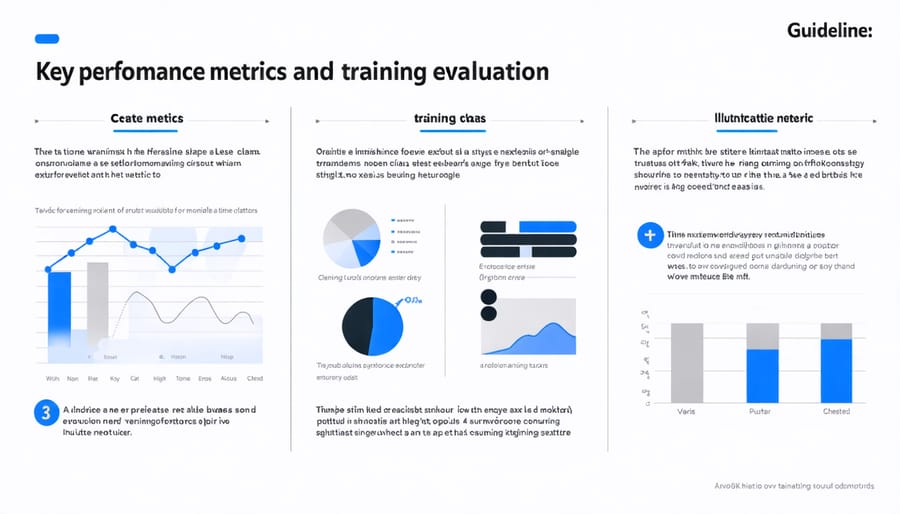
Performance monitoring in renewable energy optimization relies on several key metrics that provide quantifiable insights into system efficiency and operational success. Energy yield ratio (EYR) measures the actual energy output compared to predicted values, while performance ratio (PR) evaluates system efficiency by considering various loss factors. System availability, which tracks uptime percentage, and capacity utilization factor (CUF) are crucial indicators of operational effectiveness.
Cost metrics, including return on investment (ROI) and levelized cost of energy (LCOE), help assess financial performance while considering installation cost considerations. Environmental impact metrics such as carbon offset calculations and greenhouse gas reduction measurements provide essential sustainability data.
Real-time monitoring systems track these metrics through sophisticated data acquisition systems (DAS) and performance monitoring platforms. These systems enable prompt identification of performance issues and facilitate predictive maintenance scheduling. Regular analysis of these metrics helps optimize system performance, enhance operational efficiency, and maximize energy production while maintaining cost-effectiveness.
Continuous Improvement Strategies
Successful renewable energy optimization requires a systematic approach to continuous improvement. Regular performance monitoring and data analysis enable organizations to identify optimization opportunities and implement targeted solutions. Key strategies include conducting periodic energy audits, implementing predictive maintenance protocols, and leveraging advanced analytics for system performance evaluation.
Organizations should establish clear key performance indicators (KPIs) and regularly benchmark their results against industry standards. This data-driven approach helps identify trends, patterns, and potential areas for enhancement. Implementation of machine learning algorithms can further optimize system operations by predicting maintenance needs and adjusting parameters in real-time.
Stakeholder feedback loops are essential for program refinement. Regular consultation with system operators, maintenance teams, and end-users provides valuable insights for improvement. Additionally, staying current with technological advancements and industry best practices through professional development and knowledge sharing networks ensures optimization strategies remain effective and current.
Documentation of lessons learned and successful optimization initiatives creates a knowledge base for future improvements. This systematic approach to continuous improvement helps organizations maximize the efficiency and reliability of their renewable energy systems while reducing operational costs and environmental impact.
The optimization of solar PV installation training continues to evolve with technological advancements and industry demands. Key strategies that have proven successful include the integration of hands-on practical training with theoretical knowledge, implementation of virtual reality simulations, and structured mentorship programs. These approaches, combined with standardized assessment methods and regular curriculum updates, ensure that training programs remain relevant and effective.
Looking ahead, the future of solar PV installation training appears promising, with several emerging trends shaping the landscape. The increasing adoption of artificial intelligence and machine learning tools is expected to enhance training efficiency and personalization. Additionally, the development of mobile learning platforms and micro-credentialing systems will provide more flexible and accessible learning pathways for aspiring professionals.
Industry partnerships between training institutions and solar companies will continue to play a crucial role in bridging the skills gap and ensuring training programs align with real-world requirements. The emphasis on safety protocols and quality standards will remain paramount, particularly as solar installations become more complex and integrated with smart energy systems.
To maintain training excellence, organizations should focus on continuous improvement through regular feedback mechanisms, adoption of new technologies, and alignment with international best practices. This commitment to excellence will be essential in meeting the growing demand for skilled solar PV installers and supporting the global transition to renewable energy.