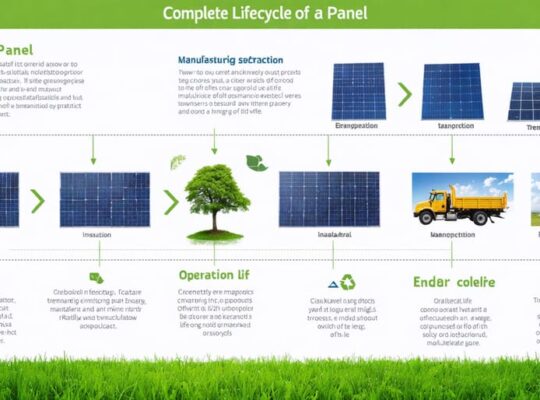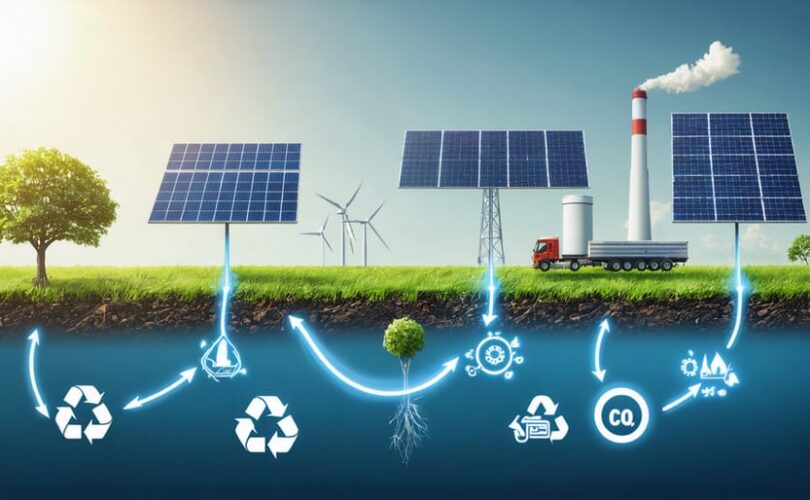
Solar energy’s role in reducing global carbon emissions extends far beyond its clean operational phase, encompassing a complex lifecycle that demands careful scientific scrutiny. While photovoltaic (PV) systems generate electricity without direct carbon emissions, their total environmental impact includes manufacturing, transportation, installation, and end-of-life disposal processes. Current research indicates that solar panels produce approximately 40-50g of CO2 equivalent per kilowatt-hour throughout their lifecycle – a fraction of fossil fuel alternatives, yet still significant enough to warrant optimization efforts.
The carbon footprint of solar energy systems varies substantially based on manufacturing location, installation methods, and panel efficiency. Chinese-manufactured panels typically carry a higher carbon burden due to coal-powered production facilities, while European and American manufacturers often achieve lower emission rates through cleaner energy grids. Modern solar installations offset their embedded carbon within 1-4 years of operation, depending on geographical location and system specifications, subsequently providing decades of clean energy production.
Understanding these lifecycle emissions becomes crucial as global solar capacity expands exponentially, with the industry projected to triple by 2027. This comprehensive carbon accounting helps stakeholders make informed decisions about solar technology adoption while driving innovations in manufacturing processes and recycling technologies to further reduce environmental impact.
Understanding Solar Energy’s Carbon Footprint
Manufacturing and Production Emissions
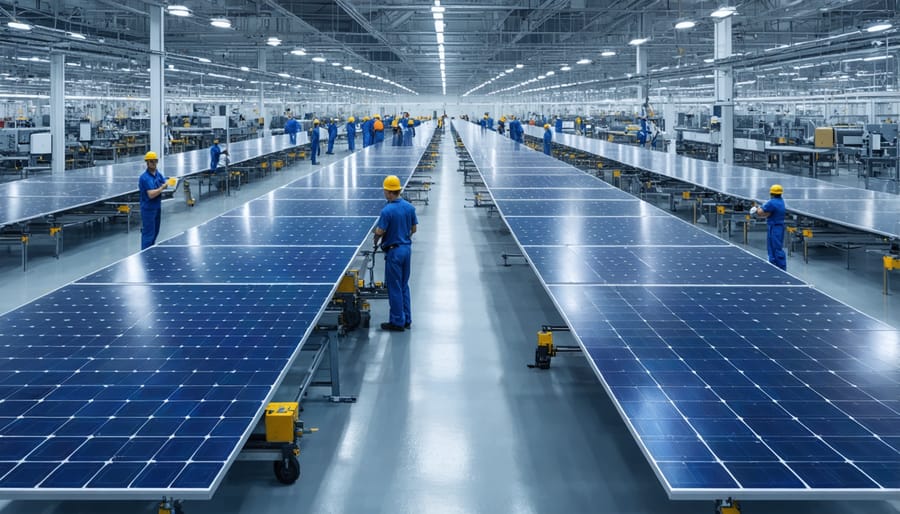
The production of solar panels involves significant energy consumption and generates substantial solar panel manufacturing emissions, primarily during silicon purification and panel assembly processes. The energy-intensive nature of manufacturing crystalline silicon cells, which require temperatures exceeding 1,500°C, contributes approximately 50-70% of the total carbon footprint during production.
Key manufacturing stages that generate emissions include raw material extraction, silicon processing, wafer production, and module assembly. The carbon intensity varies significantly based on the manufacturing location and energy sources used in production. For instance, solar panels manufactured in countries heavily reliant on coal-based electricity typically have a higher carbon footprint compared to those produced using renewable energy sources.
Recent technological advances and improved manufacturing efficiencies have reduced emissions intensity by approximately 50% over the past decade. Modern facilities implementing energy-efficient processes and renewable power sources can produce panels with significantly lower carbon footprints. The industry continues to innovate with methods such as recycled silicon usage and low-temperature manufacturing processes.
Emissions from transportation and supply chain logistics also contribute to the overall manufacturing footprint, though these represent a smaller percentage compared to direct production emissions. Understanding these factors is crucial for manufacturers and consumers seeking to minimize the environmental impact of solar energy systems.
Installation and Maintenance Carbon Impact
The transportation and installation of solar PV systems contribute to their overall carbon footprint, though these emissions are relatively minor compared to manufacturing processes. Installation activities typically involve heavy machinery, delivery vehicles, and construction equipment, generating emissions through fuel consumption. On average, transportation and installation account for approximately 3-6% of a solar system’s total lifecycle emissions.
Maintenance activities also generate ongoing emissions, primarily from vehicle trips for routine inspections, cleaning, and repairs. Modern solar installations require minimal maintenance, with most systems needing only annual or semi-annual professional inspections. Regular panel cleaning may be necessary in dusty regions or areas with limited rainfall, requiring additional site visits and potentially increasing the carbon impact.
The carbon emissions from maintenance activities vary significantly based on system size, location, and environmental conditions. Remote installations generally have a higher maintenance-related carbon footprint due to increased travel distances for service personnel. However, advances in remote monitoring technology have reduced the frequency of physical site visits, helping to minimize these emissions.
To reduce installation and maintenance-related emissions, many solar companies are transitioning to electric vehicles for service fleets and implementing optimization strategies for maintenance schedules. Some providers also utilize drone technology for inspections, further reducing the need for frequent site visits and associated emissions.
Land Use Implications of Solar Installations
Ground-Mounted vs. Rooftop Systems
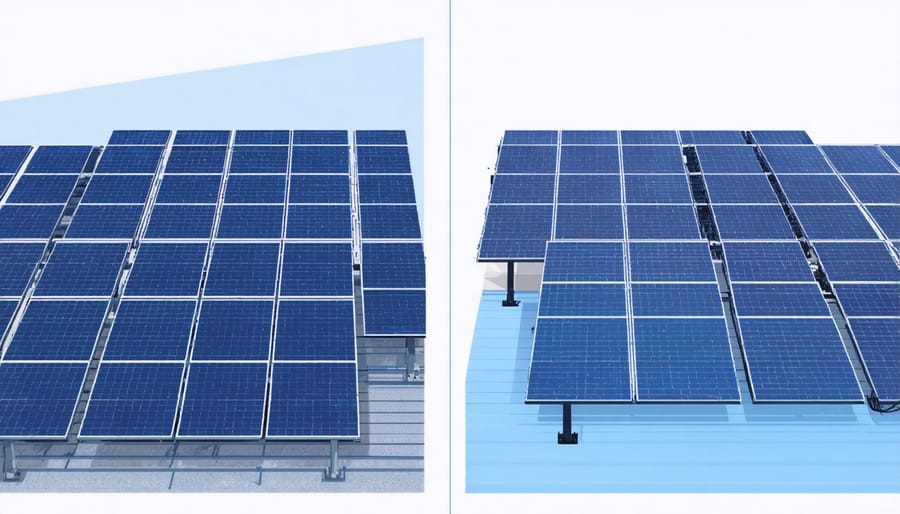
The choice between ground-mounted and rooftop solar installations significantly impacts the overall carbon footprint and environmental considerations of photovoltaic systems. Rooftop installations maximize existing built infrastructure, eliminating the need for additional land use and minimizing habitat disruption. These systems effectively utilize otherwise unused space, making them particularly valuable in urban and suburban environments where land availability is limited.
Ground-mounted systems, while requiring dedicated land area, offer advantages in terms of optimal positioning and scale. These installations can be oriented precisely for maximum solar exposure and can accommodate larger arrays than most rooftop systems. However, their land use impact varies significantly based on the installation site’s previous condition and ecological value.
Studies indicate that ground-mounted utility-scale installations typically require between 5-10 acres per megawatt of capacity, depending on the technology used and local conditions. This land requirement must be weighed against the systems’ higher efficiency rates, which often exceed those of rooftop installations by 10-20% due to optimal positioning and better ventilation.
The environmental impact of land use can be mitigated through strategic siting decisions. Installing ground-mounted systems on previously disturbed or low-value lands, such as brownfields or abandoned industrial sites, minimizes ecological disruption. Some installations even incorporate dual-use strategies, such as agrivoltaics, where agricultural activities continue beneath the panels.
Rooftop systems, while not impacting additional land use, may face limitations in terms of structural capacity, orientation, and available space. However, they contribute to urban sustainability by utilizing existing structures and reducing transmission losses through proximity to end-users. The choice between these installation types should consider local environmental conditions, available space, and specific project requirements to optimize both energy generation and environmental preservation.
Dual-Use Solar Applications
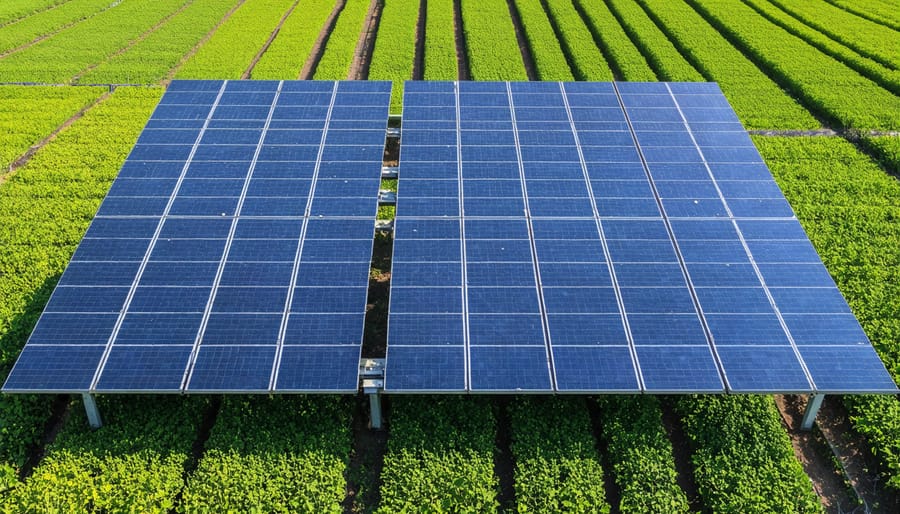
Innovative dual-use solar applications are revolutionizing how we maximize land utilization while reducing the overall carbon footprint of solar installations. Agrivoltaics, the practice of combining agricultural activities with solar power generation, represents a particularly promising approach that addresses both energy production and food security concerns.
In agrivoltaic systems, solar panels are installed at specific heights and configurations that allow crops to grow underneath. This arrangement creates several synergistic benefits: the panels provide partial shade that can protect certain crops from excessive heat and reduce water evaporation, while the plants’ natural cooling effect through transpiration helps maintain optimal panel temperature and efficiency.
Research demonstrates that agrivoltaic installations can increase land-use efficiency by up to 70% compared to separate solar and agricultural operations. Studies conducted across various climates show that some crops, particularly shade-tolerant varieties, can maintain or even increase yields under solar panels while simultaneously generating clean electricity.
Beyond agriculture, dual-use applications extend to parking lots, building structures, and water bodies. Floating solar arrays (floatovoltaics) installed on reservoirs and irrigation ponds reduce water evaporation while benefiting from the cooling effect of water, which enhances panel efficiency. Similarly, solar canopies over parking lots provide shade for vehicles while generating power, eliminating the need for additional land use.
These innovative approaches significantly reduce the carbon footprint of solar installations by maximizing land efficiency and creating additional environmental benefits. For instance, agrivoltaic systems can reduce irrigation requirements by 20-30%, further decreasing the overall environmental impact of both energy and food production. As solar technology continues to advance, these dual-use applications represent a crucial strategy for sustainable development and carbon footprint reduction.
Carbon Offset Potential
Lifetime Carbon Savings
Solar installations demonstrate significant carbon savings over their operational lifetime, typically offsetting their initial manufacturing emissions within 1-4 years of deployment. When analyzing the complete lifecycle, including end-of-life carbon impact, a typical residential solar system saves approximately 30-40 metric tons of CO2 over its 25-30 year lifespan.
The net carbon reduction calculation considers several key factors: initial manufacturing emissions (approximately 40-50g CO2/kWh), transportation and installation impacts, energy generation offset, and system efficiency degradation over time. For utility-scale installations, the carbon savings multiply significantly, with systems capable of offsetting hundreds of thousands of metric tons of CO2 annually.
Research indicates that modern solar installations achieve a carbon payback period that continues to decrease as manufacturing processes become more efficient. Current data shows that for every kilowatt-hour of electricity generated by solar panels, approximately 300-400g of CO2 emissions are avoided compared to fossil fuel alternatives.
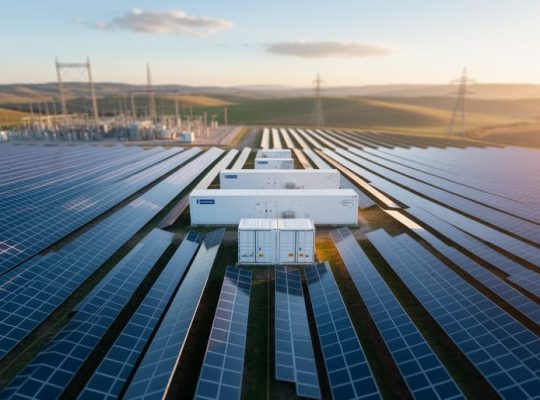
Geographic location plays a crucial role in determining lifetime carbon savings. Regions with higher solar irradiance and carbon-intensive grid electricity achieve faster carbon payback periods and greater overall emissions reduction. When combined with energy storage systems, these savings can be further optimized by maximizing solar energy utilization and grid independence.
Future Technologies and Improvements
The solar energy sector continues to witness remarkable technological advancements aimed at reducing its carbon footprint throughout the manufacturing and deployment processes. Perovskite solar cells represent a promising breakthrough, offering the potential for higher efficiency while requiring less energy-intensive production methods compared to traditional silicon cells. These next-generation cells can be manufactured at lower temperatures, significantly decreasing the energy required during production.
Bifacial solar panels are gaining traction as they capture sunlight from both sides, increasing energy yield without expanding the physical footprint. This innovation maximizes land use efficiency and improves the overall carbon offset potential of solar installations. Additionally, floating solar arrays (floatovoltaics) present an innovative solution that eliminates land use concerns while potentially reducing water evaporation from reservoirs.
Manufacturing improvements, including automated production lines and recycled materials integration, are steadily decreasing the energy intensity of solar panel production. Advanced recycling technologies are being developed to recover and reuse valuable materials from end-of-life panels, creating a more circular economy approach to solar manufacturing.
Carbon capture technologies implemented in solar manufacturing facilities show promise in further reducing emissions during production. Combined with the transition to renewable energy for manufacturing processes, these improvements are expected to significantly lower the industry’s carbon footprint within the next decade. Research into bio-based materials and enhanced durability could extend panel lifespans, improving their lifetime carbon offset potential.
Best Practices for Carbon-Conscious Solar Development
Implementing sustainable practices throughout the solar development lifecycle is crucial for maximizing the environmental benefits of photovoltaic installations. Understanding the solar panel environmental impact helps developers make informed decisions to reduce carbon emissions effectively.
Sourcing materials from local suppliers significantly reduces transportation-related emissions while supporting regional economies. Manufacturers should prioritize renewable energy in their production processes and implement energy-efficient manufacturing techniques. Selecting high-efficiency panels with longer lifespans minimizes the need for frequent replacements and reduces overall carbon footprint.
During installation, careful site selection is paramount. Utilizing previously developed or degraded land instead of clearing natural habitats preserves carbon sinks and biodiversity. Implementing dual-use strategies, such as agrivoltaics, maintains land productivity while generating clean energy. Construction teams should employ electric vehicles and equipment when possible, further reducing project emissions.
Optimal system design plays a crucial role in carbon reduction. Engineers should focus on maximizing energy yield through proper orientation, tilt angles, and spacing while minimizing material usage. Incorporating smart monitoring systems enables efficient maintenance and early problem detection, extending system lifespan and maintaining peak performance.
End-of-life considerations are equally important. Developers should partner with certified recycling facilities and implement take-back programs to ensure proper disposal and material recovery. Planning for component reuse and recycling from the project’s inception helps create a circular economy approach to solar development.
Documentation and verification of carbon reduction measures through standardized methodologies help quantify environmental benefits. Regular monitoring and reporting of emissions data enable continuous improvement and demonstrate commitment to sustainable practices. Industry collaboration and knowledge sharing accelerate the adoption of carbon-conscious development strategies across the sector.
Solar energy’s carbon footprint remains significantly lower than conventional energy sources, demonstrating its crucial role in global decarbonization efforts. Through comprehensive lifecycle analysis, we’ve established that modern solar PV systems typically offset their initial carbon investment within 1-4 years of operation, while continuing to generate clean energy for 25-30 years. The industry’s continuous technological improvements and manufacturing efficiencies are further reducing the carbon intensity of solar panel production.
Looking ahead, several promising developments suggest an even greener future for solar energy. Advanced recycling technologies are emerging to address end-of-life management, while more efficient manufacturing processes and the integration of renewable energy in production facilities are decreasing the industry’s carbon footprint. The trend toward bifacial panels and higher efficiency modules is maximizing energy generation per unit area, effectively reducing land use impacts.
As the global energy sector transitions toward renewables, solar energy’s role becomes increasingly vital. Research indicates that widespread solar adoption could reduce annual carbon emissions by several gigatons by 2050. The industry’s commitment to sustainable practices, coupled with supportive policies and continuing technological innovations, positions solar power as a cornerstone of climate change mitigation strategies.
The path forward requires continued focus on reducing manufacturing emissions, improving panel efficiency, and developing circular economy solutions. With these advancements, solar energy’s already favorable carbon profile will only improve, reinforcing its position as a leading clean energy technology.