Showing 5 Result(s)
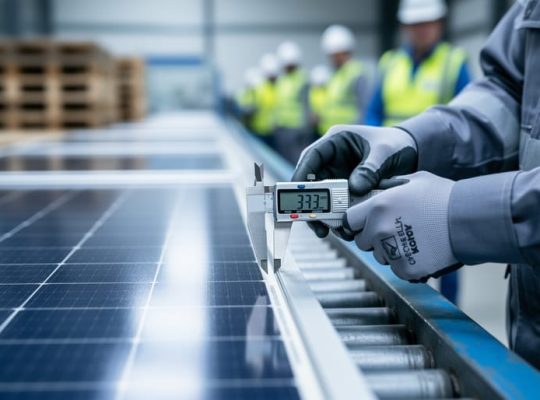
Close-up of gloved technician measuring a solar panel’s aluminum frame with a caliper on a factory conveyor, with rows of panels and PPE-clad workers softly blurred in the background under diffused industrial lighting.

How KPIV and KPOV Transform Your PV Procurement Compliance Strategy

In photovoltaic procurement, meeting local content requirements hinges on controlling the right variables—yet most professionals struggle to systematically identify and monitor what truly drives compliance outcomes. Key Process Input Variables (KPIVs) and Key Process Output Variables (KPOVs) provide the proven quality management framework that transforms vague compliance efforts into measurable, predictable results.
KPIVs represent the controllable factors you manipulate—supplier selection criteria…

Procurement manager wearing safety gear closely inspecting a photovoltaic panel on a manufacturing conveyor line inside a modern factory, with blurred workers and machinery in the background, cool blue-gray tones, no visible text or logos.

Why Local Content Rules Can Make or Break Your Solar Project

Photovoltaic procurement strategies that ignore local content requirements expose projects to regulatory penalties, contract cancellations, and revenue losses exceeding 30% of total project value. Compliance with local content regulations—mandates requiring specified percentages of domestically sourced materials, labor, or services—has become non-negotiable as governments worldwide leverage solar expansion to stimulate domestic manufacturing and job creation.
Procurement managers face a complex challenge: balancing cost optimization with regulatory adherence while maintaining project timelines and quality standards. A single …

Customs inspector in a safety vest reviewing a clipboard beside palletized solar panels at an open seaport warehouse, with stacked containers, gantry cranes, and a forklift softly blurred in the background under cool overcast daylight.

Why Your Solar Panels Are Stuck at Customs (And How to Avoid It)

Customs compliance in photovoltaic logistics represents the difference between seamless international operations and catastrophic supply chain failures that can cost solar companies millions in penalties, detained shipments, and project timeline disruptions. As the solar industry accelerates toward global expansion, understanding and implementing proper customs protocols has transitioned from administrative necessity to strategic competitive advantage.
The complexity of importing solar …

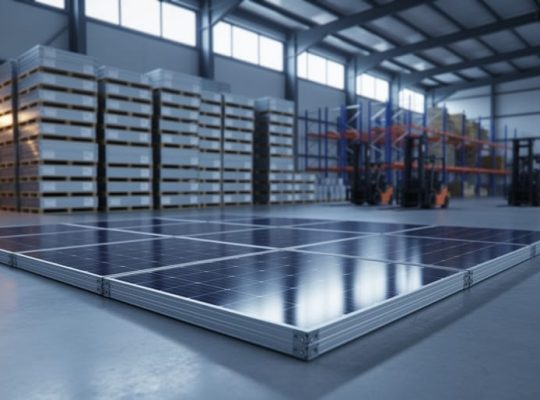
Stacked pallets of solar panels wrapped in plastic on a wet port dock under storm clouds, with a high-visibility-clad inspector examining the shipment as cargo cranes and a ship blur in the background.

How Procurement Risk Can Sink Your Solar Project Before Installation Begins

Procurement risk in photovoltaic projects represents the intersection of financial exposure, supply chain vulnerability, and technical performance uncertainty. When solar developers commit to multimillion-dollar equipment purchases, they assume risks ranging from module quality defects and shipping delays to currency fluctuations and supplier insolvency. A single miscalculated procurement decision can erode project margins by 5-15%, trigger construction delays costing thousands daily, or compromise system performance for decades.
The complexity intensifies when international procurement introduces Incoterms—standardized trade …

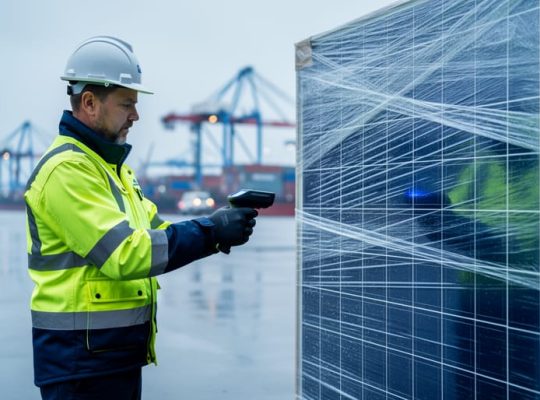
Customs inspector wearing gloves scans a shrink-wrapped pallet of solar panels at a seaport; background cargo containers and cranes are blurred with no readable markings.

Why Solar Companies Can’t Ignore the Forced Labor Enforcement Task Force

The Forced Labor Enforcement Task Force, established under the Uyghur Forced Labor Prevention Act (UFLPA), has fundamentally reshaped solar supply chain compliance since June 2022. For photovoltaic industry professionals, understanding this enforcement mechanism is no longer optional—it directly determines whether your solar modules clear U.S. Customs or face detention and seizure at the border.
The Task Force operates on a rebuttable presumption: all goods wholly or partially manufactured in China’s Xinjiang region are presumed products of forced labor and banned from importation unless importers provide clear and …