Solar transportation stands at the forefront of sustainable mobility innovation, marking a pivotal shift in how we power our movement across land, sea, and air. As photovoltaic technology advances, vehicles integrated with solar cells are transforming from experimental prototypes into practical solutions for everyday transportation needs. This evolution represents a crucial intersection between renewable energy and mobility, offering promising pathways to reduce transportation’s carbon footprint while enhancing energy independence.
Recent breakthroughs in solar cell efficiency, coupled with advances in lightweight materials and energy storage systems, have accelerated the development of viable solar-powered vehicles. From solar-assisted electric cars to autonomous solar vessels, these innovations demonstrate how photovoltaic technology can supplement and, in some cases, entirely replace traditional fossil fuel-based propulsion systems.
The integration of solar power into transportation infrastructure extends beyond vehicles themselves. Smart highways with embedded solar panels, solar-powered charging stations, and photovoltaic-enhanced public transit systems are creating an interconnected ecosystem of sustainable mobility solutions. These developments are particularly significant as transportation accounts for approximately 29% of global energy consumption, making it a critical sector for renewable energy adoption.
As we progress toward a carbon-neutral future, solar transportation technologies offer a compelling blueprint for sustainable mobility, combining environmental benefits with practical functionality. The sector’s rapid evolution signals a transformative period in transportation history, where solar power plays an increasingly central role in moving people and goods across the globe.
The Evolution of Solar PV in Transportation
From Concept to Reality
Solar transportation has evolved significantly since its inception in the 1970s, marked by several breakthrough developments. The first notable milestone came in 1977 when the University of Alabama developed the “Solar Raceabout,” demonstrating the feasibility of solar-powered vehicles. The 1980s saw increased experimentation with solar-integrated public transportation, particularly in research partnerships between universities and transit authorities.
The 1990s brought significant advances in photovoltaic efficiency and energy storage systems, enabling the creation of more practical solar vehicles. The World Solar Challenge, launched in 1987, became a crucial platform for testing and improving solar vehicle technology. These competitions spurred innovations in aerodynamics, lightweight materials, and power management systems.
The turn of the millennium marked the beginning of commercial applications, with major automotive manufacturers incorporating solar panels into hybrid vehicles. Recent developments include solar-powered trains in India, solar roads in France, and autonomous solar vessels for maritime transport. Today, enhanced photovoltaic efficiency, combined with advanced battery technology and smart energy management systems, continues to push the boundaries of what’s possible in solar transportation.
Current Market Status
The solar transportation market has witnessed significant growth in recent years, with various solutions already operational across different sectors. Solar-powered vehicles, ranging from passenger cars to public transit buses, are being tested and deployed in multiple countries. Notable examples include solar-assisted electric buses in Australia and solar-powered trains in India, demonstrating the technology’s practical viability.
Current market leaders are focusing on integrating photovoltaic systems into existing transportation infrastructure. Solar-powered charging stations for electric vehicles have become increasingly common, with major automotive manufacturers incorporating solar panels into their charging networks. Universities and research institutions are actively developing more efficient solar cells and energy storage systems specifically designed for transportation applications.
The marine sector has also embraced solar transportation, with solar-electric ferries operating in several European countries. In aviation, solar-powered aircraft prototypes have successfully completed international flights, though commercial applications remain limited. While challenges persist in energy storage and system efficiency, the market shows promising growth potential, supported by improving technology and increasing environmental regulations worldwide.
Core Technologies Enabling Solar Transportation
Advanced PV Module Integration
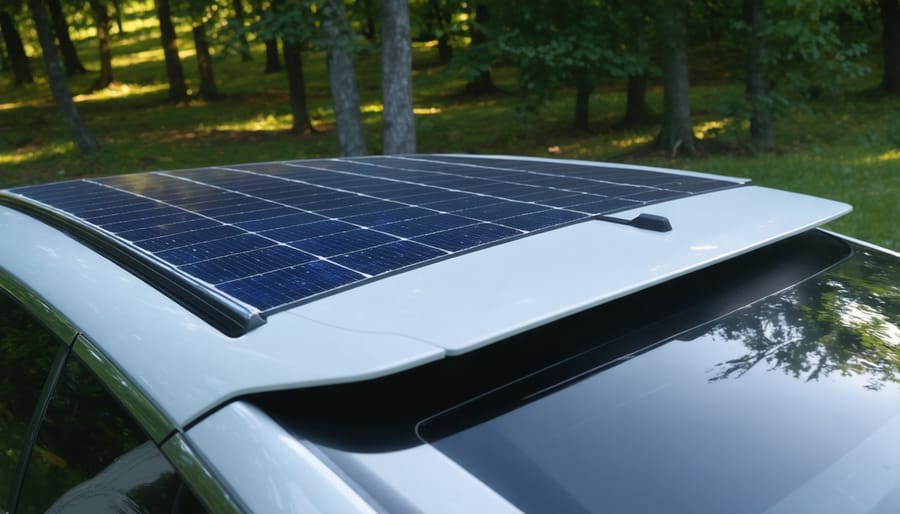
The integration of specialized photovoltaic modules into transportation vehicles requires advanced engineering solutions that go beyond conventional solar panel designs. These customized modules must balance efficiency, durability, and aerodynamics while adhering to sustainable PV technology principles. Modern vehicle-integrated photovoltaics (VIPV) employ lightweight, flexible materials and curved surface applications that maintain optimal power generation without compromising vehicle performance.
Key innovations include thin-film solar cells with enhanced bend radius capabilities, allowing seamless integration into vehicle bodywork. These specialized modules feature reinforced encapsulation systems that protect against vibration, extreme temperatures, and road debris while maintaining high power conversion efficiency. Advanced maximum power point tracking (MPPT) systems ensure optimal energy harvesting under varying conditions and vehicle orientations.
Recent developments in bifacial solar technology have enabled modules to capture reflected light from road surfaces, increasing overall energy yield. Anti-soiling coatings and self-cleaning surfaces help maintain performance in challenging transportation environments. Temperature regulation systems prevent power losses during high-temperature operation, while smart monitoring systems provide real-time performance data and predictive maintenance capabilities.
These specialized modules undergo rigorous testing protocols, including accelerated lifecycle testing, impact resistance evaluation, and environmental stress screening to ensure reliability in mobile applications. The integration process considers factors such as weight distribution, aerodynamic impact, and safety requirements specific to various transportation modes.
Energy Storage Solutions
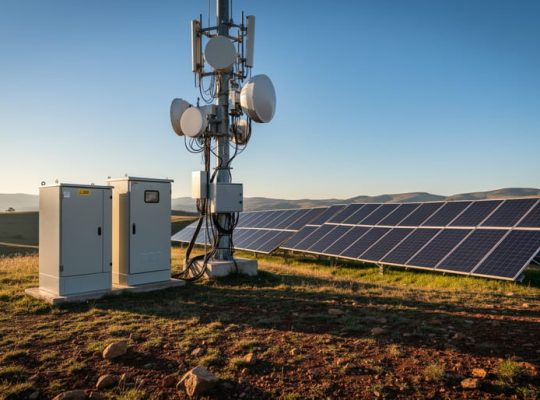
Efficient energy storage systems are crucial components in solar-powered transportation, serving as the bridge between intermittent solar generation and consistent power demands. Advanced lithium-ion batteries remain the primary storage solution, offering high energy density and reliable performance for various transportation applications. These systems are particularly vital in off-grid solar power systems where continuous operation is essential.
Modern power management systems utilize sophisticated algorithms to optimize energy distribution between solar panels, storage units, and propulsion systems. These controllers monitor real-time power generation, battery state-of-charge, and vehicle energy requirements to maintain optimal performance. Thermal management systems protect batteries from temperature extremes, extending their lifespan and maintaining efficiency.
Emerging storage technologies, including solid-state batteries and advanced capacitors, promise even greater energy density and faster charging capabilities. These innovations address current limitations in storage capacity and charging times, critical factors in the widespread adoption of solar transportation solutions.
Integration of smart grid technology enables bidirectional power flow, allowing vehicles to serve as mobile energy storage units. This vehicle-to-grid (V2G) capability enhances grid stability and provides additional value to solar-powered transportation systems, particularly in urban environments where power demands fluctuate significantly throughout the day.
Smart Control Systems
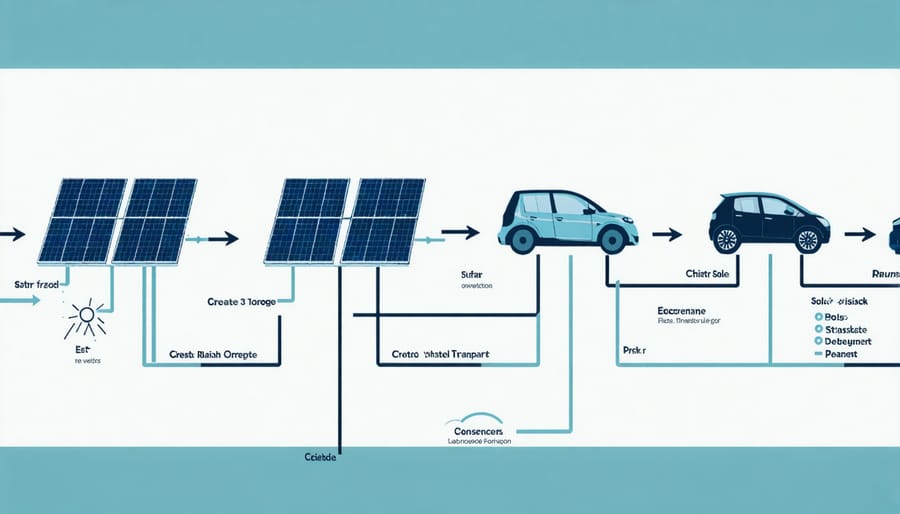
Smart control systems in solar transportation integrate sophisticated hardware and software components to maximize energy efficiency and operational performance. These systems employ advanced algorithms to monitor, analyze, and optimize energy distribution between solar panels, storage systems, and propulsion mechanisms in real-time.
At the core of these systems are microcontrollers and sensors that continuously gather data about solar irradiance, battery state of charge, vehicle speed, and environmental conditions. This data feeds into intelligent management software that makes instantaneous decisions about energy allocation, ensuring optimal utilization of available solar power while maintaining vehicle performance.
Key features of modern solar transportation control systems include maximum power point tracking (MPPT), which ensures solar panels operate at peak efficiency regardless of environmental conditions. Dynamic load balancing algorithms distribute power between immediate consumption and storage, while predictive analytics forecast energy availability based on weather patterns and route characteristics.
Advanced monitoring interfaces provide operators with crucial performance metrics and system diagnostics. These interfaces often incorporate machine learning capabilities that adapt to usage patterns and environmental conditions over time, continuously improving system efficiency.
Safety protocols are integral to these control systems, with automated responses to various scenarios such as sudden changes in solar input, battery temperature variations, or mechanical issues. This ensures reliable operation while protecting both the system components and vehicle occupants.
Applications Across Transportation Sectors
Personal Electric Vehicles
Personal electric vehicles equipped with integrated solar technology represent a significant advancement in sustainable transportation. These vehicles combine photovoltaic panels with traditional electric powertrains to extend range and reduce grid dependency. Modern solar-integrated electric cars typically feature high-efficiency solar cells embedded in the roof, hood, and sometimes side panels, generating supplementary power during daylight hours.
The efficiency of solar integration varies based on several factors, including panel placement, cell efficiency, and available surface area. Current commercial models can generate between 3-8 kWh per day under optimal conditions, providing additional range of 20-40 kilometers. While this may seem modest, it significantly reduces the need for grid charging during regular commuting.
Electric bicycles and scooters with solar charging capabilities have also emerged as practical urban mobility solutions. These smaller vehicles benefit from simplified integration requirements and lower power demands. Solar-powered e-bikes often incorporate flexible solar panels in their frame design or utilize portable solar charging stations for enhanced practicality.
Recent technological advances in photovoltaic materials, particularly in lightweight and flexible solar cells, have expanded the potential applications for personal electric vehicles. Manufacturers are developing more efficient solar integration systems, including transparent solar panels for windows and improved energy management systems that optimize power generation and consumption based on usage patterns and environmental conditions.
Public Transit Solutions
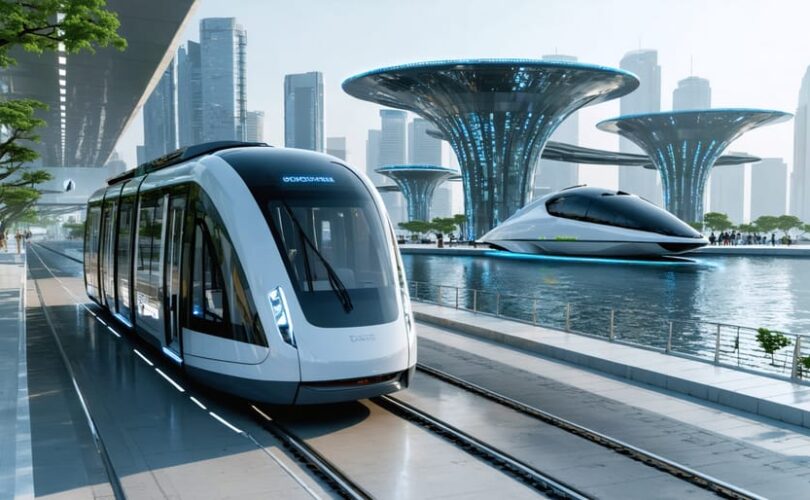
Public transportation networks are increasingly adopting solar power solutions to reduce operational costs and environmental impact. Modern solar-powered urban transit systems demonstrate remarkable efficiency gains through integrated photovoltaic technology.
Solar-powered buses utilize roof-mounted PV panels that supplement the vehicle’s electrical systems, reducing fuel consumption by up to 25%. These systems power essential components like air conditioning, lighting, and passenger information displays. Advanced energy management systems optimize power distribution between solar generation and battery storage, ensuring consistent performance throughout operating hours.
In rail transportation, solar integration takes two primary forms: trackside solar installations and train-mounted PV systems. Trackside installations provide power to signals, switches, and station facilities, while train-mounted panels contribute to onboard electrical needs. Several major metropolitan areas have implemented solar-powered trains, with some networks achieving up to 60% of their energy requirements through solar generation.
Recent technological advances have improved the efficiency of transit-specific PV systems, with specialized panels designed to withstand vibration, varying weather conditions, and aerodynamic stress. Energy storage solutions, including advanced lithium-ion batteries and supercapacitors, enable consistent power delivery even during periods of limited solar exposure.
These implementations demonstrate the viability of solar power in mass transit applications, providing a blueprint for sustainable urban transportation infrastructure.
Commercial Transport Applications
Commercial transport and logistics companies are increasingly adopting solar-powered solutions to enhance operational efficiency and reduce environmental impact. Solar-powered refrigeration units in freight trucks enable temperature-controlled transportation without relying on diesel generators, significantly reducing fuel consumption and emissions. These systems typically incorporate high-efficiency photovoltaic panels mounted on trailer roofs, connected to advanced battery storage systems.
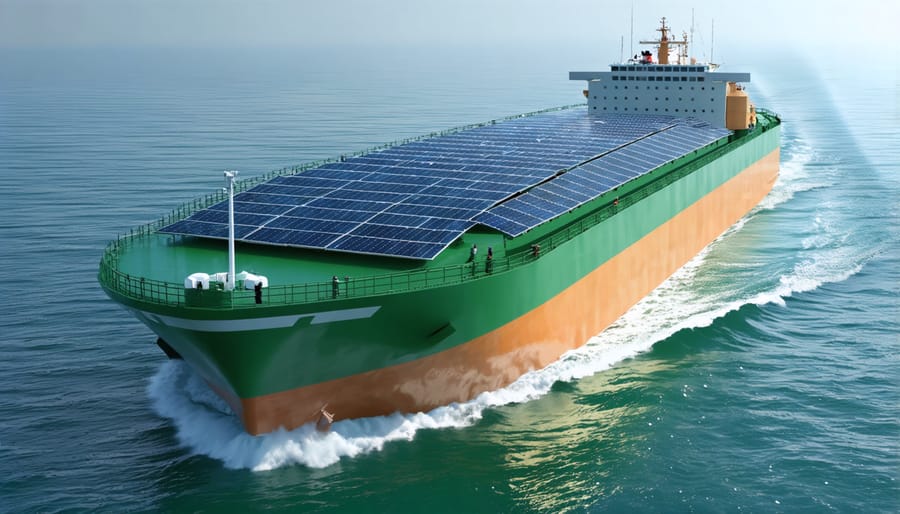
Major logistics providers have begun integrating solar panels into their warehouse facilities and distribution centers, powering electric delivery vehicles and material handling equipment. For instance, several international shipping companies now operate solar-powered cargo ships equipped with auxiliary electric propulsion systems, supplementing traditional engines during favorable conditions.
In rail transport, solar panels installed along railway tracks and on train cars provide supplementary power for lighting, air conditioning, and communication systems. Some innovative projects have demonstrated the feasibility of solar-powered trains for short-haul routes, particularly in regions with high solar irradiance.
The aviation sector is also exploring solar applications, primarily for ground operations and auxiliary power units. Solar-powered aircraft tugs, baggage handling vehicles, and maintenance equipment are becoming more common at major airports, contributing to reduced operational costs and improved sustainability metrics.
These commercial implementations often integrate smart energy management systems that optimize power distribution between solar generation, battery storage, and operational demands, ensuring reliable performance across various weather conditions and operational scenarios.
Infrastructure Requirements
Charging Networks
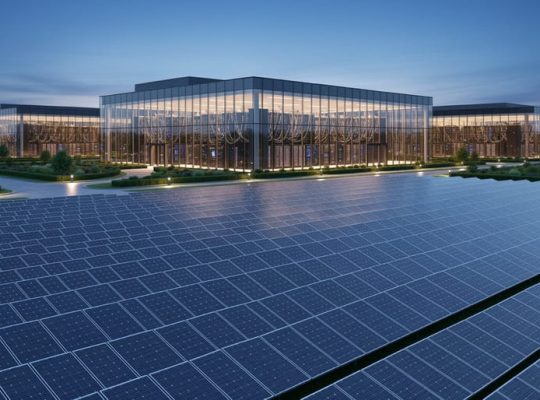
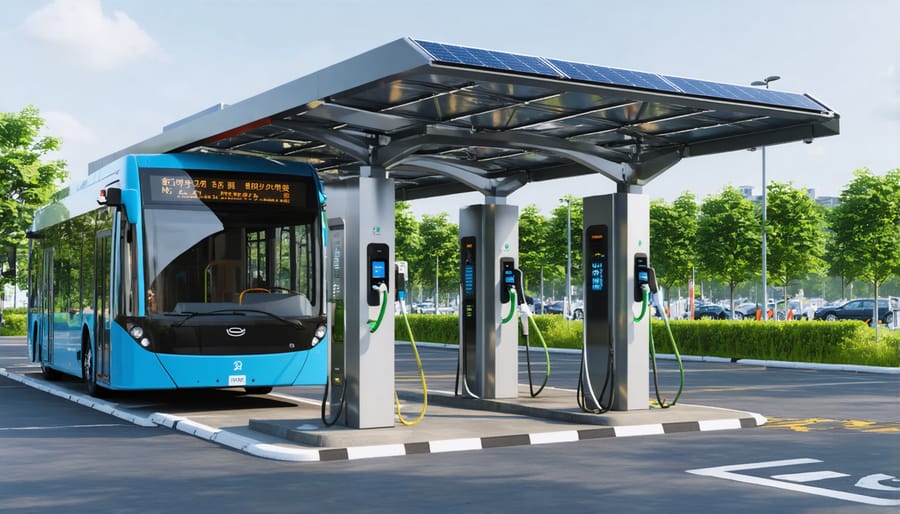
The integration of solar technology into charging networks represents a significant advancement in sustainable transportation infrastructure. Solar-integrated charging stations combine photovoltaic arrays with energy storage systems to provide clean, renewable power for electric vehicles while reducing grid dependency.
These charging networks typically feature canopy-mounted solar panels that serve dual purposes: generating electricity and providing shelter for charging vehicles. Advanced stations incorporate smart grid technologies that optimize charging schedules based on solar generation patterns and grid demand, ensuring efficient energy distribution.
Many modern solar charging facilities utilize bi-directional power flow capabilities, allowing them to feed excess solar energy back into the grid during peak generation hours. This feature creates a more resilient and sustainable charging ecosystem while potentially generating additional revenue through grid services.
Storage solutions, primarily lithium-ion battery systems, play a crucial role in these networks by bridging the gap between solar generation and charging demand. This ensures consistent power availability even during cloudy conditions or nighttime hours.
The implementation of solar charging networks has seen particular success in urban areas and along major transportation corridors, where they serve as visible demonstrations of renewable energy integration. These installations often incorporate real-time monitoring systems that display energy generation, consumption, and environmental impact metrics, helping educate the public about sustainable transportation solutions.
As technology advances, these networks are increasingly incorporating predictive analytics and artificial intelligence to optimize charging schedules and maximize solar utilization, paving the way for more efficient and sustainable transportation infrastructure.
Grid Integration
The integration of solar transportation systems with existing power infrastructure represents a critical challenge and opportunity in the renewable energy landscape. Successful implementation requires sophisticated smart grid integration systems that can manage bidirectional power flow and balance supply with demand.
Modern grid integration solutions incorporate advanced power electronics and communication protocols to ensure seamless interaction between solar-powered vehicles and the electrical grid. This includes vehicle-to-grid (V2G) technology, which enables electric vehicles to serve as mobile energy storage units, contributing to grid stability during peak demand periods.
Key components of successful grid integration include:
– Advanced metering infrastructure (AMI)
– Power quality management systems
– Load balancing mechanisms
– Real-time monitoring and control systems
– Energy storage solutions
The integration process must address several technical considerations, including voltage regulation, frequency control, and power factor correction. Grid operators are implementing sophisticated management systems that can handle the intermittent nature of solar power while maintaining system reliability.
Future developments focus on enhancing grid resilience through distributed energy resources (DERs) and microgrids, which can operate independently or in conjunction with the main grid. This flexibility improves system reliability and supports the widespread adoption of solar transportation technologies.
Future Prospects and Challenges
The future of solar transportation stands at a pivotal intersection of technological advancement and environmental necessity. As battery technology continues to evolve and solar cell efficiency improves, we’re witnessing the emergence of more viable energy independence solutions in transportation. Industry forecasts suggest that by 2030, solar-powered vehicles could represent up to 10% of the electric vehicle market.
However, significant challenges remain. The primary obstacles include improving energy storage capacity, reducing system weight, and enhancing solar cell durability under various weather conditions. Manufacturing costs continue to be a barrier to widespread adoption, though economies of scale are gradually bringing prices down.
Promising developments in perovskite solar cells and advanced power management systems offer potential breakthroughs. Research institutions are focusing on flexible solar panels that can better conform to vehicle surfaces while maintaining high efficiency. Integration with smart grid systems and autonomous vehicle technology presents exciting possibilities for optimized energy utilization.
The industry must also address standardization issues and develop robust infrastructure to support solar transportation systems. This includes establishing charging networks that can complement solar power generation and creating maintenance protocols for these specialized vehicles. Success in these areas will be crucial for achieving widespread commercial viability and public acceptance.
Solar transportation represents a pivotal advancement in sustainable mobility, combining photovoltaic technology with modern transportation systems to address both environmental concerns and energy efficiency needs. Throughout this exploration, we’ve seen how solar-powered vehicles, from passenger cars to public transit systems, are reshaping our approach to transportation.
The integration of solar technology into transportation infrastructure continues to evolve, with significant improvements in photovoltaic efficiency, energy storage capabilities, and charging systems. Research institutions and industry leaders are actively developing more efficient solar cells, lightweight materials, and advanced power management systems, promising even greater possibilities for solar transportation applications.
Looking ahead, the future of solar transportation appears promising, with emerging technologies like solar roads, autonomous solar vehicles, and enhanced battery storage solutions on the horizon. As manufacturing costs decrease and efficiency increases, we can expect wider adoption of solar transportation solutions across various sectors. The continued collaboration between research institutions, industry stakeholders, and government bodies will be crucial in advancing these technologies and establishing comprehensive infrastructure networks.
This transformation in transportation technology not only contributes to reducing carbon emissions but also paves the way for a more sustainable and energy-independent future in mobility.