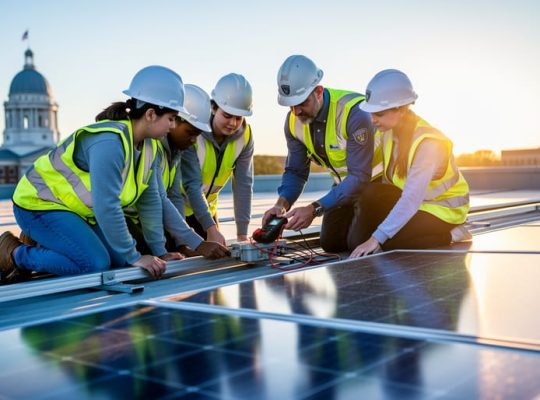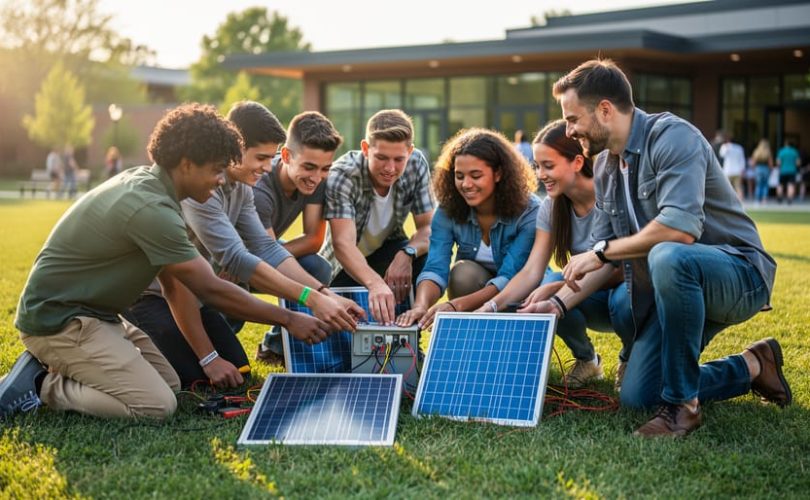
Leverage Rotary Youth Leadership Awards (RYLA) programs to cultivate the next generation of solar photovoltaic advocates by integrating renewable energy curriculum into established youth leadership frameworks. RYLA, a cornerstone Rotary International initiative serving participants aged 14-30, presents an underutilized platform for accelerating solar PV adoption through targeted youth engagement. These intensive multi-day seminars traditionally focus on leadership development, communication skills, and community service—competencies that align precisely with the skill sets required for effective clean energy advocacy and implementation.
Transform RYLA’s experiential learning model into a renewable energy incubator by incorporating solar PV fundamentals, industry exposure, and hands-on project development into existing program structures. Research demonstrates that young leaders driving solar adoption achieve measurably greater community impact when equipped with both leadership capabilities and technical knowledge. The intersection of RYLA’s proven pedagogical approach and solar industry needs creates unprecedented opportunities for program coordinators, educational institutions, and renewable energy stakeholders to develop pipelines of informed advocates.
Implement structured solar PV modules within RYLA curricula that bridge theoretical understanding and practical application. This integration addresses a critical gap in youth leadership programming: while participants develop collaborative and strategic thinking skills, they often lack exposure to high-impact career pathways in emerging sectors like renewable energy. By embedding photovoltaic technology education, policy frameworks, and community engagement strategies into RYLA experiences, programs simultaneously strengthen youth leadership competencies and advance solar adoption objectives. This approach benefits aspiring professionals seeking meaningful career directions, industry stakeholders requiring skilled talent, and communities transitioning toward sustainable energy solutions.
Understanding RYLA: Foundation for Leadership Excellence

Core Components of RYLA Programs
RYLA programs incorporate structured curriculum components designed to cultivate leadership competencies essential for emerging professionals across diverse sectors, including renewable energy and sustainability fields. These foundational elements create transformative experiences that prepare participants for complex challenges in modern industries.
Leadership skill development forms the primary pillar of RYLA programming, focusing on practical techniques for team management, decision-making under pressure, and strategic thinking. Participants engage in experiential learning activities that simulate real-world scenarios, enabling them to apply leadership theories directly to situations they may encounter in professional environments such as photovoltaic project management or renewable energy advocacy initiatives.
Ethics training represents another critical component, addressing moral reasoning, corporate responsibility, and sustainable business practices. This element proves particularly relevant for future energy sector professionals who must navigate environmental considerations, community impacts, and long-term sustainability goals in their decision-making processes.
Communication workshops enhance participants’ abilities to articulate complex technical concepts to diverse audiences—a skill invaluable for professionals who must explain renewable energy technologies to stakeholders with varying levels of technical understanding. These sessions cover public speaking, cross-cultural communication, and effective presentation strategies.
Problem-solving activities challenge participants through collaborative exercises requiring analytical thinking and innovative solutions. Teams address multifaceted challenges that mirror industry obstacles, developing competencies in research, data analysis, and implementation planning. These structured components collectively create comprehensive leadership development experiences that prepare young professionals for impactful careers in emerging sectors, particularly those requiring technical expertise combined with strong interpersonal capabilities.
The Global Reach and Local Impact
RYLA operates in over 100 countries worldwide, demonstrating Rotary International’s commitment to developing young leaders across diverse cultural and economic contexts. With approximately 9,000 students participating annually in more than 500 events globally, the program maintains a substantial international footprint while adapting to regional priorities and community needs.
Program implementation varies significantly by region, reflecting local challenges and opportunities. In North America and Europe, RYLA events increasingly incorporate sustainability themes, including renewable energy leadership modules that align with regional climate commitments. Asian-Pacific programs often emphasize technological innovation and entrepreneurship, while Latin American initiatives frequently focus on community development and social enterprise models. African programs typically integrate agricultural sustainability and resource management components.
Participation data reveals consistent growth patterns, with developing nations showing the highest percentage increases in RYLA enrollment over the past decade. University collaborations enhance program reach, with over 200 higher education institutions worldwide partnering with Rotary districts to deliver specialized leadership curricula. These academic partnerships provide participants with access to research facilities, expert faculty mentorship, and certification opportunities that strengthen program credibility.
Despite geographic variations, RYLA maintains core competencies in ethical leadership, project management, and community engagement. Regional coordinators adapt curriculum frameworks to address specific challenges, such as energy access in rural communities or youth unemployment in urban centers. This balance between standardized leadership principles and localized application ensures RYLA remains relevant and impactful across diverse contexts while maintaining program quality and measurable outcomes that benefit both participants and their communities.
The Leadership Gap in Solar PV Advocacy
Why the Solar Industry Needs Youth Voices
The solar industry faces an unprecedented need for youth engagement as the effects of climate change intensify and renewable energy adoption accelerates. Young leaders bring critical advantages that established professionals often cannot replicate, particularly in peer-to-peer communication networks where authenticity and relatability drive behavioral change. Research consistently demonstrates that climate messaging resonates more effectively when delivered by individuals within the same age cohort, creating ripple effects throughout educational institutions and social communities.
Youth advocates possess an inherent stake in long-term sustainability outcomes that extends beyond quarterly earnings or election cycles. This generational perspective influences decision-making frameworks, prioritizing systemic solutions over short-term compromises. Universities collaborating with youth leadership programs report increased student engagement in renewable energy curricula when content connects to peer-led advocacy initiatives rather than traditional lecture formats.
Furthermore, young professionals entering the photovoltaic sector challenge conventional industry practices through digital fluency and interdisciplinary approaches. They integrate social media analytics, behavioral economics, and environmental justice frameworks into solar advocacy strategies that reach broader demographics. Educational program offerings that incorporate youth leadership development consequently produce advocates who understand both technical photovoltaic specifications and effective community mobilization tactics. The solar industry’s capacity to address climate urgency depends significantly on empowering these emerging voices with structured leadership training and professional development opportunities.
Skills Required for Effective Solar Advocacy
Effective solar advocacy through RYLA programs requires participants to develop a multifaceted skill set that combines technical expertise with communication proficiency. Young advocates must first acquire foundational technical knowledge about photovoltaic systems, including solar panel efficiency, energy storage solutions, grid integration, and installation best practices. This technical grounding enables credible discussions with community members and policymakers.
Public speaking and presentation abilities form the cornerstone of successful advocacy efforts. RYLA participants should master techniques for delivering compelling presentations to diverse audiences, from municipal councils to neighborhood associations. These communication skills directly support grassroots solar advocacy initiatives that drive community-level adoption.
Policy comprehension represents another critical competency. Youth advocates must understand renewable energy regulations, incentive programs, net metering policies, and local zoning requirements that affect solar installations. This knowledge allows them to navigate bureaucratic processes and articulate policy recommendations effectively.
Community engagement capabilities round out the essential skill set. Participants need cultural sensitivity, active listening skills, and the ability to build coalitions across demographic groups. Universities collaborating with RYLA programs can enhance these competencies through experiential learning modules, guest lectures from industry professionals, and field-based projects that connect theoretical knowledge with practical application in real-world solar advocacy scenarios.
Bridging RYLA and Solar PV Education
Adapting RYLA Curriculum for Energy Advocacy
Integrating solar photovoltaic advocacy into RYLA curriculum requires a strategic, multifaceted approach that balances technical education with practical leadership development. Program coordinators can begin by incorporating dedicated modules on renewable energy fundamentals, solar technology principles, and the global transition to sustainable energy systems. These sessions should feature industry professionals who can provide authentic insights into photovoltaic careers and market trends.
Case studies serve as powerful teaching tools within RYLA frameworks. Programs can examine successful community solar installations, analyzing project development from initial feasibility studies through implementation and performance monitoring. Participants benefit from understanding both technical specifications and stakeholder engagement strategies, preparing them to advocate effectively for solar adoption in their communities.
Project-based learning represents the most impactful approach to RYLA energy advocacy training. Teams can develop solar feasibility assessments for local facilities, create community education campaigns about photovoltaic benefits, or design mock solar installation proposals with cost-benefit analyses. These hands-on projects develop critical thinking, collaboration skills, and technical literacy simultaneously.
Establishing partnerships with universities, renewable energy companies, and industry associations strengthens program credibility and provides valuable resources. Collaborating institutions can offer facility tours, mentorship opportunities, and technical expertise that enhance curriculum depth. Some organizations provide equipment demonstrations or simulation software access, enabling participants to engage with photovoltaic systems virtually.
Successful curriculum adaptation also includes policy education components, teaching participants about renewable energy incentives, regulatory frameworks, and advocacy techniques. This comprehensive approach ensures RYLA graduates emerge as informed ambassadors capable of advancing solar photovoltaic adoption through both technical knowledge and leadership capabilities.
University Collaboration Models
Strategic partnerships between universities and youth leadership initiatives create powerful platforms for advancing renewable energy education and developing the next generation of solar advocates. These collaboration models leverage academic infrastructure, faculty expertise, and institutional credibility while providing students with hands-on experience in photovoltaic technologies and clean energy policy development.
Effective university partnerships integrate solar PV training into existing leadership frameworks through multiple approaches. Joint curriculum development allows academic institutions to provide technical coursework while leadership programs contribute youth engagement methodologies and experiential learning components. This model ensures participants receive both theoretical knowledge and practical skills applicable to real-world energy challenges.
Mose Solar’s collaborative approach demonstrates how industry leaders can enhance these partnerships by offering technical expertise, site visits to operational installations, and mentorship opportunities. Universities contribute research capabilities, laboratory facilities, and academic credentials that strengthen program legitimacy and appeal to diverse stakeholders. Together, these partnerships create comprehensive solar education programs that address the renewable energy sector’s growing need for skilled professionals.
Successful models typically feature shared governance structures, clearly defined roles, and measurable outcomes that satisfy both educational standards and industry requirements. Universities benefit from enhanced community engagement and relevant program offerings, while leadership initiatives gain access to cutting-edge facilities and academic rigor. Students emerge as competent advocates equipped with technical proficiency, leadership capabilities, and networks spanning academia and industry—positioning them to drive meaningful change in renewable energy adoption and policy development.
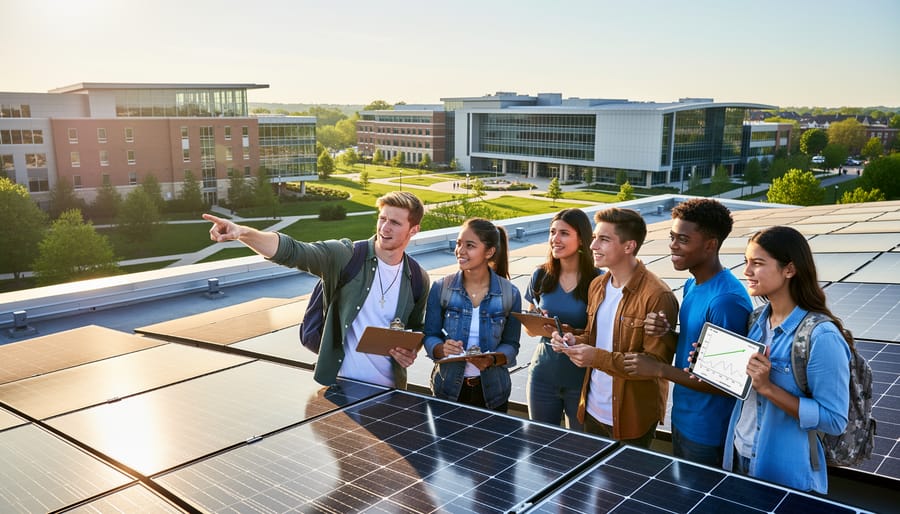
Real-World Applications: Youth-Led Solar Initiatives
Community Solar Projects Led by Young Advocates
RYLA alumni have demonstrated remarkable success in translating leadership training into tangible renewable energy outcomes. In Oregon, a team of three RYLA graduates partnered with Portland State University to establish a 250-kilowatt solar array across five community centers, providing power to over 140 low-income households. This initiative, completed within 18 months of their RYLA participation, exemplifies how structured leadership development translates into measurable environmental impact.
Similarly, a Michigan-based youth cohort leveraged their RYLA network to advocate for municipal solar policy reform. Their evidence-based presentations to city council members resulted in streamlined permitting processes that reduced installation timelines by 35 percent. Within two years, the policy changes facilitated 1.2 megawatts of additional residential solar capacity across three counties.
In California, RYLA participants collaborated with UC Berkeley’s Renewable Energy Laboratory to develop community solar projects that incorporated educational components. Their hybrid model combined 180-kilowatt installations with quarterly workshops, training over 300 residents in basic photovoltaic system maintenance and energy efficiency practices.
Texas witnessed another success when RYLA-trained advocates secured $450,000 in state funding for school-based solar installations. The project installed 375 kilowatts across seven educational facilities while developing curriculum modules that integrated renewable energy concepts into science programs. These documented outcomes demonstrate how youth leadership development programs create lasting infrastructure improvements and policy advancements that extend far beyond initial training investments.

School and Campus Solar Campaigns
Students emerging from RYLA programs have demonstrated remarkable capacity to lead institutional solar adoption initiatives. At Michigan State University, a coalition of RYLA alumni successfully advocated for a 10-megawatt solar array installation across campus facilities, engaging administration through data-driven presentations that quantified both environmental impact and long-term cost savings. Their leadership training enabled them to navigate bureaucratic processes while maintaining stakeholder engagement throughout the multi-year project.
The University of California system has witnessed similar student-driven initiatives, with RYLA-trained environmental science majors establishing peer education programs that demystify photovoltaic technology for the broader student body. These campaigns typically combine technical workshops, financial literacy sessions addressing solar economics, and community organizing strategies learned through rotary leadership development. Several high schools in Colorado have implemented smaller-scale projects, where students coordinated fundraising efforts and secured grants to install educational solar arrays that serve dual purposes as learning laboratories and functional energy systems.
Academic institutions benefit substantially from these youth-led initiatives because students bring innovative perspectives and authentic peer-to-peer communication strategies. Leadership training equips young advocates with essential skills in project management, stakeholder communication, and conflict resolution—competencies directly applicable to complex renewable energy implementation. Research from the National Renewable Energy Laboratory indicates that campus solar projects featuring student leadership demonstrate higher engagement rates and more sustained community support compared to administration-only initiatives, validating the strategic importance of youth involvement in institutional sustainability transitions.
Building a RYLA-Inspired Solar Advocacy Program
Essential Program Components
Successful RYLA programs addressing solar photovoltaic advocacy incorporate several interconnected curriculum components that build technical competence alongside leadership capabilities. The foundation begins with technical PV fundamentals, where participants engage with modules covering solar cell physics, system design principles, energy conversion efficiency metrics, and emerging technologies. Universities collaborating with RYLA programs often provide laboratory access and expert instruction to ensure participants develop substantive technical literacy rather than superficial awareness.
Advocacy skills training forms the second pillar, teaching participants how to communicate renewable energy benefits to diverse audiences. This includes public speaking workshops, policy analysis sessions examining regulatory frameworks affecting solar deployment, and stakeholder engagement simulations. Participants learn to translate technical concepts into compelling narratives for policymakers, community groups, and business leaders while maintaining scientific accuracy.
Project management instruction equips young leaders with practical tools for implementing solar initiatives within their communities. Curriculum elements cover needs assessment methodologies, feasibility studies, budget development, timeline management, and stakeholder coordination. Participants often complete capstone projects involving real-world solar installations or advocacy campaigns, applying theoretical knowledge to tangible outcomes.
The mentorship structure connects participants with established professionals across the photovoltaic value chain—researchers, engineers, policy advocates, and business developers. These relationships extend beyond program duration, creating networks that support career development and sustained engagement with renewable energy advancement. Mentors provide guidance on technical questions, career pathways, and navigating industry challenges while modeling ethical leadership practices. Structured check-ins, collaborative projects, and peer mentoring circles ensure participants receive multifaceted support throughout their leadership development journey.

Measurement and Impact Assessment
Effective measurement frameworks establish whether RYLA programs successfully cultivate renewable energy advocates and industry professionals. Assessment methodologies should encompass multiple evaluation dimensions to capture both immediate learning outcomes and long-term career trajectories.
Participant outcome tracking begins with pre- and post-program surveys measuring knowledge gains in photovoltaic technology, policy awareness, and leadership competencies. Standardized assessment instruments can quantify changes in environmental literacy, technical understanding of solar systems, and commitment to sustainability careers. Follow-up surveys at six-month and annual intervals track participant engagement in renewable energy initiatives, academic pursuits in related fields, and professional placements within the solar industry.
Community impact metrics provide tangible evidence of program effectiveness beyond individual development. Tracking the number of solar advocacy projects initiated by alumni, community education events conducted, and policy engagement activities demonstrates real-world application of RYLA training. Universities collaborating with RYLA programs contribute valuable research capabilities, enabling rigorous data collection on community solar adoption rates influenced by youth-led campaigns and educational outreach efforts.
Long-term career pathway documentation requires systematic alumni tracking systems. Recording educational trajectories through renewable energy degree programs, professional certifications in photovoltaic installation or design, and employment in solar companies or environmental organizations validates program impact on workforce development. Academic researchers partnering with RYLA initiatives can conduct longitudinal studies examining career persistence rates, leadership role progression, and alumni contributions to advancing solar technology adoption. These comprehensive metrics collectively demonstrate program value to funding organizations, industry stakeholders, and educational institutions while identifying opportunities for continuous curriculum improvement and expanded collaborative partnerships.
Resources for Aspiring Solar PV Advocates
Young professionals seeking to combine youth leadership development with solar energy advocacy can access numerous educational pathways and networking opportunities. Understanding available resources helps aspiring advocates build technical expertise while developing the communication and organizational skills essential for effective renewable energy promotion.
The Solar Energy International (SEI) offers comprehensive online courses covering photovoltaic system design, installation, and maintenance. Their entry-level programs require no prior technical background, making them ideal for RYLA alumni transitioning into solar advocacy. The North American Board of Certified Energy Practitioners (NABCEP) provides industry-recognized certification pathways, including the PV Associate credential designed for emerging professionals demonstrating foundational knowledge in solar technology.
Academic institutions increasingly offer specialized programs bridging renewable energy and leadership development. Universities such as Stanford, MIT, and Arizona State University provide certificate programs in sustainable energy management accessible through digital learning resources, enabling participants to balance professional development with existing commitments. These programs typically combine technical training with policy analysis, project management, and stakeholder engagement skills.
Professional networks offer crucial mentorship and collaboration opportunities. The Solar Energy Industries Association (SEIA) maintains a Young Professionals in Solar network connecting emerging advocates with industry leaders. The Association of Energy Engineers (AEE) provides student chapters and youth memberships featuring access to technical publications, webinars, and annual conferences. Additionally, the Clean Energy Leadership Institute offers fellowship programs specifically designed for young professionals pursuing renewable energy leadership roles.
Local and regional opportunities complement national resources. Many state renewable energy associations sponsor youth initiatives, internship programs, and advocacy training workshops. Community solar organizations frequently seek volunteers for educational outreach, providing practical experience in public engagement and project development. Aspiring advocates should also explore Rotary International’s continued education resources, which often align professional development opportunities with former RYLA participants’ interests in sustainable development and environmental stewardship.
The convergence of youth leadership development through programs like RYLA and solar photovoltaic advocacy represents a strategic investment with exponential returns for the renewable energy sector. As global energy systems undergo fundamental transformation, equipping emerging professionals with both technical competence and leadership capabilities creates a multiplier effect that extends far beyond individual participants. Young leaders trained through structured programs bring fresh perspectives to persistent challenges, accelerate technology adoption through peer networks, and sustain momentum for decarbonization initiatives across multiple decades of their careers.
Industry stakeholders bear particular responsibility for bridging the gap between academic preparation and workforce readiness. By partnering with leadership development initiatives, solar manufacturers, installers, and developers gain access to motivated talent while contributing to the sector’s long-term viability. Educational institutions should integrate renewable energy modules into existing leadership curricula, establishing formal pathways that connect youth development programs with photovoltaic industry opportunities.
For aspiring professionals, active engagement with programs modeled on RYLA’s experiential learning approach provides competitive advantages in an increasingly specialized field. These experiences cultivate essential competencies including cross-functional collaboration, systems thinking, and advocacy skills that complement technical education.
The renewable energy transition demands more than technological innovation alone. It requires a generation of informed, skilled advocates capable of navigating complex policy landscapes, mobilizing communities, and driving systemic change. Strategic investment in youth leadership development today establishes the foundation for accelerated solar adoption and sustainable energy systems tomorrow. The question facing stakeholders is not whether to invest in emerging leaders, but how quickly meaningful engagement can scale.