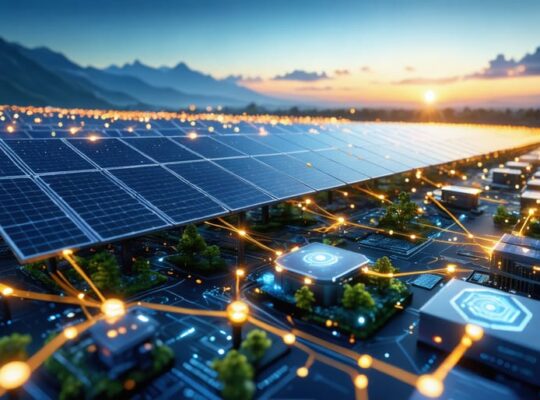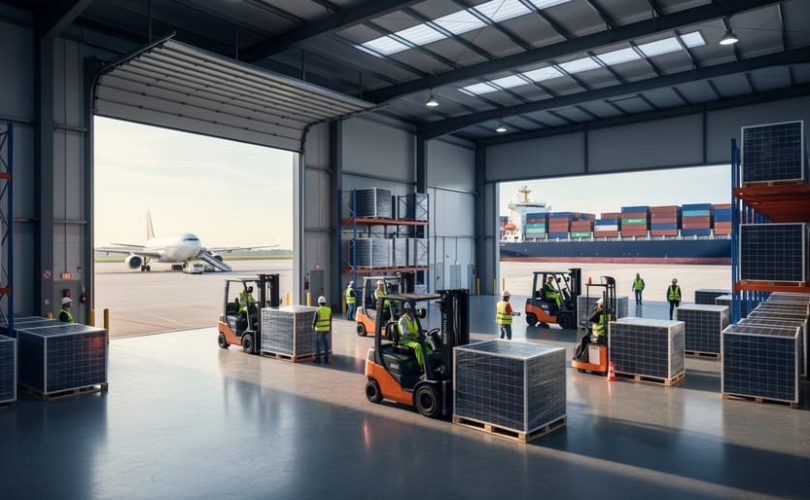
Evaluate third-party logistics providers by assessing their multimodal transportation capabilities, warehousing infrastructure across key markets, and technology integration platforms that enable real-time shipment visibility. For solar industry applications, prioritize 3PL partners offering temperature-controlled storage facilities, specialized handling protocols for fragile photovoltaic modules, and established networks in manufacturing hubs throughout Asia, distribution centers in North America and Europe, and emerging markets across Africa and Latin America.
Leverage UPS Supply Chain Solutions’ comprehensive service portfolio to streamline international solar component distribution through their integrated customs brokerage, freight forwarding across ocean and air channels, and final-mile delivery networks spanning 220 countries and territories. Their advanced warehouse management systems synchronize inventory levels with production schedules, reducing holding costs by 15-30 percent while maintaining buffer stock for demand fluctuations in renewable energy markets.
Implement zone-skipping strategies and cross-docking operations to minimize handling touchpoints and transit times for time-sensitive solar installations. UPS’s order management platforms consolidate shipments from multiple component suppliers—inverters, racking systems, monitoring equipment—into synchronized delivery schedules that align with project timelines and reduce on-site storage requirements.
The complexity of global solar supply chains demands sophisticated logistics partnerships that extend beyond basic transportation services. Modern 3PL providers function as strategic collaborators, offering supply chain analytics, risk mitigation strategies for geopolitical disruptions, and sustainability reporting that tracks carbon footprints across distribution networks. Understanding how UPS’s specialized capabilities address the unique challenges of solar PV logistics—from module fragility and regulatory compliance to volatile commodity markets—empowers industry stakeholders to build resilient, cost-effective distribution systems that accelerate renewable energy deployment worldwide.
The Unique Challenges of Solar Supply Chain Management
Component Fragility and Specialized Handling Requirements
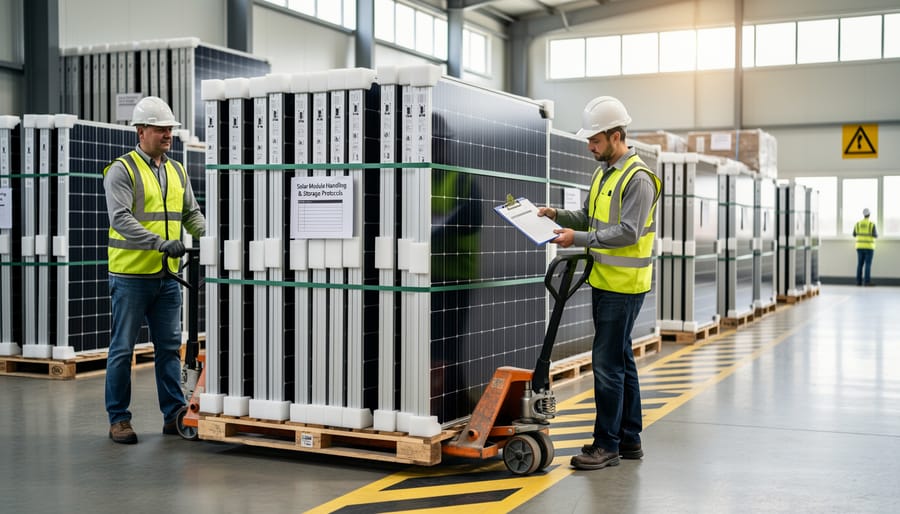
Solar photovoltaic components present distinctive logistical challenges that demand specialized handling protocols throughout the international shipping process. Monocrystalline and polycrystalline panels feature fragile silicon wafers that can develop microcracks under excessive vibration, improper stacking, or temperature fluctuations during transit. These microscopic fractures may not be immediately visible but can significantly compromise panel efficiency and longevity, resulting in substantial financial losses and warranty complications.
Professional 3PL providers like UPS implement rigorous transportation protocols specifically designed for PV components. These include climate-controlled containers maintaining optimal temperature ranges, custom cushioning systems that minimize vibration transfer, and orientation-specific positioning requirements to prevent glass breakage. Inverters and battery storage systems require additional electrostatic discharge protection and moisture-resistant packaging to preserve sensitive electronics.
The specialized nature of solar component logistics has prompted leading third-party providers to develop training programs in partnership with universities and research institutions. These educational initiatives ensure warehouse personnel and transport specialists understand proper handling techniques, load distribution principles, and damage prevention strategies unique to renewable energy equipment. For supply chain managers evaluating 3PL partners, verification of specialized solar component handling certifications and damage rate documentation should constitute essential selection criteria when optimizing international distribution networks.
Global Manufacturing and Distribution Footprints
The solar photovoltaic industry operates on a truly global scale, with manufacturing concentrated in specific regions while installation markets span every continent. China, Southeast Asia, and increasingly India dominate solar panel production, manufacturing approximately 80% of global photovoltaic modules. Meanwhile, polysilicon production occurs primarily in China and Germany, while inverters and mounting systems originate from diverse manufacturing hubs across Europe, North America, and Asia.
This geographic dispersion creates significant logistical challenges for solar supply chain networks. Components manufactured across multiple facilities must converge at installation sites in markets ranging from utility-scale desert projects in the Middle East to residential rooftop installations in suburban North America. Third-party logistics providers like UPS must coordinate ocean freight from Asian ports, arrange inland transportation across multiple countries, and synchronize deliveries to meet precise installation schedules.
The complexity intensifies when considering regulatory compliance requirements that vary by jurisdiction. Solar equipment entering European markets faces different certification standards than shipments bound for North American or Australian installations. Temperature-sensitive components require climate-controlled transportation, while fragile photovoltaic cells demand specialized handling protocols throughout the distribution chain.
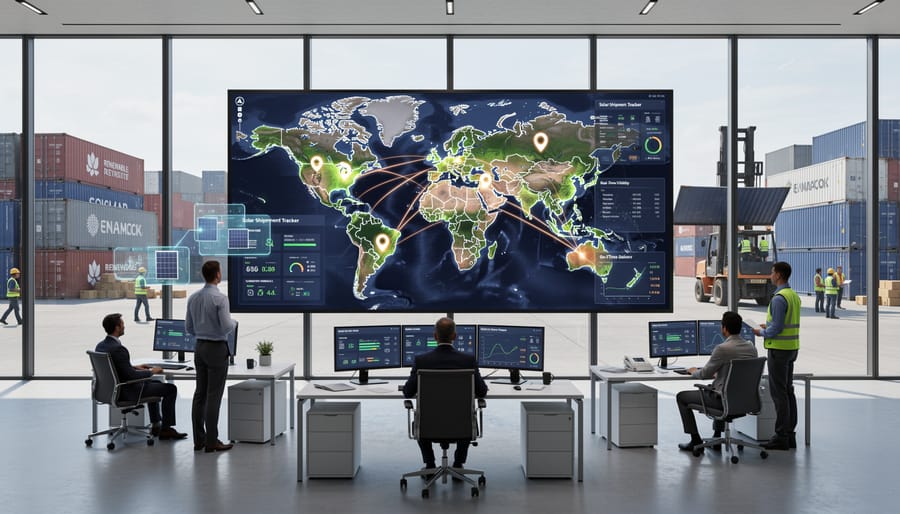
Academic research partnerships with institutions studying renewable energy logistics have revealed that successful solar supply chains require visibility across all manufacturing and distribution nodes. Integrated 3PL solutions must provide real-time tracking capabilities, customs brokerage expertise, and flexible routing options that accommodate production delays or market demand fluctuations. This multi-continental coordination capability distinguishes advanced logistics providers in serving the renewable energy sector’s unique distribution requirements.
Understanding Third-Party Logistics (3PL) in Solar Distribution
Core 3PL Services for Solar Companies
Third-party logistics providers deliver comprehensive services essential for solar industry supply chains. Warehousing capabilities form the foundation, offering climate-controlled facilities designed to protect sensitive photovoltaic modules, inverters, and balance-of-system components from environmental damage. These specialized warehouses accommodate the unique dimensional requirements of solar panels while maintaining inventory integrity throughout storage periods.
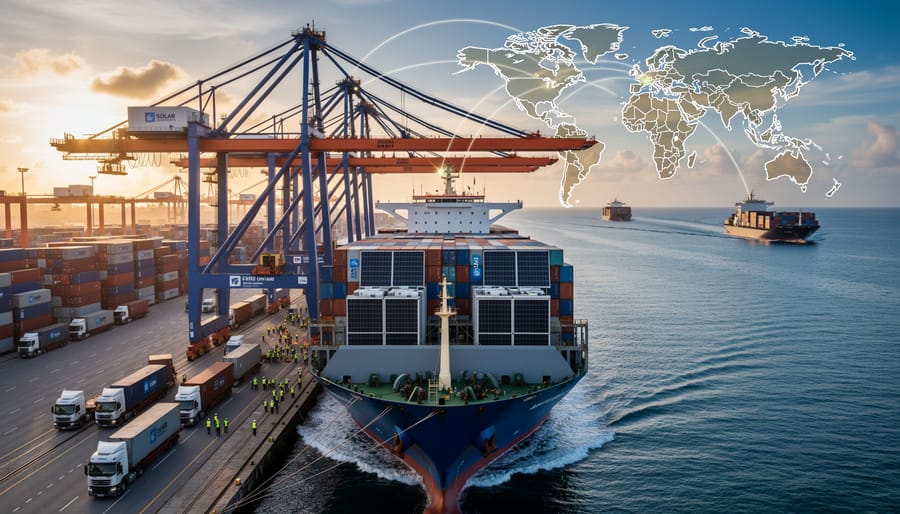
Freight forwarding services coordinate multimodal transportation across international borders, managing the complex routing of solar equipment from manufacturing centers in Asia to installation sites worldwide. Professional 3PLs optimize shipping modes—ocean, air, and ground transport—based on urgency, cost parameters, and cargo specifications.
Customs brokerage expertise proves invaluable when navigating tariff classifications, duty drawback programs, and compliance documentation for solar imports. Experienced brokers ensure regulatory adherence while minimizing delays at international checkpoints, particularly important given evolving trade policies affecting renewable energy components.
Inventory management systems provide real-time visibility into stock levels, enabling solar distributors to balance supply with project demands. Advanced warehouse management technologies track serial numbers, warranty information, and quality certifications critical for solar installations.
Last-mile delivery services complete the logistics chain, coordinating final transportation to residential rooftops, commercial facilities, or utility-scale project sites. White-glove handling options protect high-value equipment during the crucial final delivery phase, ensuring components arrive installation-ready and undamaged.
The Financial Case for Outsourcing Logistics
Partnering with established 3PL providers like UPS Supply Chain Solutions delivers compelling financial advantages for solar companies navigating competitive markets. By outsourcing logistics operations, photovoltaic manufacturers convert fixed infrastructure costs into variable expenses, eliminating capital investments in warehouses, transportation fleets, and specialized handling equipment. This financial flexibility proves particularly valuable for emerging solar companies allocating resources toward research, product innovation, and market penetration rather than logistics infrastructure.
Scalability represents another significant economic benefit. Third-party logistics partnerships enable solar businesses to expand into new geographic markets without proportional increases in operational overhead. During seasonal demand fluctuations or market contractions, companies avoid underutilized assets and excess labor costs. Professional 3PL providers leverage economies of scale across multiple clients, negotiating preferential shipping rates and optimizing consolidated freight movements that individual companies cannot achieve independently.
Risk mitigation further strengthens the financial case. Experienced logistics partners assume responsibility for regulatory compliance, customs documentation, and insurance considerations across international corridors. They maintain expertise in handling fragile photovoltaic components, reducing product damage rates and associated replacement costs. Additionally, established providers offer business continuity through redundant facilities and alternative routing capabilities, protecting solar companies from supply chain disruptions that could compromise customer commitments and revenue streams.
UPS Supply Chain Solutions: Capabilities for Solar Industry
Global Network and Regional Distribution Centers
UPS operates one of the world’s most extensive logistics networks, positioning the company as a strategic partner for solar industry supply chain management. With operations spanning over 220 countries and territories, UPS maintains sophisticated distribution infrastructure strategically located near major manufacturing centers in Asia, Europe, and the Americas. This geographic positioning proves particularly valuable for photovoltaic companies seeking to optimize delivery times from production facilities to installation sites.
The company’s distribution centers are strategically situated near key trans-national solar hubs and renewable energy markets, including facilities in Germany, California, and throughout Southeast Asia. These warehouses feature climate-controlled environments essential for protecting sensitive solar components during storage and handling.
UPS’s multimodal transportation capabilities integrate air freight, ocean shipping, ground transport, and rail services, enabling flexible routing options that balance cost efficiency with delivery speed requirements. This integrated approach allows solar companies to adapt quickly to market demands, manage seasonal fluctuations in installation activity, and navigate customs regulations across multiple jurisdictions. The network’s sophisticated tracking systems provide real-time visibility throughout the supply chain, ensuring stakeholders maintain complete oversight of valuable photovoltaic cargo from factory to final destination.
Technology Integration and Visibility Tools
UPS’s technology integration capabilities provide solar supply chain stakeholders with comprehensive visibility across complex international logistics networks. The company’s proprietary supply chain management software, UPS Quantum View, delivers real-time tracking and status updates on shipments containing sensitive photovoltaic components, enabling manufacturers and distributors to monitor temperature-sensitive solar cells and modules throughout transit.
The platform’s predictive analytics functionality leverages historical data and machine learning algorithms to forecast potential delays, optimize routing decisions, and proactively address supply chain disruptions before they impact delivery schedules. This capability proves particularly valuable when coordinating multi-modal transport of fragile solar equipment across continents.
Integration with enterprise resource planning systems represents a critical advantage for solar manufacturers managing inventory across multiple facilities. UPS’s API-enabled architecture allows seamless data exchange between manufacturer ERP systems and logistics platforms, automating order processing, customs documentation, and inventory updates. This integration reduces manual data entry errors and provides synchronized visibility across procurement, production, and distribution functions.
For research institutions and academic programs developing supply chain curriculum, UPS collaborates with universities to provide case studies demonstrating how advanced visibility tools optimize renewable energy logistics. These educational partnerships help train the next generation of supply chain professionals in applying technology-driven solutions to sustainability-focused industries.
Compliance and Regulatory Expertise
Navigating the complexities of global solar equipment distribution requires specialized expertise in customs compliance and regulatory frameworks. UPS’s comprehensive customs brokerage services streamline international shipments of photovoltaic modules, inverters, and mounting systems by managing documentation, duty calculations, and clearance procedures across multiple jurisdictions. Their tariff classification specialists ensure accurate Harmonized System codes for solar components, optimizing duty rates while maintaining full compliance with international trade regulations.
The company’s regulatory knowledge extends to understanding preferential trade agreements, anti-dumping duties specific to solar panels, and country-of-origin requirements that significantly impact landed costs. UPS manages essential documentation including commercial invoices, certificates of origin, and IEC safety certifications required for solar equipment imports. Their trade compliance technology integrates denied party screening and export control checks, protecting solar companies from inadvertent violations.
For renewable energy professionals, this expertise translates to reduced customs delays, predictable cross-border transit times, and minimized risk exposure. UPS collaborates with academic institutions to develop training programs on evolving trade policies affecting photovoltaic supply chains, ensuring industry stakeholders remain informed about regulatory changes impacting international solar commerce.
Optimization Strategies for International Solar Supply Networks
Strategic Inventory Positioning
Strategic inventory positioning represents a critical optimization approach for solar module distribution, leveraging advanced demand forecasting and regional distribution centers to minimize delivery timeframes while controlling transportation expenses. Third-party logistics providers like UPS employ sophisticated analytics platforms that analyze historical sales data, seasonal patterns, and regional installation trends to predict demand with remarkable accuracy across different geographic markets.
By establishing regional distribution centers strategically positioned near high-demand solar markets, companies can maintain optimal inventory levels that balance availability against carrying costs. This decentralized approach enables solar distributors to respond rapidly to installation projects, reducing lead times from weeks to days. UPS supply chain solutions integrate warehouse management systems with transportation networks, allowing real-time visibility into inventory positions across multiple facilities.
The positioning strategy proves particularly valuable for solar components given their sensitivity to market fluctuations driven by policy changes, utility programs, and seasonal construction patterns. Advanced forecasting models incorporate variables such as renewable portfolio standards, net metering policies, and regional incentive programs to anticipate demand shifts. This proactive positioning reduces emergency air freight costs while improving customer satisfaction through reliable delivery performance, ultimately strengthening competitive positioning in the dynamic photovoltaic marketplace.
Consolidation and Deconsolidation Programs
UPS Supply Chain Solutions implements sophisticated consolidation and deconsolidation programs specifically designed to address the complexities of solar photovoltaic component distribution. Consolidation services combine shipments from multiple solar panel manufacturers, inverter suppliers, and component facilities into single, optimized freight movements. This approach reduces transportation costs by up to 30% while minimizing carbon emissions—a critical consideration for environmentally conscious solar industry stakeholders.
For international solar supply chains, UPS manages consolidation at strategic regional hubs in Asia, Europe, and North America, where components from various manufacturers converge before ocean or air freight transit. Upon arrival at destination countries, deconsolidation programs break down bulk shipments into market-specific loads for regional distribution centers or installation sites.
The company’s advanced transportation management systems coordinate timing between manufacturing completion dates and vessel departure schedules, ensuring optimal container utilization without extending lead times. For solar projects with strict installation timelines, UPS provides cross-docking services that transition goods immediately from inbound to outbound carriers, eliminating warehouse storage delays.
Academic researchers and industry professionals can access case studies through UPS’s educational partnerships with universities, demonstrating how consolidation strategies have reduced supply chain complexity for large-scale photovoltaic deployments while maintaining component traceability throughout the distribution network.
Reverse Logistics and Warranty Management
Managing reverse logistics effectively represents a critical capability that distinguishes advanced 3PL providers in the photovoltaic sector. UPS Supply Chain Solutions offers comprehensive reverse logistics services designed to handle product returns, warranty claims, and end-of-life material recovery with the same precision applied to forward distribution networks.
When solar panels or system components fail or require replacement under warranty, the reverse logistics process must be executed efficiently to minimize customer downtime and ensure rapid resolution. Third-party logistics providers coordinate the entire return journey, from pickup authorization and transportation to inspection facilities where technical teams assess product condition and determine appropriate disposition. This centralized approach enables manufacturers to process warranty claims systematically while maintaining quality control standards.
Defective component management requires specialized handling protocols to prevent damage during transit and preserve units for failure analysis. UPS facilities equipped for reverse logistics operations provide secure staging areas and documented chain-of-custody procedures that support manufacturer investigations into product performance issues. These insights inform design improvements and quality enhancement initiatives.
End-of-life panel management has emerged as an essential service as first-generation installations reach retirement. Professional 3PL networks facilitate collection, consolidation, and delivery to certified recycling facilities, supporting solar recycling programs that recover valuable materials including silicon, silver, and aluminum. This circular economy approach addresses growing regulatory requirements regarding electronic waste while reinforcing corporate sustainability commitments. By integrating reverse logistics capabilities, 3PL providers help solar companies maintain customer satisfaction, reduce environmental impact, and extract residual value from retired equipment.
Measuring Supply Chain Performance in Solar Distribution
Establishing robust performance metrics is essential for solar companies to evaluate their 3PL partnerships effectively and ensure supply chain optimization. When collaborating with providers like UPS Supply Chain Solutions, organizations should implement a comprehensive measurement framework that captures both operational efficiency and service quality.
Delivery accuracy stands as a primary indicator, measuring the percentage of orders delivered complete and correct on the first attempt. For solar distribution, where component compatibility is critical, accuracy rates should consistently exceed 98%. This metric directly impacts installation timelines and customer satisfaction, making it a fundamental benchmark for 3PL evaluation.
Transit time performance tracks the duration from warehouse departure to final destination arrival. Solar projects operate on strict installation schedules, requiring predictable delivery windows. Companies should monitor both average transit times and on-time delivery rates, with leading 3PLs maintaining 95% or higher punctuality. Analyzing variance in transit times helps identify bottlenecks in international routing and customs clearance processes.
Damage rates require particular attention given the fragile nature of photovoltaic modules and inverters. Effective 3PLs implement specialized handling protocols that keep damage rates below 0.5%. This metric should encompass damage during loading, transit, and final delivery, with detailed root cause analysis for each incident.
Cost per unit delivered provides crucial visibility into overall supply chain efficiency. This metric should account for transportation costs, warehousing fees, insurance, and handling charges divided by units successfully delivered. Benchmarking against industry standards and tracking trends over time enables continuous improvement initiatives.
Additional metrics worth monitoring include inventory accuracy at distribution centers, order cycle time from placement to delivery, and claims resolution timeframe. Many academic research partnerships with universities have demonstrated that organizations employing comprehensive KPI dashboards achieve 15-20% greater supply chain efficiency compared to those using limited metrics. Regular performance reviews with your 3PL provider, preferably quarterly, ensure accountability and facilitate collaborative problem-solving for emerging challenges.
Emerging Trends in Solar Logistics and Supply Chain Innovation
Sustainability in Solar Logistics
Leading 3PL providers are revolutionizing solar supply chains through comprehensive sustainability initiatives that align with the renewable energy sector’s environmental commitments. Carbon-neutral shipping programs now enable solar component manufacturers to offset transportation emissions through verified carbon credit investments and renewable energy purchases, creating genuinely green logistics pathways from production facilities to installation sites.
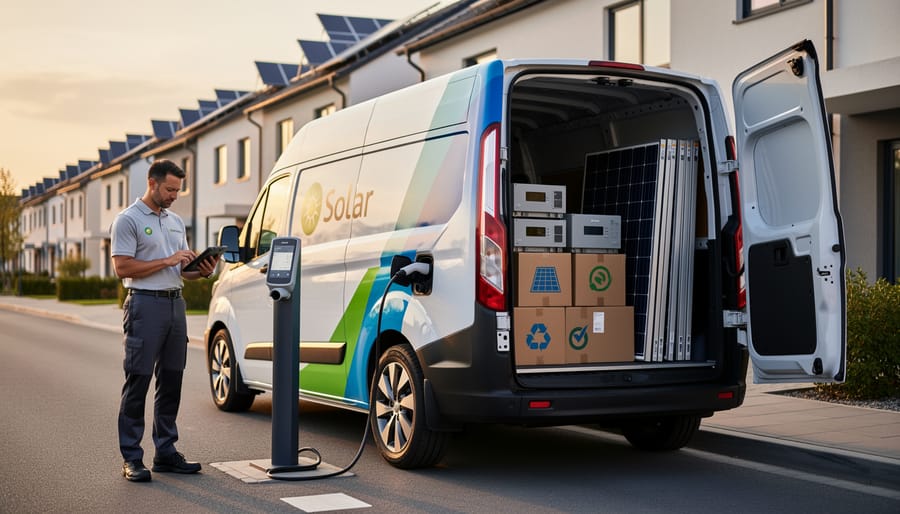
Electric delivery vehicles represent a transformative development in last-mile solar equipment distribution. Major logistics providers have deployed extensive fleets of battery-electric and hybrid trucks specifically designed to handle the weight and dimensional requirements of photovoltaic modules and inverters. These vehicles reduce urban air pollution while demonstrating the practical viability of electrified commercial transportation.
Advanced route optimization software minimizes fuel consumption by consolidating shipments and identifying efficient delivery sequences, reducing both costs and environmental impact. Several 3PL providers collaborate with universities to develop predictive analytics tools that forecast demand patterns, enabling strategic inventory positioning that decreases emergency air freight requirements.
Sustainable packaging innovations further reduce waste throughout the supply chain. Reusable protective frames, biodegradable cushioning materials, and returnable shipping containers eliminate single-use packaging while maintaining the rigorous protection standards essential for delicate solar components. These initiatives collectively demonstrate how third-party logistics partnerships advance both operational efficiency and environmental stewardship in the global photovoltaic industry.
Digitalization and Blockchain Applications
Modern third-party logistics providers are integrating advanced technologies to enhance transparency and efficiency in solar supply chains. Internet of Things sensors enable real-time monitoring of photovoltaic module shipments, tracking critical environmental conditions such as temperature fluctuations and humidity levels that could compromise product integrity during international transit. These sensor networks provide granular visibility across multi-modal transportation routes, particularly valuable for temperature-sensitive components like inverters and battery systems.
Blockchain technology is revolutionizing supply chain transparency by creating immutable records of product provenance, certifications, and custody transfers. For solar manufacturers and distributors, blockchain applications verify the authenticity of renewable energy certificates and ensure compliance with environmental standards throughout the logistics chain. This distributed ledger approach reduces documentation fraud and streamlines customs clearance processes for cross-border shipments.
Artificial intelligence platforms are transforming demand forecasting accuracy and route optimization for solar equipment distribution. Machine learning algorithms analyze historical shipment data, seasonal installation patterns, and regional policy incentives to predict inventory requirements with greater precision. AI-driven route optimization considers variables including port congestion, weather patterns, and carbon footprint reduction to identify the most efficient transportation pathways. These technological innovations, often developed through collaboration with universities, position advanced 3PL providers as strategic partners capable of managing the complexities inherent in global photovoltaic supply chains.
The strategic partnership between solar companies and professional third-party logistics providers represents far more than a transactional vendor relationship. As the photovoltaic industry scales to meet global renewable energy targets, optimized supply chains become foundational infrastructure that directly influences the pace of clean energy deployment. Professional 3PL partnerships enable solar manufacturers and distributors to concentrate resources on core competencies—advancing module efficiency, developing innovative mounting systems, and improving energy storage integration—while logistics experts navigate the complexities of international freight, customs compliance, and last-mile delivery.
The efficiency gains achieved through strategic 3PL collaboration extend beyond individual company operations to benefit the entire renewable energy ecosystem. Streamlined logistics reduce the carbon footprint of solar equipment distribution, minimize product damage during transit, and accelerate project timelines that bring clean power generation online faster. These operational improvements translate directly into competitive pricing for solar installations, making photovoltaic technology more accessible to diverse markets and accelerating global adoption rates.
At Mose Solar, we recognize that comprehensive industry education must encompass all aspects of the solar value chain, including the critical logistics infrastructure that connects manufacturing facilities to installation sites worldwide. Our commitment to advancing photovoltaic technology extends to educating current and future industry professionals about supply chain optimization, regulatory compliance, and the strategic partnerships that enable efficient global distribution. Understanding how professional logistics providers support renewable energy deployment equips the next generation of solar professionals with the holistic perspective necessary to drive meaningful progress toward sustainable energy futures.