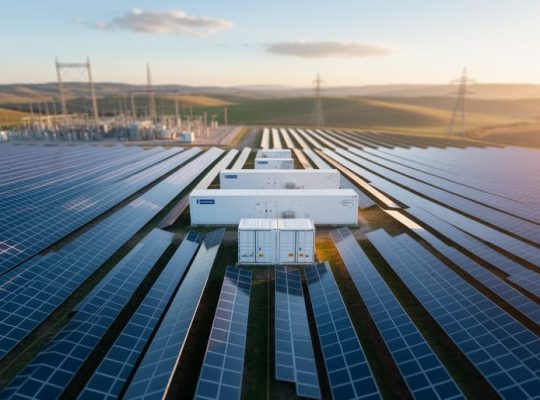
The accelerating biodiversity crisis threatens to undermine humanity’s most promising climate solution: renewable energy. As solar installations expand globally to meet decarbonization targets, the photovoltaic industry faces a critical paradox—generating clean energy while potentially disrupting the ecosystems we’re trying to protect. Every solar farm constructed alters habitats, fragments wildlife corridors, and transforms land use patterns, yet biodiversity itself offers powerful mechanisms for enhancing solar project performance and resilience.
Understanding this relationship requires examining how ecological systems directly contribute to environmental problem-solving. Biodiverse ecosystems regulate microclimates, control erosion beneath panel arrays, manage stormwater runoff, and create carbon sequestration opportunities that amplify solar’s climate benefits. Solar developers who integrate ecological principles achieve measurably better outcomes—reduced maintenance costs through natural vegetation management, enhanced pollinator support for surrounding agricultural areas, and improved community acceptance through demonstrable environmental stewardship.
The biodiversity challenges emerging from solar expansion demand systematic solutions rooted in ecological science. Research institutions partnering with industry leaders are pioneering dual-use approaches that transform solar sites into functional habitats while maintaining energy generation capacity. These innovations demonstrate that environmental solutions emerge not from choosing between renewable energy and biodiversity protection, but from designing systems where both objectives reinforce each other. For photovoltaic professionals, mastering this integration represents essential knowledge for responsible industry advancement.
Understanding the Biodiversity-Environment Connection
What Biodiversity Means for Environmental Health
Biodiversity encompasses far more than simply counting species in a given area. At its foundation, biodiversity operates across three interconnected levels: genetic diversity within species populations, species diversity across different organisms, and ecosystem diversity representing the variety of habitats and ecological communities. Additionally, functional diversity measures the range of ecological roles organisms perform, from pollination to nutrient cycling to water filtration.
These multiple dimensions of biodiversity work synergistically to provide natural solutions to pressing environmental challenges. Genetically diverse plant populations demonstrate greater resilience to climate stressors like drought and temperature extremes, maintaining ecosystem stability even as conditions shift. Diverse ecosystems naturally regulate water quality through complex filtration processes involving soil microorganisms, plant root systems, and wetland communities. Similarly, biodiverse forests sequester carbon more effectively than monocultures, with different tree species occupying distinct ecological niches and collectively maximizing carbon capture.
For renewable energy professionals, understanding biodiversity’s functional role proves essential when developing solar installations. Diverse ecosystems beneath and surrounding photovoltaic arrays can enhance soil health, reduce maintenance costs through natural vegetation management, and support local pollinator populations critical for agricultural productivity. Research conducted in collaboration with universities has demonstrated that integrating native plant communities within solar facilities creates habitat corridors while maintaining energy production efficiency. This knowledge foundation enables industry stakeholders to design projects that simultaneously address climate change mitigation and biodiversity conservation, recognizing these environmental goals as complementary rather than competing priorities.
Nature’s Built-In Solutions: Ecosystem Services
Biodiverse ecosystems function as sophisticated environmental management systems, delivering critical services that address pressing ecological challenges without requiring human intervention or technological infrastructure. These ecosystem services represent billions of dollars in value annually and form the foundation upon which sustainable development, including renewable energy installations, must build.
Pollination services provided by diverse insect populations sustain agricultural productivity and food security, with approximately 75% of global food crops depending on animal pollinators. Water filtration occurs naturally when healthy wetlands, forests, and grasslands remove contaminants and regulate water flow, reducing flood risks while maintaining clean water supplies. Carbon sequestration through diverse plant communities captures atmospheric carbon dioxide, with forests, grasslands, and marine ecosystems storing substantial quantities that would otherwise contribute to climate change.
Climate regulation extends beyond carbon capture—biodiverse environments moderate temperature extremes, influence precipitation patterns, and maintain atmospheric composition. Coastal ecosystems like mangroves and coral reefs provide storm protection, while diverse soil microbiomes enhance nutrient cycling and agricultural resilience. For solar energy professionals, understanding these natural processes proves essential when evaluating project sites. Installations that preserve or enhance local biodiversity can leverage existing ecosystem services, creating mutually beneficial outcomes where renewable energy generation coexists with nature’s built-in environmental solutions, ultimately strengthening both climate mitigation strategies and ecological integrity.
The Solar Industry’s Footprint on Natural Ecosystems
Land Use and Habitat Disruption
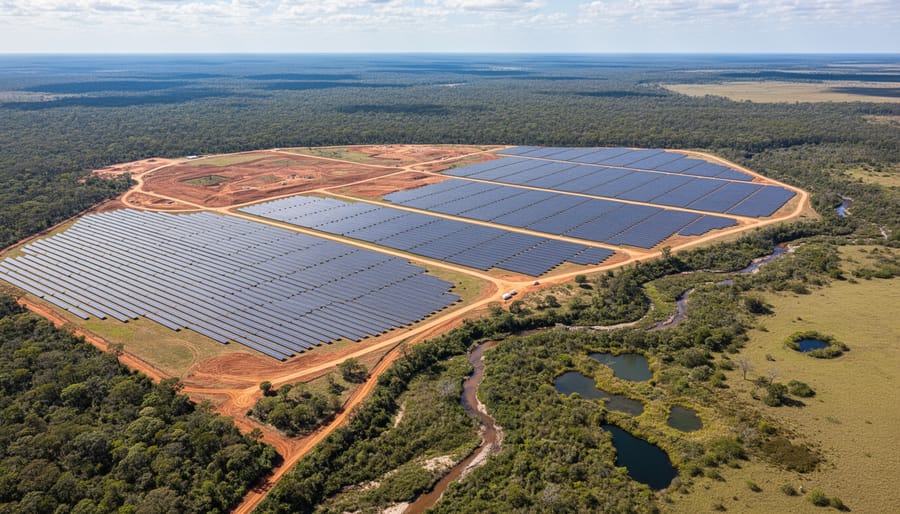
Solar energy infrastructure development requires substantial land allocation, creating considerable implications for local ecosystems and biodiversity. Ground-mounted photovoltaic installations typically require 5-10 acres per megawatt of capacity, though this varies significantly based on panel efficiency and site configuration. Large-scale utility solar farms spanning hundreds or thousands of acres can trigger extensive habitat fragmentation, disrupting wildlife corridors and isolating populations that depend on connected landscapes for foraging, breeding, and migration.
The construction phase presents immediate biodiversity challenges through vegetation clearing, topsoil removal, and earth-moving activities that eliminate existing plant communities and displace resident fauna. Native species adapted to specific soil conditions and microclimates face particular vulnerability, as grading operations fundamentally alter site hydrology and temperature regimes. These disturbances extend beyond the immediate installation footprint through access road construction, transmission line corridors, and staging areas.
Operational impacts include ongoing soil compaction from maintenance vehicles, altered rainfall infiltration patterns beneath panel arrays, and reduced sunlight availability affecting understory vegetation. Research partnerships between solar developers and universities have documented species displacement ranging from ground-nesting birds to small mammals, highlighting the importance of comprehensive pre-construction ecological assessments.
Understanding these environmental resource impacts remains critical for developing mitigation strategies. Modern approaches emphasize low-impact development techniques, strategic site selection avoiding high-value habitats, and implementing compatible land uses such as pollinator-friendly vegetation or agrivoltaic systems that maintain agricultural productivity while generating renewable energy.
The ‘Lake Effect’ and Avian Impacts
Solar installations can inadvertently create what researchers call the “lake effect,” a phenomenon where the polarized light reflected from photovoltaic panels mimics the visual signature of water bodies. Studies conducted in collaboration with universities have documented that polarotactic insects—species that navigate using polarized light patterns—frequently mistake solar arrays for aquatic habitats. This misidentification leads insects to attempt oviposition on panel surfaces, resulting in reproductive failure and localized population declines.
Avian species face similar challenges. Waterbirds and migratory species have been observed attempting to land on solar installations, mistaking the reflective surfaces for lakes or wetlands. These collision events can result in injury or mortality, particularly at utility-scale facilities covering extensive areas. The phenomenon differs from traditional bird-building collisions because the attractant is the water-mimicking reflection itself rather than transparent barriers.
Additionally, the “solar flux” effect poses thermal risks to flying species. At concentrating solar power facilities, converging reflected light creates intense heat zones that can singe feathers or cause disorientation in birds passing through the focal area. Research partnerships with ornithological institutions have become essential for quantifying these impacts and developing mitigation strategies, including anti-reflective coatings and strategic site selection that considers migratory flyways and critical habitats.
Manufacturing and Supply Chain Considerations
The photovoltaic industry’s supply chain presents significant biodiversity considerations that extend far beyond operational solar installations. Raw material extraction for silicon wafers and rare earth elements necessary for advanced PV technologies can disrupt terrestrial and aquatic ecosystems through habitat fragmentation, soil degradation, and water contamination. Mining operations for silver, aluminum, and copper—essential components in solar modules—often occur in biodiverse regions, potentially threatening endemic species and ecosystem services.
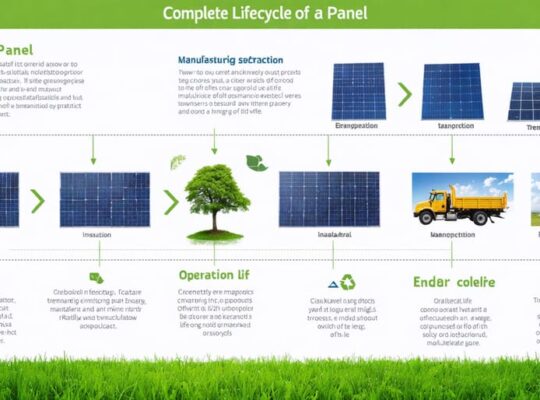
Manufacturing processes consume substantial water and energy resources while generating chemical byproducts that require careful management to prevent environmental contamination. The production of polysilicon, for instance, involves high-temperature processes that, if powered by fossil fuels, indirectly contribute to climate change and its cascading effects on biodiversity. Understanding these manufacturing and end-of-life impacts is essential for comprehensive environmental assessment.
End-of-life disposal challenges are increasingly critical as first-generation solar installations reach retirement. Without robust recycling infrastructure, valuable materials enter waste streams while potentially hazardous substances risk leaching into ecosystems. Progressive manufacturers now prioritize circular economy principles, designing modules for easier disassembly and material recovery. Industry collaboration with universities has advanced research into eco-friendly manufacturing techniques and recycling technologies, demonstrating how supply chain innovation can minimize biodiversity impacts while maintaining the renewable energy transition’s momentum.
Biodiversity as a Solar Industry Solution Partner
Agrivoltaics: Dual-Use Land Management
Agrivoltaics represents an innovative dual-use land management strategy that harmonizes solar energy production with agricultural activities or native vegetation cultivation. This approach addresses a critical challenge in renewable energy deployment: minimizing land-use conflicts while maximizing environmental benefits. By elevating solar panels to allow sufficient clearance underneath, agricultural operations can continue beneath the arrays, or native plant species can be established to support local ecosystems.
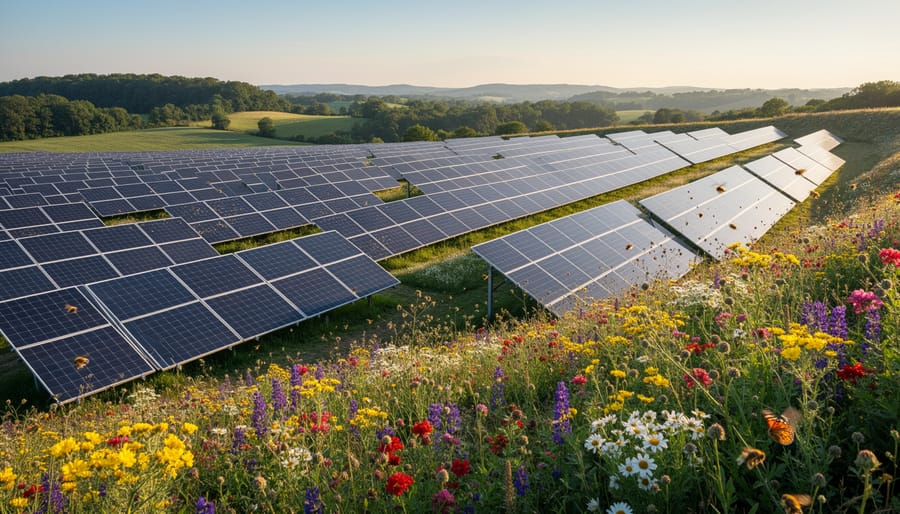
Research conducted through university collaborations has demonstrated that agrivoltaic systems can enhance biodiversity compared to conventional solar installations. The microclimate created by solar panels provides shade and reduces soil temperature, benefiting certain crops and creating habitat diversity that attracts pollinators, birds, and beneficial insects. Studies have shown increased pollinator activity in agrivoltaic sites where native flowering plants are integrated, contributing to both agricultural productivity and ecosystem health.
From an agricultural perspective, shade-tolerant crops such as leafy greens, herbs, and certain berries often thrive under partial solar canopy. This arrangement can reduce water evaporation, decrease irrigation requirements, and protect sensitive crops from extreme weather conditions. Additionally, the dual revenue stream from electricity generation and agricultural production improves land economic viability for farmers and landowners.
Educational programs increasingly emphasize agrivoltaics as a best practice for sustainable solar development. These systems demonstrate that biodiversity preservation and renewable energy generation need not be mutually exclusive. As the solar industry continues expanding, agrivoltaic approaches offer a practical framework for integrating ecological considerations into project planning, ensuring that clean energy infrastructure actively contributes to environmental restoration rather than habitat loss.
Pollinator Habitats and Solar Sites
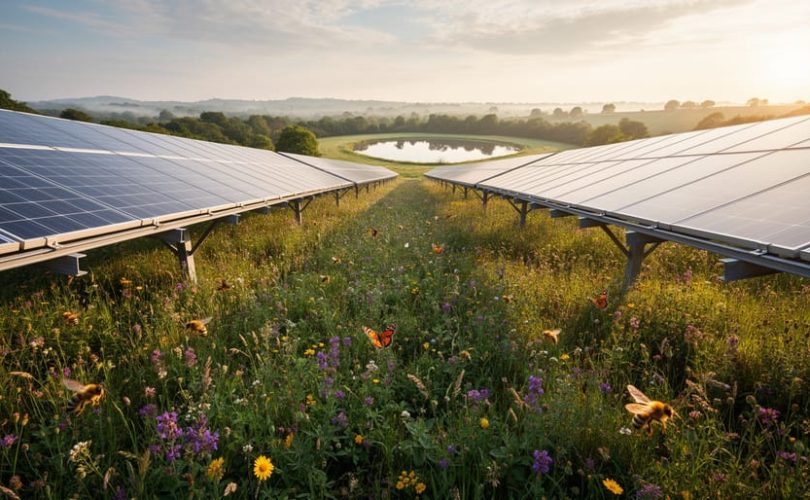
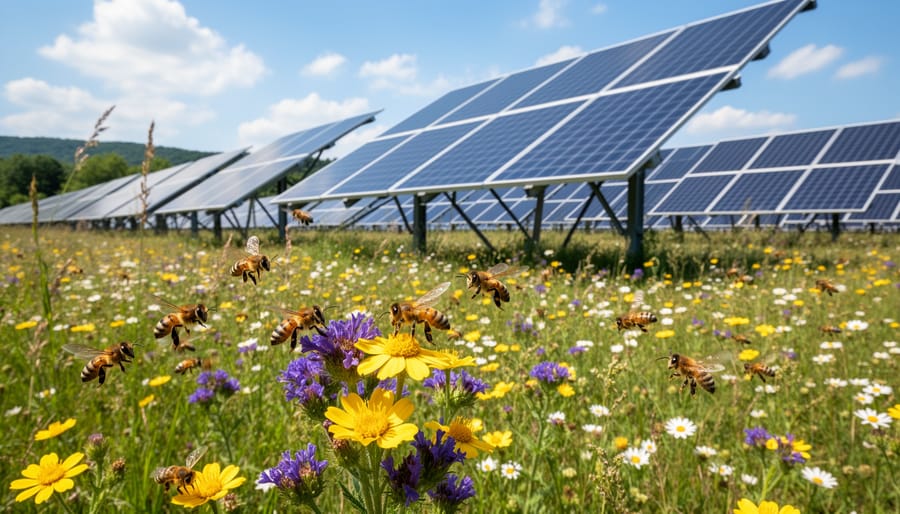
Forward-thinking solar developers are increasingly recognizing that utility-scale photovoltaic installations can serve dual purposes as pollinator habitats. Research conducted in partnership with universities demonstrates that establishing native wildflowers and grasses beneath and between solar arrays creates thriving ecosystems for bees, butterflies, and other essential pollinators whose populations have declined dramatically in recent decades.
These pollinator-friendly solar sites, now operational across multiple states, showcase remarkable environmental benefits. The diverse plantings establish deep root systems that prevent soil erosion and improve water infiltration, reducing stormwater runoff by up to 95% compared to traditional turf grass. This vegetation also moderates ground temperatures and can enhance panel efficiency by reducing ambient heat.
Economic advantages complement ecological gains. Native plant communities require minimal maintenance after establishment—no mowing, fertilizers, or irrigation—cutting operational costs significantly. Some facilities have documented maintenance reductions exceeding 75% compared to conventional landscaping approaches.
Educational program offerings developed through collaboration with universities now train solar professionals in habitat design principles. These programs address species selection appropriate to regional climates, planting density requirements around equipment, and integration strategies that maintain site accessibility for operations and maintenance activities. Several utilities have incorporated pollinator habitat commitments into project proposals, recognizing that community support often increases when solar development demonstrably benefits local ecosystems while generating clean energy.
Natural Cooling and Vegetation Management
Strategically designed vegetation around solar installations offers measurable environmental and operational benefits. Native grasses and low-growing plants create microclimates that reduce ambient temperatures by 3-5 degrees Celsius through evapotranspiration, directly improving photovoltaic panel efficiency during peak operating hours. This natural cooling effect complements the dual land-use approach of agrivoltaics, where vegetation serves multiple ecological functions.
Research conducted through university collaborations demonstrates that appropriate plantings reduce dust accumulation on panel surfaces by up to 30%, minimizing cleaning requirements and maintaining optimal energy production. Native wildflower species particularly benefit pollinators and create wildlife corridors connecting fragmented habitats across solar farm landscapes. Ground cover plants stabilize soil, prevent erosion, and sequester carbon while requiring minimal maintenance compared to traditional turf grass.
Implementation requires careful species selection based on regional climate, soil conditions, and panel height specifications. Drought-tolerant perennials offer sustainable solutions in arid environments, while shade-tolerant varieties thrive beneath elevated panel arrays. Educational programs emphasize these integrated vegetation management strategies as essential components of environmentally responsible solar development, training professionals to balance energy production with ecosystem enhancement.
Measuring and Monitoring Biodiversity Impact
Environmental Impact Assessment Protocols
Before photovoltaic installations commence, comprehensive environmental impact assessments establish critical biodiversity baselines that inform sustainable site selection and regulatory compliance. Professional PV developers must conduct pre-installation surveys encompassing habitat mapping, species inventories, and ecological sensitivity analyses. These surveys typically span multiple seasons to capture migratory patterns, breeding cycles, and vegetation phenology, ensuring comprehensive data collection.
Baseline establishment requires systematic documentation of existing flora and fauna, including threatened or endangered species protected under national and international conservation frameworks. Survey methodologies should follow standardized protocols such as transect sampling, camera trapping, and acoustic monitoring, with data quality verification through collaboration with universities and ecological research institutions. Soil composition, hydrology patterns, and ecosystem connectivity assessments complete the environmental profile.
Regulatory requirements vary by jurisdiction but commonly include Environmental Impact Statements, habitat conservation plans, and permits from environmental protection agencies. The European Union’s Environmental Impact Assessment Directive and the United States National Environmental Policy Act exemplify mandatory compliance frameworks. PV professionals should engage with local wildlife agencies early in project development to identify critical habitats, migration corridors, and protected areas requiring avoidance or mitigation measures.
Integration of biodiversity considerations into lifecycle management strategies ensures projects achieve environmental objectives while maintaining energy production goals. Continuous monitoring protocols throughout operational phases validate initial assessments and enable adaptive management responses. Educational programs increasingly emphasize assessment methodologies, preparing the next generation of solar professionals to balance renewable energy expansion with ecosystem preservation imperatives.
Long-Term Monitoring Approaches
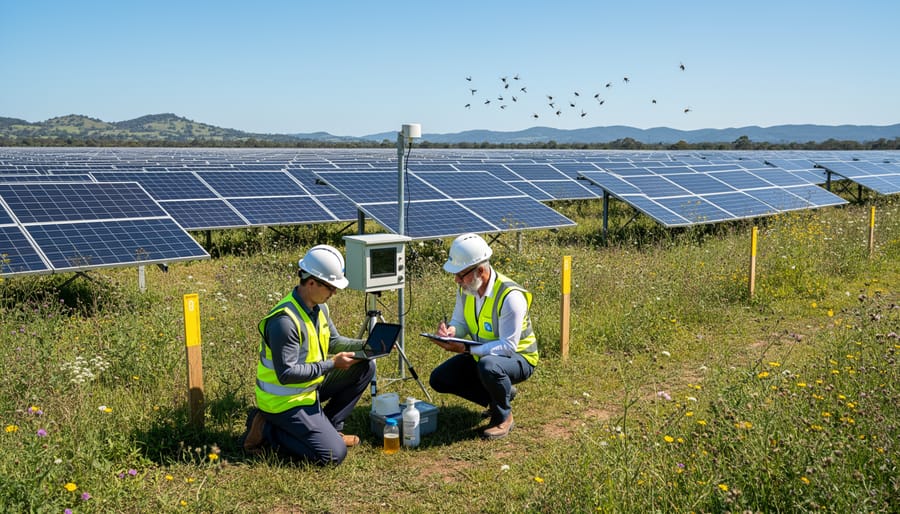
Effective long-term monitoring establishes critical baseline data and tracks biodiversity changes throughout a solar facility’s operational lifespan, typically spanning 25-30 years. Modern assessment protocols integrate multiple methodologies to capture comprehensive ecological data while minimizing site disturbance.
Camera traps provide non-invasive wildlife monitoring, automatically documenting mammal and bird activity patterns across strategic locations. These motion-activated devices generate time-stamped photographic evidence that reveals species presence, abundance, and behavioral changes in response to solar infrastructure. Analysis of this imagery contributes valuable data for climate impact assessment and habitat utilization studies.
Acoustic monitoring systems continuously record bird calls, insect sounds, and bat echolocation, enabling researchers to identify species without physical capture. These passive sensors operate year-round, capturing seasonal variations and nocturnal activity that visual surveys might miss. Advanced software analyzes audio files to detect species-specific vocalizations and quantify population trends.
Standardized vegetation surveys document plant community composition, native species establishment, and invasive species encroachment. Researchers establish permanent monitoring plots within solar arrays and reference areas, conducting seasonal assessments using quadrat sampling and transect methods.
Citizen science programs engage local communities and university collaborators in systematic data collection, expanding monitoring capacity while fostering environmental stewardship. Trained volunteers conduct pollinator counts, bird surveys, and phenological observations following scientifically rigorous protocols. These partnerships with academic institutions enhance data quality and provide educational opportunities for aspiring environmental professionals, creating a sustainable framework for ongoing biodiversity assessment.
Industry Best Practices and Innovation
Site Selection and Design Strategies
Strategic site selection represents the first and most critical step in minimizing biodiversity impacts from solar installations. Prioritizing previously disturbed lands—such as abandoned agricultural fields, decommissioned industrial sites, and degraded pastures—effectively sidesteps conflicts with pristine ecosystems. Rooftop installations offer particularly compelling advantages by utilizing existing infrastructure without consuming additional land resources. Brownfield sites, despite potential remediation requirements, present dual benefits: solar development while avoiding habitat conversion.
Panel spacing and layout design significantly influence wildlife accommodation. Increased row spacing, typically 10-15 feet rather than minimal configurations, creates corridors for small mammals, reptiles, and ground-nesting birds. Research conducted through university collaborations demonstrates that wider spacing reduces habitat fragmentation while maintaining acceptable energy generation densities. Panel elevation matters equally—mounting arrays 1-2 feet above ground permits vegetation growth underneath and facilitates animal movement.
Orientation strategies should consider local wildlife patterns. East-west oriented single-axis tracking systems, while maximizing energy capture, create different microclimates than fixed-tilt installations. Studies indicate that varied panel angles generate diverse shade patterns supporting multiple plant species and associated fauna. Perimeter design requires particular attention: permeable fencing with wildlife passages enables connectivity to adjacent habitats, preventing isolation of animal populations.
Educational programs increasingly emphasize these design considerations, preparing the next generation of photovoltaic professionals to balance renewable energy production with ecological stewardship. Implementing these strategies transforms solar facilities from potential biodiversity threats into compatible landscape elements that support broader environmental solutions.
Technological Advances Reducing Impact
The solar industry continues to develop innovative technologies that significantly reduce environmental footprints while preserving biodiversity. Anti-reflective coatings on photovoltaic panels minimize light reflection, reducing bird collisions and allowing more light to penetrate beneath installations for understory vegetation. Bifacial solar modules represent another advancement, capturing sunlight from both sides while permitting greater light transmission to the ground below, supporting plant growth and maintaining habitat functionality.
Elevated mounting systems have emerged as a particularly effective solution for biodiversity conservation. By raising panels 1-3 meters above ground level, these systems create dual-use spaces where native vegetation, pollinators, and small wildlife can thrive beneath the arrays. Research collaborations between solar developers and universities have demonstrated that properly designed elevated systems can support diverse plant communities and provide crucial habitat corridors.
Building-integrated photovoltaics, including solar tiles and facade systems, eliminate additional land requirements by transforming existing structures into energy generators. These technologies are especially valuable in urban environments, reducing pressure on natural habitats while expanding renewable energy capacity. Industry stakeholders increasingly recognize that thoughtful technology selection, informed by ecological research and educational programs focused on sustainable design principles, enables solar development that actively supports rather than compromises biodiversity objectives.
Collaboration and Certification Programs
Advancing biodiversity-friendly solar installations requires coordinated efforts among diverse stakeholders. Leading solar developers now partner with conservation organizations such as The Nature Conservancy and National Audubon Society to design projects that enhance habitat quality. Academic institutions contribute through research programs evaluating ecological outcomes at solar facilities, with universities offering specialized courses on renewable energy and ecosystem management. These collaborations generate evidence-based practices for vegetation management, pollinator habitat creation, and wildlife corridor preservation.
Emerging certification programs provide standardized frameworks for biodiversity integration. The Low Impact Solar Siting Framework developed by Argonne National Laboratory guides site selection to minimize ecological disruption. Similarly, organizations are developing third-party verification systems that assess solar installations against biodiversity criteria, including native plant coverage, soil health metrics, and wildlife monitoring protocols. These certifications help developers demonstrate environmental stewardship while providing consumers and investors with transparent sustainability indicators. As the industry matures, such partnerships and standards will become increasingly important for balancing renewable energy deployment with conservation objectives.
The Role of Education in Biodiversity-Conscious Solar Development
Curriculum Integration for Aspiring Professionals
Integrating biodiversity considerations into photovoltaic education represents a critical advancement for preparing the next generation of solar professionals. Progressive educational programs now recognize that technical expertise alone proves insufficient; aspiring professionals must understand ecological systems, environmental impact assessment methodologies, and biodiversity-conscious design principles.
University collaborations have emerged as powerful vehicles for this comprehensive training approach. Leading institutions are partnering with solar companies to develop curricula that balance energy production efficiency with ecosystem preservation. These programs incorporate courses on habitat assessment, native vegetation management, and pollinator-friendly solar site design. Students learn to evaluate pre-construction ecological baselines, implement adaptive management strategies, and quantify biodiversity outcomes alongside energy metrics.
Educational offerings increasingly emphasize practical application through field-based learning experiences. Participants conduct wildlife surveys at operational solar facilities, analyze dual-use agrivoltaic systems, and develop biodiversity enhancement plans for hypothetical projects. This hands-on approach ensures graduates enter the workforce equipped to navigate regulatory frameworks, engage with environmental stakeholders, and champion sustainable practices.
Furthermore, certification programs now include modules on ecosystem services valuation and green infrastructure integration. By embedding ecological literacy into professional development pathways, the solar industry cultivates practitioners capable of designing installations that simultaneously address climate change and biodiversity conservation—transforming potential conflicts into synergistic environmental solutions.
Cross-Disciplinary Knowledge Requirements
Photovoltaic professionals increasingly require interdisciplinary expertise to navigate the complex relationship between solar development and biodiversity conservation. Foundational knowledge in basic ecology enables practitioners to understand ecosystem functions, species interactions, and habitat requirements when evaluating potential installation sites. Familiarity with environmental law—including the Endangered Species Act, National Environmental Policy Act, and state-level conservation regulations—ensures compliance and informed decision-making throughout project lifecycles.
Effective stakeholder engagement skills prove essential when collaborating with conservation organizations, land management agencies, and local communities. These partnerships facilitate ecologically sensitive site selection and mitigation strategies that balance renewable energy goals with biodiversity protection. Additionally, proficiency in lifecycle assessment methodologies allows professionals to quantify environmental impacts holistically, from raw material extraction through decommissioning.
Universities increasingly offer specialized programs integrating renewable energy technology with environmental science, providing structured learning pathways for aspiring professionals. Educational institutions also facilitate research collaborations that advance agrivoltaic practices and pollinator-friendly solar designs. Developing these cross-disciplinary competencies positions photovoltaic professionals to implement environmental solutions that harmonize clean energy deployment with meaningful biodiversity conservation outcomes.
The relationship between biodiversity and environmental solutions in solar energy development represents far more than a regulatory consideration—it embodies a fundamental opportunity to redefine industry standards. As the photovoltaic sector continues its rapid expansion to meet global renewable energy targets, the integration of biodiversity preservation into project planning has evolved from an optional enhancement to an essential component of truly sustainable development.
Throughout this examination, we have explored how solar installations can either diminish or enhance local ecosystems depending on design choices, site selection, and long-term management practices. The evidence is clear: solar energy and biodiversity are not inherently opposed forces. Rather, when approached with ecological intelligence, solar projects can actively contribute to habitat restoration, pollinator support, and ecosystem resilience while delivering clean energy at scale.
For aspiring photovoltaic professionals entering the industry, this integrated approach must become second nature. Success in modern renewable energy demands expertise that extends beyond electrical efficiency and panel specifications to encompass ecological site assessments, native vegetation planning, and collaborative engagement with environmental scientists. Universities and training programs increasingly recognize this need, developing curricula that bridge engineering disciplines with environmental science to prepare the next generation of solar professionals for this holistic responsibility.
The solar industry stands at a pivotal moment. By embracing biodiversity-positive development practices as the standard rather than the exception, professionals can ensure that renewable energy expansion strengthens rather than compromises the natural systems upon which all environmental solutions ultimately depend. This commitment to integrated thinking will define the industry’s legacy and determine whether we merely replace one energy source with another or fundamentally transform our relationship with the environment.