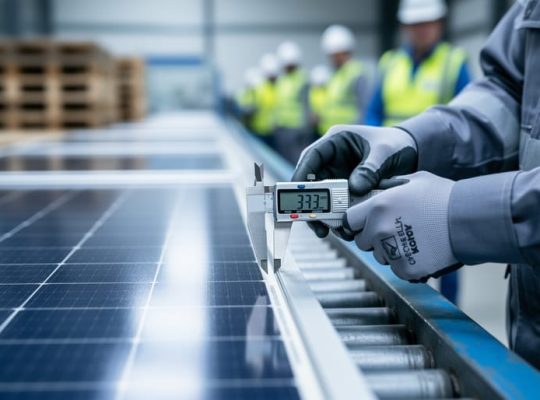
Procurement risk in photovoltaic projects represents the intersection of financial exposure, supply chain vulnerability, and technical performance uncertainty. When solar developers commit to multimillion-dollar equipment purchases, they assume risks ranging from module quality defects and shipping delays to currency fluctuations and supplier insolvency. A single miscalculated procurement decision can erode project margins by 5-15%, trigger construction delays costing thousands daily, or compromise system performance for decades.
The complexity intensifies when international procurement introduces Incoterms—standardized trade terms that precisely define when risk and cost transfer from seller to buyer. Choosing between EXW (Ex Works), FOB (Free on Board), or DDP (Delivered Duty Paid) fundamentally reshapes your risk profile, determining who bears responsibility for transportation damage, customs clearance failures, or port congestion. Many developers default to supplier-recommended terms without understanding the liability implications.
Effective risk management requires systematic identification across four categories: supplier risks (financial instability, manufacturing defects), logistical risks (transportation damage, customs delays), contractual risks (ambiguous warranty terms, weak performance guarantees), and external risks (tariff changes, force majeure events). Each category demands distinct mitigation strategies, from rigorous supplier due diligence and factory inspections to strategic insurance placement and contract clause negotiation.
This comprehensive guide examines how procurement risks manifest in photovoltaic supply chains, explains how Incoterms allocate these risks between parties, and provides actionable frameworks for contract negotiation. Whether you’re procuring your first 10 MW or managing portfolio-level supply chains, understanding these risk dynamics transforms procurement from a transactional function into a strategic competitive advantage that protects project economics and ensures long-term asset performance.
Understanding Procurement Risk in Solar PV Projects

What Makes PV Procurement Different
Photovoltaic equipment procurement presents distinct challenges that differentiate it from conventional purchasing activities. Unlike standard commodities, solar panels and related components involve complex technological specifications that directly impact system performance over 25-plus year operational lifespans. Module efficiency ratings, temperature coefficients, degradation rates, and power tolerance ranges require careful evaluation, as seemingly minor specification differences can significantly affect long-term energy generation and project economics.
Quality variations among manufacturers represent another critical consideration. The solar industry encompasses suppliers ranging from established Tier 1 manufacturers with proven track records to emerging producers offering competitive pricing but limited operational history. This variability introduces uncertainty regarding product reliability, warranty fulfillment capacity, and post-installation support. Procurement decisions must balance cost considerations against quality assurance and supplier financial stability.
Certification requirements add further complexity to the procurement process. Solar equipment must comply with multiple international standards including IEC certifications, UL listings, and region-specific safety regulations. Verification of authentic certifications and ongoing compliance monitoring become essential risk management activities, particularly when sourcing from international suppliers.
The long-term performance implications inherent to photovoltaic systems elevate procurement decisions beyond transactional purchasing. Equipment failures or underperformance discovered years after installation can result in substantial financial losses, making thorough due diligence and comprehensive contractual protections fundamental to successful procurement. These unique characteristics necessitate specialized knowledge and strategic approaches that extend well beyond traditional procurement methodologies, requiring professionals to understand both technical specifications and commercial risk allocation mechanisms.
The Financial Impact of Procurement Failures
Procurement failures in photovoltaic projects create substantial financial consequences that extend far beyond initial purchase prices. Project delays represent one of the most significant cost drivers, with each month of postponement potentially costing developers between 5-15% of total project value through financing charges, extended insurance premiums, and delayed revenue generation. When panels or inverters fail to meet specifications, replacement costs typically include not only equipment reordering but also demobilization and remobilization of installation crews, potentially doubling initial procurement expenses.
Performance shortfalls from substandard components directly impact project economics over decades. Modules delivering 3-5% below nameplate capacity translate to millions in lost revenue across a typical utility-scale installation’s 25-year lifespan. Warranty complications compound these losses when suppliers dispute claims, become insolvent, or impose burdensome return logistics requirements. Industry data indicates that 12-18% of procurement disputes result in complete warranty denials, leaving project owners absorbing full replacement costs.
Risk mitigation through comprehensive procurement contracts, rigorous supplier qualification processes, and appropriate Incoterms selection reduces these financial exposures significantly. Educational institutions and research organizations increasingly collaborate with industry stakeholders to develop standardized risk assessment frameworks that help professionals quantify and manage these critical financial considerations before committing to supplier agreements.
Key Risk Categories in PV Procurement Contracts
Quality and Performance Risks
Quality and performance risks represent critical concerns that can undermine the financial viability and operational success of photovoltaic projects long after installation. Module degradation rates serve as a primary indicator of long-term performance, with standard crystalline silicon panels typically degrading at 0.5-0.8% annually. Procurement contracts should specify maximum allowable degradation rates and establish testing protocols to verify manufacturer claims through independent laboratory validation.
Efficiency guarantees require careful scrutiny during contract negotiation. Suppliers often provide performance warranties spanning 25 years, typically guaranteeing 80-85% of initial output at project end. However, vague warranty language can create disputes when actual performance falls short. Procurement professionals should demand clear measurement criteria, temperature coefficients, and remediation procedures including module replacement or financial compensation.
Manufacturing defects pose substantial risks, from microcracks and hotspots to junction box failures and delamination. Comprehensive quality assurance programs must include factory audits, batch testing, and statistically valid sampling procedures. Third-party inspection services can verify production quality before shipment, reducing post-installation failures.
Certification compliance issues have grown increasingly complex, encompassing product certifications like IEC 61215 and IEC 61730, alongside ethical sourcing requirements. Non-compliant modules may face customs detention, project financing rejection, or regulatory penalties. Universities collaborating with industry increasingly emphasize procurement due diligence training, equipping future professionals to navigate these multifaceted compliance landscapes effectively.

Delivery and Timeline Risks
Delivery and timeline risks represent critical vulnerabilities in photovoltaic procurement that can derail project schedules and inflate financing costs. Lead time uncertainties arise from manufacturing capacity constraints, raw material shortages, and production delays that may extend delivery windows by weeks or months beyond initial estimates. These delays prove particularly problematic for solar installations operating under time-sensitive incentive programs or power purchase agreements with strict commercial operation deadlines.
Shipping delays compound these challenges through port congestion, container shortages, and route disruptions that have become increasingly common in global logistics networks. Photovoltaic modules and inverters face additional complications during customs clearance, where documentation errors, tariff classifications, or regulatory compliance issues can result in extended holding periods at borders. These cumulative delays trigger cascading effects including demurrage charges, extended equipment financing costs, and potential loss of tax credits or feed-in tariff rates tied to specific commissioning dates.
Project developers must incorporate buffer periods into construction schedules and negotiate contract clauses that clearly allocate responsibility for delays beyond the buyer’s control. Understanding Incoterms becomes essential, as terms like DDP (Delivered Duty Paid) transfer customs clearance risks to suppliers, while EXW (Ex Works) places full logistics responsibility on buyers. Academic programs increasingly emphasize supply chain risk management to prepare professionals for these complex procurement scenarios.
Financial and Payment Risks
Financial risks in photovoltaic procurement demand rigorous assessment and protective mechanisms. Currency fluctuations pose significant challenges when purchasing solar modules internationally, as exchange rate volatility can erode project margins by 5-15% between contract signing and final payment. Project developers should negotiate price adjustment clauses tied to currency indices or establish forward contracts with financial institutions to hedge exposure.
Supplier financial stability requires thorough due diligence, including review of audited financial statements, credit ratings, and payment histories. A manufacturer’s bankruptcy mid-project can delay installations by months and trigger penalty clauses with end customers. Letters of credit provide security for both parties—irrevocable confirmed LCs ensure payment to suppliers while protecting buyers through documentary compliance requirements.
Payment terms must balance cash flow management with risk mitigation. Common structures include 30% deposit, 60% before shipment, and 10% after delivery confirmation. Milestone-based payments tied to factory inspections, pre-shipment testing, and performance verification protect buyer interests. Universities collaborating on procurement research recommend escrow arrangements for high-value contracts, where independent third parties hold funds until predefined conditions are satisfied. Price adjustment mechanisms addressing raw material costs, particularly polysilicon and silver fluctuations, should include transparent calculation formulas with quarterly review periods to maintain fair pricing throughout multi-year supply agreements.
Regulatory and Compliance Risks
Regulatory and compliance risks represent a critical dimension of photovoltaic procurement that can significantly impact project timelines and costs. Import regulations vary substantially across jurisdictions, with customs authorities requiring detailed documentation regarding product origin, material composition, and manufacturing processes. Recent tariff changes, particularly anti-dumping and countervailing duties on solar modules, have created pricing volatility and supply chain uncertainty. Local content requirements in various markets mandate minimum percentages of domestically sourced components, necessitating careful supplier selection and supply chain mapping. Certification standards such as IEC, UL, and TÜV compliance are non-negotiable prerequisites for equipment deployment in most regions. Organizations must proactively monitor regulatory developments through industry associations and legal counsel, maintain comprehensive documentation for customs clearance, and verify supplier certifications through third-party audits to mitigate these risks effectively.
Incoterms and Their Role in Risk Allocation
Incoterms Basics for Solar Procurement
Incoterms, or International Commercial Terms, are standardized three-letter trade terms published by the International Chamber of Commerce that define the responsibilities, costs, and risks associated with the transportation and delivery of goods in international transactions. While not legally binding statutory requirements, these terms become contractually enforceable when parties explicitly incorporate them into their purchase agreements. For solar procurement professionals, understanding Incoterms is essential because they establish precisely when risk transfers from supplier to buyer during the shipping process.
In photovoltaic equipment purchases, proper Incoterm selection determines who bears responsibility for transportation costs, insurance coverage, customs clearance, and critically, at what point risk of loss or damage shifts from seller to purchaser. For example, FOB (Free on Board) transfers risk once goods are loaded onto the vessel, while DDP (Delivered Duty Paid) keeps risk with the supplier until equipment reaches the buyer’s designated location. Incorrect selection can leave project developers financially exposed to shipping delays, cargo damage, or customs complications.
The 2020 revision of Incoterms includes eleven terms applicable to various transportation modes, each defining distinct obligations for both parties. Given that solar modules, inverters, and mounting systems often represent substantial capital investments shipped across continents, selecting appropriate Incoterms requires careful analysis of logistics capabilities, insurance requirements, and risk tolerance. Academic institutions increasingly incorporate Incoterms education into renewable energy curricula, recognizing their importance in global solar supply chain management.
Common Incoterms Used in PV Procurement
Understanding Incoterms is essential for managing procurement risks in photovoltaic projects, as these internationally recognized trade terms define the precise allocation of costs, responsibilities, and risks between buyers and sellers throughout the supply chain.
Ex Works (EXW) places maximum responsibility on the buyer, who assumes all transportation, insurance, and customs risks from the supplier’s facility. While EXW offers the lowest initial price, buyers must possess robust logistics capabilities and face significant exposure to shipping delays, damage, and regulatory complications. This term is rarely recommended for international solar equipment procurement unless the buyer maintains experienced freight forwarding partnerships.
Free on Board (FOB) represents a balanced approach where the seller delivers goods to the departure port and handles export clearance, after which the buyer assumes ocean freight, insurance, and import risks. FOB is widely used in solar module procurement, allowing buyers to control international shipping arrangements while limiting supplier responsibilities to a clearly defined handover point. Project developers should carefully specify the named port and ensure adequate marine cargo insurance coverage.
Cost, Insurance, and Freight (CIF) shifts more responsibility to the seller, who arranges ocean transportation and basic insurance to the destination port. However, buyers still manage import customs, duties, and inland transportation. The insurance provided under CIF typically covers only minimum coverage, making supplementary policies advisable for high-value photovoltaic equipment.
Delivered Duty Paid (DDP) minimizes buyer risk, with sellers handling all logistics, insurance, customs clearance, and delivery to the final destination. While DDP simplifies procurement and provides cost certainty, it typically commands premium pricing and requires sellers with established distribution networks in the destination country.

Matching Incoterms to Your Risk Tolerance
Selecting the right Incoterm requires careful assessment of your organization’s capabilities and risk appetite. For buyers new to photovoltaic procurement, beginning with EXW or FCA terms offers greater control over logistics while assuming higher responsibility. These terms suit organizations with established shipping partnerships and customs expertise. Conversely, DDP provides maximum convenience for buyers lacking international trade experience, though at premium cost and with vendor dependency risks.
Project scale influences Incoterm selection significantly. Large installations exceeding multiple megawatts often justify dedicating resources to FOB or CFR terms, where economies of scale offset logistics complexities. Smaller projects may benefit from CIF or DDP arrangements, prioritizing simplicity over marginal cost savings. Consider your team’s logistical capabilities honestly—inexperienced buyers attempting complex shipping arrangements risk delays that negate any financial advantages.
Your risk tolerance regarding timing and quality control also matters. CPT and CIP terms balance cost and responsibility effectively for mid-sized buyers, while maintaining reasonable oversight of transit conditions. Academic institutions and research facilities collaborating on demonstration projects typically prefer simplified DDP terms to focus resources on technical implementation rather than customs procedures.
Strategic Risk Allocation in PV Contracts
Performance Guarantees and Warranties
Performance guarantees and warranties form the financial backbone of procurement risk mitigation in photovoltaic projects. When structuring contracts, demand specific power output warranties that guarantee minimum wattage thresholds for delivered modules, typically within a tolerance range of ±3% to ±5%. These guarantees protect against underperforming equipment that could jeopardize project financial models.
Linear degradation guarantees are equally critical. Industry-standard warranties should commit to no more than 2% degradation in year one, followed by annual degradation not exceeding 0.55% to 0.7% thereafter, ensuring at least 80% to 84% of nameplate capacity after 25 years. Request clear documentation of the testing methodology used to verify these performance metrics.
Product warranties addressing manufacturing defects typically span 10 to 12 years for modules and 5 to 25 years for inverters. Ensure these warranties explicitly define covered defects, exclusions, and remedy procedures. For enforceable obligations, structure contracts with quantifiable performance metrics, predetermined liquidated damages for shortfalls, and clear inspection protocols. Include provisions for independent third-party testing when disputes arise regarding performance claims. Academic research from collaborative university programs consistently demonstrates that comprehensive warranty structures correlate with reduced long-term operational risks and improved return on investment. Specify jurisdiction for dispute resolution and establish accessible channels for warranty claims processing to avoid costly delays during project operation.
Liquidated Damages and Penalty Clauses
Liquidated damages clauses establish predetermined financial compensation when suppliers fail to meet contractual obligations, providing essential protection in photovoltaic procurement. These provisions should differentiate between delivery delays, performance shortfalls below warranted specifications, and quality defects requiring remediation. For delivery delays, structure damages as daily or weekly rates calculated on the project’s lost revenue potential or financing costs, typically capped at 10-15% of contract value to ensure enforceability. Performance-based damages address situations where modules fail to meet minimum efficiency guarantees or power output specifications, with compensation scaled to the magnitude of underperformance.
Quality defect penalties should account for inspection costs, replacement expenses, and project downtime. When drafting these clauses, avoid characterizing them as penalties, which courts may reject as unenforceable; instead, frame them as genuine pre-estimates of anticipated losses. Include clear measurement methodologies, verification procedures, and timelines for claim submission. The damages should be proportionate to actual harm while providing sufficient deterrent against non-performance.
University research collaborations demonstrate that balanced liquidated damages clauses reduce disputes by establishing transparent consequences. Ensure provisions distinguish between excusable delays (force majeure events) and controllable failures, maintaining fairness while protecting project economics. Well-structured clauses provide meaningful remedies without creating unreasonable supplier risk that inflates procurement costs.
Insurance Requirements and Risk Transfer
Comprehensive insurance provisions form a critical layer of risk protection in photovoltaic procurement contracts, transferring specific financial exposures to parties best equipped to manage them. Marine cargo insurance protects against physical damage or loss during international transit, particularly vital when valuable solar modules traverse multiple transportation modes under CIF or CIP Incoterms. Coverage should extend from factory gate to project site, with policy limits reflecting replacement costs plus associated delays.
Product liability insurance safeguards against defects causing property damage or personal injury, requiring suppliers to maintain minimum coverage thresholds typically ranging from $2-5 million per occurrence. This becomes especially important for module manufacturers whose products will operate for 25-30 years across distributed installations. Professional indemnity insurance covers design errors or specification mistakes by engineering consultants involved in equipment selection and system design.
Contract clauses should mandate proof of coverage before shipment, name the buyer as additional insured, and require 30-day notice of policy cancellation. Performance bonds and warranties complement insurance by addressing non-delivery and quality issues. By strategically allocating insurance responsibilities, procurement professionals create financial backstops that protect project economics while incentivizing quality throughout the supply chain.
Inspection Rights and Quality Control Protocols
Robust inspection rights form a critical defense against quality-related procurement risks in photovoltaic projects. Effective contracts should establish clear provisions for pre-shipment factory inspections, allowing buyer representatives or appointed third-party inspectors to verify manufacturing processes, component specifications, and product quality before goods leave the facility. These inspections typically include visual examinations, electrical performance testing, and compliance verification with international standards such as IEC 61215 for crystalline silicon modules or IEC 61730 for safety requirements.
Third-party testing requirements provide independent validation of manufacturer claims, particularly for large-scale projects where quality failures carry significant financial consequences. Leading inspection agencies can conduct sampling protocols aligned with industry standards, performing flash tests to verify power output, electroluminescence imaging to detect cell defects, and mechanical load testing to ensure structural integrity.
Quality assurance procedures should mandate witness testing during critical production stages, documentary evidence of quality control checkpoints, and hold points requiring buyer approval before proceeding to subsequent manufacturing phases. Many photovoltaic professionals collaborate with universities and research institutions to establish testing protocols that reflect real-world operating conditions, ensuring purchased equipment meets long-term performance expectations while minimizing warranty claims and project delays.

Risk Mitigation Best Practices for PV Professionals
Supplier Due Diligence and Qualification
Effective supplier due diligence is fundamental to mitigating procurement risk in photovoltaic projects. Before contract execution, procurement teams should systematically evaluate potential suppliers across multiple dimensions.
Begin by assessing financial stability through audited financial statements, credit ratings, and payment history to ensure suppliers can fulfill multi-year obligations. Examine manufacturing capabilities by verifying production capacity, technology certifications (IEC, UL, TUV), and facility inspections to confirm they meet project specifications and timelines.
Quality management systems require thorough review. Request ISO 9001 certification, defect rate data, warranty claim history, and product testing reports from independent laboratories. These documents reveal the supplier’s commitment to consistent quality and reliability.
Track record evaluation should include reference checks with previous clients, project portfolio reviews, and performance metrics on delivery timeliness and after-sales service. For university research collaborations or educational programs, prioritize suppliers with documented experience in academic partnerships.
Finally, verify compliance with environmental, social, and governance standards, particularly regarding labor practices and material sourcing transparency. This comprehensive checklist reduces supplier-related risks and establishes a foundation for successful long-term partnerships in solar procurement.
Contract Documentation and Legal Protections
Robust contract documentation forms the foundation of effective procurement risk management in photovoltaic projects. Essential clauses should address performance guarantees, specifying minimum efficiency ratings and degradation thresholds for solar modules. Include detailed product specifications, delivery schedules with penalty provisions for delays, and clear quality assurance protocols that reference international standards like IEC 61215 for crystalline silicon modules.
Legal protections must incorporate warranty terms extending 10-25 years for product defects and performance guarantees, with explicit recourse mechanisms if suppliers fail to meet obligations. Liquidated damages clauses quantify financial compensation for delivery failures or performance shortfalls, protecting project timelines and revenue projections. Force majeure provisions should clearly delineate which events excuse performance while maintaining supplier accountability for foreseeable risks.
Documentation requirements include certificates of origin, third-party test reports from accredited laboratories, insurance certificates, and shipping documentation aligned with chosen Incoterms. Dispute resolution mechanisms—whether arbitration, mediation, or litigation—should specify jurisdiction and governing law, particularly critical in international transactions. University partnerships can provide access to legal templates and case studies demonstrating effective contract structures, supporting educational initiatives for emerging professionals navigating these complex legal frameworks in renewable energy procurement.
Building Contingency into Project Planning
Effective procurement risk management requires building appropriate buffers into project planning across three critical dimensions: timeline, budget, and supply chain resilience. For photovoltaic projects, procurement timelines should incorporate contingency periods of 15-25% beyond standard lead times, accounting for potential shipping delays, customs clearance complications, and quality inspection extensions. This buffer proves particularly valuable when sourcing components internationally under various Incoterms arrangements.
Budget contingencies typically range from 5-15% of total procurement costs, varying based on contract terms, supplier reliability ratings, and market volatility indicators. Project developers should establish separate contingency reserves for currency fluctuations, tariff changes, and potential equipment replacements. Universities collaborating on research projects often emphasize scenario modeling to determine optimal contingency levels based on historical procurement data.
Supply chain planning should identify alternative suppliers for critical components, maintaining qualified backup vendors even at premium costs. Diversifying sourcing across geographic regions reduces concentration risk, while maintaining strategic inventory of long-lead items provides operational flexibility. Educational programs focused on PV project management increasingly incorporate contingency planning methodologies, recognizing that well-structured buffers distinguish successful projects from those plagued by cost overruns and schedule delays.
Effective procurement risk management stands as a cornerstone of successful photovoltaic project execution. Throughout the solar equipment acquisition process, professionals must recognize that risk is not merely an unavoidable challenge but a manageable element that can be systematically addressed through informed decision-making and strategic planning. The integration of appropriate Incoterms, comprehensive contract structures, and thorough supplier evaluation protocols creates a robust framework that protects project interests while fostering productive business relationships.
The competencies required for proficient procurement risk management extend beyond basic purchasing knowledge. Today’s renewable energy professionals must demonstrate fluency in international trade terms, contract law fundamentals, supply chain logistics, and financial risk assessment. They need to understand how seemingly minor decisions regarding delivery terms or payment structures can cascade into significant project impacts. This multidimensional expertise enables practitioners to anticipate potential disruptions, allocate responsibilities appropriately, and establish clear recourse mechanisms when issues arise.
Proactive risk allocation through well-crafted contracts transforms uncertainty into predictable, manageable scenarios. Rather than reacting to problems as they emerge, forward-thinking procurement strategies establish clear boundaries of responsibility, define quality standards explicitly, and create transparent communication channels between buyers and suppliers. The selection of appropriate Incoterms alone can shift millions of dollars in liability and determine whether projects meet critical installation deadlines.
For professionals seeking to deepen their understanding of these critical concepts, structured learning opportunities provide invaluable guidance. Mose Solar’s educational program offers comprehensive training that bridges theoretical frameworks with practical application, equipping participants with the analytical tools and industry insights necessary to navigate complex procurement decisions confidently. Through collaboration with academic institutions and industry experts, these programs cultivate the next generation of renewable energy professionals prepared to manage procurement risks effectively and advance global solar deployment.