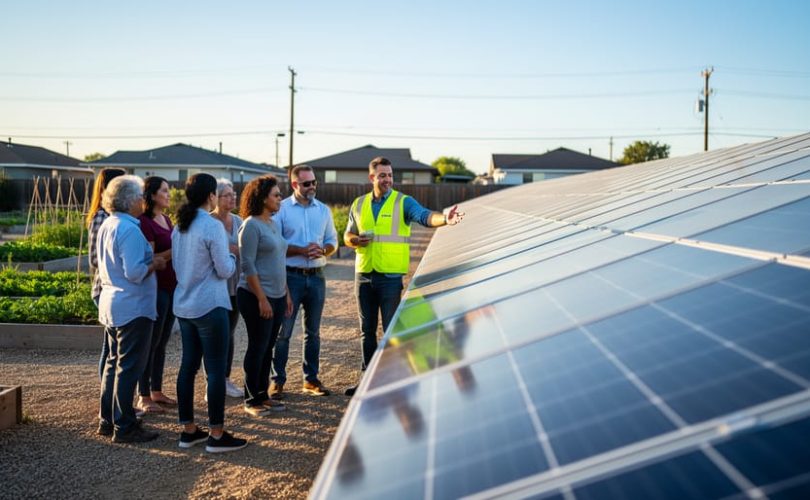
Cultural integration determines whether community solar projects thrive or languish in permitting limbo. The technical capacity to install photovoltaic arrays means nothing when installations face community resistance, fail to achieve equitable subscriber enrollment, or collapse under the weight of cultural misunderstandings between developers and residents.
Community solar represents the renewable energy sector’s most democratizing innovation—enabling apartment dwellers, renters, and low-income households to access solar benefits previously available only to property owners. Yet the industry’s 40% project abandonment rate reveals a troubling reality: engineers and developers consistently underestimate the human dimension of energy transition. Projects engineered with precision fail because developers overlook language barriers, ignore historical community grievances, or design subscription models incompatible with local economic realities.
Cultural integration in community solar extends beyond translation services or token community meetings. It requires photovoltaic professionals to develop competencies in cross-cultural communication, understand socioeconomic contexts shaping energy access, and design engagement strategies that transform passive subscribers into active stakeholders. The distinction separates transactional projects—where developers extract value from communities—from transformational initiatives that build local capacity and trust.
This competency gap represents both industry challenge and professional opportunity. As renewable energy deployment accelerates through federal incentives and state mandates, professionals who master cultural integration position themselves as indispensable. They navigate tribal consultation protocols, broker agreements with environmental justice organizations, and structure financing mechanisms addressing credit invisibility in immigrant communities.
The following framework equips photovoltaic professionals with methodologies to assess cultural contexts, identify integration barriers, and implement strategies that align technical solar deployment with community values—transforming cultural diversity from implementation obstacle into competitive advantage.
What Cultural Integration Means for Community Solar

The Difference Between Community Engagement and Cultural Integration
While community engagement represents an important first step in developing community solar initiatives, cultural integration operates at a fundamentally deeper level. Standard stakeholder engagement often involves informational meetings, surveys, and feedback sessions that gather input without necessarily transforming project fundamentals. This approach treats community involvement as a checkbox activity rather than a foundational design principle.
Cultural integration, by contrast, requires photovoltaic professionals to adapt project design, communication strategies, and implementation timelines to align with existing community cultural frameworks. Rather than asking communities to conform to predetermined solar development models, this approach reshapes the project itself to reflect local values, decision-making processes, and social structures.
For instance, while community engagement might involve presenting technical specifications at a public meeting, cultural integration would first identify how the community traditionally shares information and makes collective decisions. Does the community value elder guidance? Are religious or cultural leaders central to decision-making? What communication channels hold credibility within specific demographic groups?
This distinction manifests practically in project timelines, ownership structures, and benefit distribution models. A culturally integrated photovoltaic project might adopt cooperative ownership models that reflect communal resource management traditions, schedule construction around culturally significant periods, or incorporate design elements that respect local aesthetic values. The result is not simply a solar project with community support, but a solar project fundamentally shaped by the community it serves, creating stronger long-term sustainability and genuine local ownership.
Key Cultural Dimensions That Impact Solar Adoption
Understanding the cultural dimensions that influence solar adoption is essential for developing successful community-based renewable energy projects. These factors operate beneath the surface of technical and financial considerations, yet they fundamentally determine whether communities embrace or resist photovoltaic installations.
Trust in institutions represents a primary cultural variable affecting solar project acceptance. Communities with strong confidence in governmental agencies, utilities, and development organizations typically demonstrate greater openness to solar initiatives endorsed by these entities. Conversely, populations with historical distrust stemming from broken promises or exploitative practices require extensive relationship-building before project implementation. Successful developers recognize this dimension and adapt their engagement strategies accordingly, sometimes partnering with trusted local organizations rather than leading projects directly.
The collective-versus-individual decision-making spectrum significantly shapes how communities evaluate solar opportunities. Cultures emphasizing collective welfare and consensus-building processes require facilitated community dialogues and demonstrated benefits for the broader population. Individual-oriented societies may respond better to household-level advantages and personal autonomy in participation decisions. Project developers must align their communication and implementation approaches with these cultural patterns.
Environmental stewardship traditions provide varying foundations for solar advocacy. Indigenous communities and populations with strong land-based cultural practices often possess deep environmental values that resonate with renewable energy goals, though they may prioritize different aspects of ecological protection than mainstream environmentalism emphasizes. Understanding these nuanced perspectives prevents tone-deaf messaging and enables authentic connections between solar benefits and existing cultural values.
Economic priorities and energy usage patterns vary substantially across communities based on income levels, occupational structures, and lifestyle norms. Rural agricultural communities face different energy challenges than urban populations, while low-income households prioritize immediate cost savings over long-term environmental benefits. Recognizing these distinctions allows developers to frame solar projects in culturally relevant economic terms that address actual community needs rather than imposed assumptions about priorities.
Barriers Created by Poor Cultural Integration
Language and Communication Breakdowns
Language barriers represent one of the most significant obstacles to successful community solar project implementation, yet they remain frequently overlooked during planning phases. When project developers rely exclusively on technical jargon without adequate explanation, they inadvertently exclude potential participants who lack specialized knowledge of photovoltaic systems, interconnection processes, or subscription models. Terms like “virtual net metering,” “capacity factor,” or “levelized cost of energy” may be commonplace within industry circles but can alienate community members unfamiliar with renewable energy terminology.
The practice of distributing single-language materials in linguistically diverse communities compounds this challenge. Even when projects serve neighborhoods where multiple languages are spoken, developers often produce outreach materials, contracts, and educational resources in English only. This approach not only limits participation but signals a lack of genuine commitment to inclusive engagement, eroding trust before meaningful relationships can develop.
Culturally inappropriate messaging creates additional barriers that extend beyond simple translation issues. Marketing materials that feature imagery, examples, or value propositions disconnected from community priorities fail to resonate with target audiences. For instance, emphasizing individual cost savings may not connect with cultures that prioritize collective benefit, while promotional content lacking representation of diverse community members can suggest exclusivity rather than welcome.
Effective communication requires multilingual capabilities, plain-language explanations of technical concepts, and culturally tailored messaging that reflects community values and communication preferences. Project teams should collaborate with community leaders, cultural liaisons, and translation professionals to ensure materials are both linguistically accurate and culturally appropriate, building the foundation for authentic participation and long-term project success.
Misalignment with Community Values and Priorities
Community solar projects frequently stumble when developers prioritize technical specifications and financial returns over the values that communities hold dear. While a project may offer clean energy and cost savings, these benefits alone may not resonate with populations facing unemployment, energy insecurity, or environmental injustice. Understanding what communities actually care about requires genuine dialogue before project design begins.
Job creation often ranks as a top priority in economically disadvantaged areas. Communities want to know how many local positions will be created, whether training programs will be provided, and if employment opportunities will extend beyond construction phases. Projects that import external contractors without engaging local workforce development initiatives risk appearing extractive rather than collaborative, regardless of environmental benefits.
Energy sovereignty represents another critical value, particularly for Indigenous communities and rural populations historically underserved by centralized utilities. These communities seek control over energy resources, decision-making authority, and long-term governance structures. Projects structured as corporate-owned facilities with minimal local input fail to address this fundamental priority, even when subscription rates appear competitive.
Environmental justice concerns extend beyond carbon reduction. Communities burdened by industrial pollution, landfills, or hazardous waste sites view renewable energy through a lens of cumulative impact. They question whether solar development addresses existing environmental inequities or merely adds another infrastructure layer without remediation.
Economic resilience matters profoundly to communities seeking stability. Rather than one-time payments or short-term contracts, populations value sustained revenue streams, ownership stakes, and wealth-building mechanisms. When government solar incentives and project structures fail to create lasting economic benefits, communities perceive initiatives as transactional rather than transformative, undermining trust and long-term success.
Strategies for Effective Cultural Integration
Community-Led Assessment and Co-Design
Successful cultural integration in photovoltaic projects begins with meaningful community participation from the earliest planning stages. Community-led assessment processes establish trust and ensure that solar initiatives address actual local priorities rather than imposed external solutions. This participatory approach transforms community members from passive recipients into active stakeholders who shape project design and governance.
Effective assessment methods include conducting culturally appropriate listening sessions, household surveys administered by trusted community members, and participatory mapping exercises that identify suitable installation locations while respecting sacred or culturally significant spaces. These activities should be facilitated in primary community languages and scheduled around existing cultural calendars and work patterns. Engaging local educational institutions in this process strengthens community-led education initiatives that build renewable energy literacy across generations.
Co-design workshops enable communities to define project parameters that align with local values. For example, communities may prioritize collective ownership models over individual installations, or request specific hiring quotas for local workers. Indigenous communities might incorporate traditional ecological knowledge into site selection or establish seasonal installation schedules that respect ceremonial periods. Academic partnerships with universities specializing in participatory design methodologies can provide valuable facilitation expertise while creating research opportunities that document best practices.
Ownership structures must reflect community decision-making traditions. Cooperative models work well in communities with collective governance experience, while other groups may prefer community development corporations or partnerships with existing cultural organizations. Technical specifications including system sizing, technology selection, and maintenance protocols should emerge from these collaborative discussions rather than predetermined templates. This inclusive approach ensures projects serve genuine community needs while building local capacity for long-term solar infrastructure management and expansion.

Culturally Responsive Communication and Education
Effective communication strategies form the cornerstone of successful cultural integration in community solar projects. Research demonstrates that standardized, English-only materials significantly limit participation rates in diverse communities, creating unnecessary barriers to renewable energy access.
Multilingual outreach represents the first critical step. Project developers should translate essential materials into the predominant languages spoken within target communities, extending beyond written documents to include verbal presentations, phone support, and digital content. However, translation alone proves insufficient—materials must undergo cultural adaptation to ensure concepts resonate appropriately within different cultural frameworks and value systems.
Trusted community messengers amplify outreach effectiveness substantially. Rather than relying solely on utility company representatives or external consultants, successful projects engage respected community leaders, faith-based organizations, neighborhood associations, and local nonprofits as information channels. These established relationships provide credibility that outside entities cannot replicate, particularly in communities with historical distrust of institutional programs.
Visual communication strategies transcend literacy and language barriers effectively. Infographics, pictorial guides, and video demonstrations convey complex photovoltaic concepts without requiring advanced reading comprehension. Site visits to existing installations offer tangible, experiential learning opportunities that written materials cannot match. Educational programs should incorporate hands-on demonstrations that allow participants to physically interact with solar equipment and understand system components through direct observation.
Cultural appropriateness extends to meeting formats and scheduling. Some communities prefer informal gatherings in familiar spaces rather than formal presentations in unfamiliar settings. Collaborative university partnerships can enhance credibility while providing neutral venues for community education sessions. Timing considerations matter equally—scheduling events around cultural holidays, religious observances, and work schedules demonstrates respect and increases participation. These communication best practices transform community solar from an external imposition into a genuine community-driven initiative.
Building Trust Through Transparent Partnership Models
Successful community solar projects in historically marginalized communities require partnership models that prioritize transparency and equitable benefit distribution. Traditional top-down ownership structures often perpetuate distrust, particularly in neighborhoods that have experienced decades of extractive development practices. Progressive developers are adopting community ownership stakes, ranging from minority participation to majority control, allowing residents to become genuine stakeholders rather than passive recipients.
Solar co-ops represent one proven model, enabling pooled investment and democratic decision-making that aligns with community values. Equally important are benefit-sharing mechanisms that extend beyond standard subscriber savings. Leading projects incorporate local hiring requirements, workforce development programs partnering with community colleges and technical institutions, and revenue-sharing arrangements that fund neighborhood priorities identified through participatory planning processes.
Governance structures must include community representation at decision-making levels, not merely advisory roles. This means board positions, voting rights on project modifications, and transparent financial reporting accessible to all stakeholders. Successful projects establish clear communication protocols, regular community meetings, and culturally appropriate information dissemination methods. Payment structures should accommodate diverse economic circumstances, offering flexible terms and protection against displacement as property values increase. Universities collaborating on research initiatives can validate these models through longitudinal studies, demonstrating financial viability while building community wealth and resilience.
The Technical Side of Cultural Integration
Adapting System Design to Cultural and Environmental Context
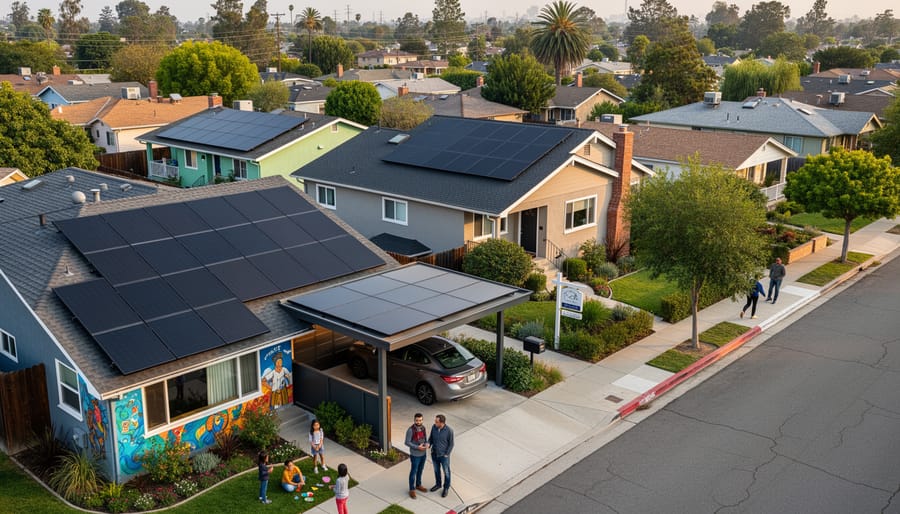
Cultural considerations fundamentally shape how solar installations integrate into community environments. Successful projects begin with understanding local land use patterns—agricultural communities may require elevated or mobile mounting systems that preserve farming activities beneath panels, while urban neighborhoods might prioritize rooftop deployments that minimize ground-level disruption. Indigenous communities often have sacred sites or seasonal gathering areas that must inform system placement and access pathways.
Aesthetic preferences vary significantly across cultures and geographies. Some communities value installations that blend seamlessly with existing architecture, favoring earth-toned frames or panels positioned to minimize visual impact from residential areas. Others embrace solar as a visible statement of environmental commitment, incorporating installations into public gathering spaces as educational landmarks. Mediterranean communities might reference traditional tile roofing patterns in array layouts, while Scandinavian designs may emphasize clean, minimalist configurations.
Module selection extends beyond technical specifications to cultural compatibility. Communities with strong local manufacturing traditions may prioritize domestically produced components, even at moderate cost premiums, to support regional economic development. Religious communities might require certification that production processes align with specific ethical standards. Climate-adapted choices also reflect cultural wisdom—desert communities drawing on traditional passive cooling knowledge may integrate thermal management strategies that complement photovoltaic performance.
Infrastructure planning must account for community gathering patterns, pedestrian traffic flows, and traditional access routes. Systems installed near places of worship, schools, or community centers require careful scheduling of maintenance activities to avoid disrupting culturally significant events. Collaborative design processes that include community representatives from project inception ensure technical solutions respect cultural practices while optimizing energy generation.
Educational Pathways for Culturally Competent PV Professionals
Preparing the next generation of photovoltaic professionals to succeed in culturally diverse environments requires education that extends far beyond panel efficiency calculations and electrical system design. Mose Solar’s university-collaboration programs recognize that technical expertise alone cannot guarantee project success when community acceptance and participation determine viability.
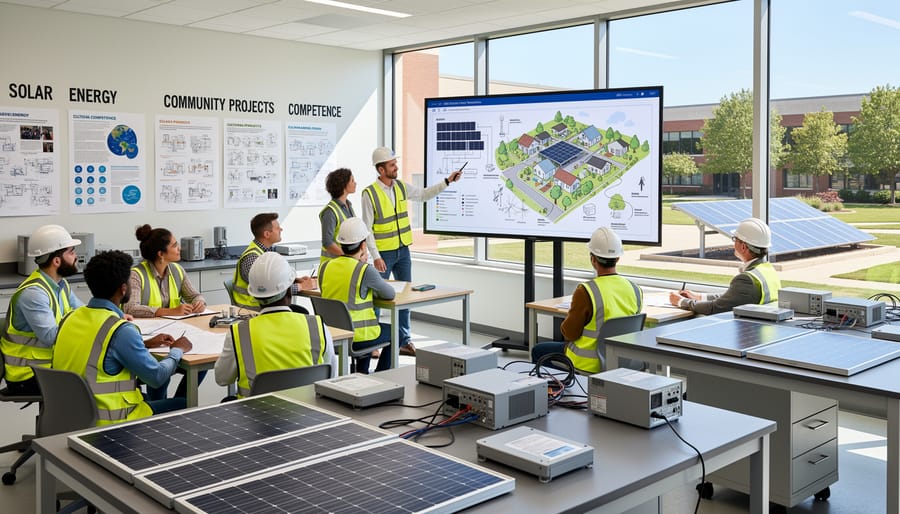
The educational curriculum integrates cultural competency training as a core component rather than an afterthought. Students engage with anthropological principles, community organizing methodologies, and cross-cultural communication strategies alongside their technical coursework. This interdisciplinary approach ensures graduates understand that solar installations function within complex social ecosystems where historical context, economic realities, and cultural values shape every project outcome.
Through partnerships with academic institutions, Mose Solar has developed experiential learning opportunities that immerse students in real-world community engagement scenarios. These programs include field studies in diverse neighborhoods, collaborative workshops with community stakeholders, and case study analyses of both successful integrations and instructive failures. Students learn to identify cultural barriers before they become project obstacles, developing skills in stakeholder mapping, trust-building protocols, and culturally appropriate communication frameworks.
The competencies emphasized in these educational pathways include active listening techniques that honor community knowledge, conflict resolution strategies that respect cultural differences, and participatory design processes that genuinely incorporate local input. Aspiring professionals learn to recognize when technical solutions must adapt to cultural preferences rather than imposing standardized approaches regardless of context.
Assessment methods evaluate not only technical knowledge but also demonstrated cultural awareness and community engagement capabilities. Graduates emerge equipped to conduct meaningful cultural assessments, facilitate inclusive planning sessions, and design solar projects that communities embrace rather than merely tolerate. This comprehensive educational model addresses the industry’s growing recognition that sustainable energy transitions depend equally on social acceptance and technological advancement, preparing professionals who can bridge both domains effectively.
Measuring Success: Beyond Kilowatt-Hours
Evaluating cultural integration in community solar projects requires moving beyond traditional energy production metrics to encompass broader indicators of social impact and community well-being. While kilowatt-hour output remains important, measuring true success demands comprehensive frameworks that capture how effectively projects serve diverse populations.
Community satisfaction surveys provide foundational data about residents’ experiences with solar initiatives. These assessments should explore whether participants feel heard during planning processes, understand billing structures, and believe the project reflects their values. Demographic analysis of survey respondents helps identify whether satisfaction levels vary across cultural groups, revealing potential gaps in engagement approaches.
Equitable participation metrics examine who actually benefits from community solar programs. Tracking enrollment demographics against community composition reveals whether projects reach historically underserved populations or primarily serve already-engaged groups. Successful community partnerships demonstrate participation rates that mirror neighborhood diversity, with particular attention to low-income households and non-English-speaking residents.
Local economic impact assessments quantify how solar investments circulate within communities. This includes monitoring contracts awarded to local businesses, jobs created for community members, and workforce development outcomes from training programs. Universities partnering with solar developers can track graduate employment in the sector, measuring how educational offerings translate into career opportunities.
Long-term sustainability indicators focus on community ownership models and ongoing engagement. Projects demonstrating cultural integration success maintain active participant advisory boards, show increasing local investment over time, and develop succession plans ensuring cultural knowledge transfers to new leadership. Retention rates of community members in decision-making roles serve as powerful indicators of whether initiatives truly embed themselves within local social fabric rather than remaining external impositions.
The successful deployment of community solar extends far beyond achieving optimal panel efficiency and electrical compliance. Cultural integration transforms what might otherwise be a purely technical infrastructure project into a dynamic community asset that generates social capital alongside clean energy. This transformation occurs when project developers recognize that photovoltaic installations exist within human ecosystems—contexts shaped by history, trust networks, economic realities, and cultural values that determine whether renewable energy initiatives thrive or merely survive.
Technical excellence in system design, inverter selection, and grid interconnection remains foundational to any successful solar project. However, these competencies alone cannot address the barriers that frequently derail community solar initiatives: mistrust stemming from past development failures, cultural misunderstandings about energy use patterns, or economic structures that inadvertently exclude the communities most affected by energy burden. The renewable energy transition demands professionals who can navigate both the electrical characteristics of semiconductor materials and the nuanced dynamics of community relationships.
For aspiring photovoltaic professionals, this presents both a challenge and an opportunity. The solar industry increasingly values practitioners who combine technical proficiency with cultural competence—individuals who can calculate voltage drop while simultaneously facilitating inclusive community meetings, or who understand both net metering policies and the importance of multilingual project communication. Universities collaborating with industry leaders are beginning to integrate these dual competencies into educational programs, recognizing that tomorrow’s solar professionals must be equipped to build trust as skillfully as they design arrays. Developing both skill sets positions emerging professionals not merely as technicians, but as facilitators of equitable energy transformation.