Community solar programs are revolutionizing renewable energy adoption by enabling multiple participants to share the benefits of a single solar installation. These collaborative initiatives break down traditional barriers to solar access, offering an innovative solution for residents, businesses, and organizations unable to install individual rooftop systems.
Operating through a shared ownership or subscription model, community solar projects distribute clean energy benefits across diverse stakeholder groups while reducing individual investment costs. Participants typically receive credits on their utility bills proportional to their share of the solar array’s output, creating a tangible economic incentive for sustainable energy participation.
According to the National Renewable Energy Laboratory, community solar installations have experienced exponential growth, with installed capacity increasing by over 700% since 2016. This rapid expansion demonstrates the model’s effectiveness in democratizing solar access and accelerating clean energy deployment across diverse demographic segments.
For municipalities, utilities, and developers seeking to implement successful community solar initiatives, these programs represent a scalable approach to meeting renewable energy goals while fostering social equity and environmental sustainability. Their structure enables broader participation in the clean energy transition, particularly benefiting renters, low-income households, and properties unsuitable for traditional solar installations.
Understanding Community Solar Programs

Core Components of Community Solar
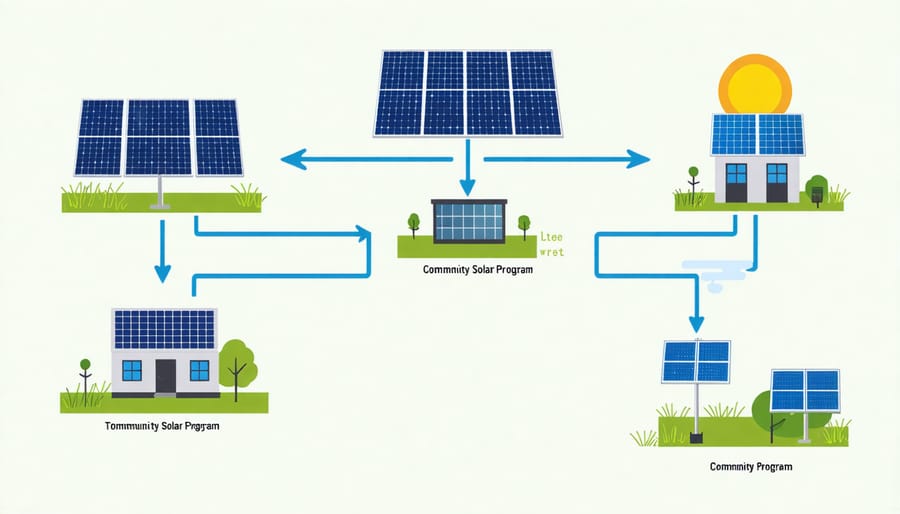
Community solar programs are built upon three fundamental components that work together to create an effective shared renewable energy system. At the core is the shared solar panel infrastructure, typically consisting of a large-scale photovoltaic array installed in a centralized location. This infrastructure serves multiple participants and is designed to maximize energy generation efficiency through optimal positioning and professional maintenance.
The subscription model forms the second critical component, enabling community members to participate without installing panels on their own properties. Subscribers can purchase or lease a portion of the solar array’s output, typically measured in kilowatts or as a percentage of the system’s total capacity. These arrangements often feature flexible terms and transferability options to accommodate changing circumstances.
Energy distribution represents the third essential component, involving sophisticated metering and allocation systems. The generated electricity flows into the local power grid, where it’s measured and credited to subscribers through virtual net metering. This process allows participants to receive credits on their utility bills proportional to their subscription share, even though the energy isn’t directly powering their homes.
The integration of these components creates a framework that makes solar energy accessible to a broader demographic, including renters, apartment dwellers, and homeowners whose properties aren’t suitable for rooftop installations. Regular monitoring and reporting systems ensure transparent tracking of energy production and distribution among all participants.
Participant Roles and Benefits
Community solar programs involve multiple stakeholders working together to create successful renewable energy initiatives. Subscribers, typically residential and commercial customers, participate by purchasing or leasing portions of the solar installation’s output. These participants receive credits on their utility bills proportional to their share of the project’s generation, making solar energy accessible without requiring rooftop installations.
Project developers play a crucial role by identifying suitable sites, securing permits, managing construction, and maintaining the solar facilities. They often partner with financial institutions to fund projects and work closely with utilities to establish interconnection agreements and billing mechanisms.
Local communities benefit through job creation, increased tax revenue, and improved environmental conditions. Municipal governments can participate as anchor subscribers or facilitate land use agreements, while educational institutions may incorporate these projects into their sustainability initiatives and research programs.
Utilities serve as essential intermediaries, managing grid connections and administering bill credits. They benefit from grid modernization opportunities and compliance with renewable energy requirements while maintaining their customer relationships.
The collaborative nature of community solar creates multiple advantages:
– Subscribers reduce energy costs and support clean energy
– Developers generate steady revenue through long-term contracts
– Communities achieve sustainability goals and economic development
– Property owners earn income through land lease agreements
– Local businesses gain opportunities for workforce development
– Environmental organizations advance clean energy adoption
This distributed approach to solar deployment maximizes stakeholder benefits while promoting renewable energy accessibility.
Collaborative Implementation Strategies
Community Engagement and Partnership Models
Successful community solar programs rely heavily on effective stakeholder engagement and carefully structured partnerships. Program developers must cultivate relationships with multiple entities, including local governments, utilities, community organizations, and residents to ensure broad participation and support.
Key engagement strategies include hosting informational workshops, conducting door-to-door outreach, and establishing community advisory boards. These initiatives help build trust, address concerns, and ensure the program meets local needs. Digital engagement through social media, webinars, and dedicated program websites complements traditional outreach methods, particularly for reaching younger demographics and tech-savvy participants.
Partnership models vary based on program scope and community needs. Common structures include:
1. Utility-Led Partnerships: Utilities take primary responsibility for program development and management while partnering with local organizations for community outreach.
2. Developer-Community Partnerships: Solar developers collaborate with community organizations to design and implement programs, often incorporating local workforce development initiatives.
3. Municipal-Private Partnerships: Local governments partner with private developers to leverage public resources and private expertise.
4. Cooperative Models: Community members form cooperatives to collectively own and manage solar installations, often partnering with technical advisors and financial institutions.
Educational institutions play a vital role by providing technical expertise, research support, and workforce training programs. These partnerships often include curriculum development, internship opportunities, and applied research projects that benefit both students and community solar initiatives.
Successful partnerships typically incorporate clear governance structures, transparent communication channels, and equitable benefit-sharing arrangements. Regular stakeholder meetings and progress reports help maintain engagement and ensure accountability throughout the program’s lifecycle.
Technical and Financial Considerations
The successful implementation of community solar programs requires careful consideration of both technical specifications and financial planning. From an engineering perspective, these projects demand comprehensive site assessment, including solar resource evaluation, grid interconnection studies, and structural analysis of hosting facilities. Project developers must ensure compliance with local building codes, electrical standards, and utility interconnection requirements.
For optimal performance, community solar installations typically require sophisticated monitoring systems and maintenance protocols. These systems track energy production, manage participant billing, and ensure fair distribution of solar credits among subscribers. Advanced inverter technologies and smart metering infrastructure are essential components that enable seamless integration with the existing power grid.
The financial framework of community solar projects involves multiple stakeholders and funding mechanisms. Traditional solar project financing options include power purchase agreements (PPAs), community investment models, and third-party ownership structures. Many programs leverage federal and state incentives, tax credits, and renewable energy certificates (RECs) to improve project economics and reduce participant costs.
Project management considerations encompass subscriber acquisition and retention strategies, ongoing maintenance scheduling, and performance monitoring. Successful programs typically maintain a dedicated team for customer service, technical support, and administrative functions. Regular performance assessments and preventive maintenance help ensure optimal system efficiency and longevity.
Risk management strategies should address potential challenges such as equipment failures, weather-related damage, and subscriber turnover. Insurance coverage, performance guarantees, and clear contractual agreements help protect all stakeholders’ interests. Additionally, establishing reserve funds for maintenance and repairs contributes to long-term program sustainability.
Success Stories and Best Practices

Case Studies
The Colorado Community Solar Gardens program stands as a pioneering example of successful community solar implementation. Launched in 2010, this initiative has grown to serve over 20,000 households, generating more than 50 MW of clean energy annually. The program’s success stems from its innovative subscription model, which allows renters and homeowners to purchase solar shares without installing panels on their properties.
In Massachusetts, the Solstice Initiative demonstrates the potential for social impact through community solar. Their project in Dover particularly showcases how educational institutions can participate, with Dover-Sherborn High School subscribing to 40% of the array’s output while incorporating renewable energy education into their curriculum.
The Rural Renewable Energy Alliance (RREAL) in Minnesota exemplifies how community solar can address energy poverty. Their Solar Assistance program has provided low-income families with access to solar energy, reducing their electricity bills by an average of 30%. The project’s success has led to its replication in other Minnesota communities.
New York’s Solar for All program presents another notable case study. This state-sponsored initiative has successfully connected over 10,000 low-income households with community solar subscriptions. The program’s innovative payment structure eliminates upfront costs and credit score requirements, making solar energy accessible to previously underserved communities.
Key Success Factors
The success of community solar programs hinges on several critical factors that must be carefully considered and implemented. Strong stakeholder engagement stands as a primary determinant, requiring active participation from utilities, local governments, community members, and program administrators. Effective programs consistently demonstrate clear communication channels and transparent decision-making processes.
Financial accessibility plays a crucial role, with successful programs offering flexible payment options and subscription models that accommodate diverse income levels. Programs that implement low-to-no upfront costs and guaranteed savings typically achieve higher participation rates and sustained community support.
Site selection and system design significantly impact program viability. Optimal locations must balance factors such as solar resource availability, grid connection capabilities, and proximity to participating communities. Professional engineering assessment and adherence to local regulations ensure long-term technical performance.
Project management excellence, including robust operations and maintenance protocols, ensures reliable system performance and subscriber satisfaction. Successful programs typically feature dedicated management teams that handle subscriber inquiries, billing processes, and system monitoring effectively.
Community education and outreach initiatives prove essential for program adoption. Successful programs often incorporate workshops, informational sessions, and digital resources to help participants understand their involvement and benefits. Regular performance reporting and benefit tracking help maintain subscriber engagement and program transparency.
Regulatory compliance and policy support create a stable foundation for program growth. Programs that align with state and local renewable energy policies while maintaining compliance with utility requirements demonstrate greater long-term sustainability.
Future Outlook and Opportunities
The community solar sector is poised for significant growth, driven by evolving policy frameworks, technological advancements, and increasing consumer demand for sustainable energy solutions. As emerging solar technologies continue to improve efficiency and reduce costs, community solar programs are becoming more accessible and economically viable for diverse communities.
Several key trends are shaping the future of community solar. Virtual net metering and blockchain-based energy trading platforms are enabling more flexible participation models, while improved battery storage solutions are enhancing program reliability and grid integration capabilities. Additionally, the integration of smart grid technologies is facilitating better energy management and distribution among program participants.
Challenges remain in scaling community solar programs effectively. These include securing suitable land for solar installations, navigating complex regulatory environments, and ensuring equitable access across different socioeconomic groups. However, these challenges are increasingly being addressed through innovative solutions such as floating solar arrays, dual-use agricultural solar installations, and targeted low-income participation programs.
Opportunities for growth are particularly promising in urban areas where rooftop solar may not be feasible for individual households. The development of microgrids and community-scale storage systems presents new possibilities for energy independence and resilience. Furthermore, the increasing corporate interest in renewable energy procurement is opening doors for hybrid models that combine community and commercial solar initiatives.
Looking ahead, community solar programs are likely to benefit from supportive federal and state policies, technological innovations in panel efficiency and energy storage, and growing environmental awareness among consumers. The sector is expected to play a crucial role in achieving renewable energy targets and fostering energy equity across communities. As program designs continue to evolve, we can anticipate more flexible subscription models, enhanced digital platforms for participant engagement, and greater integration with other clean energy initiatives.
Community solar programs represent a pivotal advancement in renewable energy adoption, offering a democratic approach to solar power access. These initiatives have demonstrated their ability to break down traditional barriers to solar adoption while fostering environmental stewardship and economic benefits across diverse communities.
Through collaborative ownership models, participants can enjoy reduced electricity costs without the need for individual rooftop installations. The programs have proven particularly valuable for renters, apartment dwellers, and those with unsuitable roof conditions, ensuring that solar energy benefits extend beyond traditional single-family homeowners.
The success of community solar initiatives relies heavily on effective stakeholder engagement, transparent program management, and strong policy frameworks. As these programs continue to evolve, they increasingly incorporate innovative financing mechanisms and advanced monitoring technologies to maximize participant benefits and system efficiency.
For those interested in joining a community solar program, the first step is to research available options in your area through local utilities or solar developers. Consider factors such as subscription terms, expected savings, and program track record. Many programs offer flexible participation options, making it easier than ever to contribute to clean energy development while potentially reducing your energy costs.
By participating in community solar programs, you become part of a growing movement toward sustainable energy independence and community-driven climate action. The time to engage is now, as these programs continue to expand and evolve across regions.