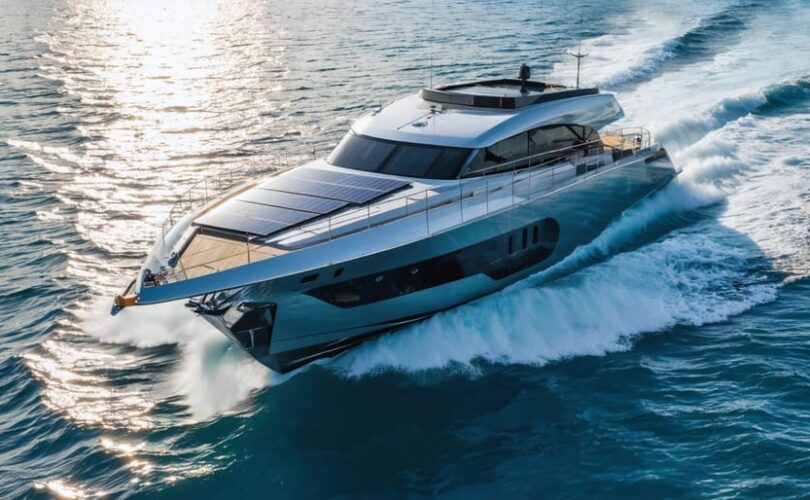
Choosing the right flexible solar panels for your boat demands a precise balance between power output, durability, and marine-specific design features. Today’s marine-grade flexible panels deliver up to 23% efficiency while weighing 70% less than rigid alternatives, making them ideal for curved surfaces and weight-sensitive vessel installations. Recent advances in photovoltaic technology have introduced salt-water resistant materials and enhanced UV protection, specifically engineered for the harsh marine environment. Leading models now incorporate ETFE coatings and marine-grade adhesives, ensuring reliable performance through extended exposure to salt spray, high humidity, and constant motion. This guide examines the top flexible solar solutions that combine maximum power generation with proven durability for marine applications, helping you make an informed decision based on real-world performance data and installation requirements.
Why Flexible Solar Panels Excel in Marine Environments
Weight and Installation Benefits
One of the most significant flexible solar panel advantages for marine applications is their remarkably low weight profile. Typically weighing 70-80% less than traditional rigid panels, flexible modules significantly reduce the overall load on your vessel’s structure. This weight reduction is particularly crucial for maintaining optimal boat performance and fuel efficiency.
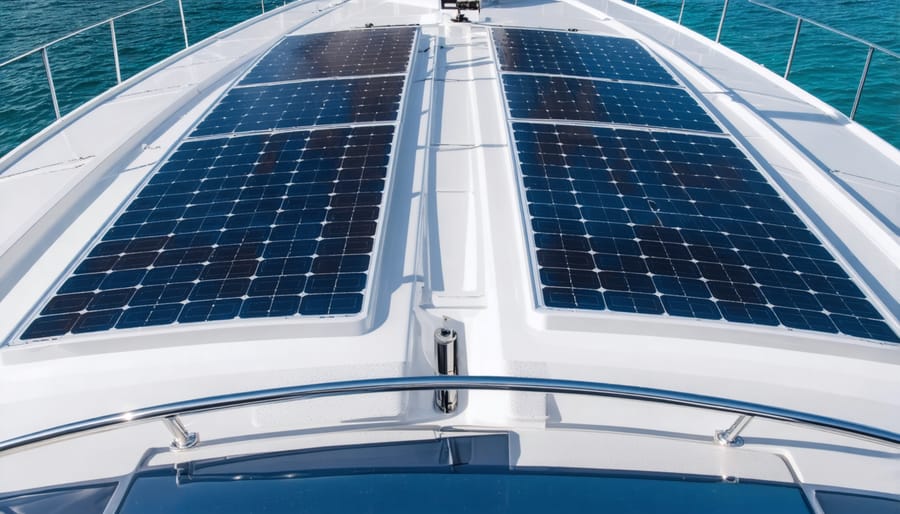
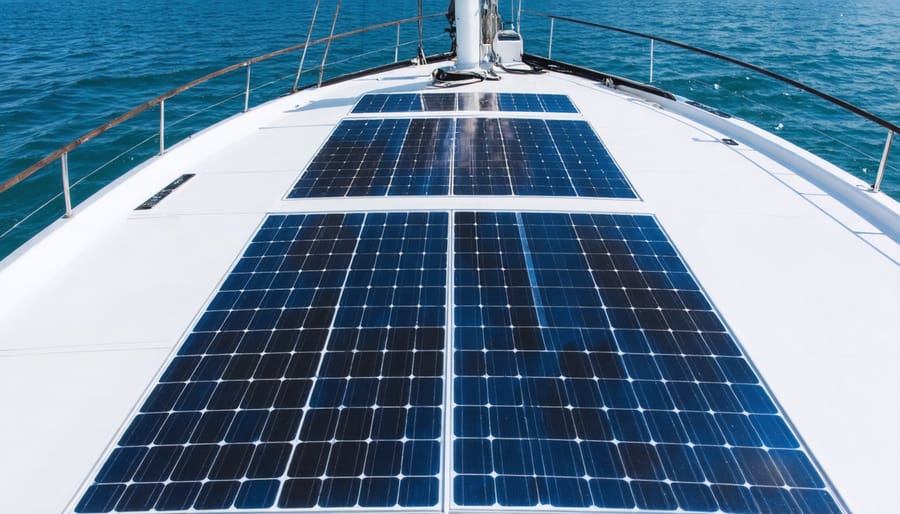
Installation flexibility represents another key benefit for marine applications. These panels can conform to slightly curved surfaces up to 30 degrees, allowing for seamless integration with various boat surfaces including cabin tops and deck areas. Their thin profile, usually less than 3mm, eliminates the need for bulky mounting hardware and reduces wind resistance while underway.
The adhesive backing available on many flexible marine solar panels enables direct surface mounting without drilling holes in your vessel’s structure. This not only preserves the integrity of your boat but also significantly reduces installation time and complexity. Additionally, the absence of rigid mounting frames minimizes the risk of corrosion issues common in marine environments.
Aerodynamic and Space Efficiency
Flexible solar panels offer significant advantages in marine applications through their superior aerodynamic properties and adaptability to curved surfaces. Unlike rigid panels, these malleable modules can conform to a boat’s deck, cabin top, or bimini, maintaining the vessel’s original profile while minimizing wind resistance. This streamlined installation reduces drag coefficient by up to 40% compared to traditional rigid panels, resulting in improved fuel efficiency and reduced wind noise during navigation.
The panels’ ability to follow the natural contours of marine surfaces also maximizes available space utilization. With thicknesses typically ranging from 2-3mm, flexible panels can be installed in areas where rigid panels would be impractical or create obstruction hazards. This characteristic is particularly valuable on smaller vessels where deck space is at a premium.
Furthermore, the low-profile nature of flexible panels reduces the risk of shadowing effects on other onboard solar components, enabling more efficient overall system design. Their lightweight construction, often 70% lighter than rigid alternatives, minimizes impact on the boat’s center of gravity and handling characteristics, making them an ideal choice for performance-oriented vessels.
Top Performing Flexible Marine Solar Panels
High-Efficiency Monocrystalline Options
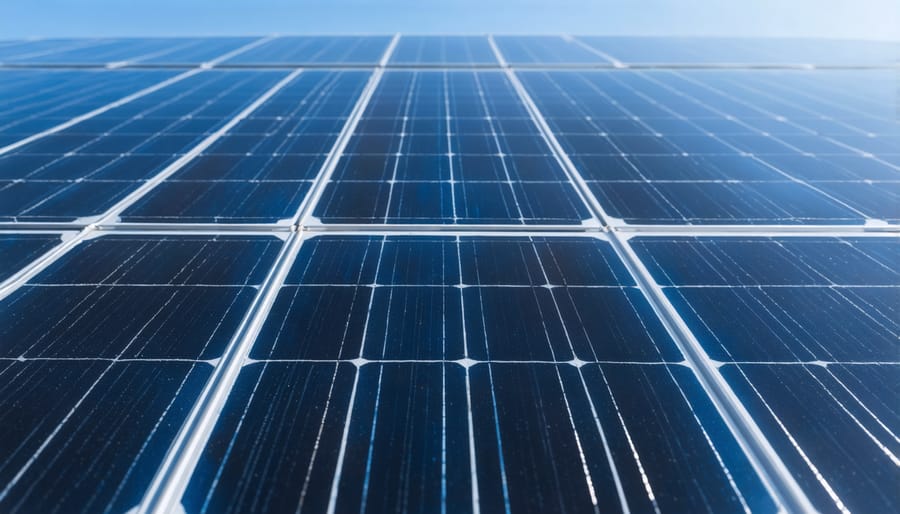
When it comes to maximizing solar power generation in limited space, monocrystalline solar technology stands out as the premier choice for marine applications. Modern flexible monocrystalline panels achieve efficiency ratings of 21-23%, significantly outperforming their polycrystalline counterparts in both power output and space utilization.
Leading the market, SunPower’s flexible monocrystalline panels deliver exceptional performance with their signature Maxeon cell technology. These panels consistently achieve power outputs of 100-170 watts per square meter while maintaining flexibility up to 30 degrees. Their advanced construction includes a specialized ETFE coating that ensures superior durability in marine environments.
LG’s marine-grade flexible panels integrate high-efficiency N-type cells, offering remarkable performance even in partial shade conditions. These panels demonstrate impressive low-light performance, generating up to 15% more power during overcast conditions compared to standard flexible panels. Their unique cell architecture reduces the impact of micro-cracks, a common concern in flexible applications.
Recent innovations from REC Solar include their flexible Alpha series, featuring heterojunction cell technology that combines crystalline silicon with amorphous silicon layers. This configuration results in superior temperature coefficient ratings (-0.26%/°C), ensuring consistent performance even during hot summer days on the water.
Key performance metrics to consider when evaluating monocrystalline flexible options include:
– Power density (W/m²): Look for panels exceeding 160 W/m²
– Temperature coefficient: Optimal range between -0.30%/°C and -0.35%/°C
– Shade tolerance: Advanced cell architectures with bypass diodes
– Marine certification: IEC 61701 salt mist corrosion testing
– Flexibility range: Minimum 30-degree bend radius without performance degradation
These high-efficiency panels typically command a premium price point, but their superior power generation capabilities often justify the investment through improved system performance and longevity. When properly installed and maintained, quality monocrystalline flexible panels can maintain 90% or more of their rated output capacity for up to 25 years, making them a reliable long-term solution for marine solar applications.
Durability-Focused Solutions
Marine environments present unique challenges for solar panels, demanding specialized durability features to withstand harsh conditions. Leading manufacturers have developed robust solutions specifically engineered for maritime applications, incorporating advanced materials and protective measures to ensure longevity and reliable performance.
High-quality marine-grade flexible solar panels typically feature ethylene tetrafluoroethylene (ETFE) coating, which provides superior resistance to saltwater corrosion and UV damage compared to traditional PET materials. This specialized coating maintains optical clarity while offering exceptional protection against the elements, helping panels maintain their efficiency over time.
Advanced lamination techniques play a crucial role in marine panel durability. Multiple-layer lamination processes create a completely sealed unit, preventing moisture infiltration and delamination—common issues in marine environments. Leading manufacturers employ pressure-sensitive adhesives specifically formulated to maintain their integrity despite constant exposure to salt spray and temperature fluctuations.
Junction boxes and connection points receive particular attention in marine-grade panels. IP68-rated components ensure complete waterproofing, while marine-grade cables and connectors feature additional corrosion protection. Some manufacturers incorporate redundant sealing systems to provide extra protection against water ingress.
Structural integrity is enhanced through reinforced backing materials and specialized cell arrangements that allow panels to flex without compromising performance. The most durable options utilize monocrystalline cells with enhanced crack resistance, mounted on composite substrates that resist warping and degradation from constant exposure to marine conditions.
Impact resistance is another critical factor, as marine panels must withstand occasional contact with equipment and extreme weather conditions. Premium panels incorporate shock-absorbing layers and reinforced edge protection to prevent damage from impacts while maintaining their flexible properties.
Testing protocols for marine-grade panels typically exceed standard industry requirements. Quality manufacturers subject their products to accelerated salt spray testing, extreme temperature cycling, and mechanical stress evaluations to verify long-term durability in marine environments.
When selecting panels for marine applications, look for products with comprehensive warranty coverage specifically addressing maritime use. Leading manufacturers typically offer warranties ranging from 5 to 10 years, with some premium products featuring extended coverage for salt water exposure and UV resistance.
These durability-focused features contribute to significantly longer service life and maintained efficiency in marine environments, ultimately providing better value despite higher initial costs compared to standard flexible panels.
Critical Installation Considerations
Mounting Systems and Surface Preparation
The successful installation of flexible solar panels on boats requires careful consideration of mounting systems and proper surface preparation. Marine-grade adhesives and specialized mounting hardware are essential components for securing panels while maintaining the integrity of your vessel’s surface.
For direct surface mounting, thoroughly clean the installation area using marine-grade cleaners to remove salt residue, oils, and contaminants. A two-step cleaning process using isopropyl alcohol followed by a surface primer ensures optimal adhesion. The mounting surface must be completely dry and maintain a temperature between 50-90°F (10-32°C) during installation.
Several mounting options are available for flexible panels:
Adhesive Mounting: High-strength marine-grade adhesives, such as 3M VHB tape or specialized solar panel adhesives, provide a secure, low-profile installation. This method eliminates the need for drilling holes but requires meticulous surface preparation.
Frame Mounting: Aluminum frames or mounting brackets offer additional support and allow for panel adjustment. This system typically requires some drilling but provides better ventilation and easier maintenance access.
Snap-Button Systems: These removable mounting solutions use marine-grade snap fasteners, allowing panels to be temporarily removed when necessary. While more expensive, they offer superior flexibility for seasonal adjustments.
For optimal performance, maintain a minimum air gap of 1/4 inch between the panel and mounting surface to allow for heat dissipation. Install panels with a slight tilt when possible to facilitate natural cleaning and water runoff. Consider using edge sealants around the panel perimeter to prevent moisture intrusion and maintain long-term adhesion.
Document the installation process and maintain detailed records of mounting materials used, as this information may be required for warranty purposes. Regular inspection of mounting points and adhesive integrity should be incorporated into routine maintenance schedules.
Wiring and Marine-Grade Components
When installing flexible solar panels on boats, proper marine-grade wiring and components are essential for safety, durability, and optimal performance. Marine environments present unique challenges due to constant exposure to moisture, salt spray, and temperature fluctuations.
All wiring should be tinned copper marine-grade cable with appropriate gauge sizing based on current load and distance. For typical flexible solar installations, 10 AWG or 8 AWG tinned copper wire provides sufficient capacity while minimizing voltage drop. Double-insulated cables with UV-resistant jacketing offer additional protection against environmental factors.
Connection points require waterproof marine-grade connectors with IP67 or higher ratings. MC4 connectors, specifically designed for solar applications, are industry standard but must be marine-rated versions with additional sealing protection. All connection points should be properly sealed with heat-shrink tubing containing adhesive lining for maximum moisture resistance.
Charge controllers must be specifically designed for marine use, featuring conformal coating on circuit boards and corrosion-resistant housing materials. MPPT (Maximum Power Point Tracking) controllers are recommended for marine applications due to their superior efficiency and ability to handle varying light conditions common in maritime environments.
Circuit protection components, including fuses and breakers, should be properly rated for DC solar applications and housed in waterproof enclosures. Install these components as close to the battery bank as possible while maintaining accessibility for maintenance.
Cable routing requires careful consideration to prevent chafing and exposure. Use marine-grade cable channels or conduit for protection, ensuring proper strain relief at entry and exit points. All penetrations through decks or bulkheads must be properly sealed using appropriate marine-grade sealants and grommets.
Grounding systems should comply with ABYC (American Boat and Yacht Council) standards, incorporating proper bonding to the boat’s existing ground system while maintaining galvanic isolation where necessary. This prevents potential corrosion issues common in marine electrical systems.
Maintenance and Performance Optimization
Cleaning and Inspection Protocols
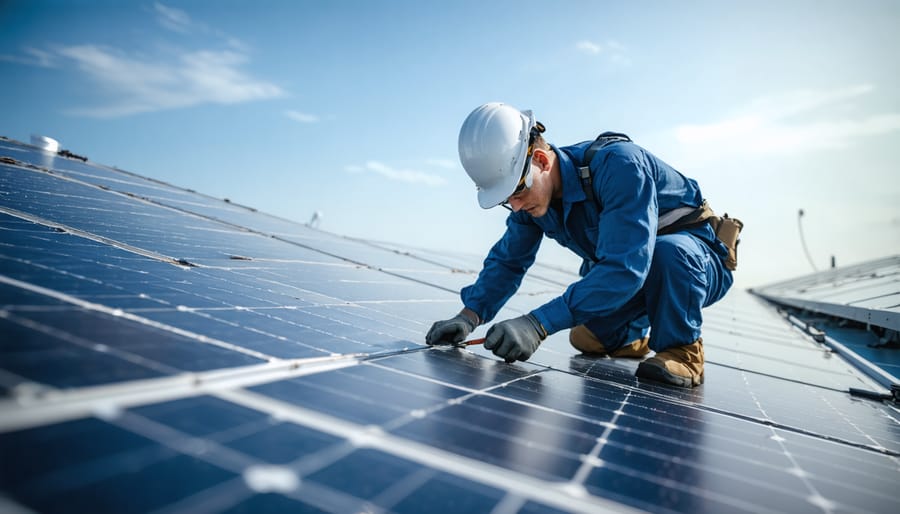
Regular maintenance of flexible solar panels in marine environments is crucial for optimal performance and longevity. Begin by inspecting the panels monthly for salt deposits, bird droppings, and marine growth. Use fresh water and a soft microfiber cloth to gently clean the surface, avoiding abrasive materials that could scratch the panels. For stubborn deposits, utilize a specialized marine-grade solar panel cleaner that won’t damage the flexible material.
During inspection, pay particular attention to the mounting points and electrical connections, as these are vulnerable to corrosion in marine environments. Check for any signs of delamination, especially around the edges where saltwater exposure is highest. Ensure all cable connections remain watertight and that strain relief mechanisms are functioning properly.
Document all cleaning sessions and inspections in a maintenance log, noting any irregularities or performance changes. This record-keeping helps track degradation patterns and anticipate necessary repairs. Consider scheduling professional inspections annually to assess the overall system health and verify the integrity of weatherproofing measures.
For maximum efficiency, coordinate cleaning with your boat’s regular maintenance schedule, and always clean panels during cooler periods to prevent thermal stress. Remember that proper maintenance not only extends panel life but also ensures consistent power output for your marine electrical systems.
Performance Monitoring Systems
To effectively monitor and optimize flexible solar panels on boats, implementing a comprehensive performance monitoring system is crucial. Modern marine solar installations benefit from advanced monitoring tools that provide real-time data on power generation, system efficiency, and environmental conditions.
Key monitoring components should include charge controllers with built-in displays, battery monitoring systems, and data logging capabilities. These tools help boat owners maximize solar panel efficiency by tracking performance metrics such as voltage, current, and power output throughout the day.
Many contemporary monitoring systems offer mobile connectivity through dedicated apps, allowing remote system surveillance and performance analysis. This feature is particularly valuable for long-distance sailors who need to monitor their energy systems while at sea.
Important parameters to track include:
– Daily energy production
– Panel temperature
– Charging efficiency
– Battery state of charge
– Shading impacts
– Weather conditions
Regular monitoring helps identify potential issues before they become serious problems and assists in optimizing panel positioning for maximum energy capture. It’s recommended to maintain detailed performance logs, which can be valuable for troubleshooting and planning future system upgrades.
Selecting the right flexible solar panels for your boat requires careful consideration of multiple factors, from efficiency and durability to installation requirements and cost-effectiveness. Through our comprehensive analysis, we’ve found that high-efficiency monocrystalline flexible panels with marine-grade materials and robust waterproofing consistently deliver the best performance in maritime environments.
For optimal results, we recommend prioritizing panels with efficiency ratings above 20%, genuine marine certifications, and proven UV resistance. The top performers in our evaluation demonstrated superior flexibility without compromising power output, maintaining structural integrity even under challenging marine conditions.
Installation location plays a crucial role in system performance. Whether mounting on cabin tops, biminis, or other curved surfaces, ensure proper ventilation to prevent overheating and maintain efficiency. Regular maintenance, including cleaning with fresh water and periodic inspection of mounting points, will extend the lifespan of your solar installation.
Remember to factor in your specific energy requirements, available mounting space, and budget when making your final selection. While premium options may require a higher initial investment, their superior durability and performance typically result in better long-term value.
For most recreational vessels, a combination of high-efficiency flexible panels with quality marine-grade mounting systems will provide reliable, sustainable power generation while maintaining the boat’s aesthetics and functionality. Always consult with qualified marine electrical professionals for proper system sizing and installation guidance.