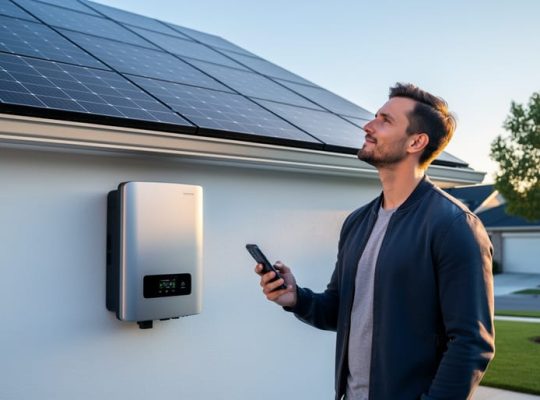
Optimize solar panel placement by calculating the precise angle based on your geographical latitude and adjusting seasonally to maximize rooftop solar efficiency. Monitor panel performance through advanced monitoring systems, identifying efficiency drops within 24 hours through automated data analysis. Clean panels quarterly using deionized water and specialized non-abrasive tools, removing accumulation that can reduce output by up to 25%. Install microinverters or power optimizers at each panel to mitigate partial shading effects, potentially increasing system efficiency by 5-25% compared to traditional string inverters. Implement regular thermal imaging inspections to detect hotspots and performance anomalies before they significantly impact generation capacity.
This precise approach integrates cutting-edge technology with proven maintenance protocols, ensuring optimal energy harvesting throughout the system’s lifecycle. Professional calibration and periodic recommissioning maintain peak performance, while strategic panel positioning maximizes exposure during peak generation hours.
Optimal Panel Positioning and Angle
Geographic Considerations
Geographic location plays a crucial role in determining the optimal positioning of solar panels for maximum energy production. The fundamental principle is that panels should be oriented to capture the maximum amount of direct sunlight throughout the day, which varies significantly based on latitude.
In the Northern Hemisphere, solar panels should face true south, while in the Southern Hemisphere, they should face true north. The optimal tilt angle of panels typically corresponds to the location’s latitude. For example, if your installation is at 40 degrees latitude, the ideal panel tilt would be approximately 40 degrees from horizontal.
However, seasonal adjustments may be necessary for peak efficiency. During summer months, when the sun is higher in the sky, a shallower angle (latitude minus 15 degrees) often yields better results. Conversely, during winter months, a steeper angle (latitude plus 15 degrees) helps capture more energy from the lower sun position.
Local climate patterns and topographical features should also inform panel positioning decisions. Areas with frequent morning fog might benefit from a slightly western bias, while locations with afternoon cloud cover might perform better with an eastern orientation. Professional solar installers typically use sophisticated modeling software to determine the exact optimal angle for specific locations.

Seasonal Adjustments
To optimize solar panel performance throughout the year, systematic adjustments to tilt angles are essential. The optimal tilt angle varies with latitude and season due to the sun’s changing position in the sky. During summer months, when the sun travels a higher arc, panels should be positioned at a shallower angle, typically latitude minus 15 degrees. Winter installations require steeper angles, approximately latitude plus 15 degrees, to capture maximum sunlight when the sun’s path is lower.
For fixed installations, a year-round tilt angle equal to the installation site’s latitude provides the best average performance. However, adjustable mounting systems enable quarterly angle modifications that can increase annual energy yield by 5-15%. The recommended adjustment schedule is:
Spring (March-May): Latitude minus 10 degrees
Summer (June-August): Latitude minus 15 degrees
Fall (September-November): Latitude minus 10 degrees
Winter (December-February): Latitude plus 15 degrees
Professional solar installers utilize solar pathfinder tools and specialized software to determine precise adjustment angles based on local conditions. These calculations account for factors such as atmospheric conditions, local weather patterns, and site-specific shading considerations. Regular monitoring of system performance metrics can help validate the effectiveness of seasonal adjustments and inform timing modifications as needed.
Maintenance Practices for Peak Performance
Cleaning Protocols
Regular cleaning is essential for maintaining optimal solar panel performance, with studies indicating that dirty panels can experience efficiency losses of up to 25%. Professional cleaning protocols typically involve a three-phase approach: inspection, cleaning, and verification.
Begin with a thorough visual inspection to identify areas of heavy soiling, bird droppings, or mineral deposits. Use specialized monitoring equipment to measure pre-cleaning performance levels for documentation purposes.
The cleaning process should utilize deionized water and soft-bristled brushes designed specifically for solar panels. Avoid abrasive materials, harsh chemicals, or pressure washers that could damage the panel surface. For stubborn deposits, apply approved biodegradable cleaning solutions that won’t leave residue or create a film that could reduce light transmission.
Cleaning frequency depends on several environmental factors. Panels in dusty, industrial, or agricultural areas typically require quarterly cleaning, while installations in cleaner environments may need only bi-annual maintenance. During periods of prolonged drought or following storms, additional cleaning may be necessary.
For optimal results, schedule cleanings during early morning or evening hours when panels are cool and system output is minimal. Document each cleaning session, including before and after performance measurements, to establish effective maintenance intervals for your specific installation.
Professional cleaning services typically utilize advanced tools like telescopic water-fed poles and automated cleaning systems for large installations, ensuring thorough cleaning while maintaining safety protocols and system integrity.
Inspection Guidelines
Regular inspection and maintenance are crucial for maintaining optimal solar panel efficiency. Establish a quarterly inspection schedule that includes examining physical components, electrical connections, and monitoring system performance metrics. During each inspection, check for surface debris, dust accumulation, and potential shading issues that may have developed since the last assessment.
Key inspection points include:
– Panel surface integrity and cleanliness
– Mounting hardware security and alignment
– Wiring connections and conduit conditions
– Inverter performance indicators
– Module temperature readings
– Junction box condition
– Support structure stability
Document baseline performance metrics and compare them during each inspection to identify efficiency trends. Monitor voltage output levels and current readings across different times of day and weather conditions. Any deviation exceeding 15% from baseline measurements warrants further investigation.
Maintenance tasks should follow a structured schedule:
Monthly: Visual inspection and basic cleaning
Quarterly: Detailed performance analysis and connection checks
Semi-annually: Comprehensive system evaluation
Annually: Professional assessment and recalibration
Keep detailed records of all inspections, including photographs of potential issues, performance data, and maintenance actions taken. This documentation helps track system degradation over time and supports warranty claims if needed. Consider implementing remote monitoring systems to receive real-time alerts about performance issues, enabling prompt intervention when efficiency drops below acceptable levels.
Temperature Management Solutions
Ventilation Techniques
Proper ventilation plays a crucial role in maintaining optimal solar panel efficiency by regulating operating temperatures. Most photovoltaic cells experience a 0.3-0.5% decrease in efficiency for every degree Celsius rise above their rated temperature. To combat this efficiency loss, implementing effective ventilation techniques is essential.
The primary method for ensuring adequate airflow involves maintaining a minimum gap of 4-6 inches between the roof surface and the solar panels. This space creates a natural convection channel that allows hot air to rise and escape while drawing in cooler air from below. Installing mounting rails that promote this airflow pattern can significantly enhance cooling effectiveness.
Professional installers often incorporate temperature-specific mounting solutions, such as thermal brackets or specialized racking systems, that optimize air circulation. These systems may include integrated ventilation channels or enhanced spacing configurations based on local climate conditions.
For ground-mounted systems, ensuring proper clearance from vegetation and maintaining unobstructed airflow paths around the array is crucial. Regular inspection of ventilation channels and removal of any debris that might restrict airflow will help maintain optimal operating temperatures and maximize system performance.
Heat Mitigation Strategies
Heat management plays a crucial role in maintaining optimal solar panel efficiency, as elevated temperatures can significantly reduce power output. Understanding panel type performance differences is essential when implementing heat mitigation strategies. Professional installations typically incorporate several proven techniques to combat heat-related efficiency losses.
Primary cooling methods include establishing adequate airflow beneath panels through proper mounting techniques, maintaining a minimum 4-6 inch gap between the roof surface and panels. Advanced thermal management solutions such as heat-dissipating backsheets and specialized coating materials can reduce operating temperatures by 10-15°C.
Active cooling systems, while less common in residential installations, offer significant benefits for commercial applications. These include water-cooling circuits, forced-air ventilation systems, and phase-change materials integrated into panel frameworks. Emerging technologies like thermally conductive adhesives and nano-engineered surfaces show promising results in laboratory testing, potentially offering cost-effective alternatives to traditional cooling methods.
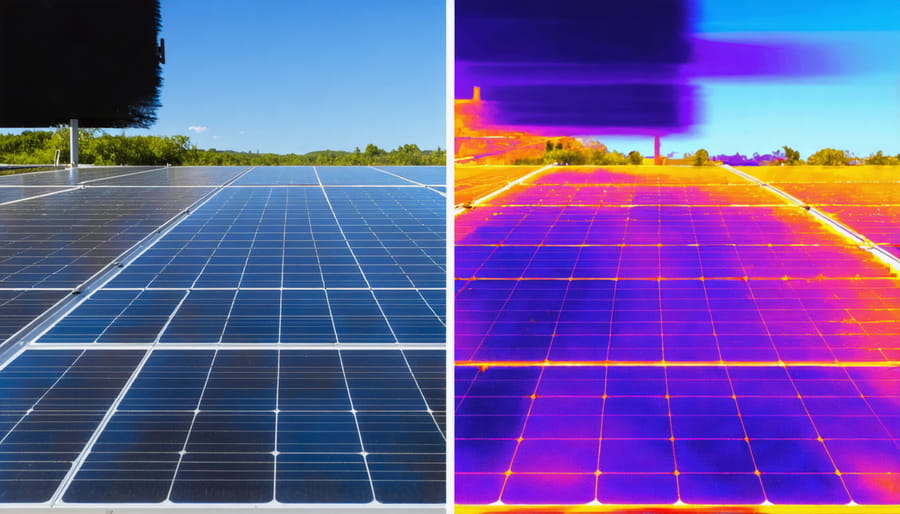
Regular monitoring of panel temperatures through thermal imaging and implementing preventive maintenance protocols ensures sustained thermal management effectiveness throughout the system’s operational lifetime.
Technology Upgrades and Optimization
Monitoring Systems
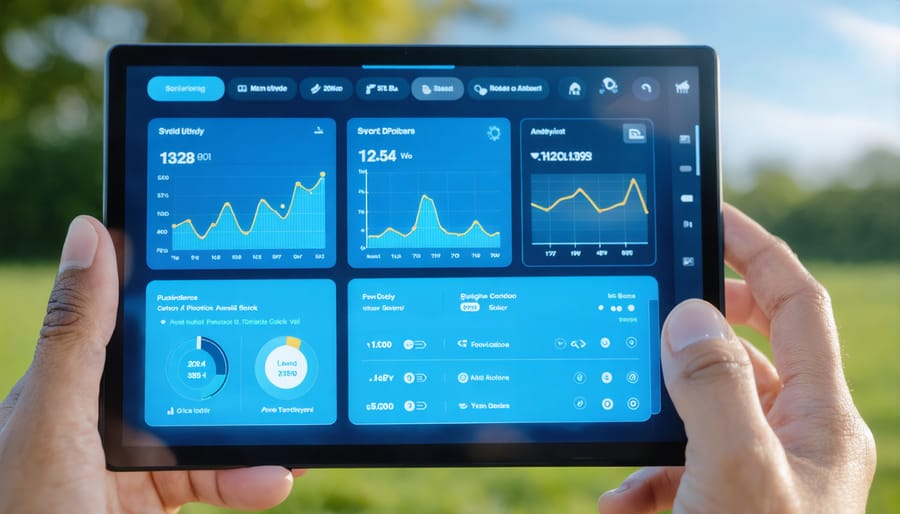
Modern monitoring systems are essential tools for maximizing solar panel efficiency through real-time performance tracking and data analysis. These systems typically comprise sensors, data loggers, and software interfaces that provide comprehensive insights into your solar installation’s operation. By implementing advanced monitoring system optimization, operators can identify performance issues before they significantly impact energy production.
Key monitoring parameters include voltage, current, power output, panel temperature, and environmental conditions. Advanced systems also track individual panel performance, enabling quick identification of underperforming modules. This granular monitoring allows for precise maintenance scheduling and rapid problem resolution.
Remote monitoring capabilities enable system operators to access performance data through web-based platforms or mobile applications, facilitating immediate response to efficiency drops. Many contemporary monitoring solutions incorporate machine learning algorithms that can predict potential issues and suggest preventive maintenance measures.
For optimal implementation, ensure your monitoring system includes:
– High-precision sensors for accurate data collection
– Reliable data transmission infrastructure
– User-friendly interface for data visualization
– Automated alert systems for performance anomalies
– Data storage capabilities for long-term analysis
– Integration with existing energy management systems
Regular analysis of monitoring data helps maintain peak system efficiency and extends the operational lifespan of your solar installation.
Performance Enhancement Equipment
Several performance-enhancing devices can significantly boost your solar system’s output. Modern microinverters and power optimizers help manage partial shading issues by allowing each panel to operate independently, maximizing energy harvest even when some panels are compromised. These devices, part of the latest solar efficiency innovations, can increase overall system yield by 5-25%.
Solar tracking systems, while requiring additional investment, can improve energy production by up to 45% by following the sun’s path throughout the day. Maximum power point tracking (MPPT) charge controllers ensure optimal voltage levels between panels and batteries, enhancing charging efficiency by 20-30% compared to traditional controllers.
Advanced monitoring systems provide real-time performance data and swift problem detection, helping maintain peak efficiency through immediate identification of underperforming panels or system components. Temperature regulation equipment, such as cooling systems and ventilation solutions, can prevent efficiency losses during hot weather by maintaining optimal operating temperatures.
Consider incorporating DC optimizers for string inverter systems, which can boost performance by 2-10% while providing panel-level monitoring capabilities. These components work together to create a more resilient and efficient solar power system.
Addressing Common Efficiency Barriers
Several common barriers can impede optimal solar panel efficiency, but implementing targeted solutions can effectively address these challenges. Shading presents one of the most significant obstacles, as even partial shade on a single panel can disproportionately affect the entire system’s output. Installing micro-inverters or power optimizers enables each panel to operate independently, minimizing the impact of localized shading.
Temperature management poses another crucial challenge, as solar panels experience reduced efficiency when operating at high temperatures. Implementing proper ventilation through adequate mounting height and using temperature-resistant materials can help maintain optimal operating temperatures. Some installations benefit from the addition of cooling systems in extremely hot climates.
Dust, dirt, and debris accumulation significantly reduce panel efficiency by blocking incoming sunlight. Establishing a regular cleaning schedule, particularly in dusty regions or during pollen seasons, helps maintain peak performance. Installing panels at a minimum 15-degree tilt facilitates natural cleaning through rainfall and prevents debris accumulation.
Weather-related efficiency losses can be mitigated through strategic planning and equipment selection. Choosing panels with high snow-shedding capabilities for cold climates and robust wind resistance ratings for exposed locations ensures consistent performance throughout the year. Anti-reflective coatings and specialized glass treatments can maximize light absorption during overcast conditions.
System degradation over time represents a gradual but significant efficiency barrier. Regular monitoring and maintenance, including annual professional inspections, help identify and address degradation factors early. Implementing surge protection devices and ensuring proper grounding protects against weather-related electrical damage.
Grid connection issues can also impact overall system efficiency. Installing power quality monitoring equipment helps identify and resolve grid-related problems promptly. Modern inverters with grid-support functions can help maintain stable operation even during grid fluctuations, ensuring consistent energy production and delivery.
Optimizing solar panel efficiency requires a comprehensive approach that combines proper installation, regular maintenance, and strategic upgrades. By implementing the key strategies discussed throughout this article – from optimal positioning and regular cleaning to advanced monitoring systems and temperature management – system owners can significantly enhance their solar energy production. The future of solar efficiency lies in emerging technologies such as bifacial panels, smart tracking systems, and improved energy storage solutions. As solar technology continues to evolve, staying informed about new developments and maintaining best practices will be crucial for maximizing system performance. Remember that even small improvements in efficiency can lead to substantial energy gains over your system’s lifetime, making the investment in optimization measures both environmentally and economically sound.