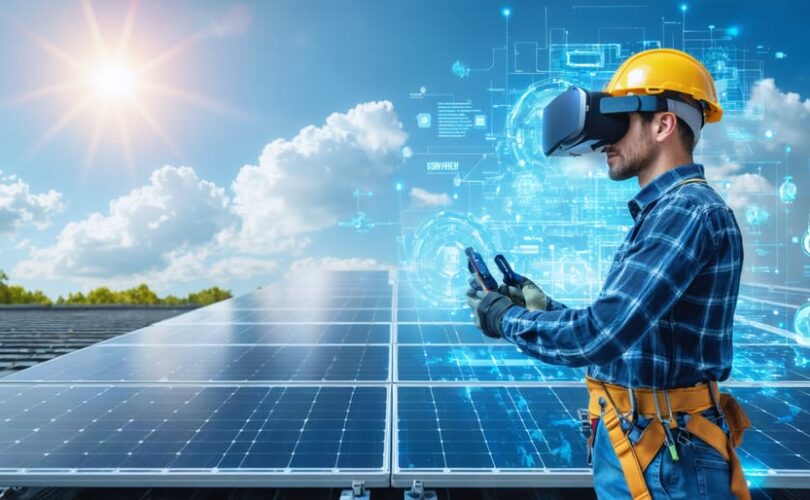
Virtual reality training simulations are revolutionizing PV installation training and technical education across industries. By creating immersive, risk-free environments, VR technology enables professionals to practice complex procedures, troubleshoot equipment failures, and master safety protocols without real-world consequences. Recent studies demonstrate that VR-trained technicians achieve competency up to 40% faster than those using traditional methods, while reducing training costs by an average of 30%.
Organizations implementing VR training report significant improvements in knowledge retention, with learners demonstrating 75% higher engagement rates compared to conventional classroom instruction. The technology’s ability to simulate diverse scenarios, from standard operations to emergency responses, ensures comprehensive preparation for field work. Advanced analytics and performance tracking capabilities provide instructors with detailed insights into learner progress, enabling personalized instruction and targeted skill development.
As renewable energy adoption accelerates globally, VR training platforms are becoming essential tools for scaling workforce development efficiently and maintaining consistent quality standards across training programs. This technological advancement represents a paradigm shift in professional education, offering unprecedented opportunities for hands-on experience in a controlled, measurable environment.
The Evolution of PV Installation Training
Limitations of Traditional Training Methods
While traditional training methodologies have served the photovoltaic industry for years, they present several significant limitations that impact training effectiveness and organizational efficiency. Safety risks pose a primary concern, particularly when training involves high-voltage equipment or working at heights on rooftop installations. These hazards necessitate extensive safety protocols and supervision, increasing both time and resource requirements.
Cost constraints represent another major challenge, as traditional training requires substantial investments in physical equipment, dedicated facilities, and maintaining inventory for hands-on practice. These expenses often limit the number of trainees that organizations can accommodate simultaneously. Additionally, equipment wear and tear from repeated training sessions leads to ongoing replacement and maintenance costs.
Scalability issues further compound these challenges, as traditional methods struggle to accommodate growing workforce demands. Geographic limitations restrict access to training facilities, while scheduling conflicts and space constraints can create bottlenecks in the training pipeline. Moreover, standardizing training quality across multiple locations becomes increasingly difficult, potentially leading to inconsistent skill development among trainees.
The VR Training Revolution
Virtual reality training is revolutionizing professional development by addressing fundamental limitations of traditional training methods. Through immersive 3D environments, VR enables learners to engage with realistic scenarios and complex equipment without physical constraints or safety risks. This technological advancement particularly benefits industries where hands-on experience is crucial but traditionally difficult to provide.
VR training simulations overcome common challenges such as limited access to equipment, geographical barriers, and scalability issues. Learners can practice procedures repeatedly in a safe environment, receive immediate feedback, and experience scenarios that would be impractical or impossible to recreate in real life. The technology allows for standardized training delivery while accommodating individual learning paces and styles.
The cost-effectiveness of VR training becomes apparent through reduced equipment wear, eliminated travel expenses, and minimized downtime. Organizations can train multiple participants simultaneously without sacrificing quality or safety. Additionally, VR’s data collection capabilities enable detailed performance tracking and assessment, providing valuable insights for continuous improvement of both individual skills and training programs.
Core Components of VR PV Training Simulations
Interactive Installation Scenarios
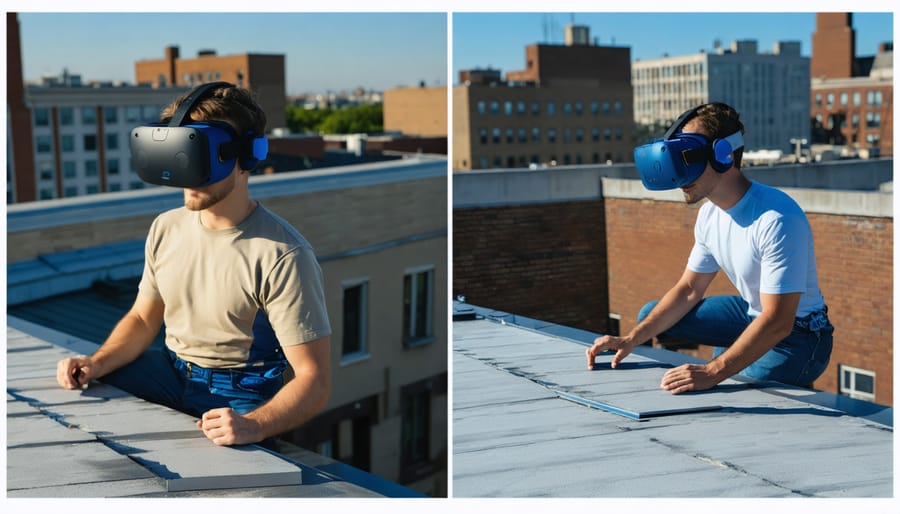
Virtual reality training simulations offer diverse installation scenarios that replicate real-world challenges photovoltaic professionals encounter in the field. Trainees can practice installations across various roof types, including flat commercial roofs, steep residential pitches, and complex architectural designs. Each scenario presents unique mounting systems, electrical configurations, and safety considerations.
The interactive nature of these simulations allows learners to practice proper tool handling and equipment placement in a risk-free environment. They can experience common installation challenges such as working with different racking systems, managing cable runs, and positioning modules for optimal performance. The simulations also include weather variations, enabling practitioners to understand how environmental conditions affect installation procedures.
Advanced scenarios incorporate troubleshooting elements where trainees must identify and resolve common installation issues, such as faulty connections or improper grounding. Users can practice emergency procedures and safety protocols without real-world consequences, building confidence and competence before working on actual installations.
The hands-on practice opportunities include collaborative exercises where multiple users can work together on large-scale installations, mirroring real job site coordination. Performance metrics track user progress, identifying areas needing improvement and ensuring mastery of critical skills. These scenarios can be customized to match specific equipment brands and local installation requirements, making the training directly applicable to real-world applications.
Safety Protocol Training
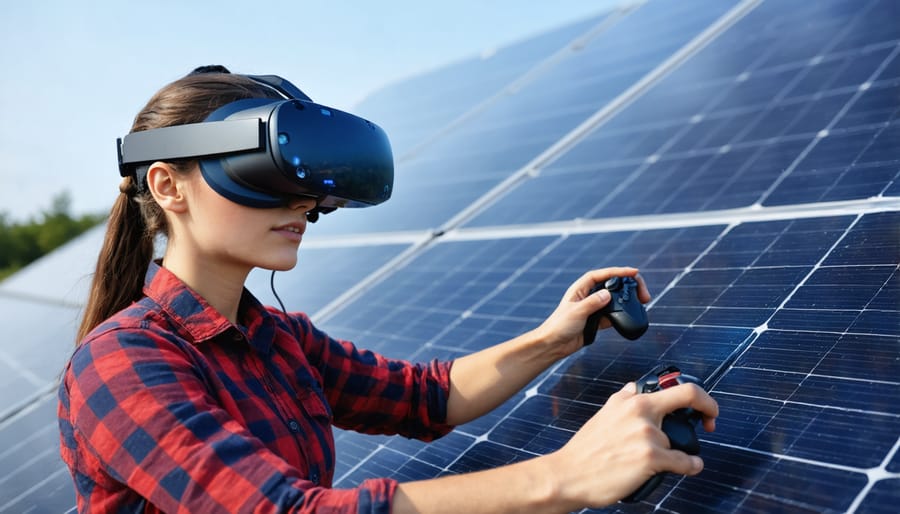
Virtual reality training simulations have revolutionized safety protocol training in the photovoltaic industry by providing immersive, risk-free environments for practicing emergency procedures and safety protocols. These simulations enable trainees to experience potentially hazardous situations without exposure to actual danger, allowing them to develop crucial decision-making skills and muscle memory for emergency responses.
The VR environment replicates common workplace hazards such as electrical malfunctions, equipment failures, and extreme weather conditions. Trainees can practice proper lockout-tagout procedures, fall protection protocols, and emergency evacuation procedures in realistic scenarios. The interactive nature of VR training ensures that participants actively engage with safety protocols rather than passively receiving information.
Real-time feedback mechanisms within VR simulations monitor trainee responses and provide immediate correction when safety procedures are not followed correctly. This instantaneous feedback helps reinforce proper safety habits and identifies areas requiring additional attention. Training programs can track performance metrics to ensure compliance with industry safety standards and regulatory requirements.
Advanced VR systems also incorporate multi-user scenarios, enabling team-based emergency response training. This collaborative approach helps develop effective communication and coordination skills essential during actual emergencies. The ability to repeat scenarios with varying conditions ensures that safety protocols become second nature to workers, ultimately creating a safer work environment in real-world applications.
Measurable Benefits of VR Training
Enhanced Learning Retention
Recent studies have demonstrated that virtual reality training simulations significantly improve knowledge retention rates in technical fields. Research conducted by the National Training Laboratory shows that VR-based learning achieves retention rates of up to 75%, compared to traditional lecture-based learning at 5-10%. This remarkable difference makes VR an invaluable tool to enhance your solar career through immersive learning experiences.
The effectiveness stems from VR’s ability to engage multiple sensory inputs simultaneously. When learners physically interact with virtual components while receiving visual and auditory feedback, their brains create stronger neural connections, leading to better long-term memory formation. A Stanford University study found that participants who learned technical procedures through VR demonstrated 40% better performance accuracy and required 20% less time to master new skills compared to traditional training methods.
Furthermore, the ability to repeat complex procedures without material waste or safety risks allows learners to practice until mastery, reinforcing proper techniques through muscle memory and experiential learning.
Risk-Free Practice Environment
Virtual reality training simulations provide an invaluable risk-free environment where photovoltaic professionals can practice complex installations and maintenance procedures without real-world consequences. This controlled setting enables trainees to experiment with various scenarios and potentially hazardous situations while maintaining complete safety.
In the virtual environment, learners can repeatedly practice critical procedures until they achieve mastery, without concerns about damaging expensive equipment or compromising system integrity. This approach is particularly beneficial when training for high-risk scenarios, such as working with high-voltage components or performing maintenance on elevated surfaces.
The simulation platform allows instructors to create challenging situations that might be too dangerous or impractical to replicate in traditional training settings. Trainees can make mistakes, learn from them, and receive immediate feedback without any safety risks or material losses. This immediate feedback loop accelerates the learning process and builds confidence before working on actual solar installations.
Furthermore, the virtual environment can be programmed to present various weather conditions, equipment malfunctions, and emergency scenarios, preparing professionals for real-world challenges they may encounter. This comprehensive preparation ensures that when technicians face similar situations in the field, they can respond with practiced expertise and confidence.
Cost and Time Efficiency
Virtual reality training simulations offer significant cost and time advantages compared to traditional training methods in the photovoltaic industry. Organizations implementing VR training programs typically experience a 40-60% reduction in overall training expenses after the initial investment in equipment and software. These savings primarily stem from eliminated travel costs, reduced equipment wear and tear, and decreased instructor hours.
The scalability of VR training allows organizations to simultaneously train multiple employees across different locations, dramatically reducing the time required for comprehensive workforce development. A typical hands-on training session that traditionally takes 8 hours can often be completed in 3-4 hours through VR simulation, while maintaining or improving learning outcomes.
Resource efficiency extends beyond direct cost savings. VR training eliminates the need for physical training equipment maintenance and replacement, reduces workplace disruption, and allows for flexible scheduling that minimizes production downtime. Companies report up to 30% faster skill acquisition when using VR training compared to conventional methods.
Safety training scenarios, which traditionally require extensive preparation and controlled environments, can be executed instantly in VR, resulting in both time and resource optimization. This efficiency translates to faster deployment of qualified technicians and improved project timelines.
Implementation Strategies
Hardware and Software Requirements
To implement effective virtual reality training simulations, specific hardware and software requirements must be met to ensure optimal performance and learning outcomes. The primary hardware component is a VR headset, with popular options including the Oculus Quest 2, HTC Vive Pro, or Valve Index. These headsets should be accompanied by motion controllers for realistic interaction within the virtual environment.
Computing requirements typically include a dedicated workstation or gaming PC with minimum specifications of an Intel i5/AMD Ryzen 5 processor, 16GB RAM, and a dedicated graphics card (NVIDIA GTX 1660 or better). For multi-user training scenarios, a stable internet connection with at least 50Mbps bandwidth is essential.
On the software side, development platforms such as Unity or Unreal Engine are commonly used to create training simulations. These environments require appropriate licenses and development tools. Additional software requirements include 3D modeling programs for creating assets, audio editing software for sound effects, and learning management systems (LMS) for tracking trainee progress.
Supporting infrastructure should include adequate space for VR movement (minimum 2m x 2m per station), proper ventilation for equipment cooling, and charging stations for controllers and headsets. Organizations should also consider backup equipment to minimize training disruptions and ensure continuous operation of their virtual reality training programs.
Integration with Traditional Training
Integrating virtual reality training simulations with traditional learning methods requires a strategic approach to maximize educational outcomes. The key lies in creating a complementary relationship between hands-on practice, classroom instruction, and VR-based learning experiences. Organizations should start by identifying specific learning objectives that VR can enhance, rather than attempting to replace existing training methods entirely.
A successful integration typically follows a blended learning model where VR simulations supplement traditional training components. For instance, students might first engage with theoretical concepts through conventional online training resources and classroom sessions before applying this knowledge in VR scenarios. This approach allows learners to build foundational understanding before practicing in virtual environments.
Training programs should establish clear transition points between traditional and VR-based learning components. For example, after completing basic safety protocols through conventional methods, trainees can practice these procedures in virtual environments that simulate high-risk scenarios. Performance metrics from VR sessions should be incorporated into overall assessment frameworks, ensuring seamless evaluation across all training modalities.
To maintain consistency, organizations should align VR content with existing training materials and standards. This includes using familiar terminology, following established procedures, and ensuring that virtual scenarios reflect real-world practices accurately. Regular review and updates of both traditional and VR components ensure continued relevance and effectiveness of the integrated training program.
Virtual reality training has fundamentally transformed the landscape of photovoltaic installation education, offering unprecedented opportunities for skill development and practical experience. The integration of VR technology has demonstrated significant improvements in learning outcomes, with trainees showing higher retention rates and increased confidence in their abilities compared to traditional training methods.
The impact extends beyond individual learning experiences to organizational benefits, including reduced training costs, enhanced safety protocols, and accelerated workforce development. As the renewable energy sector continues to grow, VR training simulations are becoming an essential tool for scaling up the skilled workforce needed to meet increasing solar installation demands.
Looking ahead, we can expect further advancements in VR training technology, including more sophisticated haptic feedback systems, improved real-time environmental modeling, and enhanced multi-user capabilities. The integration of artificial intelligence and machine learning will likely enable more personalized learning experiences and automated performance assessment.
As educational institutions and industry organizations increasingly adopt VR training solutions, standardization of virtual training protocols and certification processes will become crucial. This evolution will help ensure consistent quality across training programs while maintaining the flexibility to adapt to emerging installation techniques and technologies.
The transformative potential of VR training in photovoltaic installation continues to expand, promising to play a pivotal role in developing the next generation of solar energy professionals and advancing the global transition to renewable energy sources.