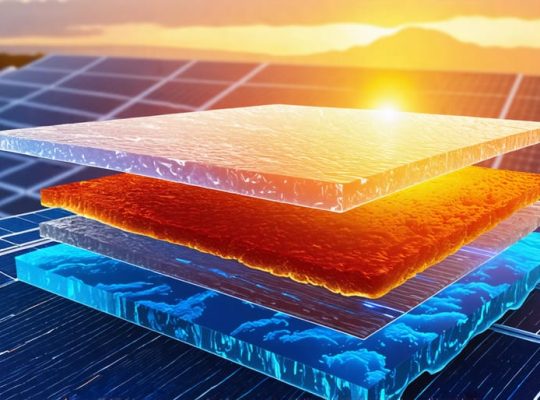
In the race toward sustainable energy solutions, photovoltaic thermal hybrid solar collectors (PVT) represent a groundbreaking advancement in photovoltaic technology. By simultaneously converting solar radiation into both electrical and thermal energy, these innovative systems achieve efficiency levels of up to 80%, significantly outperforming traditional solar panels. This dual-functionality not only maximizes space utilization but also addresses the growing demand for integrated renewable energy solutions in both residential and industrial applications. As global energy needs continue to rise and environmental concerns intensify, PVT systems emerge as a crucial technology that bridges the gap between conventional solar power generation and advanced thermal energy harvesting, offering a comprehensive solution for the future of sustainable energy production. Their ability to generate electricity while capturing waste heat for practical applications makes them an increasingly attractive option for engineers, architects, and energy professionals seeking to optimize renewable energy installations.
The Evolution of Hybrid Solar Technology
From Single-Function to Hybrid Systems
Traditional photovoltaic (PV) panels, while effective at generating electricity, typically convert only 15-20% of solar radiation into usable energy, with the remainder being lost as heat. This heat not only goes unused but can actually decrease the electrical efficiency of the PV cells. In contrast, photovoltaic thermal (PVT) hybrid collectors represent a significant advancement by capturing and utilizing both forms of energy simultaneously.
PVT systems actively cool the photovoltaic cells by circulating a heat transfer fluid (usually water or air) beneath the PV surface. This cooling mechanism serves two crucial purposes: it maintains optimal electrical efficiency of the PV cells while harvesting thermal energy that would otherwise be wasted. The collected thermal energy can then be used for various applications, including water heating, space heating, or industrial processes.
The evolution from single-function to hybrid systems has led to overall system efficiencies of up to 70%, with electrical efficiency improvements of 4-10% compared to standard PV panels. This dual-functionality not only maximizes energy harvest per unit area but also provides a more consistent energy output throughout varying weather conditions and seasons.
Key Technological Breakthroughs
Several pivotal technological advances have enabled the development of modern photovoltaic thermal hybrid solar collectors. The introduction of selective coating materials in the 1990s significantly improved thermal absorption while reducing heat losses, marking a crucial breakthrough in PVT efficiency. The development of enhanced heat transfer fluids, particularly nano-fluids and phase change materials, revolutionized thermal management capabilities.
Advanced encapsulation techniques emerged in the early 2000s, allowing better integration of photovoltaic cells with thermal collectors while maintaining optimal operating temperatures. The innovation of specialized low-iron glass with high transmittance properties improved overall system performance by maximizing solar radiation capture.
Manufacturing advances in silicon cell technology led to the creation of temperature-resistant PV cells, specifically designed for hybrid applications. This development addressed the historical challenge of reduced electrical efficiency at elevated temperatures. Additionally, the introduction of smart control systems and advanced maximum power point tracking (MPPT) algorithms has optimized the simultaneous production of electrical and thermal energy, significantly improving overall system efficiency.
Recent breakthroughs in materials science have yielded new thin-film technologies and advanced thermal interface materials, further enhancing the integration and performance of PVT systems.
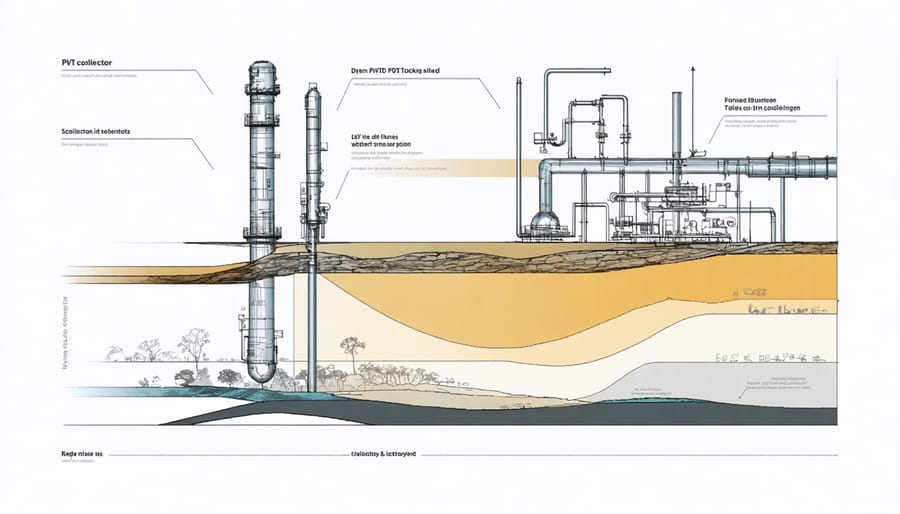
Working Principles of PVT Collectors
Electrical Generation Component
The electrical generation component of a PVT system primarily relies on photovoltaic cells, which convert solar radiation directly into electricity through the photovoltaic effect. These cells, typically made from silicon-based semiconductors, absorb photons from sunlight and generate electron-hole pairs. When these electrons are captured, they create an electric current that can be harnessed for practical use.
Modern PVT systems employ various technologies to maximize solar cell efficiency, including anti-reflective coatings, optimized cell architectures, and advanced semiconductor materials. The photovoltaic layer is engineered to capture specific wavelengths of the solar spectrum most efficiently for electricity generation, while allowing other wavelengths to pass through for thermal collection.
The electrical output of a PVT collector is influenced by several factors, including solar irradiance, cell temperature, and system design. Notably, the cooling effect provided by the thermal component helps maintain lower cell temperatures, which is crucial for maintaining electrical efficiency. As photovoltaic cells become warmer, their electrical efficiency typically decreases by approximately 0.4-0.5% per degree Celsius rise in temperature.
The generated electricity can be used immediately, stored in batteries for later use, or fed into the power grid. Advanced power conditioning systems, including inverters and charge controllers, ensure optimal power quality and system performance while protecting the electrical components from potential damage.
Thermal Energy Capture
The thermal energy capture process in photovoltaic thermal hybrid collectors involves the efficient collection and utilization of heat that would otherwise be wasted in conventional PV systems. As solar radiation strikes the PV cells, approximately 80% of the incoming energy is converted to heat rather than electricity. The hybrid system capitalizes on this thermal energy through a specialized heat transfer mechanism.
A network of fluid channels, typically containing water or glycol-based solutions, is integrated beneath the PV cells. These channels actively collect heat from the solar cells through conductive heat transfer. The heated fluid is then circulated through a heat exchanger system, where thermal energy is extracted for various applications such as water heating, space heating, or industrial processes.
The thermal collection system serves a dual purpose: it harvests useful thermal energy while simultaneously cooling the PV cells. This cooling effect is crucial as it helps maintain optimal PV cell operating temperatures, typically improving electrical efficiency by 3-9%. The collected thermal energy can achieve temperatures ranging from 40°C to 70°C, depending on the system design and operating conditions.
Advanced systems may incorporate thermal storage solutions, allowing for heat utilization during non-sunlight hours. The integration of smart controls enables dynamic adjustment of fluid flow rates to optimize both thermal and electrical output based on real-time demand and environmental conditions.
Performance Benefits and Efficiency Gains
Enhanced Energy Output
Photovoltaic thermal hybrid solar collectors demonstrate significantly higher energy generation capabilities compared to traditional solar panels or thermal collectors operating independently. These hybrid systems typically achieve total energy efficiencies of 60-80%, whereas standalone PV modules generally operate at 15-20% efficiency, and conventional thermal collectors at 40-50% efficiency.
The enhanced output stems from the synergistic relationship between the photovoltaic and thermal components. By actively cooling the PV cells through thermal collection, electrical efficiency improves by approximately 10-15% compared to standard operating conditions. This cooling effect prevents performance degradation that commonly occurs when PV cells experience elevated temperatures.
Research studies have shown that a well-designed PVT system can generate 40% more total energy per square meter compared to separate PV and thermal installations occupying the same total area. In typical residential applications, a PVT system can simultaneously produce 250-400 kWh of electricity and 400-600 kWh of thermal energy annually per square meter of collector area.
The combined energy output makes PVT systems particularly valuable in applications where both electricity and heat are required, such as industrial processes, commercial buildings, and residential complexes with high hot water demands.
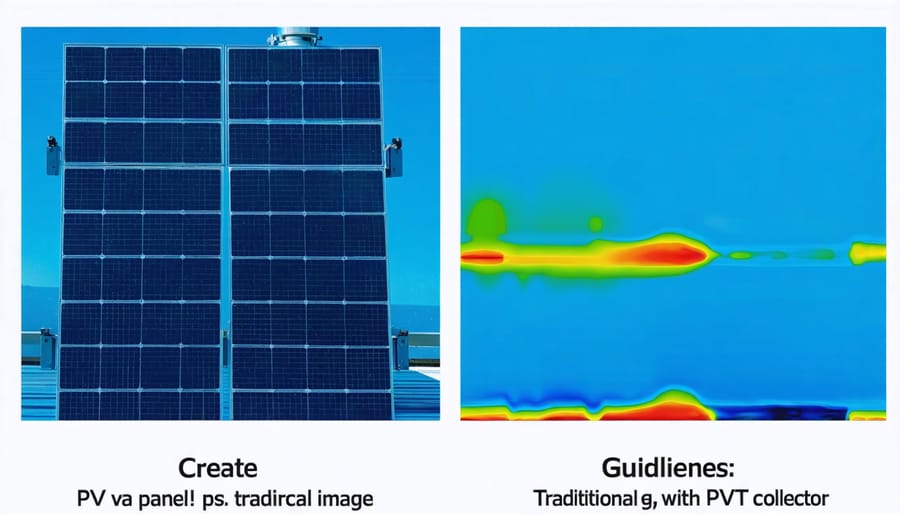
System Efficiency Metrics
System efficiency metrics for PVT collectors are evaluated through several key performance indicators that measure both electrical and thermal outputs simultaneously. The primary metrics include overall thermal efficiency (ηth), electrical efficiency (ηel), and combined system efficiency (ηPVT).
The thermal efficiency is calculated by measuring the ratio of useful thermal energy output to the total solar radiation incident on the collector surface. This involves monitoring the fluid inlet and outlet temperatures, mass flow rate, and specific heat capacity of the working fluid.
Electrical efficiency is determined by measuring the ratio of electrical power output to the incident solar radiation. This metric is affected by cell temperature, with efficiency typically decreasing as temperature rises by approximately 0.4-0.5% per degree Celsius above standard test conditions (25°C).
The combined system efficiency (ηPVT) represents the total energy output and is expressed as the sum of thermal and electrical efficiencies. Additional performance indicators include the packing factor, which measures the ratio of PV cell area to total collector area, and the thermal conductance between the PV cells and heat transfer fluid.
Standardized testing procedures, such as those outlined in ISO 9806 and IEC 61215, ensure consistent and comparable performance measurements across different PVT systems.
Real-World Applications

Residential Installations
Photovoltaic thermal hybrid solar collectors offer significant advantages for residential installations, combining efficient electricity generation with domestic hot water production. These systems integrate seamlessly with existing home infrastructure and can significantly reduce household energy costs. As part of modern distributed solar PV systems, PVT collectors maximize limited roof space by generating both electricity and heat from the same surface area.
In residential applications, PVT systems typically connect to the home’s water heating system and electrical grid connection. The thermal component can provide up to 60% of a household’s hot water needs while simultaneously generating electricity for daily consumption or grid export. This dual functionality results in overall system efficiencies of up to 70%, significantly higher than standalone PV or solar thermal systems.
Installation considerations include proper roof orientation, structural support requirements, and integration with existing HVAC systems. Modern PVT systems incorporate smart controllers that optimize performance based on household demand patterns and weather conditions. The typical residential system size ranges from 3 to 6 kW electrical capacity, with corresponding thermal output varying based on local climate and hot water requirements.
Homeowners benefit from reduced energy bills, increased property value, and lower carbon emissions. The system’s dual output means faster return on investment compared to separate solar installations, typically achieving payback periods of 5-7 years in regions with appropriate solar resources and energy costs.
Commercial and Industrial Uses
Photovoltaic thermal hybrid solar collectors have gained significant traction in commercial and industrial applications, demonstrating their effectiveness in large-scale implementations. Several notable installations worldwide showcase the technology’s practical benefits and economic viability.
In industrial settings, PVT systems have been successfully integrated into manufacturing facilities where both electricity and process heat are required. For instance, a food processing plant in southern Spain implemented a 500kW PVT system in 2019, achieving a 40% reduction in energy costs while providing hot water at 65°C for cleaning operations.
The commercial sector has also embraced PVT technology, particularly in hotels and large office buildings. A prominent example is a 12-story office complex in Frankfurt, Germany, where a 200kW PVT installation provides 70% of the building’s electrical needs and 60% of its heating requirements for space heating and domestic hot water.
Data centers represent another promising application area, where PVT systems help address both power demands and cooling needs. A pioneering installation at a Swedish data center demonstrates how waste heat recovery through PVT collectors can be utilized for district heating, achieving overall system efficiency of up to 70%.
These large-scale implementations typically show payback periods of 4-7 years, depending on local energy costs and incentives. Performance monitoring data indicates that commercial PVT installations consistently achieve combined efficiency rates of 60-80%, significantly outperforming separate PV and thermal systems.
Future Developments and Research Directions
The future of photovoltaic thermal hybrid solar collectors holds promising developments across multiple fronts. Research is actively focusing on enhancing system efficiency through advanced materials and innovative designs. Among these revolutionary solar technologies, nano-enhanced thermal fluids and spectral-selective coatings are showing particular potential for improving heat transfer and overall system performance.
Significant attention is being directed toward smart integration systems that optimize PVT operation based on real-time weather conditions and energy demand patterns. Machine learning algorithms are being developed to predict performance and automatically adjust system parameters for maximum efficiency. This intelligent control approach represents a major step forward in maximizing energy yield while minimizing operational costs.
Research institutions are exploring novel cell architectures that could dramatically increase the combined electrical and thermal efficiency of PVT systems. These include multi-junction cells specifically designed for hybrid applications and advanced thermal management solutions that reduce temperature-related performance losses.
Building-integrated PVT (BIPVT) systems are expected to see substantial development, with new designs focusing on aesthetic integration and dual functionality in building envelopes. This includes transparent PVT modules for skylights and facades, as well as modular systems that can be easily incorporated into existing structures.
Cost reduction remains a key focus area, with researchers investigating mass production techniques and alternative materials that could make PVT systems more economically viable for widespread adoption. Additionally, efforts are being made to develop standardized testing procedures and performance metrics specifically for PVT systems, which will help drive market acceptance and technology advancement.
Photovoltaic thermal hybrid solar collectors represent a significant advancement in solar energy technology, offering a dual-purpose solution that maximizes energy harvesting efficiency. By simultaneously generating electricity and thermal energy, PVT systems address the growing demand for sustainable energy solutions while optimizing space utilization and reducing installation costs. These systems demonstrate superior overall efficiency compared to separate PV panels and thermal collectors, making them increasingly attractive for both residential and commercial applications. The integration of PVT technology into existing energy infrastructure continues to evolve, supported by ongoing research and development efforts worldwide. As energy demands rise and environmental concerns intensify, PVT systems stand at the forefront of renewable energy innovation, promising a more sustainable and efficient approach to solar energy utilization. Their continued development and implementation will play a crucial role in advancing global renewable energy adoption and reducing carbon emissions.