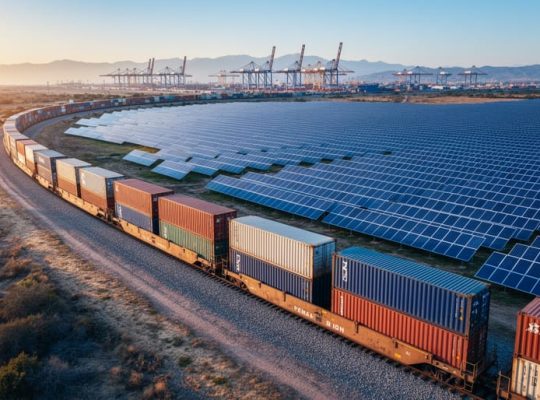
American solar suppliers are rapidly transforming the renewable energy landscape through innovative manufacturing capabilities and strategic global solar supply networks. With domestic production capacity exceeding 50 gigawatts annually and advanced automation technologies driving efficiency, U.S. manufacturers now deliver world-class photovoltaic solutions while maintaining strict quality control standards. The integration of artificial intelligence and machine learning in production processes has positioned American suppliers at the forefront of solar innovation, enabling them to meet growing domestic demand while expanding their international market presence. As government initiatives like the Solar Energy Manufacturing for America Act continue strengthening the nation’s solar infrastructure, U.S. suppliers are establishing themselves as critical players in the renewable energy transition, offering everything from high-efficiency solar panels to comprehensive energy storage solutions. This strategic positioning, combined with robust research and development partnerships with leading universities, ensures American solar suppliers remain competitive while advancing sustainable energy solutions for a carbon-neutral future.
The Evolution of US Solar Supply Infrastructure
Domestic Manufacturing Capacity
The United States has significantly expanded its solar manufacturing capabilities in recent years, with production facilities spanning multiple states and encompassing various components of the solar supply chain. Current domestic manufacturing capacity includes approximately 8.5 GW of module assembly, 5 GW of cell production, and growing capabilities in wafer and ingot manufacturing.
Major manufacturing hubs have emerged in states like Ohio, Georgia, and Texas, where companies have established large-scale facilities for solar panel production. These facilities employ thousands of workers and utilize advanced automation technologies to maintain competitive production costs while meeting stringent quality standards.
Recent legislation, particularly the Inflation Reduction Act of 2022, has catalyzed substantial investments in domestic manufacturing. Several leading manufacturers have announced plans to establish or expand facilities, potentially adding over 10 GW of annual production capacity by 2025. These expansions include integrated manufacturing facilities that will produce multiple components of the solar supply chain domestically.
Despite these developments, U.S. manufacturing currently supplies only about 20% of domestic solar panel demand. However, ongoing investments in research and development, coupled with federal incentives and increasing demand for locally manufactured products, are expected to boost this percentage significantly over the next decade. Manufacturing facilities are increasingly incorporating advanced quality control systems and automated production lines to enhance efficiency and maintain competitive pricing while meeting growing market demands.
Supply Chain Resilience Initiatives
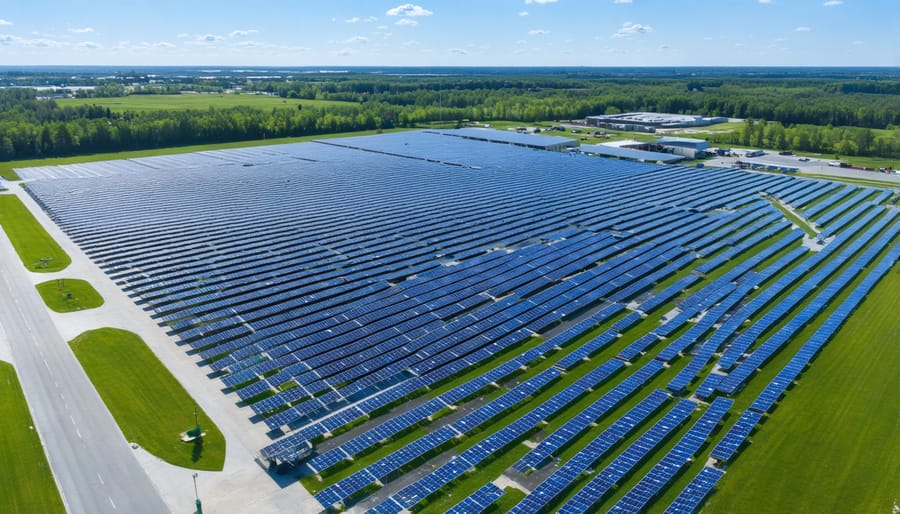
The U.S. solar industry has implemented robust initiatives to strengthen domestic supply networks and reduce dependence on international suppliers. Through strategic industry partnerships, manufacturers are establishing resilient supply chains that prioritize domestic production and quality control.
Key measures include investments in domestic manufacturing facilities, development of localized component production, and implementation of advanced inventory management systems. Companies are adopting digital tracking solutions and blockchain technology to enhance supply chain transparency and traceability. These innovations enable real-time monitoring of materials and components throughout the production process.
Risk mitigation strategies focus on diversifying supplier networks, establishing redundant supply routes, and maintaining strategic reserves of critical materials. Many suppliers are investing in automated manufacturing processes and advanced quality control systems to ensure consistent production capabilities despite external disruptions.
Additionally, industry leaders are collaborating with regional economic development agencies to create manufacturing clusters that support local job growth and reduce logistics costs. These initiatives often include workforce development programs and technological innovation centers that strengthen the domestic supply ecosystem.
The implementation of these resilience measures has resulted in more stable supply chains, reduced lead times, and improved quality control for U.S. solar manufacturers. This enhanced reliability positions American suppliers to better serve both domestic and international markets while maintaining competitive advantages in quality and innovation.
International Integration and Partnerships
Strategic Global Alliances
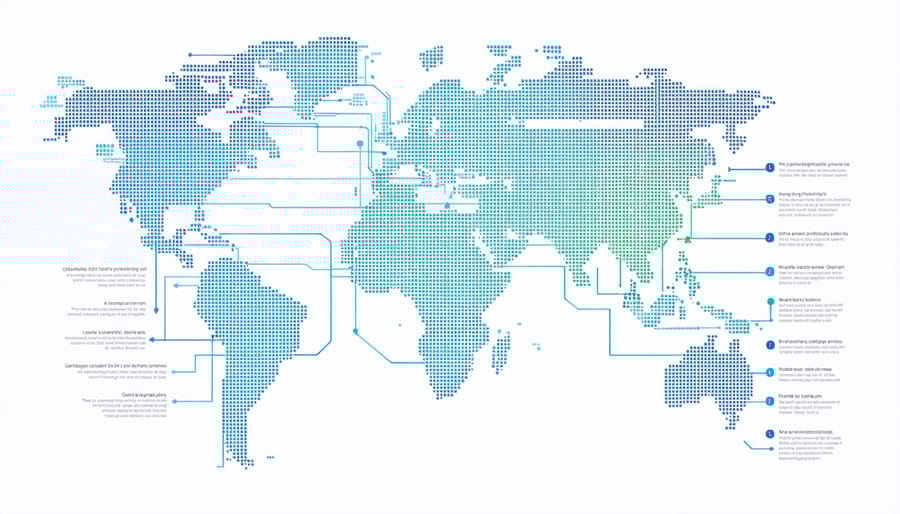
The U.S. solar industry maintains robust international partnerships that strengthen its position in the global renewable energy market. Key strategic alliances with European manufacturers, particularly in Germany and Spain, facilitate technology transfer and innovation sharing, while partnerships with Asian producers, notably in South Korea and Japan, enhance supply chain resilience and manufacturing capabilities.
These collaborations extend beyond simple supplier relationships to include joint research initiatives, shared manufacturing facilities, and coordinated quality control systems. American solar suppliers have established significant presence in emerging markets through bilateral trade agreements, particularly in India and Southeast Asia, where rapidly growing demand for solar technology creates mutual benefits for all parties involved.
Quality assurance partnerships with international certification bodies ensure that imported components meet rigorous U.S. standards, while collaborative workforce development programs with global institutions help maintain technical expertise across borders. These relationships have proven particularly valuable during supply chain disruptions, allowing U.S. suppliers to maintain steady product flow through diversified sourcing strategies.
Recent developments include strategic investments in Mexican manufacturing facilities to strengthen near-shoring capabilities and reduce transportation costs. Additionally, partnerships with Canadian clean energy providers have created an integrated North American solar supply network, enhancing regional energy security and market stability.
Looking forward, U.S. solar suppliers continue to expand their international alliance network, focusing on developing relationships that support technological advancement, sustainable practices, and market expansion while maintaining strict quality and reliability standards.
Technology Transfer and Innovation
U.S. solar suppliers are increasingly leveraging international partnerships to drive innovation and enhance technological capabilities across the global solar industry. Through strategic technology transfer initiatives, American companies are fostering knowledge exchange with partners worldwide, particularly in emerging solar markets.
These collaborative efforts encompass joint research and development projects, technical training programs, and shared manufacturing expertise. Many U.S. suppliers have established innovation centers that serve as hubs for cross-border collaboration, facilitating the development of advanced solar technologies and manufacturing processes.
Research partnerships with leading universities and institutes worldwide have resulted in breakthrough innovations in photovoltaic efficiency, energy storage integration, and smart grid technologies. These advancements are continuously incorporated into production processes, ensuring American solar products remain at the forefront of technological innovation.
Knowledge sharing extends beyond technical aspects to include best practices in quality control, sustainability standards, and environmental compliance. U.S. suppliers are implementing comprehensive training programs for international partners, focusing on maintaining consistent quality standards across global supply chains.
Digital platforms and virtual collaboration tools have revolutionized how technical expertise is shared, enabling real-time problem-solving and remote technical support. This digital transformation has accelerated the pace of innovation while reducing the barriers to international collaboration, particularly beneficial during global supply chain disruptions.
These collaborative efforts strengthen America’s position in the global solar market while fostering technological advancement and standardization across the industry.
Supply Chain Optimization Technologies
Digital Supply Chain Management
Our advanced digital supply chain management infrastructure leverages cutting-edge software solutions and integrated systems to optimize the flow of solar components from manufacturers to end-users. We utilize enterprise resource planning (ERP) systems specifically tailored for renewable energy supply chains, enabling real-time tracking of inventory, automated procurement processes, and predictive analytics for demand forecasting.
The implementation of blockchain technology ensures transparency and traceability throughout our supply network, allowing customers to verify the origin and quality of solar components. Our digital platform incorporates artificial intelligence algorithms that analyze market trends, weather patterns, and historical data to optimize inventory levels and reduce lead times.
Our supplier portal provides seamless communication channels between manufacturers, logistics partners, and distributors, facilitating efficient coordination and rapid response to market demands. The integrated quality management system maintains rigorous standards through automated inspection protocols and digital documentation.
We employ Internet of Things (IoT) sensors throughout our warehouses and distribution centers, monitoring environmental conditions and handling procedures to ensure optimal storage of sensitive solar components. The cloud-based infrastructure enables secure data sharing with stakeholders while maintaining robust cybersecurity protocols.
Regular system upgrades and continuous digital transformation initiatives keep our supply chain management capabilities at the forefront of industry standards, supporting sustainable growth and operational excellence in the solar energy sector.
Predictive Analytics and AI Applications
In today’s rapidly evolving solar supply chain landscape, predictive analytics and artificial intelligence have become essential tools for optimizing operations and maintaining competitive advantage. US solar suppliers increasingly leverage machine learning algorithms to forecast market demands, analyze supply chain disruptions, and optimize inventory management with unprecedented accuracy.
Advanced AI systems now enable suppliers to anticipate material shortages, predict maintenance requirements, and adjust procurement strategies in real-time. These platforms analyze multiple data streams, including historical sales data, weather patterns, economic indicators, and global market trends, to provide actionable insights for decision-makers.
Smart warehousing solutions, powered by AI, have revolutionized inventory management by automatically tracking stock levels, predicting reorder points, and optimizing storage space utilization. This technology has helped reduce warehousing costs by an average of 25% while improving order fulfillment rates.
Suppliers are also implementing machine learning models to enhance quality control processes. These systems can detect defects in solar panels and components with greater accuracy than traditional inspection methods, reducing waste and ensuring higher product reliability.
Blockchain integration with AI has improved supply chain transparency and traceability, allowing suppliers to verify component origins and maintain compliance with regulatory requirements. This combination of technologies has proven particularly valuable in managing complex international supply networks and maintaining quality standards across multiple vendors.
Looking ahead, the integration of quantum computing with existing AI systems promises to further enhance predictive capabilities and optimization potential in the solar supply chain sector.

Future Outlook and Sustainability
Environmental Impact Reduction
US solar suppliers are implementing comprehensive strategies to minimize their environmental footprint throughout the supply chain. Advanced recycling programs for solar panels and manufacturing waste have been established, with many suppliers achieving up to 95% material recovery rates. These initiatives significantly reduce landfill impact while conserving valuable resources.
Leading suppliers have invested in renewable energy to power their manufacturing facilities, with many facilities operating on 100% clean energy. Water conservation efforts include closed-loop systems and advanced filtration technology, reducing freshwater consumption by up to 60% compared to traditional manufacturing processes.
Sustainable packaging solutions have been adopted industry-wide, incorporating biodegradable materials and reducing plastic usage. Transportation optimization through route planning and electric vehicle integration has decreased carbon emissions in logistics operations by an average of 30%.
Suppliers are also implementing strict supplier verification programs to ensure environmental compliance throughout the value chain. Regular audits and sustainability assessments help maintain high environmental standards across all operations. Many companies have established partnerships with environmental organizations to develop innovative solutions for waste reduction and energy efficiency.
These collective efforts demonstrate the industry’s commitment to sustainable practices while maintaining product quality and operational efficiency.
Future Growth Projections
Market analysis indicates substantial growth potential for U.S. solar suppliers over the next decade, with projected compound annual growth rates exceeding 15% through 2030. This expansion is driven by increasing domestic manufacturing capacity, technological advancements, and strengthening international partnerships. Industry experts anticipate significant development in automated production facilities and enhanced quality control systems, aligning with evolving future industry standards.
Supply chain resilience is expected to improve through strategic diversification of component sourcing and increased domestic production capabilities. Major investments in research and development will likely focus on high-efficiency solar cell technologies and advanced manufacturing processes, potentially reducing production costs by 30-40% within the next five years.
The sector’s growth trajectory is further supported by federal incentives, state-level renewable energy mandates, and increasing corporate sustainability commitments. Industry forecasts suggest that U.S. suppliers will expand their market share in both domestic and international markets, particularly in emerging economies seeking reliable, high-quality solar components.
Digital transformation initiatives, including AI-driven inventory management and predictive maintenance systems, are expected to optimize operations and enhance supply chain efficiency. These technological improvements, combined with strengthening regulatory frameworks, position U.S. suppliers to meet growing global demand while maintaining competitive advantages in quality and innovation.
The U.S. solar supply landscape continues to evolve rapidly, shaped by technological advancements, policy developments, and global market dynamics. As domestic manufacturing capacity expands and supply chains diversify, American solar suppliers are positioned to play an increasingly vital role in the global renewable energy transition. The integration of advanced automation, quality control measures, and sustainable practices has strengthened the competitive edge of U.S. suppliers, while collaborative initiatives with research institutions drive innovation forward.
Looking ahead, the industry faces both challenges and opportunities. Supply chain resilience remains crucial, with suppliers implementing sophisticated inventory management systems and developing strategic partnerships to ensure consistent product availability. The commitment to environmental stewardship, combined with increasing domestic production capabilities, suggests a promising future for U.S. solar suppliers.
As the sector matures, continued investment in research and development, workforce training, and manufacturing infrastructure will be essential. The industry’s trajectory indicates strong growth potential, particularly as renewable energy adoption accelerates and demand for high-quality solar components continues to rise. This positions U.S. solar suppliers at the forefront of the clean energy revolution, ready to meet the evolving needs of both domestic and international markets.