Solar energy’s greatest limitation isn’t capturing sunlight—it’s storing that energy for use when the sun isn’t shining. As photovoltaic installations proliferate globally, the gap between solar generation peaks and consumption demands creates a critical challenge that threatens grid stability and limits renewable energy adoption. Storage solutions have evolved from simple backup batteries to sophisticated systems capable of stabilizing entire power networks.
Modern solar energy storage encompasses diverse technologies, each addressing specific needs across residential, commercial, and utility-scale applications. Lithium-ion batteries currently dominate the market with proven performance and declining costs, yet emerging alternatives like flow batteries, solid-state systems, and thermal storage are reshaping the landscape. The selection process requires balancing technical specifications—capacity, discharge duration, cycle life—against economic factors including installation costs, operational expenses, and available incentives.
Understanding these storage solutions demands examining both fundamental principles and practical implementation strategies. System sizing must account for consumption patterns, backup duration requirements, and future scalability. Integration considerations span inverter compatibility, charge controller specifications, and monitoring capabilities that optimize performance. Economic analysis extends beyond initial investment to lifecycle costs, degradation rates, and revenue opportunities through demand response programs or time-of-use arbitrage.
This comprehensive exploration examines current storage technologies, emerging innovations, selection criteria, and economic frameworks that empower informed decision-making for stakeholders across the solar energy sector.
The Storage Challenge: Why Solar Energy Needs Advanced Solutions
Understanding Energy Demand vs. Solar Production Cycles
Solar energy production follows a predictable pattern that peaks during midday hours when the sun’s intensity is strongest, typically between 10 AM and 2 PM. This generation curve, however, creates a fundamental mismatch with typical energy consumption patterns in both residential and commercial settings. Residential electricity demand typically exhibits two distinct peaks: morning hours when households prepare for the day and evening hours between 5 PM and 9 PM when families return home, increase lighting usage, and operate appliances. Commercial facilities generally demonstrate steady daytime consumption that often extends beyond solar production hours.
This temporal misalignment creates what industry professionals call the “duck curve” phenomenon, where excess solar generation occurs during midday while demand remains moderate, followed by a sharp evening demand spike precisely when solar production rapidly declines. Research conducted in collaboration with universities has quantified this storage gap, revealing that without effective energy storage solutions, between 40-60% of peak solar generation in typical residential installations remains unutilized during production hours. Conversely, evening consumption must rely entirely on grid electricity. This cyclical disconnect underscores the critical role of storage systems in maximizing solar investment returns and achieving energy independence goals.
The Cost of Energy Without Storage
Operating solar installations without adequate storage solutions presents significant economic challenges that undermine the full potential of photovoltaic investments. When solar panels generate excess electricity during peak production hours, systems without storage typically feed this surplus back to the grid at wholesale rates that are substantially lower than retail electricity prices. This asymmetry means system owners effectively subsidize grid operations while missing opportunities to capture the full value of their energy production.
Grid dependency remains a critical vulnerability for storage-free systems. During evening hours or periods of low solar irradiance, these installations must purchase electricity at premium rates, negating much of the daytime savings. Research conducted in collaboration with universities has quantified these losses at 30-40% of potential energy savings for typical residential installations.
Perhaps most significantly, the absence of storage eliminates pathways to energy independence and resilience. Without stored reserves, solar systems cannot provide backup power during grid outages, leaving property owners vulnerable to service disruptions. This limitation becomes increasingly costly as extreme weather events and aging infrastructure make grid reliability more unpredictable. For businesses and critical facilities, downtime costs can far exceed the investment in appropriate storage infrastructure, making the economic case for integrated storage solutions compelling beyond simple energy arbitrage considerations.
Current Battery Technologies Leading the Market
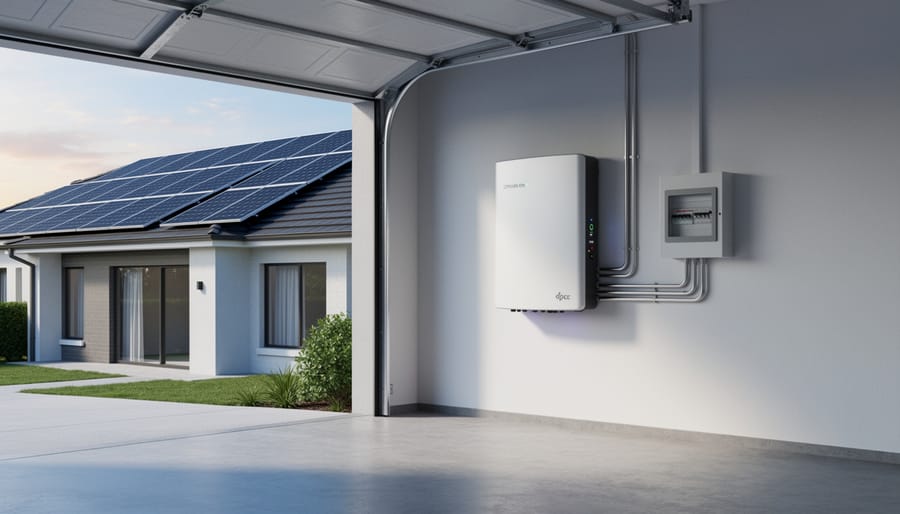
Lithium-Ion Battery Systems
Lithium-ion battery systems have emerged as the dominant technology for residential solar energy storage, commanding over 90% of the current market share. This prevalence stems from their superior energy density, ranging from 150-250 watt-hours per kilogram, which allows compact installations suitable for residential applications.
Modern lithium-ion solar batteries typically offer usable capacities between 5 kWh and 20 kWh, with modular systems enabling scalability to meet varying household demands. Round-trip efficiency metrics consistently exceed 90%, meaning minimal energy loss during charge-discharge cycles. This efficiency translates directly into maximized solar energy utilization and reduced grid dependency.
The technology delivers impressive lifespan expectations, with most residential systems rated for 5,000 to 10,000 cycles or 10-15 years of operational life. Manufacturers typically guarantee 70-80% capacity retention at end-of-warranty periods, providing predictable performance degradation curves essential for financial modeling.
Several factors explain lithium-ion dominance in residential installations. The technology offers rapid response times, enabling seamless transitions between solar charging, household consumption, and grid interaction. Depth of discharge capabilities allow users to access 80-100% of rated capacity without significant degradation, unlike older lead-acid alternatives limited to 50% utilization.
Additionally, lithium-ion systems require minimal maintenance, feature integrated battery management systems for safety and optimization, and benefit from declining costs driven by electric vehicle industry economies of scale. These characteristics collectively position lithium-ion technology as the practical standard for homeowners seeking reliable, efficient solar energy storage solutions.
Flow Batteries for Extended Storage
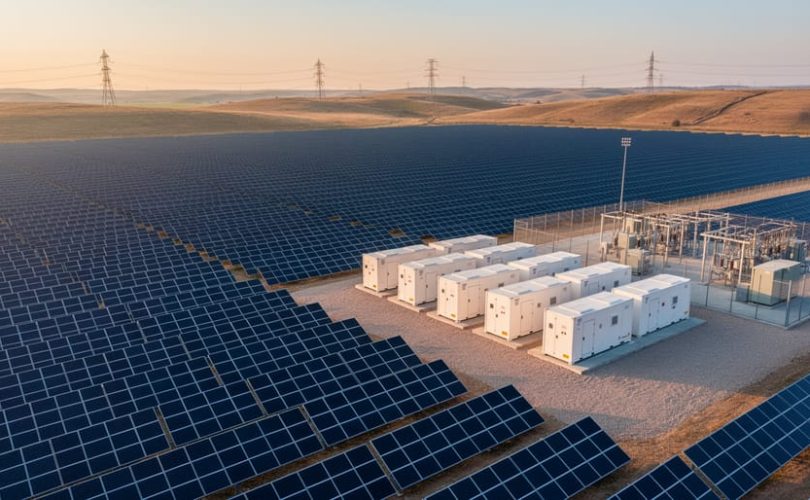
Flow batteries represent a promising solution for extended solar energy storage, particularly suited to commercial and utility-scale installations requiring discharge durations exceeding four hours. Unlike conventional batteries that store energy in solid electrodes, flow batteries circulate liquid electrolytes through electrochemical cells, separating power generation from energy storage capacity.
This fundamental design distinction provides exceptional scalability advantages. Operators can independently adjust power output by changing the electrode stack size while scaling energy capacity through larger electrolyte tanks. This modularity makes flow batteries economically attractive for applications demanding long-duration storage, as increasing capacity primarily involves adding inexpensive electrolyte solution rather than expensive hardware.
The most commercially developed variant, vanadium redox flow batteries, utilize vanadium in different oxidation states dissolved in sulfuric acid. These systems demonstrate minimal degradation over thousands of cycles, with manufacturers documenting operational lifespans exceeding 20 years. The non-flammable aqueous electrolytes also enhance safety profiles compared to lithium-based alternatives.
Universities collaborating with industry leaders have advanced alternative chemistries, including zinc-bromine and organic flow batteries, aiming to reduce costs and environmental impact. Current applications focus on grid stabilization, renewable energy integration, and microgrids where extended discharge capabilities justify higher upfront costs. As manufacturing scales and educational programs train qualified technicians, flow batteries are positioned to capture significant market share in the utility-scale solar storage sector.
Emerging Solid-State Solutions
Solid-state batteries represent a transformative advancement in solar energy storage, replacing conventional liquid electrolytes with solid materials that enhance both safety and performance. This emerging technology addresses critical limitations of traditional lithium-ion systems by eliminating flammable liquid components, significantly reducing fire risks that have historically concerned both residential and commercial solar installations.
Current solid-state developments demonstrate energy density improvements of 30-50% compared to conventional batteries, enabling more compact storage systems with extended operational lifespans. Leading manufacturers report laboratory prototypes achieving over 1,000 charge cycles while maintaining 90% capacity retention, surpassing many existing solutions. These batteries operate effectively across wider temperature ranges, making them particularly suitable for diverse climate conditions where solar installations face environmental extremes.
Several research universities collaborate with industry partners to accelerate commercialization, focusing on manufacturing scalability and cost reduction. Academic institutions contribute crucial materials science innovations, while industry stakeholders refine production processes for mass deployment.
Market analysts project limited commercial availability beginning in 2025-2026, with broader residential applications expected by 2028-2030. Initial offerings will likely target premium segments before economies of scale enable competitive pricing. Early adoption costs may exceed conventional batteries by 40-60%, though ongoing research suggests price parity could occur within the next decade as manufacturing techniques mature and production volumes increase substantially.
Breakthrough Innovations Reshaping Solar Storage
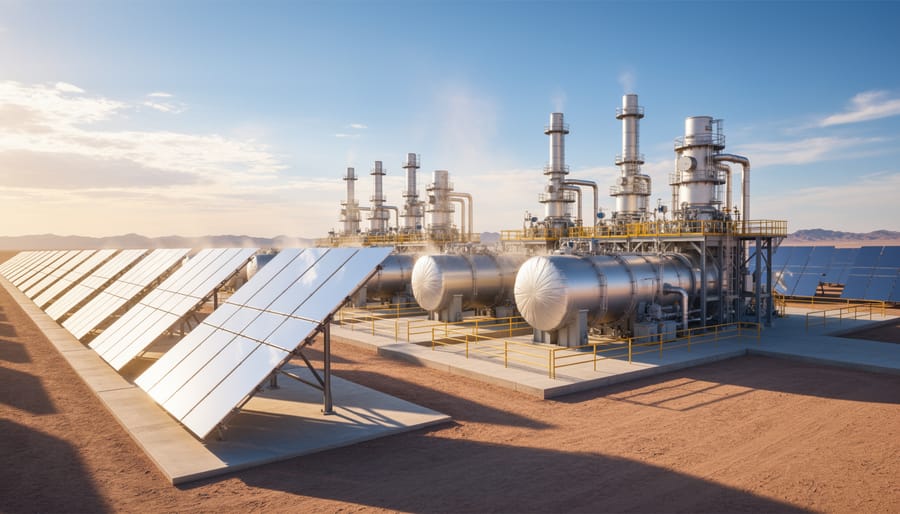
Advanced Thermal Storage Systems
Advanced thermal storage systems offer a complementary approach to battery-based solutions by capturing solar energy as heat rather than electricity. These systems excel in concentrated solar power (CSP) plants, where mirrors focus sunlight onto receivers containing molten salt or other heat transfer fluids. The heated material, often reaching temperatures above 565°C, stores thermal energy efficiently for hours or even days.
Molten salt storage remains the most commercially proven technology, utilizing a mixture of sodium and potassium nitrate that maintains stable properties at high temperatures. This stored heat drives steam turbines to generate electricity on demand, enabling CSP facilities to provide power during evening peak hours when solar generation ceases. The round-trip efficiency typically ranges from 70-90%, with storage durations extending up to 15 hours in advanced installations.
Recent innovations integrate thermal storage with traditional photovoltaic systems through hybrid configurations. PV panels generate electricity during peak sunlight, while excess energy heats thermal storage media for later use. Universities collaborate with industry leaders to develop phase-change materials and thermochemical storage solutions that promise higher energy densities and improved efficiency.
These systems particularly benefit industrial applications requiring both electricity and process heat, making them valuable for manufacturers seeking comprehensive renewable energy integration. Educational programs now incorporate thermal storage principles, preparing the next generation of professionals to optimize multi-technology solar installations.
Gravity-Based and Mechanical Storage
Gravity-based and mechanical storage systems represent innovative alternatives to electrochemical batteries for large-scale solar energy applications. These technologies convert electrical energy into potential or kinetic energy, offering unique advantages in durability and scalability.
Gravity batteries operate by using excess solar energy to lift heavy masses vertically within tower structures or mineshafts. When energy is needed, the controlled descent of these masses drives generators to produce electricity. Companies like Energy Vault have demonstrated commercial-scale gravity storage systems capable of delivering multiple megawatt-hours of capacity. These installations excel in longevity, with mechanical components offering service lives exceeding 30 years without significant degradation.
Compressed Air Energy Storage (CAES) utilizes surplus solar power to compress air into underground caverns, depleted natural gas reservoirs, or purpose-built tanks. During discharge, the compressed air drives turbines to generate electricity. Advanced adiabatic CAES systems capture and reuse compression heat, achieving round-trip efficiencies approaching 70 percent.
Research collaborations between industry leaders and universities continue advancing these mechanical storage technologies, focusing on improving efficiency, reducing costs, and optimizing integration with solar installations. While current deployments remain limited compared to battery systems, gravity-based and mechanical storage solutions demonstrate particular promise for utility-scale applications requiring multi-hour discharge durations and minimal environmental impact from material extraction or disposal concerns.
Hydrogen Production and Storage Integration
Hydrogen production through solar-powered electrolysis represents an innovative approach to long-duration energy storage, converting excess solar electricity into a versatile fuel carrier. This process uses surplus photovoltaic generation to split water molecules into hydrogen and oxygen, creating a storable energy medium that can be utilized weeks or months later when solar production is insufficient.
The primary advantage of hydrogen storage lies in its exceptional energy density and duration capabilities, making it ideal for seasonal storage applications where battery systems prove economically impractical. Unlike lithium-ion batteries that experience self-discharge and capacity degradation, hydrogen can be stored indefinitely in pressurized tanks or underground caverns without energy loss. This characteristic positions hydrogen as a crucial solution for bridging extended periods of low solar availability in regions with significant seasonal variation.
Emerging use cases include industrial applications requiring high-temperature heat, heavy transportation fuel, and grid-scale power generation through fuel cells or hydrogen turbines. Research institutions collaborating with universities are advancing electrolyzer efficiency and developing cost-effective storage infrastructure. While current conversion inefficiencies and infrastructure costs present challenges, ongoing technological improvements and growing renewable energy curtailment issues are accelerating hydrogen integration into comprehensive solar energy storage strategies, particularly for applications demanding multi-day or seasonal storage capacity.
Smart Energy Management Systems
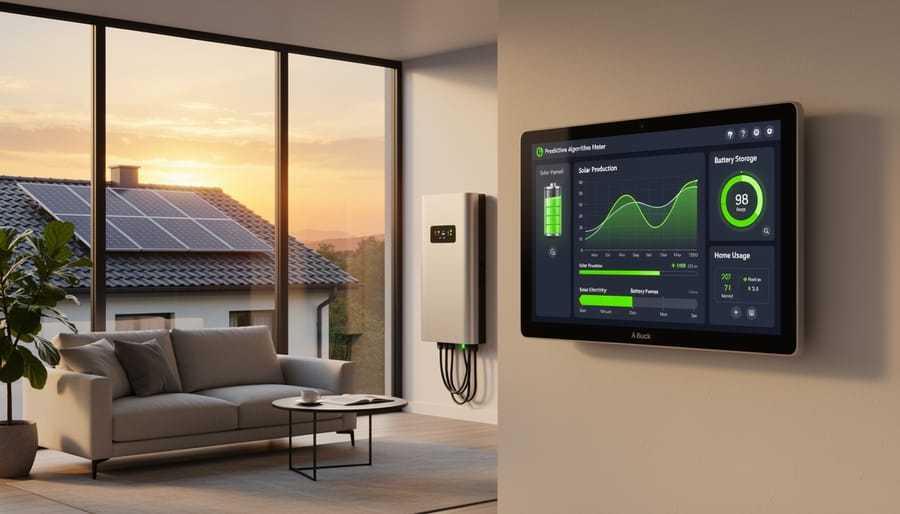
Predictive Algorithms and Load Forecasting
Machine learning algorithms have revolutionized solar energy storage management by enabling unprecedented accuracy in load forecasting and charge-discharge optimization. These predictive systems analyze historical consumption patterns, weather data, grid pricing fluctuations, and occupancy schedules to anticipate energy demand with remarkable precision, typically achieving forecasting accuracy rates exceeding 90% for short-term predictions.
Advanced digital innovation in this field employs neural networks and deep learning models that continuously refine their predictions based on real-time data inputs. These algorithms determine optimal battery operation strategies, deciding when to store excess solar generation, when to discharge stored energy to meet demand peaks, and when to participate in grid services for additional revenue streams.
Leading universities collaborate with industry partners to develop increasingly sophisticated forecasting models that account for seasonal variations, equipment degradation rates, and dynamic electricity tariffs. Research institutions have demonstrated that AI-driven battery management systems can extend battery lifespan by 15-25% through optimized cycling while simultaneously reducing energy costs by maximizing self-consumption and minimizing grid dependence.
Educational programs now incorporate machine learning applications in renewable energy management, preparing professionals to implement these technologies effectively. The integration of predictive algorithms represents a fundamental shift from reactive to proactive energy management, enabling storage systems to function as intelligent assets within broader energy ecosystems.
Grid Integration and Virtual Power Plants
Grid integration of solar storage systems represents a transformative shift toward decentralized energy management. Virtual power plants (VPPs) aggregate multiple distributed storage installations, creating a coordinated network that functions as a single, flexible power resource. This innovative approach enables residential and commercial solar-plus-storage systems to participate in wholesale energy markets while maintaining individual owner control and benefits.
VPPs leverage sophisticated software platforms to orchestrate charging and discharging cycles across thousands of battery systems. During peak demand periods, the aggregated capacity can discharge stored energy to the grid, earning participants revenue through demand response programs and capacity markets. Conversely, batteries charge during off-peak hours when electricity prices are lowest, optimizing both grid stability and owner economics.
Grid services provided by networked storage systems include frequency regulation, voltage support, and peak shaving. These capabilities reduce strain on transmission infrastructure and defer costly grid upgrades. For system owners, participation typically involves minimal lifestyle impact, with automated controls managing battery operations to balance grid needs with household requirements.
Leading utilities and technology providers are establishing VPP programs that compensate participants through monthly credits or direct payments. Research collaborations between universities and industry partners continue advancing VPP algorithms and market structures, making distributed energy resources increasingly viable. This symbiotic relationship benefits both grid operators seeking flexibility and consumers pursuing energy independence and additional income streams from their solar investments.
Selecting the Right Storage Solution for Your Solar PV System
Residential System Considerations
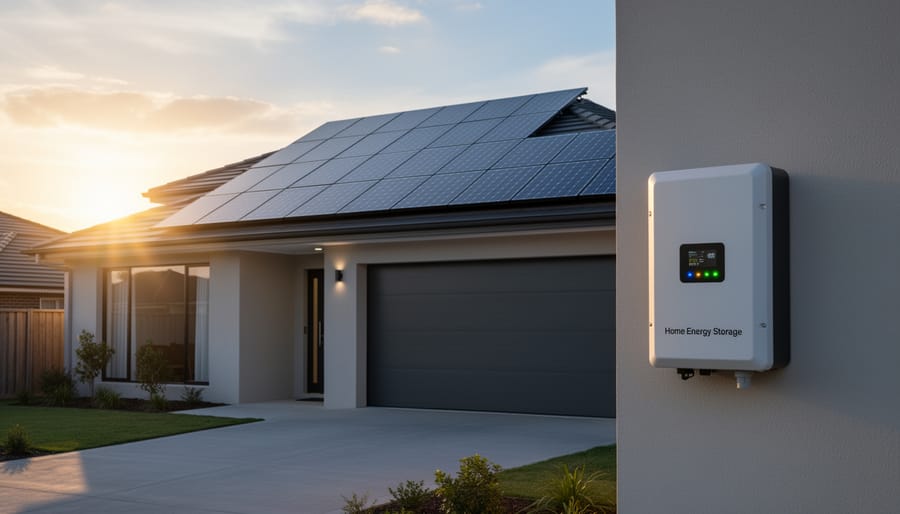
Homeowners evaluating solar energy storage solutions must consider several critical factors to ensure optimal system performance and return on investment. The primary consideration is capacity sizing, which requires careful analysis of daily energy consumption patterns, peak usage times, and desired backup duration during grid outages. A properly sized battery system typically stores between 10-15 kWh for average households, though requirements vary based on geographical location and lifestyle needs.
Compatibility with existing photovoltaic systems is equally essential. Modern storage solutions must integrate seamlessly with various panel types, including monocrystalline, multi-crystalline, and high-efficiency PERC (Passivated Emitter and Rear Cell) panels. Each technology exhibits distinct voltage and current characteristics that influence inverter selection and charge controller requirements. Homeowners upgrading to advanced PV technologies should verify battery compatibility to maximize energy harvest efficiency.
Cost-benefit analysis remains the cornerstone of residential storage investment decisions. While initial expenditures range from $8,000 to $15,000 for complete systems, potential savings emerge through time-of-use optimization, demand charge reduction, and energy independence. Financial modeling should incorporate available incentives, utility rate structures, and projected battery lifespan—typically 10-15 years for lithium-ion systems. Educational resources and professional consultations help homeowners navigate these complex considerations, ensuring informed decisions aligned with both environmental goals and economic realities. Collaborating with academic institutions and certified installers provides additional technical validation for residential storage implementations.
Commercial and Industrial Applications
Commercial and industrial solar installations demand robust storage solutions that address unique operational requirements and financial considerations. Unlike residential systems, C&I facilities typically require battery capacities ranging from 100 kWh to several megawatt-hours, depending on facility size and energy consumption patterns. These larger installations must balance upfront capital investment with long-term operational savings, making careful system design essential.
Demand charge management represents a primary driver for commercial storage adoption. Many utilities impose substantial demand charges based on peak power consumption within billing periods. Energy storage systems enable businesses to reduce these charges by up to 70% through strategic peak shaving—discharging stored solar energy during high-demand periods rather than drawing from the grid. This application alone often justifies the investment, with typical payback periods of 5-7 years.
Scalability considerations are crucial for business operations planning long-term growth. Modular battery systems allow facilities to expand storage capacity incrementally as energy needs increase, avoiding oversized initial investments. For building-integrated solar systems, storage integration must be planned during initial architectural phases to ensure adequate space allocation and electrical infrastructure.
Universities and research institutions increasingly collaborate with industry partners to develop optimized commercial storage solutions, offering educational programs that train professionals in system design, demand response strategies, and energy management software. These initiatives help businesses implement storage systems that maximize return on investment while supporting grid stability and sustainability objectives.
The Economic Case for Solar Energy Storage
The financial landscape for solar energy storage has transformed dramatically over the past decade, with system costs declining by approximately 80% since 2010. This cost reduction, combined with favorable policy frameworks and increasing electricity rates, has positioned storage solutions as economically viable investments across residential, commercial, and utility-scale applications.
For residential installations, typical payback periods now range from 7 to 12 years, depending on electricity rates, local incentives, and usage patterns. Homeowners in areas with time-of-use pricing structures see accelerated returns, as storage enables peak demand avoidance and maximizes self-consumption of generated solar power. The federal Investment Tax Credit currently covers 30% of battery storage costs when paired with solar systems, substantially improving project economics. Many states offer additional rebates and incentives that can reduce upfront costs by an additional 10-25%.
Commercial and industrial facilities benefit from demand charge reduction, which can account for 30-70% of utility bills in some regions. Strategic deployment of storage systems to shave peak demand typically delivers payback periods of 5 to 8 years, with operational savings continuing throughout the system’s 10-15 year lifespan. These economics are further enhanced by participation in demand response programs and grid services markets.
Utility-scale storage projects demonstrate increasingly compelling returns as solar energy investments continue growing and global solar policies evolve to support grid modernization. Levelized costs of storage have fallen to competitive ranges with traditional peaking plants, while providing additional ancillary service revenue streams.
The long-term value proposition extends beyond simple payback calculations. Energy storage provides resilience during grid outages, protects against future electricity rate escalation, and increases property values. As technology advances and production scales expand, analysts project continued cost reductions of 15-20% through 2030, further strengthening the economic case across all market segments.
The convergence of advanced solar energy storage solutions with increasingly efficient photovoltaic technologies represents a pivotal transformation in our journey toward a sustainable energy future. As we have explored throughout this article, innovations in battery chemistry, grid-scale systems, and intelligent energy management platforms are systematically addressing the fundamental intermittency challenges that once limited solar adoption. These technological advancements are no longer theoretical prospects but practical realities reshaping energy infrastructure worldwide.
However, technology alone cannot drive this transformation. The rapid evolution of storage solutions demands a workforce equipped with current knowledge and specialized skills to design, implement, and maintain these sophisticated systems. Professional development and continuous education have become essential components of industry advancement. At Mose Solar, we recognize this critical need through our university collaboration programs, which bridge the gap between emerging research and practical application. These partnerships ensure that aspiring professionals and established practitioners alike can access the training necessary to leverage next-generation storage technologies effectively.
The path forward requires both technological innovation and human capital investment. As storage costs continue declining and performance metrics improve, the integration of solar and storage systems will transition from specialized applications to standard practice. This synergy between photovoltaic generation and energy storage creates unprecedented opportunities for grid stability, energy independence, and environmental stewardship. For professionals committed to renewable energy, staying informed and continuously developing expertise in these advancing technologies will be fundamental to shaping a cleaner, more resilient energy landscape for generations to come.