
Crowdsourced loans are revolutionizing solar energy financing by democratizing investment opportunities and accelerating renewable energy adoption worldwide. Through innovative peer-to-peer lending platforms, individuals can now contribute directly to solar projects, creating a sustainable funding ecosystem that benefits both investors and clean energy developers. This alternative financing model has emerged as a powerful solution to bridge the traditional funding gap in solar installations, particularly in developing regions and underserved communities.
The convergence of digital technology, environmental consciousness, and financial innovation has enabled these platforms to connect thousands of small-scale investors with promising solar ventures. By aggregating multiple micro-investments, crowdsourced loans provide crucial capital for projects that might otherwise struggle to secure conventional financing. This democratized approach not only accelerates the global transition to renewable energy but also offers investors the opportunity to earn returns while contributing to environmental sustainability.
As the solar industry continues to evolve, crowdsourced lending platforms are becoming increasingly sophisticated, incorporating blockchain technology, automated risk assessment, and transparent impact tracking systems. These advancements ensure efficient capital allocation, reduced transaction costs, and enhanced security for all participants in the solar financing ecosystem.
The Rise of Solar Microlending Platforms

How Solar Microlending Works
Solar microlending operates through specialized platforms that connect individual lenders with solar project developers and installers. The process begins when project initiators submit detailed proposals, including technical specifications, financial projections, and implementation timelines. These proposals undergo rigorous verification by platform administrators to ensure feasibility and reliability.
Through peer-to-peer solar networks, investors can browse validated projects and choose to fund portions of installations, typically starting from as little as $25. The aggregated funds are released to project developers once funding targets are met, usually incorporating milestone-based disbursement schedules to ensure proper project execution.
Borrowers repay loans through fixed monthly installments, which include principal and interest. These payments are automatically distributed to lenders proportional to their investment. Platforms typically implement comprehensive risk assessment protocols, including credit checks and project viability analyses, while maintaining escrow accounts to secure funds during transactions.
Most platforms incorporate real-time monitoring systems that track project progress and payment schedules, providing transparency for all stakeholders. This systematic approach ensures efficient capital deployment while minimizing risks for both lenders and borrowers.
Key Players in Solar Crowdlending
Several prominent platforms have emerged as leaders in solar crowdlending, each offering distinct approaches to connecting investors with solar projects. Sun Exchange, established in 2015, pioneered a unique model allowing investors to purchase individual solar cells, generating returns through electricity sales. Their platform has successfully funded numerous installations across Africa and Asia.
Mosaic stands out as a major player in the United States market, having facilitated over $7 billion in solar loans. Their approach focuses on residential solar installations, offering competitive interest rates and streamlined approval processes. The platform’s success stems from its partnerships with established solar installers and robust credit assessment methods.
GreenCrowding, operating primarily in European markets, differentiates itself through project-specific investment opportunities and comprehensive technical due diligence. Their platform emphasizes transparency by providing detailed environmental impact metrics and real-time performance data.
Trine, focusing on emerging markets, has developed a notable track record in funding solar projects for small businesses and communities. Their platform combines social impact investing with careful project vetting, maintaining a default rate below industry averages while delivering both financial and environmental returns.
Benefits for Solar Entrepreneurs
Flexible Funding Options
Crowdsourced loans offer remarkable flexibility in terms of funding structures and repayment options, making them increasingly attractive for solar energy projects. These loans typically range from $5,000 to $500,000, with terms extending from 12 months to 10 years, depending on project scope and solar project ROI projections.
Borrowers can choose between fixed and variable interest rates, with rates typically ranging from 5% to 12%, generally lower than traditional commercial loans. The application process is streamlined through digital platforms, requiring basic project documentation, financial statements, and a detailed business plan.
What sets crowdsourced loans apart is their accessibility and customizable funding schedules. Projects can receive funding in phases, aligned with construction milestones, reducing initial capital requirements. This staged approach allows developers to optimize cash flow management and reduce carrying costs.
Most platforms offer early repayment options without penalties, enabling borrowers to leverage improved cash flows from operational solar installations. Additionally, some platforms provide grace periods during the construction phase, allowing projects to generate revenue before beginning repayment.
The qualification criteria focus on project viability rather than traditional credit metrics alone, making funding accessible to a broader range of developers. This approach particularly benefits community solar initiatives and emerging solar enterprises that might face challenges with conventional financing channels.
Community Engagement and Support
Community engagement plays a pivotal role in the success of crowdsourced solar loans, creating a collaborative ecosystem that benefits both project developers and investors. The active participation of community members fosters transparency, accountability, and trust in solar ventures, leading to higher success rates and more sustainable outcomes.
Studies indicate that projects with strong community engagement typically achieve their funding goals 27% faster than those with minimal community interaction. This engagement often manifests through regular project updates, interactive Q&A sessions, and detailed impact reports that keep investors informed and involved throughout the development process.
The social aspect of crowdsourced loans creates a network effect, where successful projects inspire more community members to participate in future solar initiatives. Investors become advocates for renewable energy adoption, sharing their experiences and encouraging others to support similar projects. This organic growth strengthens the overall ecosystem and accelerates the deployment of solar technology.
Community support extends beyond financial contributions. Local expertise, professional networks, and valuable feedback from engaged stakeholders often enhance project planning and execution. Many successful solar ventures attribute their achievement to the diverse perspectives and collective wisdom provided by their community of supporters.
Moreover, strong community engagement helps project developers identify and address potential challenges early in the process, reducing risks and improving project outcomes. This collaborative approach ensures that solar initiatives remain aligned with community needs while maintaining high standards of implementation and operation.
Impact on Solar Industry Growth
Success Stories and Case Studies
The transformative impact of crowdsourced loans in solar energy deployment is exemplified by several notable success stories. In rural Tanzania, a community-based solar installation project successfully raised $50,000 through microloans from 372 individual lenders, providing electricity to 200 households and a local medical clinic. The project achieved full repayment within 24 months while reducing energy costs for participants by 40%.
In India, a solar entrepreneur secured $25,000 through crowdfunded microloans to establish a solar panel distribution network across five villages. The initiative not only created 15 local jobs but also enabled 500 families to transition from kerosene to clean solar power. The loan was repaid in 18 months, with lenders receiving a 5% return on investment.
A particularly innovative case emerged in Mexico, where a cooperative of small-scale farmers utilized crowdsourced loans totaling $75,000 to install solar-powered irrigation systems. This implementation reduced their operating costs by 60% and increased crop yields by 35%. The success led to the expansion of similar projects across neighboring communities.
These cases demonstrate the scalability and reliability of crowdsourced solar financing. According to impact assessment studies, projects funded through microloans show a 92% success rate in terms of implementation and loan repayment, while generating measurable social and environmental benefits for participating communities.
Market Expansion Effects
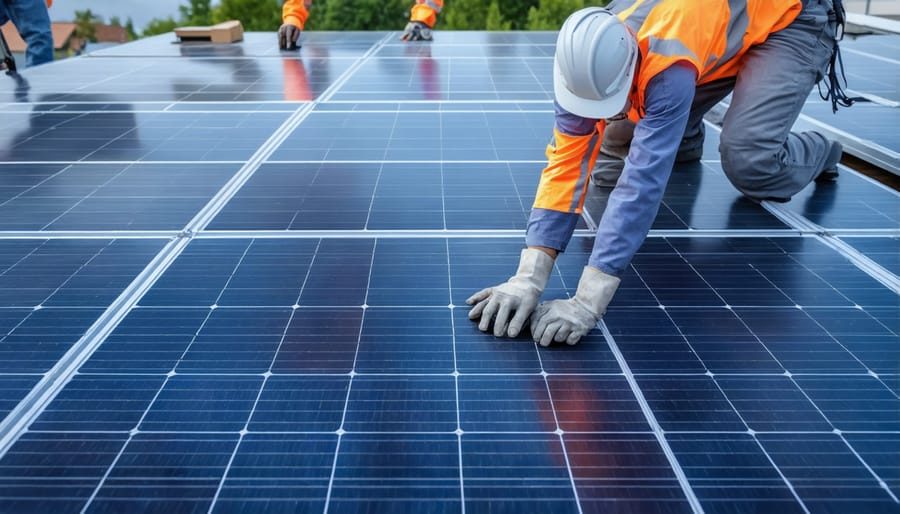
Crowdsourced loans have significantly transformed the solar financing landscape, creating unprecedented market accessibility for both investors and project developers. This democratization of solar funding has contributed substantially to solar industry growth trends, particularly in emerging markets where traditional financing options are limited. The peer-to-peer lending model has enabled smaller-scale solar installations to secure funding more efficiently, reducing the dependency on conventional banking institutions.
The market expansion effects are evident in the increasing number of successfully funded projects across diverse geographical regions. By connecting multiple small investors with solar initiatives, crowdsourced loans have effectively lowered entry barriers for both parties. This has led to accelerated adoption of solar technology in previously underserved communities and created new opportunities for sustainable energy development.
Furthermore, the scalability of crowdsourced lending platforms has enabled rapid market response to growing demand, ensuring that promising solar projects can secure necessary funding without extensive delays. This efficiency has become particularly crucial in supporting the industry’s dynamic growth and technological advancement.
Future Outlook and Opportunities

Technology Integration
The integration of advanced technology has revolutionized crowdsourced loans in the solar sector, particularly through the implementation of blockchain in energy trading and smart contract systems. These technological innovations have enhanced transparency, reduced transaction costs, and improved the overall efficiency of microlending platforms.
Blockchain technology enables secure, immutable record-keeping of loan transactions while automating various aspects of the lending process. Smart contracts automatically execute predetermined conditions, ensuring timely disbursements and repayments without manual intervention. This automation reduces administrative overhead and minimizes the risk of human error.
Advanced data analytics and machine learning algorithms now power credit assessment models, enabling more accurate evaluation of borrower creditworthiness. These systems analyze alternative data points, including energy consumption patterns and payment histories, to make informed lending decisions.
Mobile applications and digital platforms have made microlending more accessible to both lenders and borrowers. These interfaces facilitate seamless communication, document verification, and transaction processing. Real-time monitoring systems allow stakeholders to track project progress and loan performance, ensuring accountability and fostering trust within the lending ecosystem.
APIs (Application Programming Interfaces) enable integration with various financial services, creating a comprehensive ecosystem that supports efficient fund transfers, payment processing, and portfolio management. This technological infrastructure has significantly reduced geographical barriers and expanded the reach of crowdsourced solar financing initiatives.
Regulatory Developments
Recent regulatory developments have significantly shaped the landscape of solar microlending and crowdsourced financing. The Securities and Exchange Commission’s implementation of Regulation Crowdfunding (Reg CF) has expanded access to solar investment opportunities while establishing crucial investor protections. These regulations now allow companies to raise up to $5 million annually through crowdfunding platforms, creating more substantial opportunities for solar project financing.
Several states have introduced legislation supporting community solar initiatives and peer-to-peer lending platforms. California’s groundbreaking Green Finance Framework has established guidelines for environmental impact assessment in crowdfunding projects, setting a precedent for other states. Meanwhile, the Federal Trade Commission has strengthened disclosure requirements for crowdfunding platforms, ensuring greater transparency in solar project financials and expected returns.
The Department of Energy’s recent policy framework has integrated crowdfunded solar projects into broader renewable energy initiatives, providing additional incentives and tax benefits for participants. These developments have been complemented by new banking regulations that facilitate partnerships between traditional financial institutions and solar crowdfunding platforms.
International regulatory frameworks, particularly in the European Union and United Kingdom, have also influenced U.S. policy approaches. Their emphasis on standardized reporting requirements and environmental impact assessments has helped establish best practices for the industry, leading to more robust risk assessment protocols and improved investor protection mechanisms.
Crowdsourced microloans have emerged as a transformative force in solar energy development, bridging critical financing gaps and accelerating renewable energy adoption worldwide. By connecting individual lenders with solar projects, these innovative funding mechanisms have demonstrated their ability to democratize clean energy access while offering sustainable investment opportunities. The impact extends beyond mere financial support, fostering community engagement and environmental consciousness among participants.
The success of microlending platforms in solar deployment has proven particularly valuable in developing regions, where traditional financing options may be limited or unavailable. These platforms have enabled countless solar installations, from individual household systems to community-scale projects, contributing significantly to global renewable energy goals. The model’s effectiveness is evidenced by high repayment rates and tangible improvements in energy access for underserved populations.
Looking ahead, crowdsourced microloans are poised to play an increasingly vital role in the renewable energy transition. As technology platforms evolve and awareness grows, these funding mechanisms will continue to unlock new opportunities for solar development while promoting environmental sustainability and social equity in energy access. Their importance in advancing clean energy solutions cannot be overstated, making them an essential tool in the global fight against climate change.