The solar industry is experiencing unprecedented growth, transforming from a niche market into a cornerstone of the global energy transition. Recent market analyses reveal that solar installations have doubled every two years since 2020, with latest trends in solar PV indicating accelerated adoption across residential, commercial, and utility sectors. Driven by plummeting manufacturing costs, technological breakthroughs, and intensifying climate change concerns, the industry’s trajectory shows no signs of slowing. Global investment in solar technology reached $308 billion in 2023, representing a 36% increase from the previous year. With major economies implementing aggressive renewable energy policies and corporations making substantial commitments to solar adoption, industry experts project the market to triple in size by 2030. This remarkable expansion is reshaping energy markets, creating millions of jobs, and establishing solar as a dominant force in the worldwide transition to sustainable energy sources.
Global Solar Market Expansion
Record-Breaking Installation Numbers
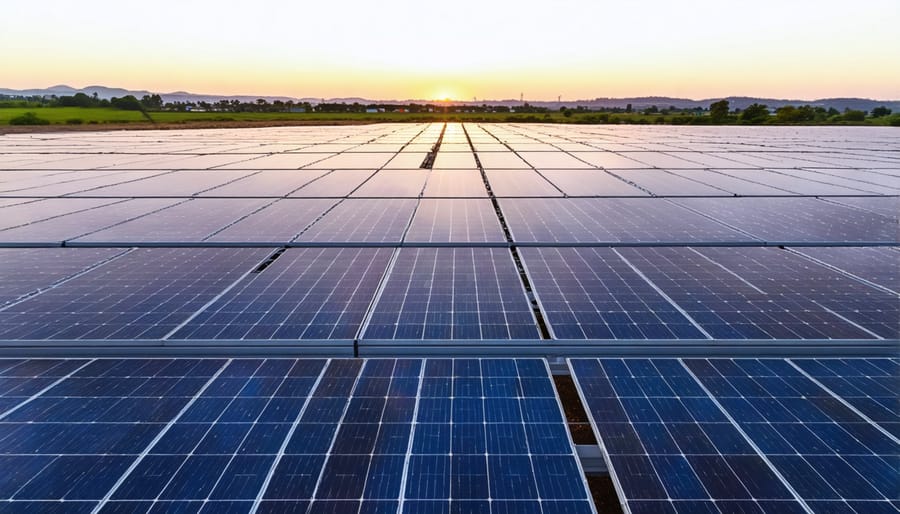
The global solar industry has achieved unprecedented growth in recent years, with 2023 marking several significant milestones in installation capacity. According to the International Energy Agency (IEA), solar PV installations reached a record-breaking 350 GW of new capacity additions worldwide, representing a 40% increase from the previous year. This surge in deployments has been particularly notable in commercial solar installations, which witnessed a 45% year-over-year growth.
China continues to lead the global solar expansion, installing approximately 180 GW of new capacity in 2023, while the European Union and United States followed with 60 GW and 32 GW, respectively. Emerging markets in Southeast Asia and Latin America have also demonstrated remarkable growth, with combined installations exceeding 40 GW.
The utility-scale sector dominated new installations, accounting for 60% of total capacity additions. Residential and commercial segments showed robust growth as well, driven by improved technology costs and supportive policy frameworks. Manufacturing capacity has expanded correspondingly, with global solar panel production reaching 800 GW annually, ensuring steady supply for mounting demand.
These installation figures underscore the solar industry’s accelerating trajectory and its pivotal role in the global energy transition. Projections indicate this growth trend will continue, with annual installations expected to surpass 500 GW by 2025.
Regional Growth Leaders
Several key regions are driving remarkable growth in the global solar industry, with China maintaining its position as the dominant force in both manufacturing and deployment. In 2023, China installed over 180 GW of new solar capacity, representing more than half of global installations and demonstrating unprecedented market expansion.
The European Union continues to show strong growth, particularly in Germany, Spain, and the Netherlands, where favorable policies and ambitious renewable energy targets have accelerated solar adoption. Germany alone added approximately 14 GW of new solar capacity in 2023, marking its strongest year for solar installations.
The United States has emerged as another significant growth market, driven by the Inflation Reduction Act’s incentives and state-level renewable portfolio standards. California leads domestic installations, followed by Texas and Florida, with utility-scale projects accounting for the majority of new capacity.
India’s solar market is experiencing rapid expansion, supported by government initiatives and declining installation costs. The country aims to achieve 280 GW of solar capacity by 2030, making it one of the fastest-growing markets globally.
Emerging markets in Southeast Asia, particularly Vietnam and Thailand, are showing promising growth trajectories, while Latin American countries like Brazil and Chile are establishing themselves as regional solar powerhouses through successful auction programs and supportive regulatory frameworks.
Technological Advancements Driving Growth
PERC Technology Evolution
Passivated Emitter and Rear Cell (PERC) technology has emerged as a game-changing innovation in the solar industry, significantly improving the efficiency and cost-effectiveness of photovoltaic modules. Since its commercial introduction in 2013, PERC has become the dominant technology in solar cell manufacturing, with market adoption exceeding 80% of all new solar panel production by 2022.
The fundamental advantage of PERC technology lies in its ability to capture previously wasted light through an additional passivation layer on the rear side of the solar cell. This innovation has enabled commercial solar panels to achieve efficiency ratings above 22%, compared to the 15-17% typical of traditional aluminum back-surface field (Al-BSF) cells.
Manufacturing costs for PERC cells have decreased substantially, dropping from approximately $0.50 per watt in 2015 to below $0.20 per watt in 2023. This cost reduction, coupled with improved efficiency, has made PERC modules increasingly attractive to both residential and utility-scale installations.
The evolution of PERC technology continues with the development of advanced variants such as multi-PERC and bifacial PERC cells. These innovations promise even higher efficiencies and better performance under real-world conditions. Industry forecasts suggest that PERC technology will maintain its market dominance through 2025, though emerging technologies like heterojunction (HJT) and TOPCon are beginning to gain traction in high-end applications.

Next-Generation Solar Solutions
The solar industry is witnessing remarkable technological breakthroughs that are revolutionizing energy generation and storage capabilities. Perovskite solar cells represent one of the most promising advances, offering potential efficiency rates exceeding 30% when combined with traditional silicon cells in tandem configurations. These next-generation cells are lighter, more flexible, and potentially more cost-effective to manufacture than conventional panels.
Bifacial solar panels are gaining significant traction, capable of harvesting sunlight from both sides and increasing energy yield by 5-30% compared to traditional modules. This technology is particularly effective in snow-covered regions or areas with high surface reflectivity.
Building-integrated photovoltaics (BIPV) are transforming how we incorporate solar technology into architecture. These solutions seamlessly integrate solar cells into building materials, including windows, roofing tiles, and façades, enabling structures to generate power while maintaining aesthetic appeal.
Floating solar farms, or floatovoltaics, represent another innovative approach, utilizing water bodies to host solar installations. These systems benefit from the cooling effect of water, which enhances panel efficiency while reducing water evaporation from reservoirs.
Advanced energy storage solutions are evolving alongside solar technology. Solid-state batteries and flow batteries show promise for grid-scale storage, while artificial intelligence and machine learning are optimizing system performance and predictive maintenance capabilities.
Quantum dot solar cells and organic photovoltaics are emerging technologies that could further revolutionize the industry, offering the potential for ultra-thin, highly efficient, and environmentally friendly solar solutions. These innovations underscore the industry’s commitment to continuous improvement and sustainable development.
Economic Factors Fueling Expansion
Cost Reduction Trends
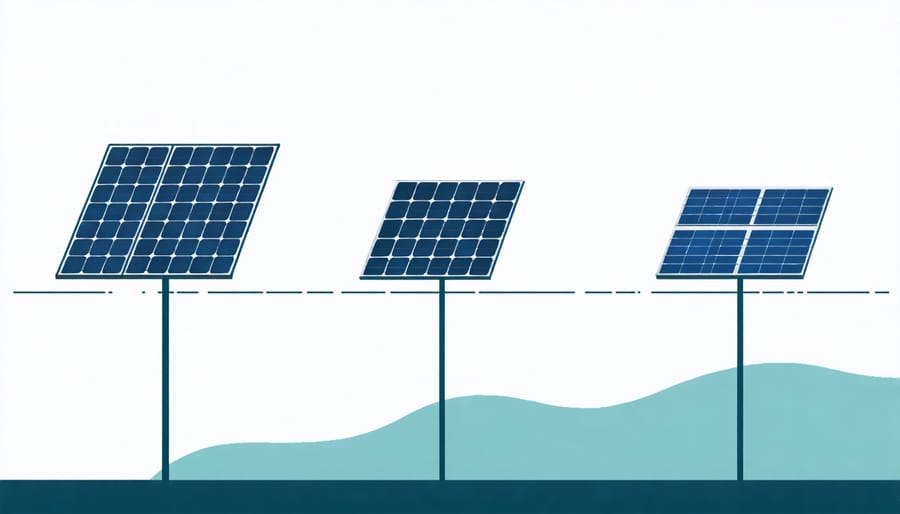
The solar industry has experienced remarkable cost reductions over the past decade, making renewable energy increasingly competitive with traditional power sources. According to the International Renewable Energy Agency (IRENA), the global weighted-average levelized cost of electricity (LCOE) for utility-scale solar installations has declined by more than 85% since 2010. This substantial decrease is primarily attributed to technological improvements, manufacturing efficiency, and economies of scale.
Solar panel production costs have dropped significantly, with manufacturers implementing automated processes and optimizing supply chains. The price per watt for photovoltaic modules has decreased from over $2.00 in 2010 to well under $0.30 in recent years. This dramatic reduction has improved solar panel ROI metrics, making solar installations more attractive to both residential and commercial customers.
Installation costs have also declined through standardized mounting systems, improved worker training, and streamlined permitting processes. Battery storage solutions, crucial for solar system optimization, have seen similar cost reductions, enhancing the overall value proposition of solar investments. Industry analysts project these cost reduction trends will continue, driven by ongoing technological innovations and increased manufacturing capacity worldwide.
The combination of falling costs and improved efficiency has shortened payback periods for solar installations, typically ranging from 5-8 years in most markets, compared to 10-15 years a decade ago. These economic improvements have significantly contributed to the industry’s rapid growth and adoption rates.
Investment Landscape
The solar industry continues to attract substantial investment capital, with global funding reaching unprecedented levels. In 2023, venture capital and private equity investments in solar technologies exceeded $12 billion, representing a 40% increase from the previous year. Institutional investors are particularly drawn to utility-scale solar projects, which offer stable long-term returns and align with ESG investment criteria.
Corporate funding in the solar sector has diversified, encompassing various solar project financing options, including green bonds, power purchase agreements (PPAs), and innovative financial instruments. Major financial institutions have committed to increasing their renewable energy portfolios, with solar power representing a significant portion of these commitments.
Government incentives and policy support continue to play a crucial role in attracting investment. The Inflation Reduction Act in the United States, for instance, has catalyzed billions in new solar investments through tax credits and grants. Similarly, the European Green Deal has sparked increased funding across the EU solar market.
Emerging markets are experiencing remarkable growth in solar investment, particularly in regions like Southeast Asia and Latin America. These markets benefit from declining technology costs and improving regulatory frameworks, making solar projects increasingly attractive to international investors. The trend indicates a maturing industry with robust financial backing and diverse funding sources, supporting sustained growth in the coming years.
Industry Challenges and Solutions
Supply Chain Optimization
The solar industry has made significant strides in strengthening its supply chain infrastructure to meet growing demand and overcome persistent challenges. Major manufacturers are implementing advanced inventory management systems and developing regional manufacturing hubs to reduce dependency on single-source suppliers. These strategic initiatives help mitigate risks associated with geopolitical tensions and trade restrictions.
Vertical integration has emerged as a key strategy, with leading companies acquiring or partnering with raw material suppliers and component manufacturers. This approach ensures better control over quality, costs, and delivery timelines while reducing supply chain vulnerabilities. Companies are also investing in automated warehousing solutions and predictive analytics to optimize inventory levels and improve supply chain visibility.
To address polysilicon shortages and other material constraints, manufacturers are diversifying their supplier base across multiple geographical regions. This includes establishing new production facilities in emerging markets and developing alternative material sources. Additionally, industry leaders are implementing sustainable practices throughout the supply chain, from responsible sourcing of raw materials to eco-friendly packaging and transportation solutions.
The adoption of blockchain technology and digital tracking systems enables better transparency and traceability in the supply chain, helping companies maintain quality standards and comply with regulatory requirements. These technological advancements, combined with strategic partnerships and robust risk management protocols, are creating more resilient supply chains capable of supporting the industry’s rapid growth.
Workforce Development
The solar industry’s rapid expansion has created a significant demand for skilled workers across various roles, from installers and technicians to engineers and project managers. To meet these workforce needs, the industry is implementing comprehensive development strategies that combine traditional education with innovative training approaches.
Leading solar companies are establishing partnerships with technical schools and community colleges to create specialized training programs that prepare students for immediate employment upon graduation. These programs often include hands-on experience with solar installation techniques, electrical systems, and safety protocols.
Professional certification programs, such as the North American Board of Certified Energy Practitioners (NABCEP), provide standardized credentials that ensure quality workmanship and safety standards across the industry. Many employers now require or strongly prefer these certifications when hiring new personnel.
Online learning platforms and virtual reality training modules are emerging as effective tools for workforce development, allowing aspiring professionals to gain theoretical knowledge and practical skills remotely. This technology-driven approach has made solar education more accessible and cost-effective.
Additionally, apprenticeship programs are gaining traction, offering paid on-the-job training while participants earn industry certifications. These programs help bridge the skills gap while providing immediate employment opportunities for new entrants to the solar workforce.
The solar industry continues to demonstrate remarkable growth across multiple indicators, positioning itself as a cornerstone of the global energy transition. Market analyses consistently show accelerating adoption rates, with global solar installations reaching record levels year after year. Investment in solar technology has created a positive feedback loop, driving both efficiency improvements and cost reductions that make solar increasingly competitive with traditional energy sources.
Key growth metrics, including employment figures, installed capacity, and market valuations, all point to sustained expansion in the coming decades. The industry has proven resilient to economic challenges, maintaining momentum even during global market disruptions. Technological innovations in photovoltaic efficiency, energy storage solutions, and manufacturing processes continue to enhance the sector’s value proposition.
Looking ahead, the solar industry’s growth trajectory appears robust, supported by strengthening policy frameworks, corporate sustainability commitments, and increasing consumer demand for clean energy solutions. Emerging markets are expected to play a crucial role in future expansion, while established markets continue to optimize and upgrade existing infrastructure.
However, sustained growth will require ongoing attention to supply chain optimization, workforce development, and grid integration challenges. The industry’s ability to address these challenges while maintaining technological innovation and cost competitiveness will be crucial for achieving its full potential in the global energy landscape.
Despite occasional market fluctuations, the fundamental drivers of solar industry growth remain strong, suggesting continued expansion and evolution of this vital renewable energy sector.