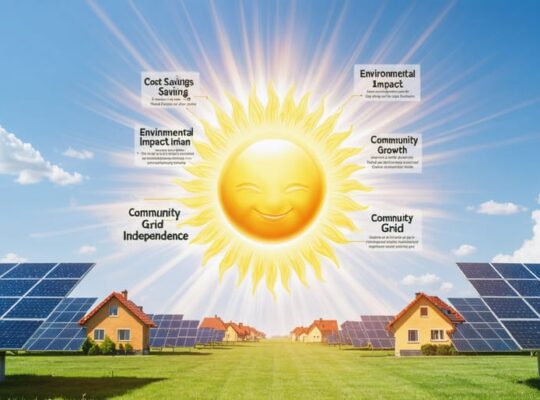
Florida’s pioneering community solar initiatives are revolutionizing how residents access clean, renewable energy while fostering local energy independence. Through innovative community solar partnerships, municipalities across the Sunshine State are developing shared solar facilities that enable multiple households and businesses to benefit from solar power without installing panels on their properties.
The state’s abundant solar resources, combined with recent policy developments and utility commitments, have positioned Florida as a emerging leader in community solar deployment. Florida Power & Light’s SolarTogether program, the largest community solar initiative in the United States, demonstrates the scalability and economic viability of these projects while creating a blueprint for other utilities nationwide.
As energy costs continue rising and climate concerns intensify, Florida’s community solar programs offer a democratic approach to clean energy adoption, enabling renters, low-income households, and those with unsuitable roofs to participate in the renewable energy transition. These initiatives not only advance environmental sustainability but also strengthen grid resilience and create local economic opportunities through job creation and infrastructure development.
Understanding Florida’s Community Solar Framework
Current Policy Landscape
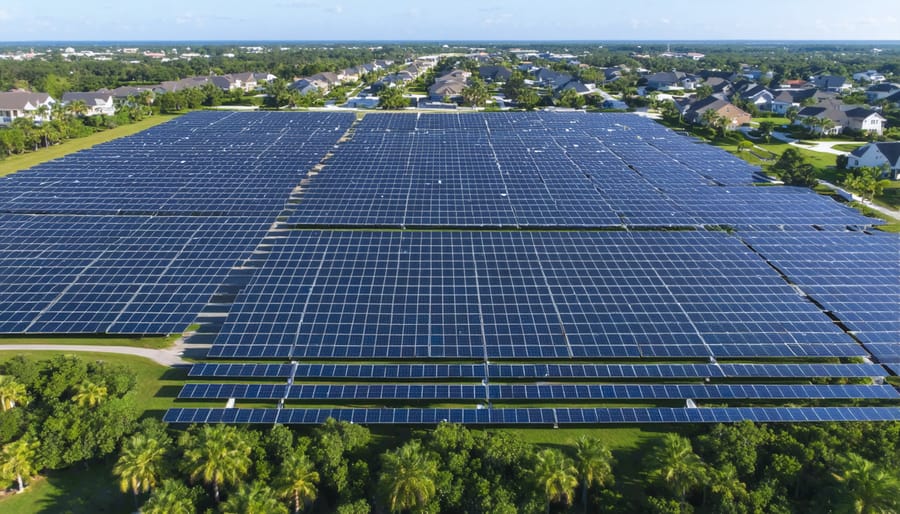
Florida’s solar energy policies have evolved significantly in recent years, though community solar implementation remains relatively limited compared to other states. The Florida Public Service Commission (PSC) oversees utility-scale community solar programs, with the most notable being Florida Power & Light’s (FPL) SolarTogether initiative, launched in 2020.
Current regulations allow investor-owned utilities to develop and manage community solar projects, while limiting third-party development opportunities. The state’s net metering policies apply to community solar subscribers, enabling participants to receive credits on their utility bills for their share of solar generation.
Legislative framework includes provisions under Florida Statute 366.91, which recognizes renewable energy as a critical component of the state’s energy mix. However, Florida lacks specific community solar enabling legislation, unlike states with more mature programs such as Minnesota or Massachusetts.
Recent policy developments include the Clean Energy Connection Program approval in 2021, which expands community solar access to low-income households through dedicated capacity allocations. Additionally, municipalities and electric cooperatives maintain authority to establish their own community solar programs, subject to PSC oversight.
The regulatory landscape continues to evolve, with stakeholders advocating for more comprehensive policies to facilitate broader community solar adoption and increased program accessibility across different demographic segments.
Utility Participation and Program Structure
Florida’s community solar landscape is primarily driven by utility companies who play a central role in program implementation and management. Florida Power & Light (FPL) leads the state’s community solar initiatives through its SolarTogether program, which represents the largest community solar program in the United States. The program operates on a subscription-based model where participants can reserve portions of solar capacity from large-scale solar installations.
Duke Energy Florida has also launched its Clean Energy Connection program, offering similar subscription-based access to solar energy. Both utilities utilize a bill credit system where subscribers receive monthly credits based on their subscription level and the solar facility’s production.
The program structure typically involves upfront subscription costs or monthly payments, with participants receiving proportional benefits from the generated solar power. Most Florida utilities implement a shared savings model, where subscribers see immediate bill credits while the utility maintains and operates the solar facilities.
Municipal utilities and electric cooperatives across Florida have developed smaller-scale community solar projects tailored to their local communities. These programs often feature more flexible participation options and lower minimum subscription requirements compared to larger utility programs.
Utility participation models in Florida emphasize accessibility and scalability, though program availability varies by service territory. The utilities maintain responsibility for site selection, construction, maintenance, and subscriber management, ensuring professional oversight of these complex energy systems.
Benefits and Challenges of Florida Community Solar
Economic Advantages
Florida’s community solar programs offer substantial financial advantages for participants, with the cost benefits of community solar extending beyond individual savings to broader economic impacts. Subscribers typically experience a 10-15% reduction in their monthly electricity bills, with some programs offering fixed rates that protect against future utility price increases.
The investment structure eliminates the substantial upfront costs associated with private solar installation, making clean energy accessible to a broader demographic. Participants can subscribe with minimal initial investment, often starting with monthly payments that are lower than their current utility bills. This democratization of solar access creates opportunities for renters, apartment dwellers, and homeowners with unsuitable roofs to participate in the renewable energy transition.
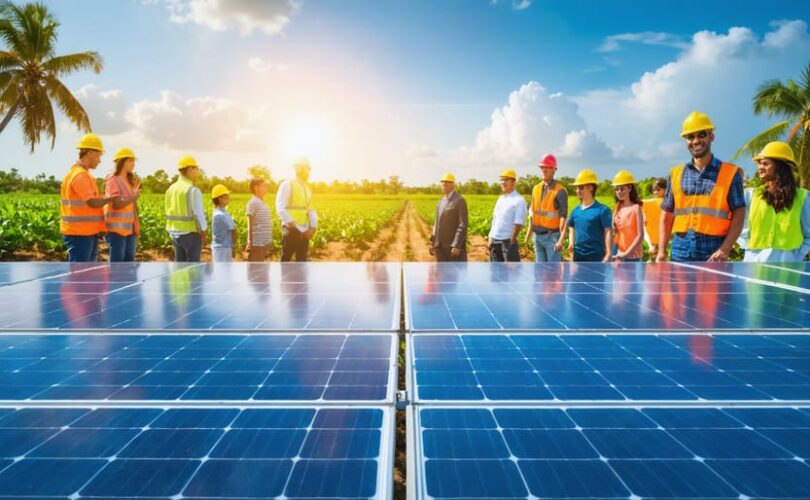
Community solar projects also generate local economic benefits through job creation and workforce development. These installations require skilled technicians for construction, maintenance, and operations, creating employment opportunities in the renewable energy sector. Additionally, local governments benefit from increased tax revenue from solar facilities, which can fund community improvements and services.
The programs often incorporate flexible subscription models, allowing participants to adjust their solar share based on their energy needs and financial capabilities. This adaptability, combined with transparent pricing structures, enables subscribers to optimize their energy costs while supporting clean energy development. Some programs even offer performance guarantees, ensuring subscribers receive their expected savings and protecting their investment.
For businesses, participation in community solar can enhance their environmental, social, and governance (ESG) profiles while reducing operational costs, creating a compelling value proposition for corporate sustainability initiatives.
Implementation Hurdles
Despite the growing interest in community solar projects across Florida, several significant challenges impede their widespread implementation. The regulatory landscape presents one of the most substantial hurdles, as Florida’s current utility regulations limit third-party power purchase agreements and restrict direct energy sales between private entities.
Technical challenges include grid integration complexities and the need for sophisticated billing systems to manage multiple subscriber accounts. The state’s unique weather patterns, including frequent thunderstorms and hurricane risks, necessitate robust infrastructure planning and additional protective measures, increasing project costs and complexity.
Land acquisition poses another significant challenge, particularly in densely populated areas where suitable sites for solar installations are limited. Environmental considerations, including wetland preservation and wildlife protection, further restrict potential development locations.
Financial barriers remain prominent, with high initial capital requirements and complex financing structures deterring some potential developers. The need for long-term subscriber commitments can also present challenges, as many residents are hesitant to enter into extended agreements.
Social and educational hurdles persist, including misconceptions about solar reliability and cost-effectiveness. Some communities express concerns about visual impact and land use changes, while others struggle with understanding the subscription model and its benefits.
Utility company resistance presents another obstacle, as some established providers view community solar as competition to their traditional business model. This can result in delayed interconnection processes and complicated approval procedures.
Administrative challenges include managing subscriber turnover, maintaining accurate billing systems, and ensuring fair allocation of benefits among participants. The need for ongoing maintenance and system monitoring also requires dedicated resources and expertise.
Local Energy Autonomy Through Community Solar
Community Empowerment
Community solar initiatives in Florida are reshaping the traditional power dynamics of energy production by placing more control in the hands of local communities. These programs enable residents and businesses to collectively make decisions about their energy future, fostering a sense of ownership and responsibility in sustainable energy development.
Local municipalities and cooperative organizations play pivotal roles in implementing community solar projects, allowing communities to determine project locations, capacity requirements, and subscription models that best serve their specific needs. This democratic approach to energy production ensures that solar installations align with community preferences while maximizing local economic benefits.
The decision-making process typically involves multiple stakeholders, including local government officials, utility representatives, community organizations, and residents. Through public meetings, workshops, and advisory committees, communities can actively participate in shaping their energy landscape. This collaborative approach helps address concerns about land use, environmental impact, and economic distribution of benefits.
Florida’s community solar framework also promotes energy equity by enabling participation from diverse socioeconomic groups. Local control mechanisms ensure that benefits are distributed fairly, with many programs incorporating provisions for low-income household participation and community reinvestment initiatives.
By empowering communities to take charge of their energy decisions, Florida’s community solar programs are creating a more resilient and sustainable energy future while strengthening local economies and fostering community engagement in clean energy development.
Grid Resilience
Community solar installations in Florida contribute significantly to grid resilience through decentralized power generation and advanced infrastructure integration. These systems enhance local grid stability by providing multiple generation points, reducing the strain on traditional power distribution networks during peak demand periods. Through sophisticated grid interconnection technologies, community solar facilities can respond dynamically to grid demands, offering voltage support and frequency regulation.
The strategic placement of community solar arrays across Florida’s service territories creates a more robust and flexible power network. During extreme weather events, such as hurricanes, these distributed generation systems can help maintain partial power supply to critical facilities and reduce recovery times. Modern inverter technologies employed in community solar projects enable sophisticated power quality management, helping utilities maintain stable grid operations.
Advanced monitoring systems and smart grid integration allow these installations to participate in demand response programs, contributing to grid stability during peak usage. The incorporation of energy storage solutions further enhances grid resilience by providing backup power capabilities and smoothing out intermittent generation patterns. This infrastructure modernization supports Florida’s growing energy needs while strengthening the overall reliability of the power distribution system.
By diversifying power generation sources and locations, community solar installations help create a more resilient grid architecture that can better withstand both natural disasters and technical failures. This distributed approach to power generation represents a crucial step toward building a more sustainable and reliable energy infrastructure in Florida.
Future Prospects and Recommendations
Florida’s community solar landscape shows tremendous potential for growth, with projections indicating a possible 300% increase in installations over the next five years. This expansion is driven by decreasing technology costs, growing environmental awareness, and increasing demand for renewable energy alternatives among residential and commercial consumers.
Several key factors will influence the sector’s development. The continued evolution of state policies, particularly regarding virtual net metering and subscriber benefits, will play a crucial role. Implementation of more favorable regulatory frameworks could accelerate adoption rates and improve project economics for developers and participants alike.
To maximize the potential of community solar in Florida, several policy recommendations warrant consideration:
1. Establish dedicated community solar legislation that clearly defines program parameters and consumer protections
2. Implement standardized interconnection procedures to streamline project development
3. Create incentive programs specifically targeting low-income participation
4. Develop transparent pricing mechanisms that benefit both utilities and subscribers
5. Expand virtual net metering capabilities to enhance program accessibility
The integration of energy storage solutions with community solar projects presents another significant opportunity. As battery technology becomes more affordable, hybrid systems could provide greater grid reliability and enhanced value for participants.
Educational initiatives and workforce development programs will be essential to support industry growth. Partnerships between technical schools, universities, and solar developers can create career pathways and ensure a skilled labor force meets expanding market demands.
Looking ahead, community solar in Florida could become a cornerstone of the state’s clean energy transition. Success will depend on collaborative efforts between utilities, regulators, developers, and communities to create sustainable program models that benefit all stakeholders. Innovation in financing mechanisms, including green bonds and crowd-funding platforms, could help accelerate project development and expand access to clean energy for more Floridians.
To maintain momentum, stakeholders should focus on demonstrating clear economic benefits, ensuring project transparency, and developing inclusive participation models that serve diverse community needs.
Florida’s community solar landscape demonstrates significant promise for reshaping the state’s energy future. The growing adoption of shared solar programs highlights a shift toward more sustainable and democratized energy solutions. As demonstrated throughout this analysis, these programs offer multiple benefits, including reduced electricity costs, increased grid resilience, and expanded renewable energy access for diverse communities.
The success of existing community solar projects in Florida has established a strong foundation for future growth. With improving technology, decreasing installation costs, and evolving regulatory frameworks, the potential for expansion remains substantial. Utility companies, developers, and community organizations continue to forge partnerships that strengthen the infrastructure needed for widespread adoption.
However, realizing the full potential of community solar in Florida requires ongoing attention to several key factors. Continued policy support, enhanced grid integration capabilities, and sustained public education efforts will be crucial for future development. The state’s unique environmental conditions and growing population make it particularly well-suited for community solar expansion, suggesting a bright outlook for this sector.
Looking ahead, Florida’s community solar market is expected to mature and diversify, offering increasingly sophisticated solutions for energy independence. As more communities recognize the economic and environmental advantages of shared solar programs, their role in Florida’s energy mix will likely continue to grow, contributing significantly to the state’s clean energy goals and sustainable development objectives.