Photovoltaic forecasting stands at the intersection of renewable energy advancement and technological innovation, revolutionizing how we predict and optimize solar power generation. As global renewable energy capacity continues to expand at unprecedented rates, accurate PV forecasting has become indispensable for grid operators, energy traders, and utility companies managing intermittent solar resources. This sophisticated blend of meteorological data, artificial intelligence, and real-time monitoring enables stakeholders to anticipate solar power output with increasing precision, ultimately enhancing grid stability and economic efficiency.
The evolution of PV forecasting technologies reflects the maturation of the solar energy sector, incorporating advanced satellite imagery, machine learning algorithms, and IoT sensors to deliver increasingly reliable predictions across multiple time horizons. From short-term operational decisions to long-term capacity planning, these forecasting capabilities have become crucial tools in accelerating the transition toward sustainable energy systems. As policy frameworks evolve and grid integration challenges multiply, understanding and implementing effective PV forecasting strategies has emerged as a critical competency for organizations navigating the complex landscape of renewable energy deployment.
The Evolution of PV Forecasting in Policy Making
Traditional Forecasting Methods
Traditional photovoltaic forecasting methods rely on a combination of statistical analysis, physical modeling, and empirical data collection. These approaches typically incorporate historical weather patterns, solar irradiance measurements, and atmospheric condition data to predict solar power output. Time series analysis, including autoregressive and moving average models, has been widely used to establish baseline forecasting capabilities.
Physical models focus on analyzing solar geometry, panel specifications, and local environmental factors to calculate expected energy production. These models often utilize clear-sky radiation calculations combined with cloud cover predictions to estimate PV system performance. Persistence forecasting, which assumes tomorrow’s conditions will mirror today’s, serves as a simple but effective benchmark for short-term predictions.
Satellite-based methods have also played a crucial role in traditional forecasting by providing cloud movement data and solar radiation measurements across large geographical areas. Ground-based sky imaging systems complement satellite data by offering detailed local cloud observations and movement patterns. These conventional approaches, while foundational to the field, are gradually being enhanced by modern technological advances and machine learning techniques to improve accuracy and reliability.
Modern Forecasting Technologies
Modern photovoltaic forecasting relies on sophisticated tools that combine multiple data sources and advanced algorithms. Satellite imaging, numerical weather prediction (NWP) models, and artificial intelligence have revolutionized the accuracy of solar power predictions. Machine learning algorithms, particularly deep neural networks, process vast amounts of historical data to identify patterns and improve forecast reliability.
Real-time monitoring systems now integrate ground-based sensors with sky-imaging cameras to track cloud movements and solar irradiance levels. These systems, coupled with technological advancements in solar monitoring equipment, provide minute-by-minute power output predictions.
Advanced meteorological models incorporate atmospheric parameters such as aerosol concentrations and humidity levels to enhance prediction accuracy. Grid operators benefit from hybrid forecasting systems that combine short-term and long-term predictions, enabling better resource allocation and grid stability management.
Modern forecasting platforms also leverage edge computing and IoT devices to process data closer to the source, reducing latency and improving response times. These innovations have significantly increased forecast accuracy, with some systems achieving error rates below 5% for day-ahead predictions.

Current Policy Impacts on PV Forecasting
Grid Integration Requirements
Grid integration requirements for photovoltaic systems have evolved significantly in response to increasing solar penetration levels and grid stability concerns. Modern interconnection standards require sophisticated forecasting capabilities to ensure reliable grid operation and optimal power distribution.
Current policies mandate that utility-scale PV installations implement advanced forecasting systems that can predict power output with specified accuracy levels. These requirements typically include both day-ahead and intraday forecasting capabilities, with accuracy thresholds ranging from 85% to 95% depending on the jurisdiction and system size.
Grid operators have established specific technical requirements for forecast data submission, including temporal resolution (typically 15-minute to hourly intervals), forecast horizon (24-72 hours), and update frequency. These standards ensure that grid operators can effectively manage power flow and maintain system stability.
Many jurisdictions now require PV plant operators to provide real-time monitoring data and forecast updates through standardized communication protocols. This includes meteorological data, power output measurements, and system status information, which are essential for maintaining forecast accuracy and grid reliability.
Financial implications are tied to forecast accuracy, with some markets implementing penalty mechanisms for significant deviations from predicted output. Conversely, incentive structures may reward operators who consistently achieve high forecast accuracy levels.
Compliance with these requirements often necessitates investment in advanced monitoring equipment, sophisticated forecasting software, and dedicated personnel. As grid integration standards continue to evolve, PV plant operators must stay informed about policy changes and adapt their forecasting systems accordingly.

Market Performance Standards
Market performance standards for photovoltaic forecasting have evolved significantly due to increasing grid integration requirements and regulatory frameworks. Grid operators and utility companies now mandate specific accuracy thresholds for solar power prediction, typically requiring forecast errors to remain below 5-10% for day-ahead predictions and 3-5% for intraday forecasts.
These standards vary by jurisdiction, with some regions implementing more stringent requirements. For instance, the European Union’s Clean Energy Package establishes comprehensive guidelines for renewable energy forecasting, while individual member states may impose additional accuracy requirements. In the United States, the Federal Energy Regulatory Commission (FERC) Order 841 has influenced forecasting standards by requiring improved integration of energy storage systems, which directly impacts PV forecast accuracy requirements.
Financial penalties for forecast deviations have become increasingly common, driving improvements in forecasting methodologies. Grid operators may impose balancing costs when actual production deviates significantly from predicted values, making accurate forecasting essential for project economics. These market mechanisms have spurred investment in advanced forecasting technologies and methodologies.
Certification programs and standardization efforts are emerging to ensure forecast quality. Organizations like the World Meteorological Organization (WMO) and the International Energy Agency (IEA) are working to establish unified benchmarks for PV forecasting accuracy. These initiatives help create consistency across markets and provide clear performance metrics for forecast service providers.
The trend towards stricter performance standards continues as grid operators seek to maintain stability with increasing renewable energy penetration. This evolution drives innovation in forecasting techniques and promotes the development of more sophisticated prediction models.
Future Policy Trends and Their Impact
Smart Grid Integration Policies
Smart grid integration policies are evolving rapidly to accommodate the increasing penetration of photovoltaic systems into power networks. These policies focus on establishing standardized protocols for PV forecasting data integration, ensuring grid stability, and optimizing energy distribution. Utility companies and grid operators are required to implement advanced forecasting systems that can predict solar power generation with high accuracy across multiple time scales.
Key policy requirements include real-time data sharing between PV system operators and grid managers, standardized communication protocols, and minimum accuracy thresholds for forecasting models. Grid codes are being updated to mandate specific forecasting capabilities for large-scale PV installations, including short-term (hours ahead) and day-ahead predictions.
Many jurisdictions now require PV plant operators to provide regular forecast updates and maintain certain performance metrics. These requirements often include specifications for forecast resolution, update frequency, and error margins. Additionally, policies are being developed to address cybersecurity concerns and data privacy in forecast sharing systems.
Future policy directions point toward increased automation in grid management, with PV forecasting playing a central role in demand response programs and energy storage coordination. Emerging regulations are expected to focus on artificial intelligence integration, improved weather monitoring networks, and enhanced coordination between distributed energy resources.
These integration policies aim to create a more resilient and efficient grid system while maximizing the utilization of solar energy resources. Compliance with these regulations is becoming increasingly important for PV system operators and utilities alike.
Energy Storage Requirements
Energy storage requirements have become increasingly critical in photovoltaic forecasting as grid operators seek to balance renewable energy integration with system stability. The growing deployment of battery storage systems and other energy storage technologies necessitates more sophisticated forecasting approaches that consider both generation and storage capabilities.
Accurate forecasting enables optimal storage management by predicting when excess energy should be stored and when it should be released to the grid. This becomes particularly important as storage mandates and renewable portfolio standards evolve across different jurisdictions. Grid operators must now factor in storage capacity, charge/discharge rates, and efficiency losses when developing their forecasting models.
Storage policies typically require maintaining specific power reserve margins, which directly influence forecasting parameters. For instance, many jurisdictions now mandate that solar installations above certain capacities must incorporate storage solutions to smooth out generation intermittency. These requirements create new variables that forecasting systems must account for, including state of charge predictions and degradation patterns of storage systems.
The integration of storage also introduces new temporal considerations in forecasting. While traditional PV forecasting focused primarily on daylight hours, storage-aware forecasting must account for 24-hour operation cycles, including evening peak demands and overnight charging strategies. This expanded scope requires more comprehensive data analysis and advanced algorithmic approaches to maintain forecast accuracy.
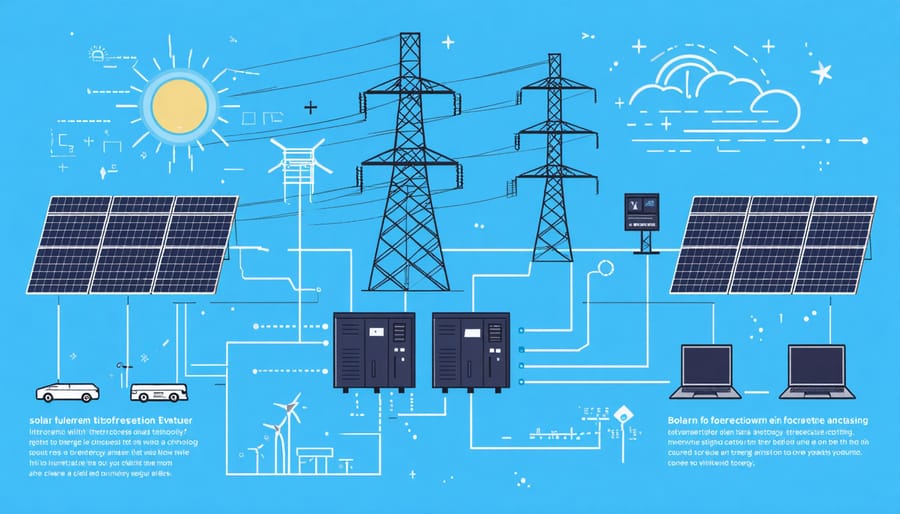
International Policy Harmonization
The harmonization of photovoltaic forecasting policies across international borders has become increasingly crucial as solar energy adoption accelerates globally. Countries are recognizing the need to align their forecasting requirements with global renewable energy standards to facilitate better grid integration and cross-border energy trading.
Key initiatives include the International Energy Agency’s Task 16, which focuses on standardizing solar forecasting methodologies across member nations. This collaborative effort has led to the development of unified metrics for forecast accuracy assessment and reporting protocols that are being adopted worldwide.
Several regions have already implemented harmonized frameworks. The European Union’s Grid Code requirements for renewable energy forecasting serve as a model for other jurisdictions. Similarly, the Asia-Pacific region has established the APEC Renewable Energy Grid Integration Network to coordinate forecasting practices among member economies.
These standardization efforts address critical aspects such as:
– Minimum accuracy requirements for different forecast horizons
– Standardized data formats and communication protocols
– Common verification methods and performance metrics
– Unified reporting requirements for grid operators
The movement toward international policy harmonization continues to gain momentum as grid operators and energy markets become increasingly interconnected. This standardization helps reduce barriers to entry for solar projects while improving overall grid stability and reliability across borders.
Economic Implications of Advanced Forecasting
The implementation of advanced photovoltaic forecasting systems represents a significant investment for solar energy operators, but the economic benefits often outweigh the initial costs. Recent industry analyses demonstrate that accurate forecasting can improve solar PV investment returns by 8-15% through enhanced grid integration and reduced operational uncertainties.
Advanced forecasting systems typically require substantial upfront capital for hardware, software, and infrastructure development. These costs include specialized meteorological equipment, computing resources, and training for operational staff. However, the return on investment manifests through multiple channels: reduced balancing costs, optimized energy trading, and improved grid stability.
Grid operators benefit from decreased reserve requirements when accurate forecasts are available, leading to system-wide cost reductions. For individual plant operators, precise forecasting enables better participation in energy markets, potentially increasing revenue through strategic bidding and optimal dispatch scheduling. Studies indicate that advanced forecasting systems can pay for themselves within 2-3 years through improved operational efficiency alone.
The economic advantages extend beyond direct monetary benefits. Enhanced forecasting capabilities lead to reduced wear and tear on equipment through better maintenance scheduling, extended component lifetime, and decreased insurance premiums due to lower operational risks. Additionally, improved forecast accuracy helps minimize penalties associated with generation shortfalls or grid imbalances.
For utility-scale installations, the implementation of advanced forecasting systems typically results in a 3-5% reduction in operational costs annually. This improvement stems from better resource allocation, optimized storage utilization, and more efficient grid integration. Furthermore, as renewable portfolio standards become more stringent, the ability to accurately forecast production becomes increasingly valuable for compliance and planning purposes.
The field of photovoltaic forecasting continues to evolve rapidly, driven by technological advancements and the increasing integration of solar energy into power grids worldwide. As we’ve explored, accurate forecasting plays a crucial role in optimizing solar energy utilization and grid stability. The convergence of artificial intelligence, machine learning, and improved meteorological data has significantly enhanced forecast accuracy, enabling better resource planning and management.
Looking ahead, several key developments are expected to shape the future of PV forecasting. The implementation of 5G networks and IoT sensors will enable real-time data collection and processing, while quantum computing may revolutionize weather prediction models. Additionally, the standardization of forecasting methodologies and increased international collaboration will likely lead to more reliable and consistent predictions across different regions.
For stakeholders in the solar industry, staying informed about these developments is crucial. The continued refinement of forecasting techniques, combined with supportive policies and technological innovations, will be essential for achieving greater solar energy integration and advancing toward a more sustainable energy future.