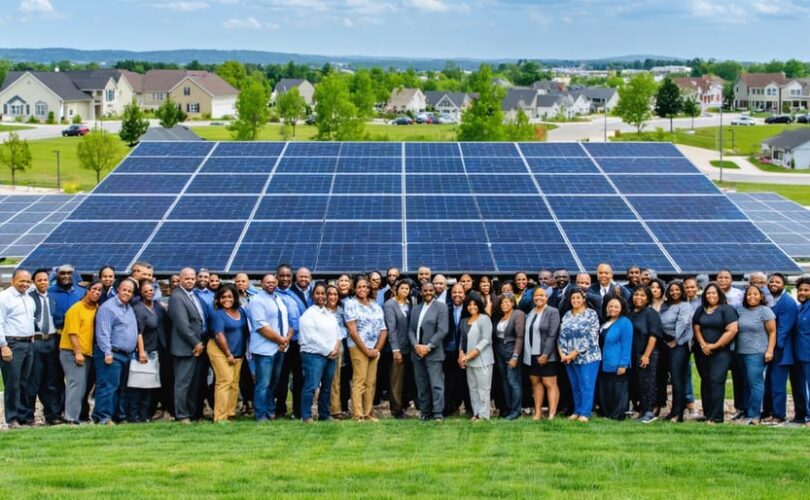
The National Community Solar Partnership (NCSP) represents a groundbreaking federal initiative that’s transforming America’s energy landscape by making solar power accessible to all communities, regardless of income or location. This Department of Energy-led program has mobilized over 800 partners across government, industry, and nonprofit sectors to accelerate the deployment of community solar projects nationwide, targeting 20 gigawatts of community solar capacity by 2025—enough to power millions of households and create substantial energy cost savings for consumers.
Through strategic technical assistance, policy guidance, and innovative financing solutions, the NCSP breaks down traditional barriers to solar adoption while fostering local economic development and energy independence. The partnership particularly emphasizes serving low- and moderate-income households, ensuring that the benefits of clean energy reach historically underserved communities. By facilitating collaboration between utilities, developers, and community organizations, this initiative is creating a more equitable and sustainable energy future while addressing critical environmental justice concerns.
This comprehensive approach to community solar development not only democratizes access to renewable energy but also creates jobs, reduces carbon emissions, and builds resilient local economies—demonstrating how federal leadership can catalyze meaningful change in America’s clean energy transition.
The National Community Solar Partnership Framework

Core Objectives and Targets
The National Community Solar Partnership (NCSP) has established ambitious targets to make community solar accessible to every American household by 2025. At its core, the program aims to enable 5 million households to access community solar, targeting a 700% increase in deployment while achieving a 20% average bill savings for subscribers.
Central to NCSP’s mission is the democratization of solar energy access, particularly focusing on low- and moderate-income communities, renters, and households without suitable rooftop space. The partnership works to remove barriers through policy reform, technical assistance, and stakeholder engagement across multiple sectors.
Key objectives include developing innovative financing mechanisms, streamlining permitting processes, and establishing best practices for consumer protection. The partnership emphasizes equitable deployment by prioritizing environmental justice communities and ensuring that project benefits reach historically underserved populations.
NCSP coordinates with state and local governments, utilities, developers, and community organizations to create sustainable business models that balance profitability with affordability. Through these collaborative efforts, the partnership seeks to establish a replicable framework for community solar development nationwide, ultimately contributing to the broader goal of a carbon-free electricity sector by 2035.
Partnership Network Structure
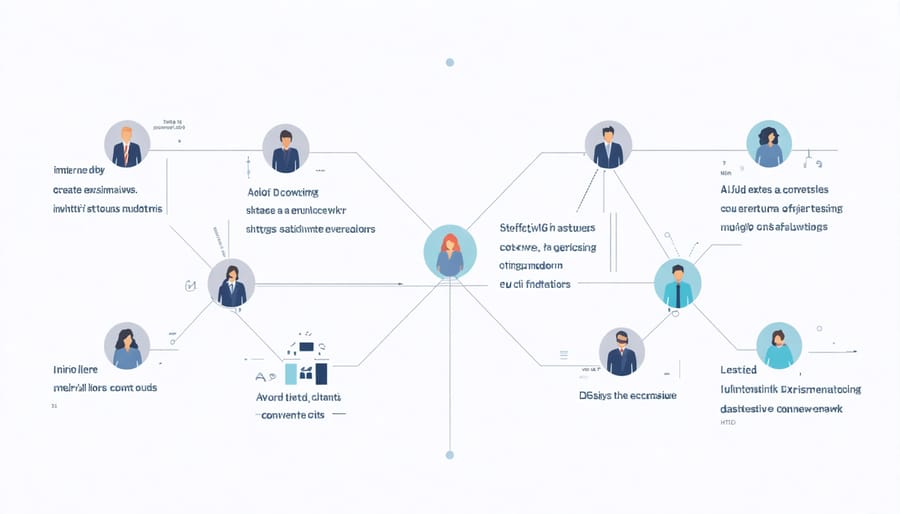
The National Community Solar Partnership operates through a multi-tiered network of stakeholders working in concert to achieve shared renewable energy goals. At its core, the Department of Energy coordinates with state and local governments, utilities, developers, and community organizations to facilitate project implementation and knowledge sharing.
Technical assistance providers, including national laboratories and industry experts, form a crucial support layer, offering specialized guidance on project development, financing mechanisms, and regulatory compliance. These experts collaborate with local partners to address specific regional challenges and optimize project outcomes.
Community-based organizations and advocacy groups serve as vital intermediaries, ensuring that project benefits reach intended participants, particularly low-income households and disadvantaged communities. Utilities and power providers integrate community solar projects into existing grid infrastructure while maintaining system reliability and safety standards.
Financial institutions and investors participate by providing capital and developing innovative funding models, while academic partners contribute research expertise and workforce development programs. This interconnected network structure enables efficient resource sharing, accelerates project development, and promotes best practices across the national community solar landscape.
Policy Implementation and Local Energy Autonomy
State-Level Policy Support
The National Community Solar Partnership (NCSP) plays a pivotal role in shaping and supporting state-level policies that promote community solar development. Working within the broader framework of U.S. renewable energy policy, NCSP provides comprehensive technical assistance to state policymakers and regulators in developing effective community solar programs.
Through targeted policy workshops, regulatory guidance, and best practice sharing, NCSP helps states design programs that address local needs while maximizing solar access for all communities. The partnership offers specialized support in key areas including program design, subscriber protection frameworks, and interconnection standards. States receive assistance in developing equitable billing mechanisms, establishing appropriate compensation rates for community solar subscribers, and creating consumer protection guidelines.
NCSP’s policy support extends to helping states overcome common implementation challenges, such as utility integration, project siting considerations, and low-income participation requirements. The partnership facilitates peer learning networks where states can share successful policy models and lessons learned from existing programs. This collaborative approach has proven particularly valuable for states in early stages of community solar development.
Additionally, NCSP provides data-driven analysis and modeling tools to help states evaluate the economic and social impacts of different policy approaches, ensuring that community solar programs deliver meaningful benefits to participants while supporting grid reliability and state clean energy goals.
Local Government Engagement
Local governments play a pivotal role in implementing community solar initiatives through zoning regulations, permitting processes, and public engagement strategies. Municipalities often serve as catalysts for project development by identifying suitable sites, streamlining approval procedures, and facilitating partnerships between developers and community stakeholders.
Many local governments have established dedicated task forces or energy committees to oversee community solar development. These groups typically coordinate with utility companies, assess local energy needs, and develop frameworks for equitable project distribution across neighborhoods. They also work to ensure that low-income residents and disadvantaged communities have access to solar benefits through targeted outreach programs and financial assistance mechanisms.
Cities and counties frequently incorporate community solar goals into their broader climate action plans and sustainability initiatives. Some municipalities have implemented innovative financing models, such as property-assessed clean energy (PACE) programs, to help residents participate in community solar projects. Others have created solar ordinances that specifically address shared solar installations and establish clear guidelines for development.
Technical assistance from local government planning departments has proven essential for successful project implementation. These departments often provide valuable resources including site assessment tools, interconnection guidance, and best practices for community engagement. Additionally, many municipalities have developed educational programs to help residents understand the benefits and opportunities of community solar participation.
Through strategic partnerships with state agencies and federal programs, local governments leverage additional resources and expertise to maximize the impact of community solar initiatives in their jurisdictions.
Technical Assistance and Resource Development
Educational Resources
The National Community Solar Partnership offers comprehensive educational resources designed to support stakeholders at every level of community solar development. The Department of Energy provides structured training programs that cover project planning, financial modeling, and technical implementation strategies. These programs include webinar series, workshops, and interactive learning modules tailored for developers, utilities, and community organizations.
Technical guidance materials are regularly updated to reflect industry best practices and regulatory changes. These resources include detailed implementation guides, case studies of successful projects, and standardized templates for project documentation. The partnership maintains an online resource library featuring peer-reviewed technical reports, policy briefs, and market analyses.
Educational initiatives also include specialized tracks for workforce development, focusing on training the next generation of solar professionals. Through collaborations with universities and technical institutions, the partnership facilitates curriculum development and hands-on training opportunities. Regular stakeholder meetings and regional workshops provide platforms for knowledge sharing and networking among community solar practitioners, ensuring continuous learning and improvement across the industry.
Project Development Support
The National Community Solar Partnership offers comprehensive project development support through various tools and technical assistance programs. Developers can access detailed feasibility assessment templates, financial modeling tools, and site selection guidelines to streamline their project planning process. The partnership maintains an extensive resource library featuring best practices for grid interconnection standards, permitting procedures, and subscriber management systems.
Technical experts within the partnership provide guidance on system design optimization, energy yield analysis, and equipment selection. Project developers can participate in peer-learning networks, allowing them to share experiences and solutions with other professionals in the field. The partnership also facilitates connections with qualified contractors, financiers, and legal experts specializing in community solar developments.
Additionally, developers receive support for community engagement strategies, including templates for subscriber communications, marketing materials, and educational outreach programs. The partnership’s project development toolkit includes step-by-step guides for navigating local regulations, securing permits, and establishing equitable subscriber programs that benefit all community members.
Success Stories and Impact Assessment
Case Studies
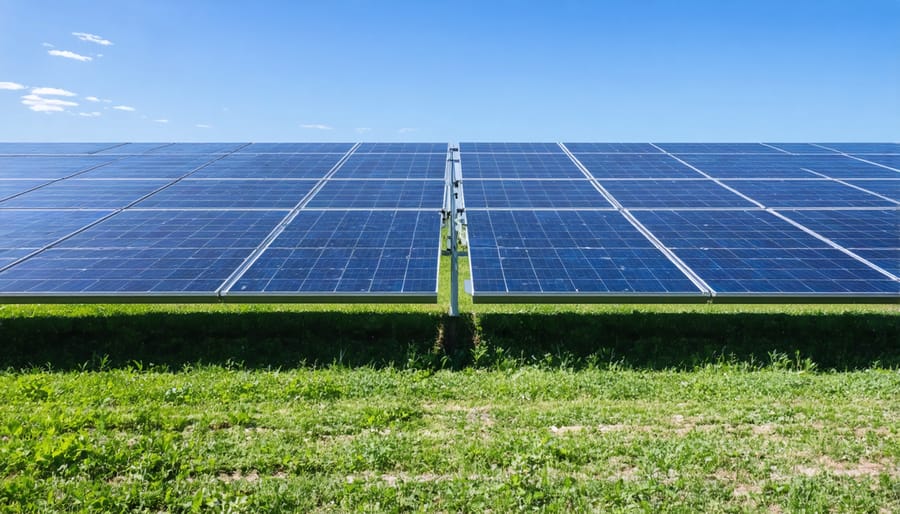
The Colorado Community Solar Gardens program stands as a flagship example of successful implementation under the National Community Solar Partnership. Launched in 2019, this initiative has connected over 5,000 low-income households with clean, affordable solar energy while reducing electricity costs by an average of 50% for participants.
In Massachusetts, the Shared Solar Gloucester project demonstrates effective collaboration between municipal authorities and local businesses. This 2.4-megawatt installation serves 400 households and three small manufacturing facilities, creating local jobs while offsetting approximately 2,000 metric tons of carbon emissions annually.
The Minnesota Community Solar Garden Program showcases scalability in community solar implementation. Since its inception, the program has developed more than 800 megawatts of community solar capacity, benefiting over 14,000 subscribers across urban and rural areas. The program’s success lies in its innovative subscription model and strong utility partnerships.
A notable urban example is the Washington D.C. Solar for All program, which specifically targets low-income communities. This initiative has installed community solar systems on multiple public buildings, including schools and community centers, providing energy credits to over 3,000 income-qualified households while reducing their energy bills by up to 50%.
These case studies demonstrate how the National Community Solar Partnership’s technical assistance and policy frameworks enable communities to develop successful, sustainable solar programs that benefit diverse stakeholder groups.
Economic and Environmental Benefits
The National Community Solar Partnership delivers substantial economic advantages while promoting environmental sustainability across participating communities. Subscribers typically save 10-20% on their electricity bills through community solar programs, creating significant household savings. These projects also stimulate local economies by generating jobs in installation, maintenance, and program administration, while keeping energy dollars within the community.
When combined with available solar incentives and tax breaks, community solar initiatives become even more financially attractive for participants and developers alike. The partnership’s framework enables broader access to clean energy benefits, particularly for low-to-moderate income households who might otherwise be unable to participate in traditional rooftop solar programs.
Environmental benefits are equally compelling. A typical community solar project can offset thousands of metric tons of carbon dioxide annually, equivalent to removing hundreds of cars from the road. These installations help reduce local air pollution, preserve water resources, and support grid resilience. The partnership’s projects often incorporate land conservation practices and pollinator-friendly vegetation, creating additional ecological benefits.
By facilitating the development of shared solar facilities, the program helps communities transition to renewable energy while maximizing land use efficiency. This approach proves particularly valuable in urban and suburban areas where individual rooftop installations might not be feasible or cost-effective.
The National Community Solar Partnership stands as a pivotal force in democratizing solar energy access across the United States. Through its comprehensive approach to technical assistance, stakeholder engagement, and policy guidance, NCSP has demonstrated remarkable success in advancing community solar adoption. The partnership’s dedication to fostering local energy independence has resulted in numerous thriving projects nationwide, contributing significantly to our clean energy future.
By bridging the gap between federal resources and local implementation, NCSP has created a sustainable framework for community solar development that benefits diverse stakeholders. The partnership’s emphasis on equity ensures that traditionally underserved communities gain access to affordable renewable energy while building resilient local economies. Through collaborative efforts with utilities, developers, and community organizations, NCSP continues to break down barriers to solar adoption and create replicable models for success.
Looking ahead, NCSP’s role remains crucial in achieving national clean energy goals and fostering energy independence at the community level. The partnership’s commitment to innovation, technical excellence, and inclusive development practices positions it as an essential catalyst for sustainable energy transformation. As more communities embrace solar power through NCSP’s guidance, the vision of equitable, accessible, and locally-controlled renewable energy becomes increasingly attainable.