Solar energy policies stand at the forefront of global climate action, shaping the renewable energy policy landscape through strategic incentives and regulatory frameworks. The rapid evolution of photovoltaic technology, coupled with declining installation costs, has catalyzed unprecedented policy innovation across federal, state, and local jurisdictions. These policies, ranging from investment tax credits and renewable portfolio standards to net metering programs, have fundamentally transformed the economics of solar adoption while accelerating the transition toward sustainable energy infrastructure.
Recent analysis reveals that comprehensive solar policies have driven a 49% increase in residential PV installations since 2019, demonstrating the profound impact of well-designed regulatory frameworks. As governments worldwide intensify their commitment to carbon reduction targets, understanding these policies becomes crucial for stakeholders throughout the renewable energy sector. The intricate interplay between technology advancement, market dynamics, and policy mechanisms continues to shape the future of solar energy deployment, making it imperative for industry professionals and policymakers to stay informed about emerging trends and regulatory developments.
Current Federal Solar Incentive Programs
Investment Tax Credit (ITC)
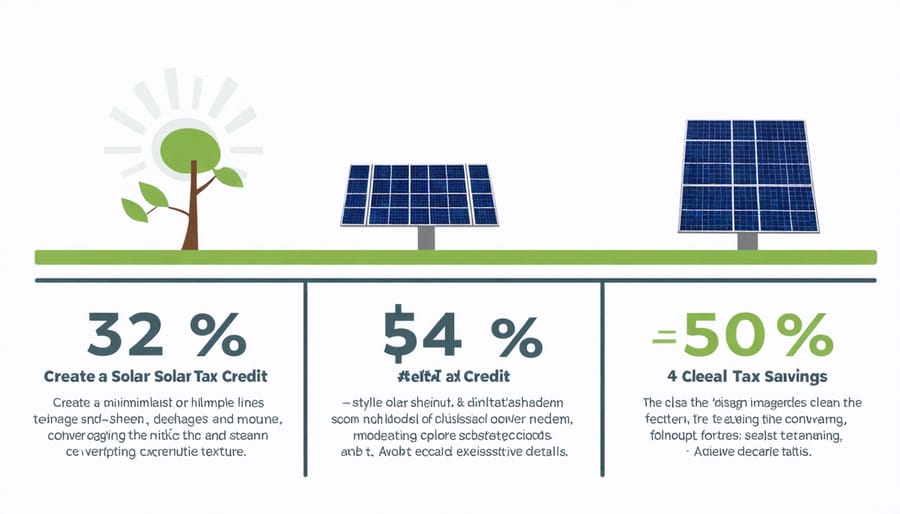
The Investment Tax Credit (ITC) stands as one of the most significant federal incentives driving solar energy adoption in the United States. This tax credit allows both residential and commercial solar system owners to deduct a substantial percentage of their solar installation costs from their federal taxes, significantly improving investment returns on solar installations.
Currently, the ITC provides a 30% tax credit for systems installed between 2022 and 2032. To qualify, systems must meet specific requirements, including being newly installed and located within the United States. Both primary residences and secondary homes are eligible, while rental properties may have different qualifying criteria.
For commercial installations, the ITC offers additional benefits, including the option to claim the credit for systems that began construction, provided they are completed within four years. The credit can be applied to various solar technologies, including photovoltaic systems, solar heating and cooling systems, and energy storage devices when paired with solar installations.
The implementation process requires careful documentation, including proof of installation, detailed cost breakdowns, and verification of system operation. Property owners must file IRS Form 5695 for residential installations or Form 3468 for commercial projects to claim the credit. It’s important to note that unused credits can be carried forward to subsequent tax years, providing flexibility in tax planning strategies.
Federal Grant Programs
The U.S. Department of Energy (DOE) administers several significant grant programs to accelerate solar energy adoption nationwide. The Solar Energy Technologies Office (SETO) funding program stands as the cornerstone initiative, providing competitive grants for research, development, and deployment of photovoltaic technologies. These grants typically range from $500,000 to $5 million per project.
Notable federal funding opportunities include the Energy Efficiency and Conservation Block Grant Program (EECBG), which allocates resources to states, territories, and tribal governments for implementing renewable energy projects. The Rural Energy for America Program (REAP), administered by the Department of Agriculture, offers grants covering up to 25% of total eligible project costs for agricultural producers and rural small businesses investing in solar installations.
The DOE’s SunShot Initiative continues to support innovative solar projects through various funding mechanisms, including cooperative agreements and direct grants. Research institutions can access specialized funding through the Advanced Research Projects Agency-Energy (ARPA-E), which focuses on breakthrough technologies in the solar sector.
Additional opportunities exist through the Environmental Protection Agency’s Clean Energy Programs and the National Science Foundation’s sustainable energy research initiatives. These programs often emphasize collaborative projects between academic institutions and industry partners, fostering innovation while accelerating market deployment of solar technologies.
State-Level Solar Policies
Net Metering Policies
Net metering policies represent a crucial mechanism in the solar energy landscape, enabling solar system owners to receive credit for excess electricity fed back into the grid. These policies vary significantly across jurisdictions, with different approaches to compensation rates and billing structures significantly impacting solar adoption rates.
Most states implement full retail rate net metering, where customers receive credit at the same rate they pay for electricity consumption. This approach provides the strongest financial incentive for solar adoption, typically resulting in shorter payback periods for system owners. However, some utilities argue this model may not adequately account for grid maintenance costs.
Alternative approaches include net billing and time-of-use (TOU) rates, which offer varying compensation based on when electricity is exported to the grid. Several states have adopted “value of solar” tariffs, which calculate export rates based on factors including grid infrastructure savings, environmental benefits, and avoided fuel costs.
Recent policy shifts have introduced monthly connection fees or reduced export rates in some regions, reflecting ongoing debates about cost allocation between solar and non-solar customers. Studies indicate that while these modifications can extend system payback periods, they haven’t significantly deterred solar adoption in markets with strong solar resources and high retail electricity rates.
The effectiveness of net metering policies often correlates with complementary measures such as renewable portfolio standards and solar incentive programs. Data shows states maintaining consistent, well-designed net metering frameworks typically experience more stable solar market growth and higher installation rates compared to regions with frequently changing policies.
Understanding these varying approaches helps stakeholders optimize solar investments while ensuring grid stability and fair cost distribution among all utility customers.
Renewable Portfolio Standards
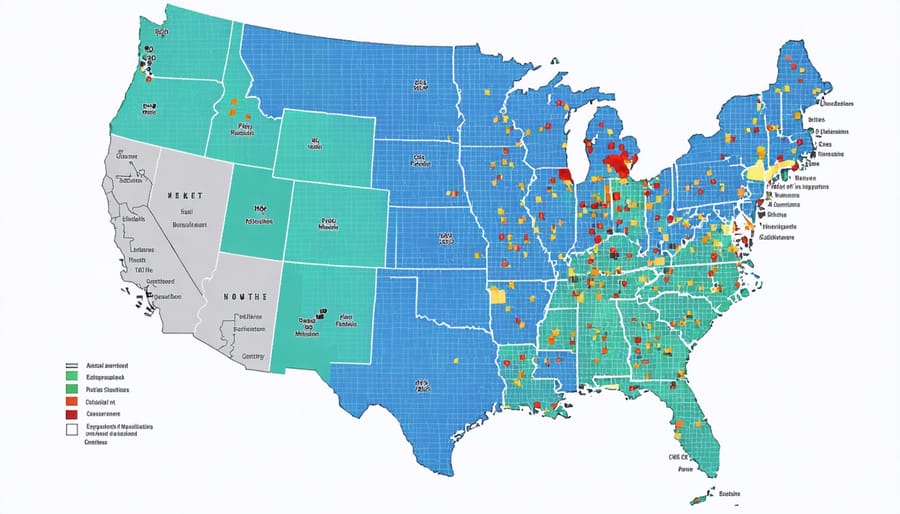
Renewable Portfolio Standards (RPS) represent a crucial policy mechanism driving solar energy adoption across the United States. These state-level mandates require electricity suppliers to source a specified percentage of their power from renewable sources, including solar, by predetermined target dates. Currently, 30 states and the District of Columbia maintain active RPS policies, with several incorporating specific solar carve-outs or multipliers to accelerate photovoltaic deployment.
States with ambitious RPS requirements, such as California (60% by 2030) and New York (70% by 2030), have experienced significant growth in solar installations. The solar carve-outs within these standards have proven particularly effective, as demonstrated in New Jersey, where the Solar Renewable Energy Certificate (SREC) program has supported the installation of over 3.5 GW of solar capacity.
RPS compliance mechanisms typically include renewable energy certificates (RECs), which utilities can either generate through their own renewable energy production or purchase from other producers. States with more stringent RPS requirements often see higher REC prices, creating additional financial incentives for solar development.
The effectiveness of RPS policies varies based on factors including compliance enforcement, penalty structures, and target ambition. Research indicates that states with well-designed RPS programs experience 2-3 times higher renewable energy deployment rates compared to states without such mandates. These standards continue to evolve, with many states increasing their targets and incorporating specific provisions for distributed generation and community solar projects.
Local Government Incentives
Property Tax Exemptions
Property tax exemptions serve as significant financial incentives for residential and commercial solar installations across various jurisdictions. These exemptions typically allow property owners to exclude the added value of solar energy systems from their property tax assessments, effectively reducing the long-term cost of solar investments.
Most states offer some form of property tax benefit for solar installations, though the specific terms and duration vary by location. For example, some states provide 100% exemption for the full value of the solar installation, while others offer partial exemptions or time-limited benefits. California’s property tax exclusion for solar energy systems, established under Section 73 of the Revenue and Taxation Code, exemplifies a comprehensive approach that has helped drive widespread adoption.
Commercial property owners particularly benefit from these exemptions, as larger solar installations can significantly increase property values. Local municipalities may supplement state-level exemptions with additional tax benefits, creating layered incentives for solar adoption. However, property owners must typically apply for these exemptions and meet specific installation and certification requirements to qualify for the tax benefits.
Building Code Requirements
Building codes across jurisdictions increasingly incorporate solar-ready requirements to facilitate photovoltaic system integration in new construction projects. These regulations typically mandate structural considerations for roof loads, electrical system preparedness, and dedicated space for solar equipment. Many municipalities now require new residential construction to include solar-ready zones on rooftops, with clear pathways for conduit installation and adequate electrical panel capacity.
California’s Title 24 Building Energy Efficiency Standards serves as a leading example, requiring all new residential construction to include solar PV systems since 2020. Similar mandates are emerging nationwide, with variations in requirements based on building size, type, and location. Common specifications include minimum roof area requirements, orientation considerations for optimal solar exposure, and load-bearing capacity calculations.
Commercial building codes often incorporate additional requirements, such as energy monitoring systems integration and provisions for future energy storage installations. These regulations typically align with broader energy efficiency standards and green building certifications, creating a comprehensive framework for sustainable construction practices that optimize solar energy utilization.
Policy Impact Analysis
Market Growth Metrics
Statistical evidence demonstrates a strong correlation between supportive solar energy policies and increased photovoltaic adoption rates across various markets. Recent analysis reveals that regions with comprehensive solar incentive programs experience adoption rates 2.5 to 3 times higher than areas without such policies. The impact of these policies on global solar market trends has been particularly notable in the residential sector.
Data from 2020-2023 shows that states implementing net metering policies witnessed an average annual growth rate of 47% in residential PV installations, compared to 18% in states without such programs. Investment Tax Credit (ITC) implementation has resulted in a 52% compound annual growth rate in commercial solar installations across participating regions.
Feed-in tariff policies have demonstrated significant impact, with countries utilizing these mechanisms achieving 156% higher installation rates compared to baseline projections. Additionally, renewable portfolio standards (RPS) have driven utility-scale solar deployment, with compliant states experiencing 89% higher capacity additions than non-RPS states.
Cost-effectiveness metrics indicate that every dollar invested in solar incentive programs generates approximately $2.80 in economic benefits through job creation, reduced energy costs, and environmental advantages. Furthermore, regions with streamlined permitting processes report 35% faster installation timelines and 22% lower soft costs compared to areas with traditional procedures.
The data conclusively demonstrates that well-designed policy frameworks serve as crucial catalysts for solar market expansion, with multiplicative effects on both economic and environmental outcomes.

Future Policy Directions
As the solar energy landscape continues to evolve, future policy developments are expected to focus on grid modernization, energy storage integration, and enhanced market mechanisms. Key emerging trends include the implementation of dynamic pricing structures, improved interconnection standards, and comprehensive carbon pricing frameworks.
Policy recommendations for advancing solar adoption encompass several critical areas. First, standardizing permitting processes across jurisdictions could significantly reduce soft costs and accelerate deployment. Second, implementing technology-neutral clean energy standards would create a more competitive market while ensuring grid reliability. Third, developing policies that support community solar projects and virtual net metering could expand access to solar energy for broader demographics.
Looking ahead, policymakers are increasingly considering integrated approaches that combine solar incentives with energy efficiency programs and grid modernization initiatives. This holistic strategy aims to maximize the benefits of solar deployment while addressing infrastructure challenges. Additionally, policies supporting workforce development and research initiatives will be crucial for maintaining technological advancement and economic competitiveness in the solar sector.
To ensure long-term success, future policies must balance economic viability with environmental benefits while promoting equity in clean energy access. This includes developing mechanisms for fair cost allocation, addressing grid integration challenges, and creating sustainable funding models for incentive programs.
Solar energy policies continue to evolve as nations worldwide recognize the critical role of photovoltaic technology in achieving sustainable energy goals. The analysis of current policy frameworks reveals several key insights that will shape the future of solar energy adoption. Successful policies consistently demonstrate a balanced approach, combining financial incentives with regulatory support and market-based mechanisms.
The effectiveness of feed-in tariffs, renewable portfolio standards, and tax incentives has been proven across multiple jurisdictions, particularly when implemented as part of comprehensive energy transition strategies. However, the most successful outcomes are achieved when policies are designed with long-term stability and predictable degression pathways, allowing industry stakeholders to make informed investment decisions.
Looking ahead, the solar energy policy landscape is expected to focus increasingly on grid integration, energy storage solutions, and distributed generation. Emerging trends suggest a shift toward more sophisticated market mechanisms, including time-of-use pricing and virtual power plant arrangements. The integration of artificial intelligence and smart grid technologies will likely necessitate new policy frameworks to address these technological advances.
For continued growth in solar adoption, policymakers must maintain flexibility while ensuring policy stability. Future success will depend on addressing challenges such as grid modernization, permit streamlining, and workforce development. As costs continue to decline and technology improves, policies will need to adapt while maintaining support for innovation and market development in the solar energy sector.