The evolving landscape of solar panel taxation presents both challenges and opportunities for the renewable energy sector. As governments worldwide implement diverse fiscal policies to regulate photovoltaic installations, understanding the tax implications becomes crucial for stakeholders across the industry. Recent legislative changes have introduced complex frameworks that affect everything from residential solar installations to utility-scale projects, fundamentally reshaping the economic calculations behind solar energy adoption.
The intersection of environmental policy and tax law has created a multifaceted system where incentives and levies coexist, impacting investment decisions and market growth. While some jurisdictions offer substantial tax credits and exemptions to accelerate solar adoption, others have implemented fees and tariffs that could potentially slow renewable energy expansion. This dynamic environment requires careful analysis of both immediate financial implications and long-term economic benefits.
For industry professionals, investors, and homeowners alike, navigating these tax structures demands a thorough understanding of current regulations, available incentives, and potential financial obligations. The strategic importance of these considerations has become paramount as the solar industry continues its rapid evolution, making tax optimization an essential component of successful solar energy projects.
Current Solar Panel Tax Landscape
Federal Tax Policies
The federal government offers substantial tax incentives to promote solar energy adoption, with the Investment Tax Credit (ITC) serving as the cornerstone of these initiatives. Understanding these current government incentives is crucial for stakeholders in the solar industry. The ITC allows property owners to deduct a significant percentage of their solar installation costs from their federal taxes, currently set at 30% through 2032.
Additionally, the Modified Accelerated Cost Recovery System (MACRS) enables businesses to depreciate solar energy systems over a five-year period, substantially reducing their tax burden. The federal government also provides grants and loan programs through the Department of Energy and Rural Development agencies, supporting both residential and commercial solar installations.
Recent legislative developments, including the Inflation Reduction Act of 2022, have extended and enhanced these tax benefits, introducing new provisions for energy storage systems and domestic manufacturing credits. These policies reflect a long-term federal commitment to renewable energy development and create a stable framework for industry growth. Property owners must carefully document their solar investments and consult with tax professionals to maximize these benefits while ensuring compliance with IRS regulations.
State and Local Tax Variations
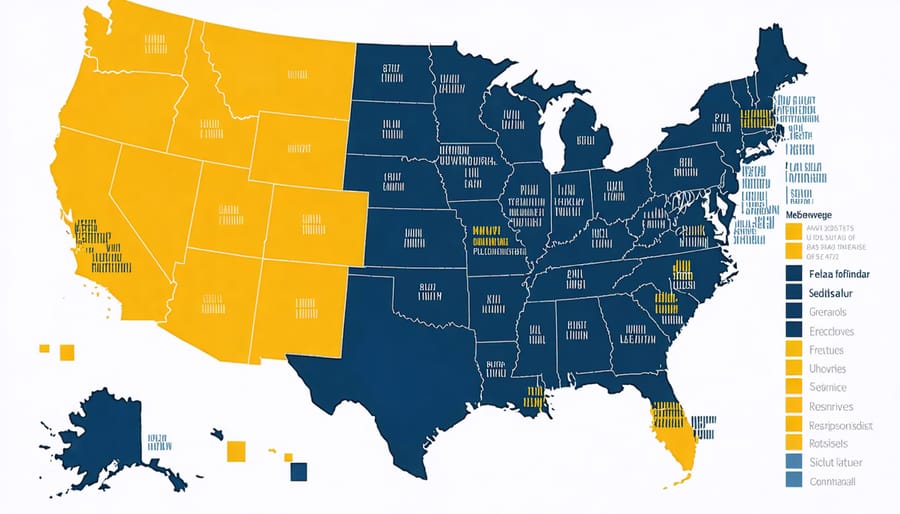
Tax treatment of solar panel installations varies significantly across different states and municipalities, creating a complex landscape for stakeholders to navigate. States like California, Massachusetts, and New York offer substantial tax incentives and exemptions, while others maintain more conservative approaches. For example, California provides a property tax exclusion for solar energy systems, ensuring that the added value of solar installations doesn’t increase property tax assessments.
Many municipalities have implemented specific ordinances affecting solar panel taxation. Some local governments offer complete property tax exemptions for renewable energy improvements, while others incorporate solar installations into their standard property assessment frameworks. These variations can significantly impact the financial viability of solar projects across different regions.
Sales tax treatment also differs by jurisdiction. Several states exempt solar equipment from sales tax, reducing initial installation costs. However, the qualification criteria and documentation requirements for these exemptions vary considerably. Some jurisdictions require certification from licensed professionals or specific equipment ratings to qualify for tax benefits.
Understanding these regional differences is crucial for project planning and financial modeling. Industry stakeholders should conduct thorough research of local tax policies and maintain regular communication with relevant tax authorities to ensure compliance and maximize available benefits.
Economic Impact Analysis
Consumer Cost Implications
Tax policies significantly influence the financial landscape of solar panel installations across both residential and commercial sectors. While 2024 solar tax credits offer substantial incentives, various taxation measures can impact the total installation costs that consumers face.
For residential installations, property tax assessments on solar equipment can increase annual property taxes, though many jurisdictions offer exemptions to encourage adoption. Import duties on solar components typically add 10-25% to equipment costs, which manufacturers and installers often pass directly to consumers. However, these increased costs are frequently offset by available federal and state tax incentives.
Commercial installations face similar cost implications but with additional considerations. Businesses must navigate depreciation schedules, which affect tax deductions and overall return on investment calculations. Sales tax on solar equipment purchases can add significant upfront costs, though some states provide exemptions for renewable energy systems.
The net cost impact varies by location due to differing state and local tax policies. While some regions impose minimal tax burden on solar installations, others maintain higher rates that can increase project costs by 15-30%. Understanding these tax implications is crucial for accurate cost assessment and long-term financial planning in solar investments.
Industry Growth Effects
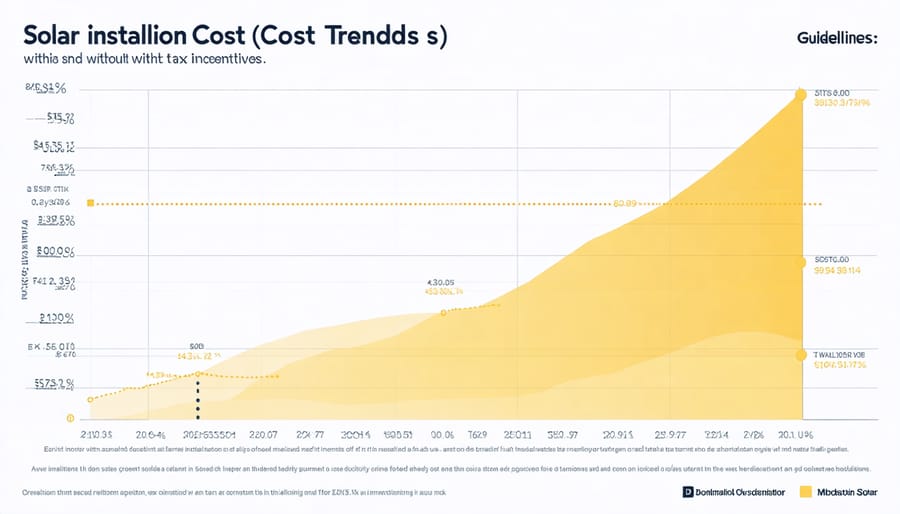
The implementation of solar panel taxation policies has demonstrated significant effects on industry growth trajectories across various markets. Research indicates that regions with higher tax burdens on solar equipment typically experience slower adoption rates and reduced industry expansion. For instance, studies show that a 10% increase in solar panel taxation can lead to a 15-20% decrease in new installations within the first year of implementation.
However, markets that maintain favorable tax policies, such as tax exemptions or incentives for solar installations, consistently demonstrate robust growth patterns. These supportive tax environments often result in increased employment opportunities within the solar sector, enhanced manufacturing capabilities, and stronger supply chain development.
The impact extends beyond immediate market effects, influencing research and development investments, manufacturing efficiency improvements, and technological innovations. Companies operating in jurisdictions with lower tax burdens can allocate more resources to product development and market expansion, leading to more competitive pricing and improved technology adoption rates.
Industry analysts have observed that flexible taxation frameworks, which consider market maturity and technology advancement stages, tend to foster more sustainable growth. This approach allows emerging solar markets to establish strong foundations while enabling mature markets to maintain competitive advantages. The relationship between taxation policies and industry growth remains a critical factor in shaping the future of solar energy adoption and market development.

Job Market Influence
Tax policies surrounding solar panels significantly influence employment patterns within the renewable energy sector. Recent industry analyses indicate that regions with favorable solar tax incentives experience up to 30% higher job growth in photovoltaic installation and maintenance positions compared to areas with restrictive policies.
The solar industry’s workforce development responds directly to tax policy changes. When governments implement tax credits or exemptions for solar installations, companies typically increase their hiring efforts, particularly for skilled technicians and project managers. Conversely, the introduction of new solar panel taxes often leads to temporary workforce contractions and delayed expansion plans.
Manufacturing employment also shows sensitivity to tax policies. Domestic solar panel producers report that favorable tax treatments enable them to maintain competitive pricing while sustaining local jobs. This relationship becomes particularly evident in states offering manufacturing tax credits, where solar production facilities demonstrate higher employee retention rates and increased investment in workforce training programs.
Educational institutions and vocational training centers adjust their curriculum offerings based on industry demand shaped by tax policies. Programs focusing on solar installation, maintenance, and system design see increased enrollment during periods of tax-incentivized market growth. This creates a positive feedback loop, where skilled workforce availability supports industry expansion, which in turn generates more employment opportunities.
Understanding these employment dynamics helps policymakers balance revenue generation with workforce development goals when crafting solar panel tax legislation.
Future Tax Policy Trends
Proposed Legislative Changes
Several significant legislative proposals are currently under consideration at both federal and state levels that could reshape the solar panel taxation landscape. The Solar Energy Manufacturing for America Act (SEMA) proposes new tax credits for domestic manufacturers of photovoltaic components, aiming to strengthen the U.S. solar supply chain and reduce dependency on international markets.
State-level initiatives are gaining momentum, with multiple jurisdictions considering property tax exemptions for residential solar installations. These proposals typically seek to exclude the added value of solar systems from property tax assessments, potentially offering substantial savings for homeowners who invest in renewable energy.
The Clean Energy for America Act introduces a technology-neutral approach to energy tax incentives, potentially affecting how solar installations are taxed. This legislation proposes to simplify the current complex web of energy tax provisions while extending and expanding certain solar-specific benefits.
Industry stakeholders are closely monitoring proposed changes to the Investment Tax Credit (ITC) structure, including potential modifications to the direct pay provision and transferability options. These amendments could significantly impact project financing and investment strategies in the solar sector.
Local governments are also developing new frameworks for solar panel assessment and taxation, with some proposing specialized zones where renewable energy installations receive preferential tax treatment. These initiatives often align with broader sustainability goals and climate action plans, creating a more favorable environment for solar adoption while ensuring fair revenue distribution for municipalities.
International Policy Comparisons
A comparative analysis of international solar panel taxation reveals diverse approaches across major renewable energy markets. Countries like Germany and China have implemented strategic tax policies that have significantly influenced global solar market trends and adoption rates. Germany’s model, which emphasizes reduced VAT rates for residential solar installations, has contributed to its position as a leading solar energy adopter in Europe.
China’s dual approach combines manufacturer incentives with consumer tax benefits, effectively supporting both domestic production and market growth. This strategy has enabled Chinese manufacturers to maintain competitive pricing while expanding their global market share. In contrast, Australia implements a system of renewable energy certificates that function as tax offsets, providing immediate financial benefits to solar adopters.
Japan’s solar taxation framework incorporates depreciation benefits for commercial installations while offering residential tax deductions, creating a balanced approach that supports both sectors. The European Union’s varying member state policies provide valuable insights into regional adaptation of solar tax frameworks, with countries like Spain and Italy demonstrating how targeted tax incentives can accelerate solar adoption.
These international approaches offer valuable lessons for U.S. policymakers, particularly in structuring effective incentive programs and balancing domestic manufacturing interests with consumer accessibility. The success of these diverse strategies suggests that a nuanced, multi-faceted approach to solar panel taxation may be most effective in achieving both economic and environmental objectives.
Strategic Planning Considerations
Tax Planning Strategies
To maximize tax benefits from solar PV investments, property owners should implement strategic planning approaches throughout the installation and operation phases. Understanding available tax equity financing options is crucial for optimizing returns on investment.
Key strategies include timing installations to align with fiscal year planning, maintaining detailed documentation of all expenses, and leveraging accelerated depreciation benefits where applicable. Property owners should consider structuring their solar investments through business entities to maximize available deductions and credits.
Consulting with tax professionals who specialize in renewable energy investments is essential for identifying all eligible incentives and ensuring compliance with current regulations. This includes exploring federal, state, and local tax benefits, which often can be combined to enhance overall returns.
Regular review and updating of tax planning strategies is recommended as policies and incentives evolve. Property owners should also consider the timing of equipment upgrades and maintenance to optimize tax advantages while maintaining system efficiency. Creating a comprehensive tax planning timeline that aligns with installation phases and operational milestones can significantly improve financial outcomes.
Compliance Requirements
To qualify for solar panel tax benefits, property owners must maintain comprehensive documentation of their photovoltaic system installation and associated costs. Essential records include detailed receipts, contractor agreements, equipment specifications, and proof of system certification. The IRS requires Form 5695 for residential energy credits, which must be filed alongside your annual tax return.
Commercial installations require additional documentation, including depreciation schedules and business use calculations. Property owners must retain proof of system commissioning, interconnection agreements with utility providers, and any local permits or certificates of compliance. These documents should be preserved for at least three years after claiming the tax credit.
Regular monitoring and performance reports may be necessary to validate ongoing compliance, particularly for systems participating in state-level incentive programs. Many jurisdictions require annual certification of system operation and maintenance to maintain tax benefit eligibility. Professional documentation services can help ensure proper record-keeping and timely submission of required forms.
For maximum benefit qualification, consult with a tax professional familiar with renewable energy incentives to ensure all compliance requirements are met and properly documented.
The taxation landscape for solar panels continues to evolve as governments worldwide adapt their policies to address climate change and promote renewable energy adoption. Current tax incentives and rebates have proven effective in stimulating market growth, though challenges remain in policy standardization and long-term sustainability. Looking ahead, the industry can expect further refinements in tax frameworks as technology costs decrease and installation rates increase. The integration of solar energy into broader energy policies suggests a trend toward more streamlined and comprehensive tax structures. For stakeholders, staying informed about policy changes and maintaining thorough documentation will be crucial for maximizing tax benefits. As the solar industry matures, we can anticipate more sophisticated tax mechanisms that balance government revenue needs with sustainable energy goals, ultimately supporting the global transition to renewable energy sources.