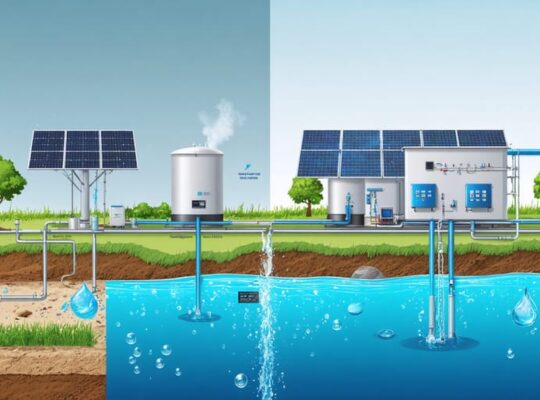
Harness photovoltaic technology to eliminate waterborne pathogens through solar disinfection (SODIS) by filling transparent PET bottles with contaminated water and exposing them to direct sunlight for six hours at minimum, allowing UV-A radiation and thermal treatment to destroy bacteria, viruses, and protozoa at no operational cost. Integrate advanced photocatalytic oxidation systems that combine UV light with titanium dioxide semiconductors to accelerate pathogen destruction and break down chemical contaminants through reactive oxygen species generation. Deploy solar-powered water management systems that couple photovoltaic panels with membrane filtration technologies, enabling autonomous operation in off-grid communities where 2.2 billion people lack access to safely managed drinking water.
The convergence of solar energy and water treatment represents a transformative solution to global water scarcity, particularly in regions where conventional infrastructure remains economically or logistically unfeasible. Solar water purification encompasses multiple technological approaches—from passive thermal disinfection to sophisticated photovoltaic-driven reverse osmosis—each leveraging renewable energy to address critical public health challenges. Current research demonstrates that solar-assisted water treatment can achieve 99.99 percent pathogen reduction while eliminating reliance on chemical disinfectants or grid electricity.
This comprehensive analysis examines the photochemical mechanisms underlying solar water purification, evaluates emerging technologies from photocatalytic reactors to concentrated solar distillation, and assesses performance variables including solar irradiance thresholds, water turbidity limits, and system scalability factors. Through examination of validated field implementations and collaborative university research partnerships, we establish evidence-based frameworks for technology selection and deployment strategies that advance both renewable energy integration and universal water security objectives.
The Science Behind Solar Water Purification
Solar Disinfection (SODIS) and UV Radiation
Solar Disinfection, commonly known as SODIS, harnesses ultraviolet radiation from sunlight to neutralize waterborne pathogens through photochemical and thermal processes. The method primarily relies on UV-A radiation, which occurs at wavelengths between 315 and 400 nanometers, to damage the DNA and cellular structures of bacteria, viruses, and protozoa.
When sunlight penetrates clear water contained in transparent bottles, UV-A rays interact with the genetic material of microorganisms, causing thymine dimers to form in their DNA strands. This photochemical disruption prevents pathogens from reproducing and ultimately leads to cellular death. Additionally, reactive oxygen species generated during UV exposure further compromise cell membranes and internal structures. The synergistic effect becomes particularly pronounced when water temperatures exceed 50 degrees Celsius, as thermal inactivation accelerates the disinfection process.
Effective SODIS treatment typically requires six hours of direct sunlight exposure under clear sky conditions, though cloudy weather may necessitate up to two full days. Water turbidity significantly impacts UV penetration, making pre-filtration essential when treating water with visible suspended particles. Research conducted through university collaborations has demonstrated that SODIS can achieve a 99.9 percent reduction in common bacterial pathogens including E. coli and Vibrio cholerae when proper exposure parameters are maintained.
The technology’s simplicity makes it accessible for resource-limited settings, though users must understand critical factors affecting performance. Educational programs focused on renewable energy applications increasingly incorporate SODIS principles, recognizing its value as a low-cost, sustainable water treatment solution that complements broader solar technology implementation strategies.

Solar Thermal Distillation Process
Solar thermal distillation harnesses the sun’s radiant energy to purify contaminated water through a natural evaporation-condensation cycle. When sunlight penetrates a transparent cover and strikes a dark surface containing contaminated water, thermal energy converts the liquid into water vapor. This phase transition is critical because contaminants including dissolved salts, heavy metals, pathogens, and organic compounds remain in the liquid phase due to their higher boiling points and molecular weights.
The water vapor rises within an enclosed chamber, leaving behind concentrated contaminants in the basin. As the vapor contacts a cooler condensation surface, typically the underside of an angled transparent cover, it transitions back to liquid form as purified water. Surface tension causes droplets to coalesce and flow along the condensation surface into collection channels.
This passive process requires no electrical input, making it particularly viable for remote locations and emergency applications. The distillation method achieves removal rates exceeding 99.5% for most contaminants, though volatile organic compounds with boiling points near water may require supplementary treatment. Modern solar stills incorporate reflective materials, improved insulation, and optimized geometry to enhance thermal efficiency and daily water production yields.
Photocatalytic Oxidation Technology
Photocatalytic oxidation represents a sophisticated advancement in solar water treatment, utilizing semiconductor materials that become photoactive when exposed to sunlight. Titanium dioxide (TiO2) serves as the most widely researched photocatalyst due to its stability, non-toxicity, and strong oxidative properties. When ultraviolet photons strike the semiconductor surface, they generate electron-hole pairs that initiate powerful oxidation reactions, effectively decomposing persistent organic pollutants, pharmaceutical residues, and industrial chemicals that conventional filtration cannot remove.
Enhanced photocatalysts now incorporate modifications like nitrogen doping or noble metal deposition to extend light absorption into the visible spectrum, significantly improving efficiency under natural sunlight conditions. Research institutions collaborating with industry partners continue developing composite materials combining photocatalytic properties with membrane technologies, creating hybrid systems that simultaneously oxidize contaminants and physically separate particles. These advanced oxidation processes demonstrate particular effectiveness against emerging contaminants including microplastics and endocrine-disrupting compounds, positioning photocatalytic systems as essential components in comprehensive water purification strategies for municipalities and industrial applications.
Solar-Powered Water Purification Technologies
Passive Solar Still Systems
Passive solar still systems represent one of the most accessible and cost-effective methods for water purification in off-grid environments. These devices operate without electricity, relying entirely on solar thermal energy to evaporate contaminated water and condense purified vapor on collection surfaces. A basic solar still consists of a transparent cover, typically glass or UV-resistant plastic, positioned above a dark-bottomed basin containing the water source. Solar radiation penetrates the cover, heating the water until evaporation occurs, leaving contaminants behind.
Construction requires minimal materials: a waterproof basin, transparent glazing, a collection trough, and a clean water storage container. The angle of the transparent cover, typically 10-15 degrees, facilitates condensate runoff toward collection points. Efficiency rates for passive solar stills generally range from 2-5 liters per square meter daily under optimal conditions, though performance varies significantly with ambient temperature, humidity, and solar intensity.
These systems prove particularly valuable for remote coastal communities, disaster response scenarios, and rural areas lacking infrastructure. Universities researching sustainable water solutions have documented successful implementations in arid regions where conventional purification remains impractical. While production capacity limits their use to small-scale applications, passive solar stills require virtually no maintenance and can operate reliably for years, making them ideal supplementary purification systems for emergency preparedness and resource-constrained settings.

PV-Powered Reverse Osmosis Units
Photovoltaic-powered reverse osmosis (PV-RO) systems represent a technologically mature approach to solar water purification, directly converting sunlight into electrical energy for membrane filtration. These photovoltaic water solutions eliminate fossil fuel dependency while delivering potable water in off-grid locations.
The core components include crystalline silicon or thin-film PV arrays, charge controllers, battery storage systems, and high-pressure pumps that force water through semi-permeable membranes. Typical community-scale installations require 2-5 kW of solar capacity to produce 5,000-15,000 liters daily, depending on feedwater salinity and membrane efficiency. Energy recovery devices in larger systems recapture pressure from brine streams, reducing power consumption by 30-40 percent.
Technical specifications vary considerably based on application parameters. Brackish water systems operate at 10-25 bar pressure, while seawater desalination demands 55-80 bar, significantly increasing energy requirements. Modern spiral-wound membranes achieve 99.5 percent salt rejection rates with recovery ratios between 35-75 percent.
Scalability advantages make PV-RO particularly suitable for community installations. Modular panel configurations allow capacity expansion as populations grow, while declining photovoltaic costs have improved economic viability. Universities collaborate with manufacturers to optimize system designs, creating valuable research opportunities for students pursuing renewable energy careers. Battery integration ensures continuous operation during cloudy periods, maintaining reliable water supply for communities.
Hybrid Solar Purification Systems
Hybrid solar purification systems represent the next generation of water treatment technology, combining photovoltaic electricity generation with solar thermal processes to maximize energy efficiency. These integrated solar systems utilize PV panels to power pumps, UV lamps, and electronic controls while simultaneously harnessing thermal energy for distillation or pasteurization processes. Advanced configurations incorporate battery storage solutions, enabling continuous operation during nighttime hours or cloudy conditions. Research collaborations between universities and industry partners have demonstrated that hybrid systems can achieve 40-60% higher overall efficiency compared to standalone technologies. The dual-energy approach proves particularly valuable in remote locations requiring reliable, year-round water treatment capacity. Modern hybrid designs feature smart controllers that optimize energy allocation between thermal and electrical processes based on real-time solar availability and water demand, ensuring consistent purification performance while minimizing system costs through shared infrastructure components.
Emerging Solar Water Treatment Innovations
Recent advances in solar water treatment showcase remarkable potential for addressing global water challenges. Solar-responsive nanomaterials, including titanium dioxide nanotubes and graphene-based composites, demonstrate enhanced photocatalytic efficiency by maximizing light absorption across broader wavelengths. These materials can degrade persistent organic pollutants and neutralize pathogens more effectively than conventional methods.
Plasmonic heating technology represents another breakthrough, utilizing metallic nanoparticles that convert sunlight into localized heat, enabling rapid water vaporization and contamination removal. This approach achieves distillation rates exceeding traditional solar stills by 200-300%, making it particularly promising for decentralized applications.
Next-generation photocatalysts incorporating elements like bismuth vanadate and carbon nitride show improved stability and performance under visible light, reducing reliance on UV radiation. Research collaborations between universities and industry partners continue advancing these technologies, with pilot projects demonstrating scalability potential. Educational programs now integrate these innovations into curricula, preparing professionals to implement emerging solar water treatment solutions that combine photovoltaic principles with environmental remediation.
Performance Factors and Efficiency Optimization
Solar Irradiance and Geographic Considerations
Solar irradiance varies significantly across geographic regions, directly impacting the efficiency and sizing requirements of solar water purification systems. Equatorial regions receive approximately 2,000-2,500 kWh/m²/year of solar energy, while higher latitudes may receive only 1,000-1,500 kWh/m²/year, necessitating larger collector arrays or longer exposure times to achieve equivalent purification volumes.
Seasonal variations further influence system performance. Summer months in temperate zones can provide sufficient irradiance for continuous operation, whereas winter conditions may reduce output by 50-70%, requiring supplementary treatment capacity or increased storage. Cloud cover and atmospheric conditions reduce UV transmission by 30-90%, making climate analysis essential for accurate system design.
System sizing must account for local peak sun hours, typically ranging from 3-7 hours daily depending on location. A household system requiring 20 liters of purified water daily would need a 0.5-1.0 m² solar collector in high-irradiance regions, but 1.5-2.5 m² in areas with limited sunlight. Professional assessment tools incorporating historical meteorological data enable precise capacity planning, ensuring reliable year-round operation. Understanding these geographic factors allows stakeholders to optimize investment returns while maintaining consistent water quality standards across diverse operational environments.
Water Quality and Contaminant Types
Solar water purification demonstrates remarkable effectiveness against specific contaminant categories while presenting limitations with others. Ultraviolet radiation from sunlight excels at inactivating biological pathogens, including bacteria, viruses, and protozoan cysts, through DNA disruption mechanisms. Research conducted in collaboration with universities confirms that SODIS (Solar Disinfection) achieves over 99.9% pathogen reduction under optimal conditions. Solar thermal methods effectively eliminate thermally-sensitive microorganisms and can reduce certain volatile organic compounds through evaporation.
However, solar methods alone struggle with chemical contaminants such as heavy metals, fluorides, nitrates, and dissolved salts. These persistent pollutants require supplementary treatment approaches, including activated carbon filtration, reverse osmosis, or chemical precipitation processes. Turbidity also significantly impairs solar disinfection efficiency, necessitating pre-filtration for water exceeding 30 NTU. Emerging contaminants like pharmaceuticals and microplastics present variable removal rates depending on molecular structure and system configuration. Educational programs now emphasize integrated treatment strategies that combine solar purification with complementary technologies to address diverse contamination profiles effectively, ensuring comprehensive water safety across different environmental contexts.
System Design and Material Selection
Effective solar water purification systems require careful consideration of design elements that maximize sunlight absorption and thermal efficiency. Optimal configurations typically position water containers at angles that capture peak solar radiation throughout the day, with many systems incorporating adjustable platforms to track seasonal sun position changes. Reflective surfaces, such as aluminum foil or specialized mirror coatings, can increase light concentration by up to 40%, directing additional solar energy toward the water vessel and accelerating the purification process.
Thermal insulation plays a crucial role in maintaining elevated temperatures necessary for pathogen inactivation. Materials like polyurethane foam or fiberglass insulation minimize heat loss, particularly on side and bottom surfaces where radiation exposure is limited. The choice of water container material significantly impacts system longevity and performance. Food-grade polycarbonate and borosilicate glass offer excellent UV transparency while resisting degradation from prolonged solar exposure. These materials demonstrate operational lifespans exceeding 10 years under continuous use, making them cost-effective for sustained deployment. University research collaborations have validated that proper material selection and design optimization can improve purification efficiency by 60% compared to basic configurations.
Real-World Applications and Case Studies
Remote and Off-Grid Communities
Solar water purification systems have demonstrated remarkable success in remote and off-grid communities worldwide, addressing critical public health needs where conventional infrastructure remains unavailable. Field installations in rural Kenya utilizing SODIS methodology have reported 99.9% pathogen reduction rates, providing safe drinking water to communities of over 5,000 residents without electricity access. Similar deployments in Peruvian highlands using photovoltaic-powered UV disinfection units process approximately 2,000 liters daily, serving multiple villages at operational costs below $0.02 per liter.
Community-based programs in Bangladesh incorporating solar thermal distillation systems have reduced waterborne disease incidence by 76% within two years of implementation. These installations typically require minimal maintenance, with local technicians trained through collaborative educational programs managing routine operations. Performance monitoring data from these sites consistently shows system uptime exceeding 90%, even in challenging environmental conditions. The integration of renewable energy solutions not only ensures water security but creates local employment opportunities and strengthens community resilience against climate-related water scarcity challenges.

Disaster Relief and Emergency Response
When natural disasters compromise conventional water infrastructure, portable solar disinfection systems provide life-saving intervention capabilities. Emergency response organizations increasingly deploy SODIS-based kits and portable UV photovoltaic units in disaster zones, as these require no fuel supply chains or complex maintenance protocols. Following hurricanes, earthquakes, and floods, these systems deliver pathogen-free water within hours of deployment, addressing immediate public health threats.
Refugee camps represent another critical application area where solar purification technologies prove invaluable. Camp administrators implement centralized solar disinfection arrays that process thousands of liters daily, reducing waterborne disease transmission while minimizing operational costs. These installations complement broader solar-powered health applications in humanitarian contexts, demonstrating photovoltaic technology’s versatility beyond conventional energy generation. International relief agencies now include solar water treatment capacity in their standard emergency response protocols, recognizing the technology’s reliability, scalability, and minimal resource requirements during crisis situations where traditional purification methods prove impractical or unavailable.
Agricultural and Industrial Applications
Solar water purification technologies provide essential support for agricultural and industrial operations in regions with limited infrastructure. Irrigation systems benefit significantly from solar disinfection methods, particularly in smallholder farming communities where conventional water treatment remains cost-prohibitive. Studies conducted through university partnerships demonstrate that SODIS-treated water reduces crop contamination by waterborne pathogens while eliminating energy costs associated with pumping and chemical treatment.
Industrial applications extend to food processing facilities, textile manufacturing, and small-scale production environments requiring process water. Photovoltaic-powered purification systems deliver consistent water quality for equipment cooling, washing operations, and product formulation without relying on grid electricity. These installations typically combine solar panels with UV treatment modules or membrane filtration systems, achieving treatment capacities ranging from 500 to 5,000 liters daily depending on configuration.
Educational programs now address implementation strategies for agricultural and industrial contexts, training technicians in system sizing, maintenance protocols, and water quality monitoring. This knowledge transfer proves particularly valuable in resource-limited settings where technical expertise and replacement parts availability present ongoing challenges.
Economic and Environmental Benefits
Cost Analysis and Return on Investment
Solar water purification systems demonstrate compelling economic advantages when evaluated over their operational lifetime. Initial capital expenditure for photovoltaic-powered purification units typically ranges from $2,000 to $15,000 depending on system capacity and technology selection, with SODIS applications requiring minimal upfront investment while advanced membrane systems command higher costs.
Operational savings emerge immediately, as solar-powered systems eliminate fuel costs entirely. Comparative lifecycle analysis reveals that conventional diesel-powered purification incurs ongoing fuel expenses of $0.15-0.30 per cubic meter of treated water, while solar alternatives reduce this to maintenance-only costs of approximately $0.02-0.05 per cubic meter. Over a 20-year system lifespan, these savings typically offset initial investments within 3-7 years for grid-independent installations.
Universities collaborating on solar water purification research have documented additional economic benefits including reduced infrastructure requirements for fuel storage and delivery, lower maintenance frequency compared to combustion-based systems, and minimal operator training costs. For remote communities and disaster relief applications, the elimination of supply chain dependencies represents substantial indirect savings.
Educational programs emphasizing renewable energy integration help professionals accurately assess total cost of ownership, incorporating factors such as panel degradation rates, battery replacement cycles, and regional solar irradiance patterns. This comprehensive financial modeling supports informed decision-making for stakeholders evaluating solar water treatment solutions.
Carbon Footprint Reduction and Sustainability Metrics
Solar water purification systems deliver measurable environmental benefits by displacing fossil fuel-dependent alternatives. When replacing diesel-powered pumping and treatment systems, photovoltaic water purification eliminates approximately 2.5 to 3.5 kilograms of carbon dioxide per kilowatt-hour generated. For a typical 5-kilowatt system operating six hours daily, this translates to roughly 27 to 38 metric tons of CO2 avoided annually.
The sustainability advantages extend beyond carbon reduction. Solar disinfection eliminates chemical chlorination requirements, preventing approximately 0.5 to 1.2 kilograms of chlorine compounds per cubic meter of treated water. This reduction protects aquatic ecosystems from disinfection byproducts and reduces hazardous material transportation.
Life cycle assessments demonstrate that photovoltaic water systems achieve carbon neutrality within 1.5 to 3 years of operation, depending on regional manufacturing sources and solar irradiance levels. Over a 25-year operational lifespan, these systems offset 600 to 850 times their embodied carbon, creating a net positive environmental impact.
Universities collaborating on solar water research have documented additional benefits including reduced noise pollution, elimination of fuel storage risks, and decreased maintenance-related vehicle emissions. These comprehensive metrics position solar water purification as a critical technology for achieving sustainable development goals while expanding access to clean water resources.
Implementation Challenges and Solutions

Technical Limitations and Maintenance Requirements
Solar water purification systems face several practical constraints that require careful consideration during implementation. Weather dependency remains the primary limitation, as cloud cover, seasonal variations, and geographic location directly impact treatment capacity. Systems in regions with inconsistent sunlight may achieve only 50-70% of their theoretical output, necessitating hybrid approaches that incorporate backup purification methods or adequate storage capacity for treated water during periods of reduced solar irradiance.
Scaling challenges emerge when transitioning from household units to community-level installations. Reactor design must balance surface area exposure with structural integrity, while maintaining optimal water depth for UV penetration. Most solar disinfection systems operate effectively at scales of 2-20 liters for household use, but larger implementations require multiple parallel units rather than simple volumetric scaling.
Routine maintenance includes regular cleaning of transparent surfaces to prevent biofilm accumulation and sediment buildup, which can reduce UV transmission by 30-50%. Pre-filtration systems require periodic replacement, typically every 3-6 months depending on water quality. However, these maintenance demands remain considerably lower than conventional treatment infrastructure.
Mitigation strategies include implementing predictive weather monitoring, developing modular systems for flexible capacity adjustment, and establishing collaborative maintenance protocols. Universities increasingly partner with communities to provide technical training programs, ensuring sustainable long-term operation while advancing practical research in solar water treatment optimization.
Community Adoption and Training Needs
Successful implementation of solar water purification technologies requires comprehensive community engagement strategies that address both technical competencies and cultural considerations. User education programs must focus on proper system operation, maintenance protocols, and hygiene practices to ensure long-term sustainability. Training initiatives should incorporate hands-on demonstrations, visual aids, and locally relevant examples to accommodate varying literacy levels and learning preferences.
Cultural acceptance factors significantly influence adoption rates, particularly regarding perceptions of water safety and traditional purification methods. Community leaders and trusted local figures play essential roles in building confidence in solar disinfection technologies. Programs must respect existing water practices while demonstrating scientific validation through accessible testing methods and transparent performance monitoring.
Capacity-building initiatives benefit from partnerships between implementing organizations, academic institutions, and local governments. Universities contribute research expertise and can develop contextualized training curricula that address regional needs. Establishing local maintenance networks and creating economic opportunities through system installation and servicing enhances community ownership and project longevity.
Effective programs incorporate feedback mechanisms allowing users to report challenges and suggest improvements, ensuring technologies remain responsive to community needs. Documentation in local languages, peer-to-peer learning models, and ongoing technical support establish foundations for sustainable operation beyond initial implementation phases. These comprehensive approaches transform solar water purification from external interventions into community-managed public health solutions.
The Future of Solar Water Purification
Integration with Smart Water Management Systems
Modern solar water purification systems increasingly incorporate smart technologies that enhance operational efficiency and accessibility. IoT-enabled sensors continuously monitor critical parameters including solar irradiance, water quality metrics, flow rates, and system performance, transmitting real-time data to centralized platforms for analysis. This integration enables predictive maintenance protocols that identify potential issues before system failures occur, significantly reducing downtime in community installations.
Artificial intelligence algorithms optimize treatment cycles by analyzing weather patterns, water demand fluctuations, and seasonal variations. These systems automatically adjust operational parameters to maximize purification capacity while minimizing energy consumption. Universities collaborating on research projects have developed machine learning models that predict optimal treatment schedules based on historical data and forecasted conditions.
Grid-connected photovoltaic systems offer particular advantages for urban deployments, allowing excess solar energy to power supplementary treatment stages or feed into local microgrids. Educational programs now include training modules on system integration, preparing renewable energy professionals to design hybrid solutions that combine solar disinfection with conventional infrastructure. Remote monitoring capabilities prove especially valuable for rural installations, where technical support teams can diagnose issues and guide local operators through maintenance procedures without requiring immediate on-site visits.
Educational Pathways and Professional Development
The growing demand for solar water purification systems has created specialized career opportunities for photovoltaic professionals. Comprehensive training programs now address the unique intersection of renewable energy technology and water treatment applications, equipping professionals with essential competencies in system design, installation, and maintenance.
Professional development pathways include certification courses covering UV disinfection systems, photocatalytic processes, and hybrid solar purification technologies. These programs emphasize hands-on experience with both photovoltaic components and water quality monitoring equipment. Mose Solar actively collaborates with universities to develop curriculum frameworks that integrate theoretical knowledge with practical field applications.
Aspiring professionals can access solar energy education programs specifically tailored to water treatment applications, including workshops on remote system deployment and sustainable community solutions. Industry partnerships provide internship opportunities where participants gain exposure to real-world installations across diverse geographical settings. This educational infrastructure ensures that professionals remain current with emerging technologies while addressing critical water access challenges through solar innovation.
Solar-powered water purification stands at a critical intersection of renewable energy innovation and global public health imperatives. As demonstrated throughout this analysis, photovoltaic technology has evolved beyond its traditional role in electricity generation to become an indispensable tool in addressing water security challenges facing communities worldwide. The convergence of solar energy and water treatment offers a sustainable pathway toward achieving universal access to safe drinking water, particularly in regions where conventional infrastructure remains economically or logistically unfeasible.
The technologies examined—from direct solar disinfection methods to advanced PV-powered reverse osmosis systems—illustrate the versatility and scalability of solar solutions. These systems reduce dependency on fossil fuels while simultaneously decreasing operational costs and environmental impacts. For aspiring photovoltaic professionals, this emerging application domain presents significant career opportunities, combining technical expertise with meaningful social impact. Academic institutions and industry collaborators are increasingly developing specialized educational programs to prepare the next generation of professionals who can design, implement, and optimize these integrated systems.
Moving forward, continued innovation in photovoltaic efficiency, energy storage, and water treatment processes will expand deployment possibilities. Strategic investments in research, coupled with policy frameworks supporting renewable energy adoption, will accelerate the transition toward sustainable water management. Solar-powered purification represents more than technological advancement—it embodies a commitment to environmental stewardship and equitable resource distribution. As climate challenges intensify and water scarcity affects more populations, photovoltaic-driven solutions will prove essential in building resilient, sustainable communities capable of meeting fundamental human needs through clean, renewable energy.