Solar energy stands at the cusp of a revolutionary transformation, driven by groundbreaking innovations that transcend traditional photovoltaic technology. Recent advancements in perovskite solar cells, achieving efficiency rates above 29%, signal a paradigm shift in renewable energy generation. This breakthrough, coupled with emerging artificial intelligence-powered smart grid systems, positions solar technology as a cornerstone of sustainable energy solutions.
The convergence of nanotechnology and solar engineering has unleashed unprecedented possibilities, from transparent solar windows to ultra-efficient bifacial panels that capture reflected light. These innovations extend beyond mere power generation – they represent a fundamental reimagining of how we harness and distribute solar energy. Smart microgrids, enhanced by blockchain technology, now enable precise energy management and peer-to-peer trading, democratizing access to renewable power.
As global investment in solar research surpasses $150 billion annually, the industry witnesses the emergence of game-changing technologies like solar paint, floating photovoltaic farms, and space-based solar power systems. These developments not only promise to revolutionize energy production but also address critical challenges of storage, efficiency, and grid integration, paving the way for a sustainable energy future powered by innovative solar solutions.
The Rise of P2P Solar Financing Platforms
Traditional vs. P2P Solar Financing
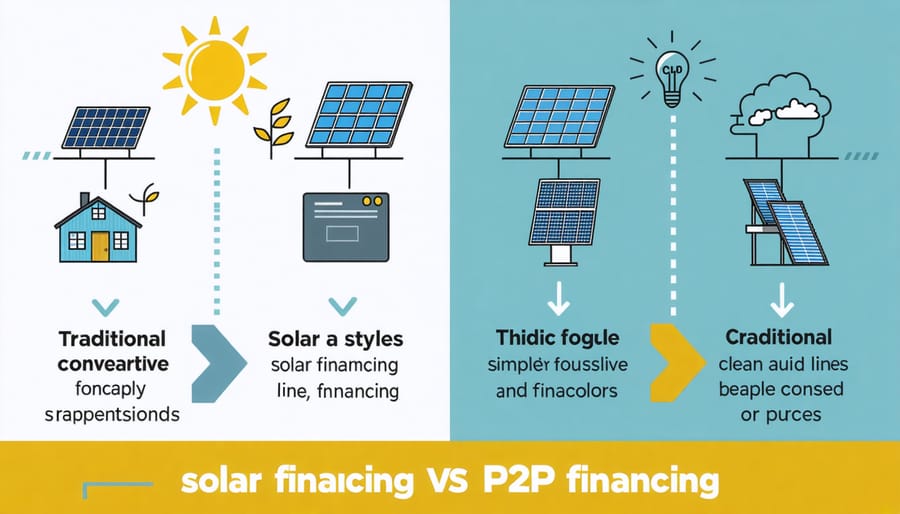
The solar energy financing landscape has evolved significantly, with traditional solar financing methods being complemented by innovative peer-to-peer (P2P) solutions. While conventional financing relies on bank loans, leases, and green bonds, P2P platforms connect investors directly with solar project developers, reducing intermediary costs and streamlining the funding process.
Traditional financing often involves lengthy approval processes, strict credit requirements, and substantial collateral demands. In contrast, P2P solar financing offers greater flexibility, potentially lower interest rates, and faster deployment of capital. This democratized approach enables smaller investors to participate in solar projects while allowing developers to access diverse funding sources.
However, each model presents distinct advantages and challenges. Traditional financing provides established security mechanisms and standardized processes, whereas P2P platforms offer innovation in risk assessment and investment structuring. The choice between these options typically depends on project scale, investor preferences, and regulatory considerations.
Key Benefits for Investors and Solar Developers
Peer-to-peer solar financing platforms offer substantial advantages for both investors and project developers, creating a mutually beneficial ecosystem. Investors gain access to diversified renewable energy portfolios with potential returns ranging from 5-15% annually, significantly higher than traditional fixed-income investments. The platform’s transparent structure allows investors to select specific projects based on their risk appetite and environmental impact preferences while maintaining lower minimum investment thresholds compared to conventional solar financing.
For solar developers, these platforms provide streamlined access to capital, reducing the typical project funding timeline from months to weeks. This efficiency translates to lower soft costs and improved project economics. Developers can leverage the platforms’ standardized documentation and automated compliance processes, significantly reducing administrative burden and legal expenses.
Both parties benefit from the platforms’ enhanced due diligence processes, which typically include comprehensive technical assessments, financial modeling, and risk analysis. The digital nature of these platforms enables real-time project monitoring, automated payment processing, and detailed performance reporting, ensuring transparency and accountability throughout the project lifecycle. This technological infrastructure also facilitates easier portfolio management and scalability for future projects.
How P2P Solar Platforms Work
Investment Models and Returns
The landscape of solar project funding has evolved significantly, offering diverse investment models tailored to different scales and objectives. Power Purchase Agreements (PPAs) remain a cornerstone investment structure, typically delivering 7-10% annual returns while providing stable, long-term revenue streams. These agreements minimize upfront costs for hosts while guaranteeing investors predictable cash flows over 15-25 year terms.
Community solar projects present another compelling model, with expected ROIs ranging from 6-12% depending on location and project scale. These initiatives often utilize innovative financing mechanisms such as crowdfunding platforms or cooperative ownership structures, enabling broader participation from smaller investors.
Commercial solar installations frequently employ lease-based models, offering returns between 8-15% through combination of tax incentives, depreciation benefits, and energy savings. Solar Investment Tax Credit (ITC) continues to play a crucial role in enhancing project economics, though investors must carefully structure deals to optimize these benefits.
Utility-scale projects typically deliver more modest but stable returns of 5-8%, attracting institutional investors seeking long-term, low-risk investments. These projects often incorporate storage solutions, potentially increasing returns through enhanced grid services and peak demand management.
Each model carries distinct risk-return profiles, regulatory considerations, and operational requirements. Successful implementation requires thorough due diligence, particularly regarding site assessment, equipment selection, and performance guarantees.
Risk Management and Security Features
The implementation of robust risk management protocols and security features is paramount in modern solar energy systems. Advanced monitoring systems utilize artificial intelligence and machine learning algorithms to detect potential equipment failures, performance degradation, and security breaches before they escalate into significant issues.
Physical security measures include tamper-evident seals, reinforced mounting systems, and surveillance equipment to protect solar installations from theft and vandalism. Digital security infrastructure employs multi-layer encryption, secure authentication protocols, and regular security audits to safeguard operational data and control systems.
Insurance coverage specifically designed for solar installations provides protection against natural disasters, equipment failure, and performance shortfalls. Performance guarantee mechanisms ensure system output meets specified parameters, with compensation protocols in place for underperformance.
Documentation and compliance tracking systems maintain detailed records of maintenance activities, performance metrics, and security incidents. Regular risk assessments evaluate potential threats across multiple categories, including environmental factors, cyber vulnerabilities, and operational risks.
Emergency response protocols outline clear procedures for various contingencies, while backup systems ensure critical operations continue during unexpected events. Training programs ensure personnel are well-versed in security protocols and risk mitigation strategies, creating a comprehensive safety culture throughout the organization.
These measures collectively create a resilient framework that protects investments, ensures operational continuity, and maintains stakeholder confidence in solar energy systems.
Leading P2P Solar Financing Platforms
Platform Comparison and Selection Criteria
When evaluating peer-to-peer solar investment platforms, several critical factors must be considered to ensure optimal investment outcomes and risk management. The platform’s track record and operational history serve as primary indicators of reliability, with established platforms typically offering more robust security measures and proven performance metrics.
Financial considerations play a pivotal role in platform selection. Investors should carefully examine fee structures, minimum investment requirements, and expected returns. Transparent platforms provide detailed information about transaction costs, management fees, and any additional charges that might impact investment returns. The liquidity options available through the platform, including secondary market trading capabilities, warrant particular attention.
Technical infrastructure and security protocols constitute another crucial evaluation criterion. Advanced platforms implement sophisticated encryption methods, secure payment gateways, and robust identity verification systems. The platform’s ability to handle high transaction volumes and maintain system stability during peak periods indicates technological competence.
Due diligence capabilities represent a distinguishing factor among platforms. Superior platforms offer comprehensive project assessment tools, detailed technical documentation, and independent engineering reports. They should provide clear visibility into the solar project’s specifications, performance projections, and maintenance schedules.
Regulatory compliance and legal framework adherence demonstrate platform legitimacy. Investors should verify the platform’s registration status with relevant financial authorities and examine their compliance with applicable securities regulations. The presence of appropriate licenses and certifications provides additional assurance.
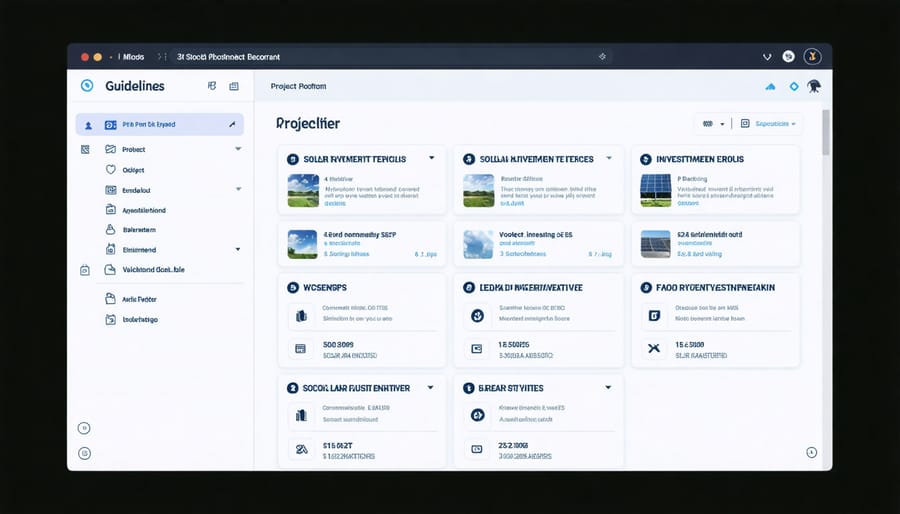
User experience and platform functionality significantly impact investment efficiency. An intuitive interface, comprehensive reporting tools, and responsive customer support enhance the investment process. Advanced platforms often offer portfolio management features, automated investment options, and detailed analytics dashboards.
Geographic coverage and project diversity influence investment opportunities. Platforms operating across multiple regions typically offer broader project selection and enhanced risk diversification potential. The ability to invest in various solar project types and sizes enables strategic portfolio construction aligned with individual investment goals.
Integration capabilities with external systems and service providers can streamline investment processes. Platforms offering automated bank transfers, tax reporting features, and API connectivity demonstrate technological sophistication and operational efficiency.
Future of P2P Solar Financing
Integration with Smart Contracts and Blockchain
Smart contracts and blockchain technology are revolutionizing peer-to-peer solar energy financing by providing secure, transparent, and automated transaction systems. These technologies enable direct energy trading between producers and consumers while eliminating intermediaries and reducing administrative costs.
Blockchain platforms facilitate automated payments and energy credit distribution through smart contracts, which execute predetermined agreements when specific conditions are met. For example, when a solar panel owner generates excess electricity, the smart contract automatically calculates the energy contribution, determines the payment amount, and transfers funds to the producer’s digital wallet.
Several innovative projects have implemented these technologies successfully. Energy trading platforms now utilize blockchain to record generation data, consumption patterns, and financial transactions in immutable distributed ledgers. This ensures transparency and trust among participants while protecting against fraud and manipulation.
The integration of these technologies also enables micro-investing in solar projects through tokenization, where investors can purchase fractional ownership in solar installations. This democratizes solar investment opportunities and increases access to renewable energy financing for both producers and consumers. As blockchain technology matures, these systems are expected to become increasingly sophisticated and widely adopted in the solar energy sector.

Regulatory Landscape and Market Growth
The global solar energy market continues to experience significant growth, driven by favorable regulatory frameworks and increasing environmental awareness. Recent renewable energy investment trends indicate a substantial shift towards solar technologies, with governments worldwide implementing supportive policies and incentives.
Key regulations, such as feed-in tariffs, tax credits, and renewable portfolio standards, have created a conducive environment for solar energy adoption. The Investment Tax Credit (ITC) in the United States and similar initiatives in Europe and Asia have significantly reduced the financial barriers to solar implementation.
Market projections suggest a compound annual growth rate (CAGR) of 20.5% from 2023 to 2030, with particular emphasis on utility-scale solar installations and distributed generation systems. Emerging economies are establishing ambitious renewable energy targets, implementing streamlined permitting processes, and developing standardized interconnection procedures.
Regulatory compliance requirements continue to evolve, focusing on grid integration, safety standards, and environmental impact assessments. These frameworks ensure sustainable market growth while maintaining system reliability and consumer protection.
Peer-to-peer platforms have fundamentally transformed the landscape of solar energy adoption by democratizing investment opportunities and creating new pathways for project funding. These innovative financing mechanisms have successfully bridged the gap between individual investors and solar projects, enabling broader participation in renewable energy initiatives. The impact is particularly evident in the increasing number of community solar installations and small-scale photovoltaic projects that might not have been viable through traditional financing channels.
The accessibility of P2P platforms has attracted diverse stakeholders, from individual retail investors to institutional players, creating a more dynamic and inclusive solar energy market. This democratization has not only accelerated solar adoption rates but has also fostered greater public awareness and engagement with renewable energy initiatives. The reduced barrier to entry has enabled more property owners to implement solar solutions, contributing to decreased carbon emissions and enhanced energy independence.
Looking ahead, P2P platforms are poised to play an increasingly crucial role in advancing solar energy deployment, particularly as technology continues to evolve and regulatory frameworks mature. Their success demonstrates that innovative financing solutions are essential for achieving widespread solar adoption and meeting global sustainability goals.