Floating photovoltaic systems, an innovative fusion of solar technology and water resource management, are revolutionizing the renewable energy landscape. These sophisticated installations deploy solar panels on bodies of water, offering a compelling solution to land scarcity while maximizing energy generation efficiency. By utilizing otherwise unused water surfaces such as reservoirs, industrial ponds, and hydroelectric dams, floating solar arrays achieve up to 15% higher electricity yields compared to traditional ground-mounted systems, thanks to the natural cooling effect of water and enhanced light reflection.
As the global demand for clean energy intensifies, floating photovoltaic technology emerges as a crucial advancement in sustainable power generation. These systems not only generate clean electricity but also provide additional benefits such as reduced water evaporation and improved water quality through decreased algae growth. With installations spanning from Asia’s ambitious megaprojects to Europe’s precision-engineered facilities, floating solar represents a significant leap forward in renewable energy infrastructure.
The technology’s dual-use approach to resource optimization, combined with its minimal environmental impact, positions floating photovoltaic systems at the forefront of modern renewable energy solutions. This advancement marks a critical milestone in our journey toward a more sustainable and energy-efficient future.
Understanding Floating Photovoltaic Systems
Core Components and Design
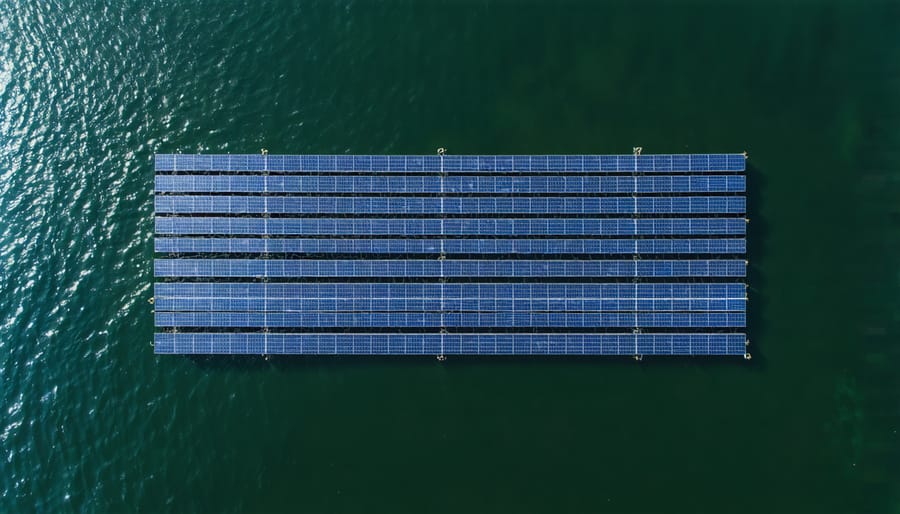
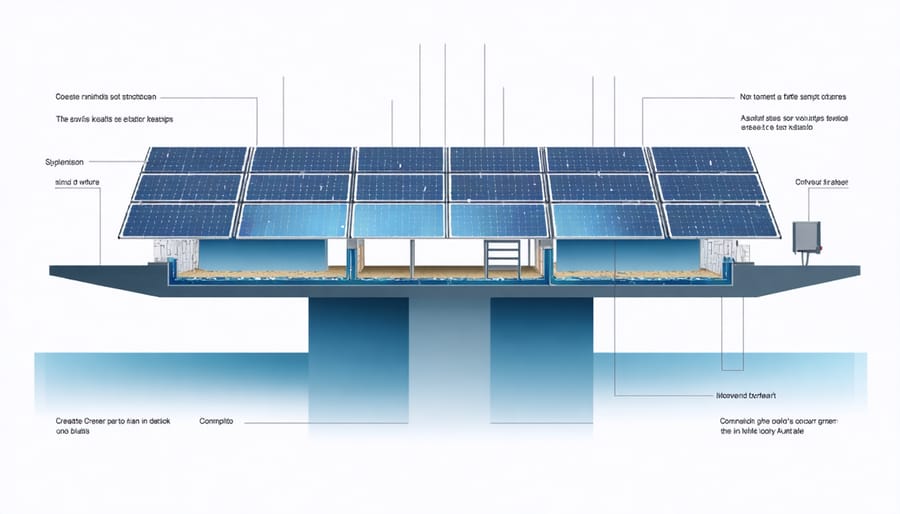
Floating photovoltaic systems comprise three essential components that work together to ensure optimal performance and durability. The foundation of these systems is the floating platform, typically constructed from high-density polyethylene (HDPE) or UV-resistant polymers, designed to support the entire array while maintaining buoyancy. These platforms feature specialized air-filled chambers and interconnected modules that provide stability against wave action and wind loads.
The mounting system forms the crucial interface between the floating platform and solar panels. Unlike traditional off-grid solar systems, these mounts must accommodate movement while maintaining panel orientation. Advanced mounting solutions incorporate flexible joints and corrosion-resistant materials to ensure longevity in aquatic environments.
The photovoltaic panels used in floating installations are specially designed to withstand increased humidity and potential water exposure. These panels often feature enhanced encapsulation materials and specialized frame designs to prevent moisture ingress. Many manufacturers now offer bifacial panels that can capture reflected light from the water surface, increasing overall system efficiency.
Additional components include anchoring systems that secure the installation to the reservoir bed or banks, and specialized electrical infrastructure designed for marine environments. These systems often incorporate marine-grade cables and waterproof junction boxes to ensure safe and reliable operation throughout the system’s lifetime.
Advanced Engineering Features
Floating photovoltaic systems require sophisticated engineering solutions to ensure long-term stability and performance in aquatic environments. The anchoring system serves as the foundation, typically employing a combination of tensioned cables and floating buoys designed to accommodate water level fluctuations and wave action. These systems must maintain optimal panel orientation while adapting to dynamic environmental conditions.
Cable management presents unique challenges in floating installations. Specialized marine-grade cables with enhanced UV protection and waterproof properties are essential for maintaining electrical connections. These cables are typically routed through floating conduits that protect against moisture infiltration while allowing for system movement. Junction boxes are equipped with IP68-rated enclosures to ensure complete water resistance.
Water-resistant technologies are integral to system longevity. All components undergo rigorous waterproofing treatments, including corrosion-resistant coatings and specialized sealants. The floating platforms themselves are constructed from high-density polyethylene (HDPE) or similar materials that resist degradation from prolonged water exposure and UV radiation.
Advanced monitoring systems track environmental conditions, structural integrity, and electrical performance. These systems often incorporate sensors that measure wave height, wind speed, and water quality, enabling automated responses to extreme weather events. Additionally, innovative cooling mechanisms leverage the water body’s thermal properties to enhance panel efficiency through heat dissipation, providing a significant advantage over land-based installations.
Environmental and Performance Benefits
Enhanced Energy Generation
Floating photovoltaic systems demonstrate enhanced energy generation capabilities compared to traditional ground-mounted installations, primarily due to two key factors: the natural cooling effect of water and reduced dust accumulation. Similar to other dual-use solar installations, these systems leverage environmental conditions to optimize performance.
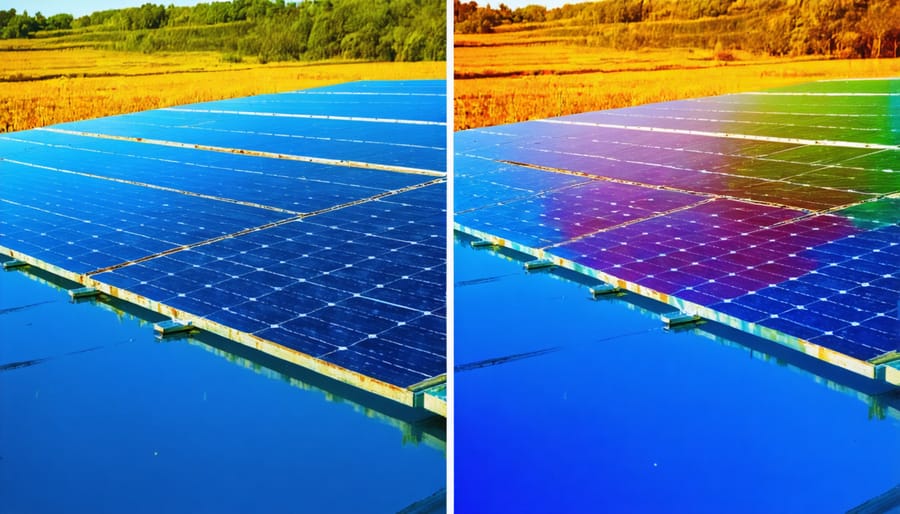
The water body’s cooling effect significantly improves panel efficiency by maintaining lower operating temperatures. When solar panels heat up, their conversion efficiency typically decreases by 0.3% to 0.5% per degree Celsius above optimal operating temperature. The proximity to water helps maintain panel temperatures 5-10°C lower than land-based installations, resulting in a 5-12% increase in energy yield.
Additionally, the water surface provides a naturally clean environment that minimizes dust accumulation on panel surfaces. Unlike ground-mounted systems that require regular cleaning to remove dust and debris, floating panels experience less soiling due to their location over water. This reduced dust accumulation maintains optimal light transmission to the photovoltaic cells, ensuring consistent energy generation and reducing maintenance requirements.
The reflective properties of the water surface also contribute to enhanced energy generation through albedo effect. This phenomenon increases the total solar radiation reaching the panels through reflected light from the water surface, particularly during early morning and late afternoon hours when direct sunlight is at oblique angles. Research indicates that this additional reflected radiation can boost overall system efficiency by 3-5% compared to traditional ground-mounted installations.
Ecological Impact
Floating photovoltaic systems offer significant ecological advantages compared to traditional ground-mounted solar installations. One of the most notable benefits is water conservation through reduced evaporation, with studies showing up to 70% decrease in water loss from reservoirs covered by floating panels. This makes them particularly valuable for solar-powered water applications in arid regions.
The panels’ shading effect inhibits algae growth by limiting sunlight penetration, which naturally improves water quality and reduces the need for chemical treatments. This mechanism helps maintain healthier aquatic ecosystems while decreasing maintenance costs for water management facilities.
Floating solar installations can preserve valuable land habitats by utilizing existing water bodies, eliminating the need for terrestrial ecosystem disruption. This approach is particularly beneficial in regions where land availability is limited or ecologically sensitive. The systems can be strategically positioned to avoid interfering with critical wildlife corridors and aquatic migration patterns.
Research indicates that these installations can create new microhabitats for aquatic species. The underwater support structures often serve as artificial reefs, providing shelter for fish and attachment points for beneficial aquatic organisms. Additionally, the cooler water temperatures beneath the panels can enhance oxygen retention, supporting diverse aquatic life.
The systems also demonstrate positive effects on water quality by reducing direct exposure to sunlight, which helps maintain stable water temperatures and reduces the risk of harmful algal blooms. This natural temperature regulation contributes to improved ecosystem balance and biodiversity in the host water body.
Implementation Considerations
Site Selection and Assessment
The selection of an appropriate water body for floating photovoltaic systems requires careful assessment of multiple environmental, technical, and operational factors. Water bodies suitable for floating solar installations typically include artificial reservoirs, hydroelectric dam reservoirs, irrigation ponds, and water treatment facilities. These locations should offer sufficient surface area, minimal wave action, and stable water levels throughout the year.
Key assessment criteria include water depth analysis, shoreline stability evaluation, and bottom topography studies. The water body should maintain a minimum depth of 1.5 meters to ensure proper system operation and minimize potential environmental impacts. Additionally, wind patterns, wave characteristics, and seasonal water level fluctuations must be thoroughly analyzed to determine optimal array positioning and anchoring requirements.
Environmental impact assessments are crucial and should examine effects on aquatic ecosystems, water quality, and local wildlife. Studies must evaluate potential changes in water temperature, dissolved oxygen levels, and light penetration beneath the arrays. Consideration should also be given to fish habitats, bird migration patterns, and aquatic vegetation growth.
Technical feasibility studies should assess grid connection possibilities, proximity to existing electrical infrastructure, and site accessibility for construction and maintenance. Local regulations, water rights, and permits must be thoroughly reviewed before project implementation.
Climate considerations, including solar radiation levels, precipitation patterns, and extreme weather events, play vital roles in site selection. Areas prone to severe storms, high winds, or extensive ice formation may require additional engineering considerations or may be deemed unsuitable for floating solar installations.
Technical Requirements
The installation of floating photovoltaic systems requires careful attention to technical specifications and safety protocols. The primary components include specially designed floating platforms, photovoltaic panels, mooring systems, and electrical infrastructure. These platforms must be constructed from UV-resistant, high-density polyethylene (HDPE) or similar materials capable of withstanding prolonged water exposure and environmental stresses.
Installation procedures begin with a comprehensive site assessment, including water depth measurements, wind pattern analysis, and water quality evaluation. The floating structure must be assembled on-shore before being carefully launched into the water body. Mooring systems, typically consisting of anchors and flexible cables, must be precisely calculated to accommodate water level fluctuations while maintaining system stability.
Maintenance protocols involve regular inspection of both mechanical and electrical components. Key areas requiring periodic monitoring include platform integrity, panel cleanliness, cable connections, and inverter performance. Specialized equipment and trained personnel are essential for safe maintenance operations on water. Remote monitoring systems should be implemented to track performance metrics and detect potential issues early.
Safety measures are paramount in floating solar installations. Essential requirements include:
– Personal flotation devices for all maintenance personnel
– Electrical isolation protocols specific to water-based systems
– Lightning protection systems
– Emergency response procedures
– Regular safety training for operational staff
The electrical infrastructure must comply with relevant maritime and electrical safety standards, incorporating waterproof junction boxes, marine-grade cables, and proper grounding systems. All components should meet IP67 or higher protection ratings to ensure reliable operation in wet conditions. Regular thermographic inspections help identify potential electrical hotspots before they become hazardous.
Economic Viability
Floating photovoltaic systems present compelling economic advantages compared to traditional land-based installations. The initial investment typically ranges from $0.80 to $1.20 per watt, depending on location and scale, which is comparable to ground-mounted systems. However, the enhanced efficiency due to the cooling effect of water can increase energy yield by 5-15%, improving the return on investment.
Operating costs are often lower than land-based alternatives, as floating systems require minimal land preparation and benefit from reduced vegetation management expenses. The water body’s natural cooling effect also extends panel lifespan, potentially reducing long-term replacement costs. These factors contribute to making floating solar an attractive option among sustainable energy solutions.
Cost-benefit analyses indicate typical payback periods of 5-7 years, varying with regional electricity prices and available incentives. When considering dual-use benefits, such as reduced water evaporation and algae growth control, the economic value proposition becomes even stronger. Additionally, floating installations can utilize existing infrastructure like hydroelectric dam transmission lines, potentially reducing connection costs by 20-25%.
Market studies suggest that floating solar systems can achieve levelized cost of electricity (LCOE) rates between $0.05-0.10 per kWh, making them increasingly competitive with conventional power sources. This economic viability, combined with space-saving benefits, positions floating photovoltaics as an increasingly attractive investment for utility-scale renewable energy projects.
Floating photovoltaic systems represent a significant advancement in renewable energy technology, offering a promising solution to the dual challenges of land scarcity and sustainable power generation. As global energy demands continue to rise, these innovative installations have demonstrated their potential to revolutionize the solar energy sector through improved efficiency, reduced water evaporation, and minimal land use impact.
The future outlook for floating PV systems appears particularly bright, with projections indicating substantial growth in both developed and emerging markets. Technological improvements in floating structures, anchoring systems, and panel efficiency continue to enhance system reliability while reducing installation and maintenance costs. Furthermore, the synergistic benefits of combining floating solar with existing hydroelectric infrastructure present exciting opportunities for hybrid power generation systems.
Research and development efforts are focusing on addressing current challenges, including long-term durability in marine environments, optimization of floating structure designs, and enhanced weather resistance. Industry collaboration with academic institutions is driving innovation in materials science and system engineering, promising even more efficient and cost-effective solutions in the coming years.
As climate change mitigation becomes increasingly urgent, floating photovoltaic systems are positioned to play a crucial role in the global transition to renewable energy. Their ability to utilize unused water surfaces while delivering superior performance makes them an attractive option for governments, utilities, and private investors committed to sustainable energy development.