
Photovoltaic (PV) glass stands at the forefront of sustainable building technology, revolutionizing how we harness solar energy in modern architecture. This innovative material transforms ordinary windows into power-generating assets through building-integrated photovoltaics, marking a significant breakthrough in renewable energy integration. By incorporating transparent solar cells between glass layers, PV glass enables buildings to generate clean electricity while maintaining essential functionality as windows and building materials.
The technology represents a crucial advancement in sustainable construction, offering architects and developers a sophisticated solution that combines energy efficiency with aesthetic appeal. Unlike traditional solar panels, PV glass seamlessly integrates into building facades, skylights, and windows, eliminating the need for separate mounting systems or additional surface area. This dual-purpose material not only generates power but also provides thermal insulation and UV protection, making it an increasingly attractive option for modern construction projects focused on sustainability and energy independence.
As global demands for sustainable building solutions continue to rise, PV glass emerges as a key player in the transition toward net-zero energy buildings, promising a future where our architectural surfaces actively contribute to our energy needs.
The Science Behind PV Glass Windows
Composition and Structure
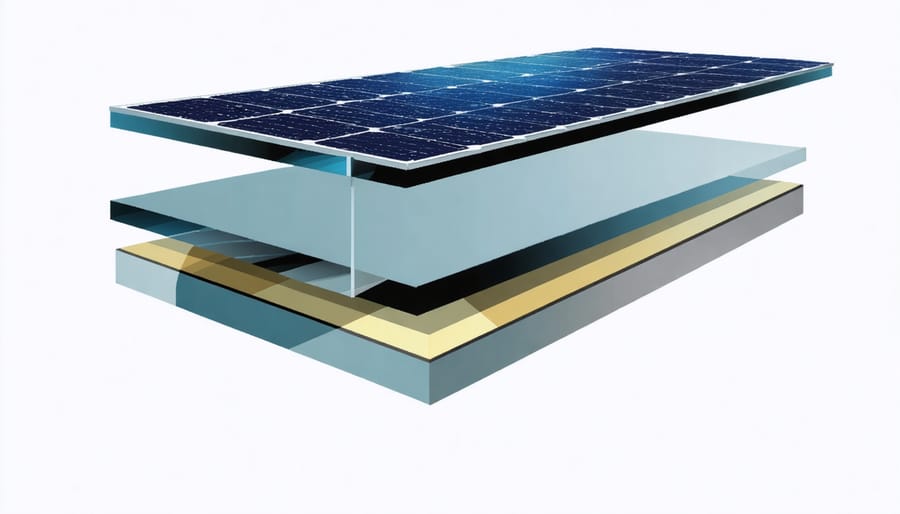
Photovoltaic glass consists of multiple sophisticated layers, each serving a specific function in the solar energy conversion process. The foundation is typically a high-transparency tempered glass substrate, specially treated to maximize light transmission while maintaining structural integrity. This base layer is coated with a transparent conductive oxide (TCO), commonly indium tin oxide or fluorine-doped tin oxide, which serves as the front electrical contact.
The active photovoltaic layer, responsible for converting solar energy into electricity, is composed of semiconductor materials. In crystalline silicon-based PV glass, this layer contains ultra-thin silicon wafers, while thin-film technologies utilize materials such as amorphous silicon, cadmium telluride, or copper indium gallium selenide (CIGS). These semiconductors are sandwiched between protective encapsulation layers, typically made of ethylene vinyl acetate (EVA) or polyvinyl butyral (PVB).
A back contact layer, usually aluminum or molybdenum, completes the electrical circuit. The entire assembly is sealed with another glass layer or protective backing sheet to ensure durability and weather resistance. Advanced PV glass may incorporate additional functional layers, such as anti-reflective coatings to minimize light loss, or low-emissivity layers to enhance thermal performance. The exact composition and thickness of each layer are precisely engineered to optimize both power generation efficiency and optical transparency, making PV glass suitable for building integration.
Light-to-Energy Conversion Process
The light-to-energy conversion process in photovoltaic glass relies on the photovoltaic effect, where semiconductor materials within the glass transform solar radiation into electrical energy. When sunlight strikes the PV glass, photons interact with the semiconductor layer, typically composed of silicon or thin-film materials, causing electrons to become excited and create an electric current.
In window applications, this process occurs within a specialized multilayer structure. The outer layer consists of transparent conducting oxide (TCO) that allows light transmission while facilitating electrical conductivity. Beneath this lies the photovoltaic semiconductor layer, strategically designed to capture specific wavelengths of light while maintaining partial transparency for visible light transmission.
The conversion efficiency depends on several factors, including the type of semiconductor material used, the thickness of the photovoltaic layer, and the angle of incident light. Modern PV glass implementations utilize advanced materials and manufacturing techniques to optimize this balance between transparency and power generation. Some designs incorporate selective absorption technology, which allows visible light to pass through while capturing ultraviolet and infrared radiation for energy conversion.
The generated electricity is collected through a network of microscopic conductors embedded within the glass structure. These conductors channel the electrical current to the window frame’s edge, where it connects to the building’s electrical system or energy storage devices.
Types of Window-Integrated PV Technologies
Crystalline Silicon Windows
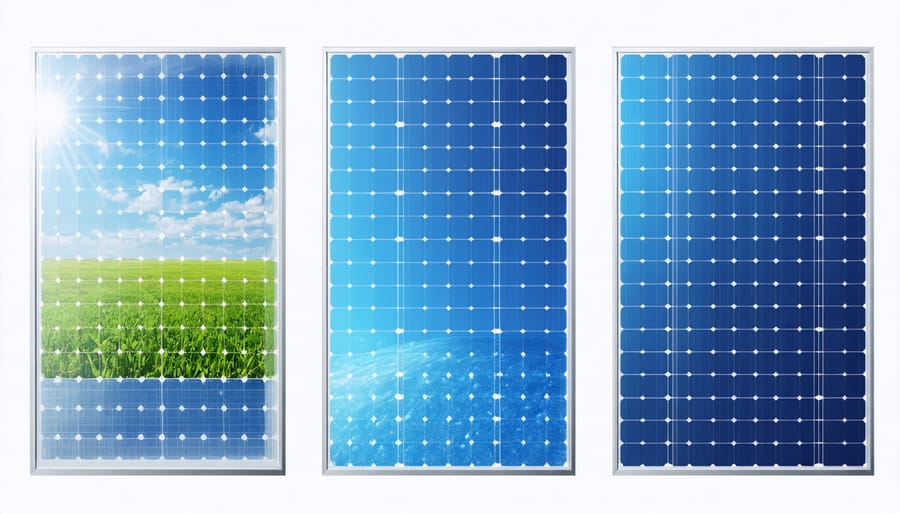
Crystalline silicon solar cells, the most widely used photovoltaic technology, have been successfully adapted for window applications through innovative manufacturing processes. These windows incorporate traditional silicon solar cells between two glass panes, with carefully engineered spacing to allow partial light transmission while maintaining power generation capabilities.
The cells are typically arranged in a grid pattern with transparent gaps between them, achieving a balance between energy production and natural light penetration. Modern crystalline silicon window designs can achieve transparency levels between 10-30% while maintaining power conversion efficiencies of 15-20%, making them suitable for commercial building integration.
These windows utilize advanced lamination techniques and specialized encapsulation materials to ensure durability and weather resistance. The silicon cells are protected from environmental factors while maintaining their electrical performance over the expected 25-30 year lifespan. Recent developments have focused on reducing the visible appearance of cell patterns and improving overall aesthetics without compromising energy generation capacity.
Current applications include office buildings, industrial facilities, and institutional structures where both energy generation and natural lighting are prioritized. The technology continues to evolve with improvements in cell efficiency and transparency options.
Thin-Film Solar Windows
Thin-film solar windows represent a cutting-edge advancement in photovoltaic glass technology, incorporating ultra-thin semiconductor layers that enable both power generation and transparency. These innovative windows typically utilize materials such as amorphous silicon, copper indium gallium selenide (CIGS), or perovskites, deposited in layers just a few micrometers thick on the glass substrate.
The key advantage of thin-film technology in windows lies in its ability to maintain visible light transmission while harvesting solar energy. Modern thin-film solutions can achieve transparency levels between 30-70%, depending on the specific application requirements and energy generation goals. The semiconductor layers can be tuned to absorb specific parts of the solar spectrum, particularly in the infrared and ultraviolet regions, while allowing visible light to pass through.
Recent developments have focused on improving conversion efficiency while maintaining aesthetic appeal. Current commercial thin-film solar windows typically achieve efficiency rates of 5-12%, with laboratory prototypes demonstrating potential for higher performance. These windows also offer additional benefits such as heat reduction, UV protection, and potential integration with smart building management systems, making them increasingly attractive for sustainable architecture applications.
Organic PV Windows
Organic photovoltaic (OPV) windows represent an innovative advancement in building-integrated photovoltaics, offering unique advantages over traditional silicon-based solutions. These semi-transparent windows incorporate organic semiconducting materials that convert solar energy into electricity while maintaining visibility and aesthetic appeal.
The technology utilizes conjugated polymers and small molecules as photoactive materials, which can be processed into thin films through cost-effective solution-based methods. Unlike conventional PV cells, OPV windows can be manufactured with varying levels of transparency, typically ranging from 20% to 60%, allowing architects and designers to balance natural lighting with energy generation requirements.
Recent developments in organic photovoltaic materials have achieved power conversion efficiencies exceeding 12% in laboratory conditions, with continuous improvements through molecular engineering and device optimization. The flexibility in color selection and transparency makes OPV windows particularly attractive for modern architectural applications, especially in commercial buildings and high-rise structures.
While current challenges include stability and lifetime concerns, ongoing research focuses on developing more durable organic materials and improved encapsulation techniques. The potential for low-cost, large-scale manufacturing using roll-to-roll printing processes makes OPV windows a promising solution for sustainable building design. This technology aligns with green building certifications and contributes to reducing operational energy costs while maintaining architectural aesthetics.
Performance and Efficiency Considerations
Energy Generation Potential
The energy generation potential of PV glass varies significantly based on several key factors, including geographical location, installation angle, glass transparency, and cell technology. In optimal conditions, modern PV glass installations typically achieve conversion efficiencies ranging from 5% to 15%, with high-end products reaching up to 20% efficiency.
Real-world performance data indicates that a standard square meter of PV glass can generate between 50-200 kilowatt-hours (kWh) annually. For perspective, a typical office building with 1,000 square meters of PV glass facade could potentially generate 50,000-200,000 kWh per year, enough to offset a significant portion of its energy consumption.
Climate conditions significantly impact generation capacity. Regions with high solar irradiance, such as the southwestern United States or southern Europe, can expect performance at the higher end of the spectrum. However, even in less sunny regions, diffuse light collection capabilities ensure consistent energy generation throughout the year.
Installation orientation also plays a crucial role. Vertical installations, typical in building facades, generally produce about 70% of the energy compared to optimally tilted installations. Despite this reduction, the large surface area available on building facades often compensates for lower per-panel efficiency, making PV glass a viable energy generation solution for modern architecture.
Recent technological advances have improved low-light performance and temperature coefficient ratings, ensuring more stable energy production across varying environmental conditions.

Installation and Optimization
The successful installation of PV glass requires careful consideration of multiple factors to achieve optimal performance. Proper orientation and tilt angle are crucial, with south-facing installations typically yielding the highest energy output in the northern hemisphere. Professional installers should conduct thorough site assessments, accounting for shading patterns, local climate conditions, and structural requirements.
To maximize efficiency, implementing an effective building energy optimization strategy is essential. This includes integrating smart monitoring systems to track performance metrics and identify potential issues early. Regular maintenance protocols should include cleaning schedules based on local environmental conditions, as dust and debris accumulation can significantly impact power generation.
Temperature management plays a vital role in PV glass performance. Adequate ventilation behind the panels helps prevent overheating, which can reduce efficiency. Installing appropriate thermal barriers and utilizing advanced framing systems can help maintain optimal operating temperatures.
For maximum energy harvest, consider implementing power optimizers or micro-inverters, particularly in installations where partial shading is unavoidable. These devices help minimize power losses and ensure each PV glass panel operates at its peak potential, regardless of the performance of adjacent panels.
Applications and Future Developments
Photovoltaic glass technology is rapidly evolving, with innovative applications transforming the construction and renewable energy sectors. Current implementations include smart windows in commercial buildings, greenhouse installations, and advanced building-integrated solar solutions that seamlessly combine functionality with power generation.
The automotive industry has begun incorporating PV glass in electric vehicle sunroofs and windows, contributing to extended driving ranges through supplementary power generation. In urban architecture, entire building facades now utilize semi-transparent PV glass panels, creating structures that generate significant portions of their energy requirements while maintaining aesthetic appeal.
Emerging developments in PV glass technology show promising advancements. Research laboratories are working on next-generation materials with improved efficiency and transparency. Perovskite-based PV glass, currently under development, shows potential for achieving higher conversion rates while reducing production costs. Dynamic electrochromic PV glass, which can adjust its transparency based on environmental conditions, represents another frontier in smart building technology.
Future applications are expected to expand into consumer electronics, with transparent PV glass potentially integrating into smartphone screens and portable device displays. The agriculture sector is exploring PV greenhouse applications that optimize both energy generation and crop growth conditions. Additionally, researchers are developing self-cleaning PV glass coatings that enhance durability and maintain optimal performance with minimal maintenance.
Infrastructure projects are increasingly incorporating PV glass in novel ways, from noise barriers along highways to bus shelter roofs. These implementations demonstrate the versatility of PV glass technology while contributing to urban sustainability goals. As manufacturing processes become more refined and cost-effective, widespread adoption across various sectors is anticipated, marking a significant step toward more sustainable built environments.
Window-integrated PV glass represents a significant advancement in building-integrated photovoltaics, offering a compelling blend of sustainable energy generation and architectural functionality. Throughout this exploration, we’ve seen how this technology transforms conventional windows into power-generating assets while maintaining essential transparency and aesthetic appeal.
The key advantages of PV glass, including reduced energy costs, decreased carbon emissions, and enhanced building efficiency, position it as a crucial component in modern sustainable architecture. The technology’s ability to generate clean electricity while serving as a building material makes it particularly valuable for urban environments where space optimization is essential.
Looking ahead, the future of PV glass appears promising, with ongoing research focused on improving transparency levels, increasing power conversion efficiency, and reducing manufacturing costs. Emerging technologies, such as perovskite solar cells and advanced coating techniques, suggest potential breakthroughs in performance and affordability.
Industry trends indicate growing adoption across commercial, residential, and institutional sectors, driven by stricter environmental regulations and increasing awareness of sustainable building practices. As manufacturing processes become more refined and economies of scale take effect, PV glass is expected to become increasingly accessible to a broader market.
For the technology to reach its full potential, continued collaboration between researchers, manufacturers, and architects will be crucial. With sustained investment in research and development, PV glass is poised to play a vital role in achieving net-zero building standards and advancing sustainable urban development.