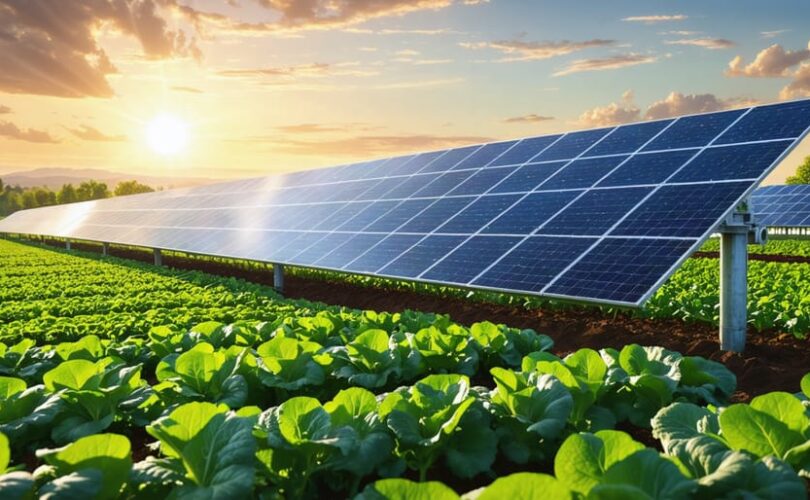
Agrivoltaics represents a groundbreaking fusion of solar energy generation and agricultural production, revolutionizing how we maximize land use efficiency in the modern farming landscape. This innovative system enables farmers to cultivate crops beneath elevated solar panels, creating a symbiotic relationship that enhances both energy production and crop yields while advancing sustainable off-grid living. By combining photovoltaic technology with traditional farming practices, agrivoltaics addresses two critical global challenges: renewable energy generation and food security. Research demonstrates that these dual-use systems can increase land productivity by up to 70% while providing shade-adapted crops with optimal growing conditions and protecting them from extreme weather events. For agricultural communities worldwide, agrivoltaics represents not just an alternative farming method, but a transformative approach to resource optimization that promises to reshape the future of sustainable agriculture.
The Science Behind Agrivoltaic Systems

Solar Panel Configuration and Light Management
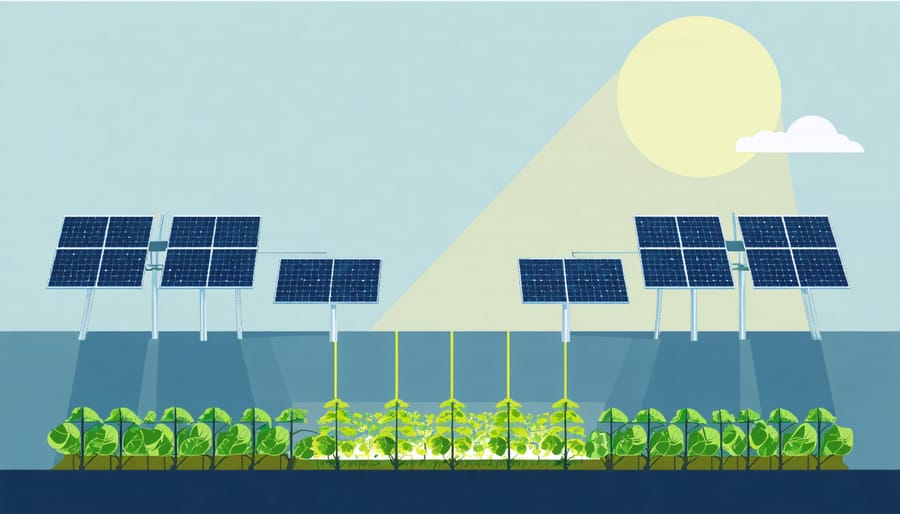
In agrivoltaic systems, optimal solar panel configuration is crucial for successful solar energy integration while maintaining crop productivity. The standard configuration involves elevating panels 3-5 meters above ground level, allowing sufficient space for farming equipment and natural plant growth. Panel spacing typically ranges from 2-4 meters, creating light gaps that ensure uniform distribution of solar radiation to crops below.
Modern installations utilize bifacial solar panels with tracking systems to optimize both energy generation and crop exposure to sunlight. The tilt angle of panels is calculated based on geographical location and seasonal sun paths, typically ranging between 20-30 degrees in most regions. Light management systems incorporate specialized algorithms that adjust panel orientation throughout the day, maintaining an optimal balance between electricity generation and photosynthetically active radiation (PAR) for crops.
To maximize effectiveness, panels are arranged in east-west oriented rows with calculated shadow patterns that prevent prolonged shading of any single area. This configuration ensures crops receive 70-90% of available sunlight while maintaining solar panel efficiency above 85%.
Microclimate Benefits
Agrivoltaic systems create unique microclimates that can significantly enhance growing conditions for crops. The solar panels provide partial shade, reducing direct solar radiation and protecting plants from excessive heat and light stress. This shading effect helps maintain optimal soil moisture levels by decreasing evaporation rates, resulting in more efficient water usage and potentially reduced irrigation requirements.
The elevated panel structure creates air circulation patterns that can benefit plant growth. The temperature differential between shaded and unshaded areas generates gentle air movement, helping to regulate humidity levels and reduce the risk of fungal diseases. During extreme weather events, the panels act as protective barriers, shielding crops from heavy rainfall, hail, and strong winds.
Research has shown that these microclimate modifications can lead to improved crop yields in certain species, particularly in regions with intense solar radiation or water scarcity. The panels’ presence also helps moderate temperature fluctuations between day and night, creating more stable growing conditions. This temperature regulation can extend growing seasons and provide opportunities for cultivating crops that might otherwise struggle in open-field conditions.
Crop Compatibility and Selection
Shade-Tolerant Crops
In agrivoltaic systems, selecting appropriate shade-tolerant crops is crucial for maximizing land-use efficiency and maintaining agricultural productivity. Research has identified several crop varieties that perform well under the partial shade conditions created by solar panels. Leafy greens such as spinach, lettuce, kale, and chard have demonstrated excellent adaptability, often showing improved quality and reduced water requirements in these environments.
Root vegetables, including potatoes, carrots, and turnips, also exhibit favorable growth patterns under moderate shade conditions. Certain herbs like mint, parsley, and cilantro thrive in the diffused light environment, while shade-loving mushrooms can be successfully cultivated in areas with more significant light reduction.
Notable success has been achieved with specific varieties of tomatoes, peppers, and beans that have been bred or selected for partial shade tolerance. These crops benefit from the temperature moderation provided by solar panels, particularly in regions with intense summer heat. Additionally, certain berries and small fruits have shown promising results when integrated into agrivoltaic systems.
Crop selection should consider local climate conditions, seasonal variations, and the specific light reduction patterns created by the installed solar array to optimize agricultural yields while maintaining energy generation efficiency.
Performance Metrics
Studies conducted across various agrivoltaic installations demonstrate significant performance advantages in both crop production and energy generation. Research shows that certain crops grown under solar panels can achieve yields between 60-80% of conventional farming methods, while simultaneously generating clean electricity. Shade-tolerant crops like lettuce, tomatoes, and certain berries have shown particularly promising results, with some varieties exhibiting improved water use efficiency of up to 30%.
Energy generation metrics indicate that well-designed agrivoltaic systems can maintain 85-95% of the power output compared to traditional ground-mounted solar installations. The slight reduction in energy yield is offset by the agricultural benefits and land-use efficiency. Field trials have documented combined land equivalent ratios (LER) exceeding 1.6, indicating that agrivoltaic systems are 60% more efficient in land use compared to separate farming and solar installations.
Temperature monitoring reveals that crops grown under panels typically experience 5-15°F lower ambient temperatures during peak summer conditions, reducing water requirements and heat stress. Economic analyses suggest that dual-use systems can increase land value by 30-70% compared to single-use applications, while providing farmers with two reliable income streams. These metrics continue to improve as system designs evolve and new crop varieties are tested under varying environmental conditions.
Implementation and System Design
Infrastructure Requirements
The successful implementation of an agrivoltaics farming system requires careful consideration of both solar and agricultural infrastructure components. The primary element is the elevated photovoltaic (PV) array structure, typically mounted 3-5 meters above ground level to accommodate farming activities underneath. These structures must be engineered to withstand local weather conditions while maintaining optimal solar exposure and achieving grid independence.
Essential infrastructure components include:
– Reinforced mounting systems designed for dual-use applications
– Weather monitoring stations for environmental data collection
– Irrigation systems modified for semi-shaded conditions
– Access paths for maintenance and agricultural equipment
– Power conversion and storage facilities
– Crop-specific support structures (trellises, protective barriers)
The foundation design must account for both array stability and soil health preservation. Careful spacing between PV panels is crucial to ensure sufficient light penetration for crop growth while maximizing energy generation. Modern installations often incorporate automated tracking systems to optimize both farming and energy production.
Water management infrastructure requires particular attention, including:
– Precision irrigation systems
– Rainwater harvesting capabilities
– Water storage facilities
– Distribution networks designed around panel placement
These components must be integrated harmoniously to create a functional system that serves both agricultural and energy generation purposes while maintaining long-term sustainability.
Maintenance and Management
Regular maintenance and proper management are crucial for the optimal performance of agrivoltaic systems. The dual-use nature of these installations requires a carefully coordinated approach to ensure both agricultural productivity and solar energy generation remain efficient.
Solar panel maintenance in agrivoltaic systems includes regular cleaning to remove dust, pollen, and bird droppings, which can reduce energy generation efficiency. This cleaning process must be scheduled to minimize disruption to farming activities and avoid damage to crops. Periodic inspections of mounting structures, electrical connections, and inverters are essential to prevent system failures and maintain safety standards.
Agricultural operations require careful planning around the solar infrastructure. Crop selection and rotation schedules should account for panel shading patterns and maintenance access requirements. Irrigation systems need regular monitoring and adjustment to ensure uniform water distribution beneath the panels. Height-restricted farming equipment must be used to prevent collision with solar installations.
System monitoring through automated data collection helps optimize both energy production and crop yields. Regular soil testing and crop health assessments are necessary to adjust farming practices as needed. Documentation of maintenance activities, crop performance, and energy generation helps identify areas for improvement and supports long-term system optimization.
Training staff in both agricultural and solar maintenance procedures ensures safe and efficient operation. Establishing clear protocols for emergency situations and regular maintenance schedules helps prevent conflicts between farming and energy production activities.
Economic and Environmental Benefits
Financial Returns
The financial returns of agrivoltaic systems demonstrate a compelling dual-revenue stream potential through combined energy generation and crop production. Initial investment costs typically range from $2,000 to $3,500 per kilowatt installed, including specialized mounting systems and elevated array configurations. However, these costs are often offset by increased land-use efficiency and enhanced crop value.
Studies indicate that agrivoltaic installations can achieve payback periods of 8-12 years, depending on local energy prices, agricultural yields, and available incentives. Farmers implementing these systems report 60-80% retention of traditional crop yields while generating significant electricity revenue, typically ranging from $21,000 to $35,000 per acre annually through power purchase agreements.
The economic benefits extend beyond direct revenue streams. Shade-tolerant crops grown under solar panels often command premium prices due to improved quality and extended growing seasons. Water conservation benefits translate to reduced irrigation costs, with studies showing 20-30% savings in water expenditure. Additionally, many regions offer tax incentives, grants, and renewable energy credits that can substantially improve the financial outlook.
Risk mitigation is another crucial financial advantage, as diversified income streams protect against market volatility in either sector. Operating expenses typically decrease by 5-10% compared to conventional farming due to reduced water usage and natural pest control benefits provided by the panel infrastructure.

Environmental Impact
Agrivoltaic systems demonstrate remarkable environmental benefits by optimizing land use and promoting sustainable energy solutions while supporting agricultural production. These systems significantly reduce carbon emissions through dual-purpose land utilization, effectively decreasing the carbon footprint of both energy generation and farming operations.
Research indicates that agrivoltaic installations can reduce water consumption by 25-30% through decreased evaporation and improved soil moisture retention. The partial shading provided by solar panels creates microclimate conditions that protect crops from extreme weather events and reduce water stress, contributing to more resilient agricultural practices.
The systems also enhance biodiversity by creating diverse habitats for pollinators and beneficial insects. The varied light patterns and environmental conditions beneath the panels support different species, contributing to ecosystem health and natural pest management.
Furthermore, agrivoltaic systems help preserve valuable agricultural land by eliminating the need to choose between food production and renewable energy generation. This dual-use approach prevents the conversion of additional land for solar installations, thereby protecting natural habitats and maintaining vital ecosystem services.
By combining clean energy production with sustainable farming practices, agrivoltaic systems represent a crucial advancement in addressing climate change while ensuring food security and environmental conservation.
Agrivoltaics represents a transformative approach to sustainable land use, offering a viable solution to the growing challenges of energy security and food production. As demonstrated by successful implementations worldwide, these systems have proven their capacity to increase land-use efficiency by up to 70% while maintaining or even improving crop yields. The dual-use technology not only optimizes space utilization but also contributes significantly to reducing water consumption and providing crops with beneficial partial shading.
Looking ahead, the future of agrivoltaics appears promising, with technological advancements continuing to enhance system efficiency and economic viability. Ongoing research and development focus on optimizing panel designs, improving crop-specific solutions, and developing more sophisticated monitoring systems. The integration of artificial intelligence and smart farming techniques is expected to further revolutionize agrivoltaic installations, enabling more precise resource management and improved yield predictions.
As global initiatives for renewable energy adoption and sustainable agriculture gain momentum, agrivoltaics is positioned to play a crucial role in meeting these objectives. Government incentives, declining solar technology costs, and increasing awareness of environmental sustainability are driving wider adoption. However, success will depend on continued collaboration between agricultural experts, solar energy professionals, and policymakers to establish standardized practices and overcome existing implementation challenges. With proper support and innovation, agrivoltaics has the potential to become a standard practice in modern farming, contributing significantly to both food and energy security while promoting environmental stewardship.