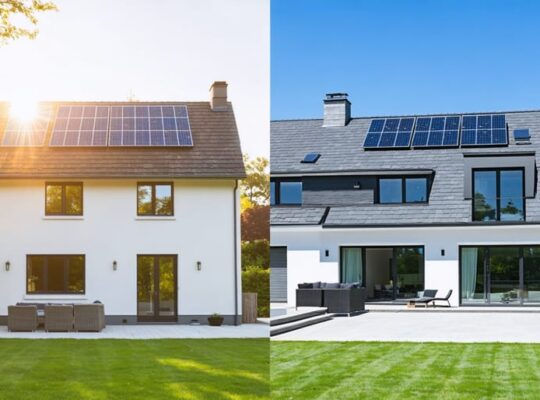
The U-value of windows stands as a critical performance metric in modern architectural design, measuring heat transfer through glazing systems and directly impacting building energy efficiency. As architects and engineers increasingly integrate building-integrated photovoltaics with window systems, understanding U-value becomes essential for optimizing both thermal performance and energy generation. Advanced window technologies now achieve U-values as low as 0.14 W/m²K, representing a significant leap forward in building envelope performance. This thermal efficiency metric, measured in watts per square meter-kelvin (W/m²K), serves as a fundamental parameter in determining energy consumption, occupant comfort, and compliance with increasingly stringent building codes. For professionals in architecture, construction, and renewable energy sectors, mastering U-value calculations and specifications enables the creation of high-performance buildings that balance energy conservation with sustainable power generation.
Understanding U-Value in Window Systems
What Is U-Value?
U-value, also known as thermal transmittance, is a measure of heat transfer through a building material or assembly, such as a window. Expressed in watts per square meter-kelvin (W/m²K), this value indicates how effectively a window prevents heat from escaping or entering a building. A lower U-value signifies better thermal insulation performance, making it a crucial metric in energy-efficient building design.
The measurement considers three primary heat transfer mechanisms: conduction through solid materials, convection through air spaces, and radiation through transparent surfaces. For windows specifically, U-value calculations account for the entire window assembly, including the glazing system, frame materials, and spacers between glass panes.
Modern window technologies often achieve U-values ranging from 0.8 to 3.0 W/m²K, with high-performance triple-glazed units reaching the lower end of this spectrum. This metric is particularly important when evaluating window performance in different climate zones and determining compliance with building energy codes.

Impact on Energy Efficiency
The U-value of windows significantly influences a building’s overall thermal performance and energy consumption patterns. Lower U-values indicate superior insulation properties, resulting in reduced heat transfer between interior and exterior environments. Buildings with high-performance windows featuring low U-values typically experience decreased heating and cooling loads, leading to substantial energy savings throughout the year.
In residential and commercial applications, windows with optimal U-values can reduce annual energy costs by 15-40%, depending on climate conditions and building design. These energy-efficient windows minimize heat loss during winter months while preventing excessive solar heat gain during summer, maintaining consistent indoor temperatures and reducing HVAC system strain.
For building designers and energy consultants, understanding window U-values is crucial for achieving energy performance targets and meeting building code requirements. The selection of appropriate window systems based on U-value considerations directly impacts both operational costs and environmental footprint, making it a critical factor in sustainable building design and energy optimization strategies.
U-Value in PV Glass Windows
PV Glass Construction and U-Value
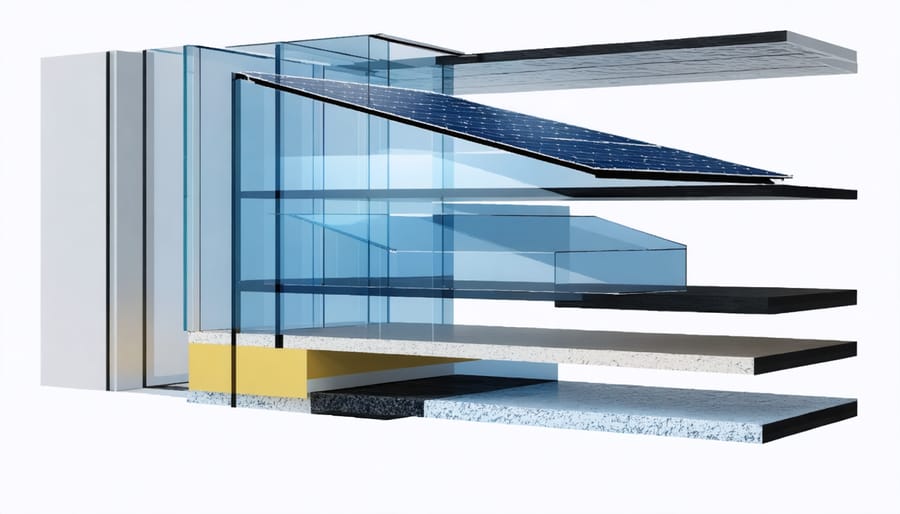
PV glass construction significantly influences the overall U-value of window systems through its layered composition and material selection. The integration of photovoltaic cells between glass panes creates additional thermal barriers that affect heat transfer rates. Typically, a PV glass assembly consists of multiple layers: an outer glass pane, encapsulation material, PV cells, another layer of encapsulation, and an inner glass pane.
The U-value of PV glass windows varies depending on several key factors. Double-glazed PV configurations generally achieve U-values between 1.1 and 2.8 W/m²K, while triple-glazed systems can reach values as low as 0.5 W/m²K. The inclusion of low-emissivity coatings and inert gas fills, such as argon or krypton, between the glass panes further enhances thermal performance.
The thickness and type of glass used in each layer also play crucial roles. Tempered glass, commonly used for durability and safety, typically offers better insulation properties than standard float glass. The spacing between glass panes, usually ranging from 12mm to 16mm, creates an optimal thermal break when combined with appropriate gas fills.
Modern PV glass manufacturers often employ advanced edge sealing technologies and warm-edge spacers to minimize thermal bridging around the perimeter. These improvements can reduce U-values by up to 20% compared to traditional aluminum spacer systems, contributing to better overall window performance.
Balancing Solar Generation and Thermal Performance
When designing window-integrated photovoltaic systems, achieving optimal balance between solar generation capability and thermal insulation presents a critical engineering challenge. The incorporation of photovoltaic elements into window assemblies inherently affects their U-value performance, requiring careful consideration of design trade-offs to maintain building energy efficiency while maximizing solar power integration.
Advanced glazing technologies now enable manufacturers to achieve U-values as low as 0.5 W/m²K while maintaining reasonable power generation capabilities. This is accomplished through strategic material selection and innovative layer configurations. For instance, low-emissivity coatings can be positioned to minimize heat loss while allowing sufficient light transmission for photovoltaic cells to operate effectively.
The key considerations include:
– Solar cell density and placement within the glazing assembly
– Spectral selectivity of glass coatings
– Cavity spacing and gas filling options
– Edge seal design and thermal bridge mitigation
Recent developments in thin-film PV technology have reduced the impact on thermal performance, allowing for better compromise between generation and insulation. Building designers must evaluate site-specific factors such as climate zone, building orientation, and energy requirements to determine the optimal balance between these competing parameters. This assessment should include both winter heating and summer cooling loads to ensure year-round performance optimization.
Optimizing U-Value in Window-Integrated PV Systems
Design Strategies
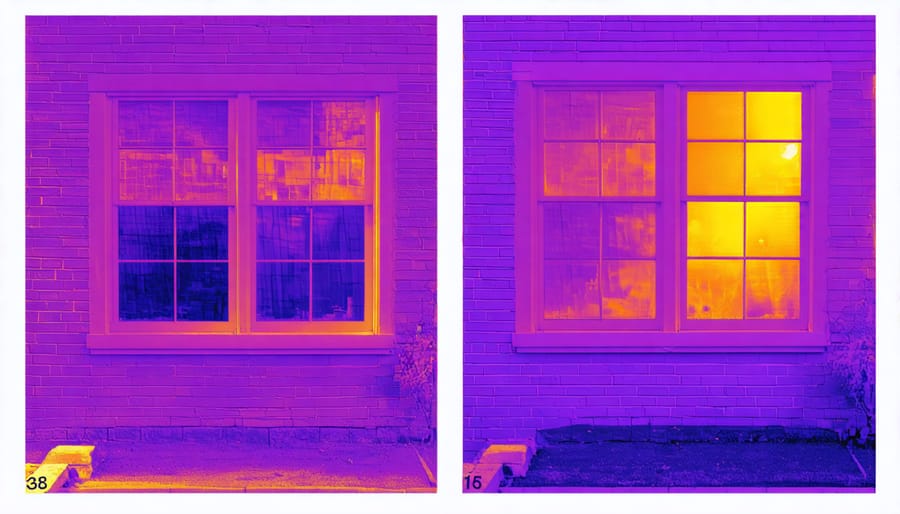
Several effective strategies exist for optimizing window U-values while maintaining photovoltaic efficiency. The primary approach involves using low-emissivity (low-e) coatings strategically positioned to minimize heat transfer without compromising solar cell performance. These coatings can be applied to specific surfaces within a multi-pane assembly to balance thermal insulation with light transmission.
Double and triple-glazing configurations incorporate inert gas fills, typically argon or krypton, between panes to reduce thermal conductivity. The spacing between glazing layers is carefully calculated to optimize both thermal resistance and solar gain. Modern warm-edge spacers replace traditional aluminum spacers, reducing thermal bridging at window edges.
Advanced frame designs utilize thermal breaks and multiple chambers to minimize heat transfer through the frame structure. Composite materials and innovative frame profiles help achieve lower U-values while maintaining structural integrity. Integration of phase change materials (PCMs) in frame cavities can provide additional thermal management benefits.
The incorporation of vacuum-insulated glazing (VIG) technology offers exceptional thermal performance with minimal thickness, making it particularly suitable for PV integration. Smart glazing systems can dynamically adjust their properties based on environmental conditions, optimizing both energy generation and thermal performance throughout different seasons.
These design strategies must be carefully balanced with PV requirements, ensuring sufficient light transmission for optimal solar cell efficiency while maintaining desired thermal performance characteristics.
Material Selection
The thermal performance of windows significantly depends on the materials used in their construction. Frame materials play a crucial role, with aluminum frames typically having higher U-values (less insulation) compared to vinyl or fiberglass options. However, thermal breaks in aluminum frames can substantially improve their performance.
Glass composition is particularly important, with double and triple-glazed units offering superior insulation compared to single-pane windows. Low-emissivity (Low-E) coatings, consisting of microscopic metal or metallic oxide layers, reflect infrared light while allowing visible light to pass through, thereby reducing heat transfer. These coatings can improve U-values by up to 40% when properly implemented.
The space between glass panes, typically filled with inert gases like argon or krypton, provides additional insulation benefits. These gases, being denser than air, reduce convective heat transfer and improve overall thermal performance. The incorporation of these advanced materials aligns with the growing demand for eco-friendly building materials while maintaining optimal energy efficiency.
Spacer materials between glass panes also impact U-values, with warm-edge spacers made from low-conductivity materials offering better thermal performance than traditional aluminum spacers. The combination of these materials and technologies enables windows to achieve U-values as low as 0.8 W/m²K in high-performance applications.
Industry Standards and Regulations
Building codes and energy efficiency standards worldwide have established specific requirements for window U-values to ensure optimal thermal performance in buildings. In the United States, the International Energy Conservation Code (IECC) sets minimum U-value requirements that vary by climate zone, typically ranging from 0.27 to 0.45 BTU/h·ft²·°F for residential buildings.
The European Union enforces stricter standards through the Energy Performance of Buildings Directive (EPBD), requiring windows to achieve U-values as low as 0.8 W/m²K in passive house construction. The UK Building Regulations Part L mandates maximum U-values of 1.4 W/m²K for replacement windows in existing buildings and 1.2 W/m²K for new construction.
Notable certification programs like ENERGY STAR® and Passive House Institute (PHI) have established voluntary performance tiers that often exceed mandatory requirements. ENERGY STAR® certification demands U-values between 0.20 and 0.27, depending on the geographic region, while PHI certification requires values of 0.8 W/m²K or lower.
Compliance testing must follow standardized procedures outlined in NFRC 100 (North America) or ISO 10077 (International) to ensure consistent measurement and reporting. These standards define specific testing conditions, including temperature differentials and measurement methodologies, guaranteeing reliable performance comparisons across different window products and manufacturers.
The optimization of U-values in photovoltaic windows represents a critical frontier in building-integrated solar technology. As the industry continues to advance, we can expect further improvements in thermal performance through innovative materials and manufacturing processes. The balance between solar energy harvesting and thermal insulation remains a key challenge, but emerging solutions like selective coatings and advanced glazing systems show promising results. Looking ahead, the integration of artificial intelligence and smart materials may revolutionize how we approach U-value optimization in PV windows. Success in this field will require continued collaboration between researchers, manufacturers, and building professionals to develop solutions that meet both energy generation goals and thermal performance standards. As global energy efficiency requirements become more stringent, the role of optimized U-value PV windows in achieving net-zero buildings will become increasingly significant.