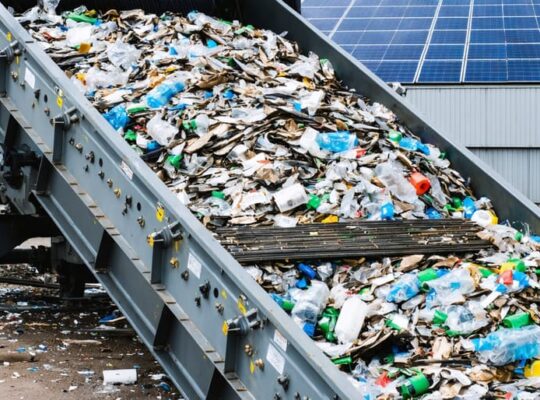
Innovation in recycling technology stands at the forefront of sustainable development, transforming how we approach the lifecycle of solar panels and other renewable energy components. Advanced materials recovery processes now achieve unprecedented efficiency rates, extracting up to 95% of valuable materials from end-of-life products. Through artificial intelligence and automated sorting systems, recycling facilities have revolutionized waste separation, reducing contamination and increasing the quality of recovered materials.
The integration of blockchain technology enables transparent tracking of recycled materials, ensuring accountability throughout the supply chain while chemical recycling breakthroughs allow for the recovery of previously unrecyclable materials. These innovations not only address environmental concerns but also create economic opportunities, with the global recycling technology market projected to reach $45 billion by 2025.
As industries worldwide embrace circular economy principles, cutting-edge recycling solutions demonstrate how technology can bridge the gap between environmental responsibility and economic viability. From molecular-level material separation to zero-waste manufacturing processes, these advancements are reshaping our approach to resource conservation and sustainable production.
Current Challenges in Solar PV Recycling
Material Complexity
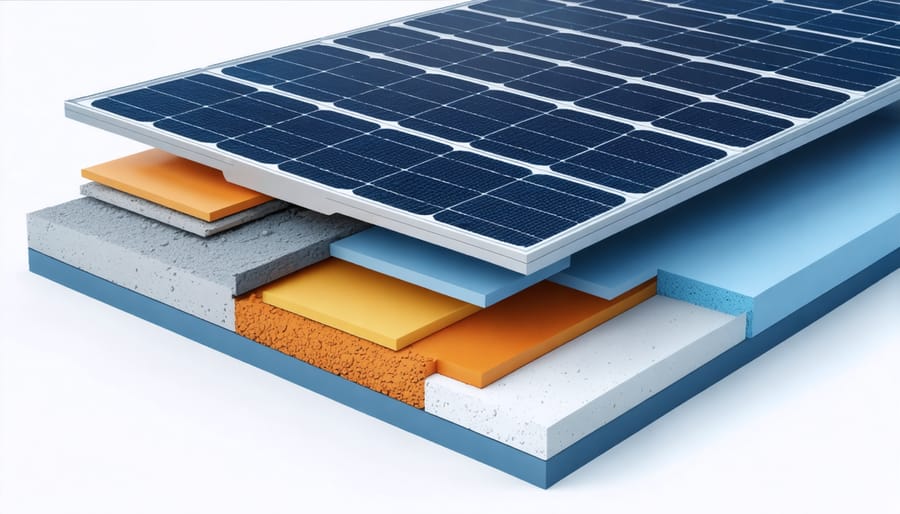
Modern photovoltaic panels comprise multiple layers of diverse materials, each presenting unique current recycling challenges. The primary components include glass (70-75%), aluminum frames (10-15%), encapsulant materials like EVA (ethylene vinyl acetate), and the photovoltaic cells themselves, which contain silicon, silver, and other precious metals.
The complexity stems from how these materials are bonded together during manufacturing. The EVA encapsulant, designed to protect cells from environmental factors, creates a strong adhesive bond that makes separation particularly difficult. Additionally, the presence of trace elements such as lead, tin, and copper in solder connections requires careful handling during recycling processes.
Crystalline silicon panels, which dominate the market, present different challenges compared to thin-film technologies. While the aluminum frames and glass can be readily recycled using conventional methods, recovering the silicon wafers and silver contacts demands sophisticated thermal and chemical processes. Emerging technologies like perovskite cells introduce additional complexity with their unique material compositions, necessitating the development of specialized recycling protocols.
Economic Barriers
The economic barriers to recycling innovation in the photovoltaic industry present significant challenges for widespread adoption. Current recycling processes often require substantial capital investment in specialized equipment and facilities, making it difficult for smaller operations to enter the market. The cost of collecting, transporting, and processing end-of-life solar panels frequently exceeds the value of recovered materials, creating an unfavorable economic equation for many recyclers.
Market dynamics also pose challenges, as the price volatility of recovered materials affects the financial viability of recycling operations. While silver and high-grade silicon command premium prices, other materials yield lower returns, impacting overall profitability. Additionally, the relatively young solar industry means the volume of panels requiring recycling remains limited, preventing recyclers from achieving economies of scale.
The absence of standardized recycling regulations across regions creates market uncertainty, deterring potential investors. Furthermore, competition from virgin materials, often available at lower costs, challenges the market for recycled components. These economic barriers necessitate innovative business models and policy frameworks to create sustainable recycling solutions for the growing solar industry.
Emerging Technologies in PV Recycling
Automated Dismantling Systems
Modern recycling facilities are increasingly deploying sophisticated automated dismantling systems that combine advanced robotics with artificial intelligence to revolutionize material separation and recovery processes. These systems utilize computer vision, machine learning algorithms, and precision robotics to identify, sort, and process recyclable materials with unprecedented accuracy and efficiency.
At the heart of these systems are AI-powered optical sorters that can distinguish between different types of materials based on their physical and chemical properties. High-resolution cameras and spectroscopic sensors analyze items on conveyor belts in real-time, while machine learning models process this data to make split-second sorting decisions. The integration of deep learning algorithms enables these systems to continuously improve their recognition capabilities and adapt to new material types.
Robotic arms equipped with specialized end-effectors perform precise dismantling operations, carefully separating components while preserving their integrity for optimal recycling. These robots can handle various materials, from electronics to industrial waste, with consistent accuracy and minimal human intervention. Advanced gripping technologies, including vacuum systems and adaptive mechanical hands, ensure gentle yet effective handling of different materials.
The implementation of automated dismantling systems has significantly increased recycling efficiency while reducing operational costs and workplace hazards. These systems can operate continuously, processing larger volumes of materials than traditional manual sorting methods. Additionally, the high precision of automated separation leads to purer material streams, resulting in higher-quality recycled products and improved market value.
Key benefits include reduced contamination rates, increased recovery rates of valuable materials, and enhanced worker safety by minimizing exposure to hazardous substances. As these technologies continue to evolve, they are becoming increasingly crucial in achieving circular economy objectives and meeting stringent environmental regulations.

Chemical Recovery Processes
Chemical recovery processes represent a significant breakthrough in recycling technology, particularly for complex materials found in solar panels and electronic waste. Advanced solvent-based extraction methods now enable the selective separation of precious metals and rare earth elements with unprecedented precision. These processes utilize specialized chemical agents that target specific materials, allowing for the recovery of high-purity silver, copper, and gallium from end-of-life photovoltaic modules.
Recent developments in hydrometallurgical techniques have improved the efficiency of metal recovery while reducing environmental impact. These processes employ carefully controlled pH levels and temperature conditions to dissolve and precipitate valuable materials sequentially. For instance, innovative leaching solutions can now extract up to 95% of silver content from solar cells without compromising the purity of other recoverable materials.
Electrochemical separation methods have also evolved significantly, incorporating advanced membrane technology and selective ion exchange resins. These systems can process large volumes of material while maintaining high recovery rates and minimal chemical waste. The integration of automated monitoring systems ensures optimal chemical conditions throughout the recovery process, maximizing yield while minimizing environmental impact.
Emerging technologies in chemical recovery include bio-based extraction methods, which utilize engineered bacteria to selectively accumulate specific metals. These environmentally friendly approaches reduce the dependence on harsh chemicals and generate fewer toxic byproducts. Additionally, new chemical recovery systems are being designed with closed-loop principles, where process chemicals are continuously recycled and reused, significantly reducing operational costs and environmental footprint.
As research continues, these chemical recovery processes are becoming more efficient and economically viable, making them increasingly attractive for large-scale recycling operations.
Circular Economy Integration
Material Recovery and Reuse
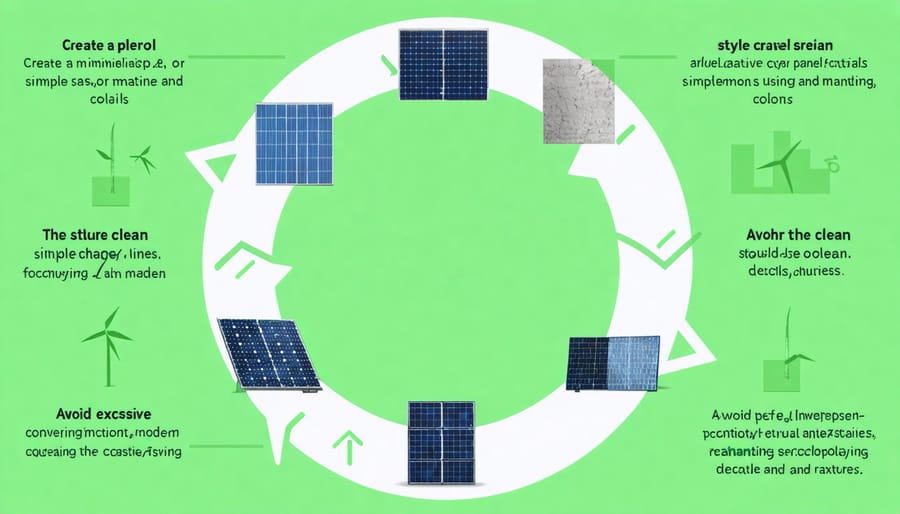
The material recovery and reuse process represents a critical advancement in sustainable solar panel manufacturing. Advanced recycling facilities now achieve recovery rates exceeding 95% for valuable materials, including silver, silicon, and aluminum. These recovered materials undergo rigorous quality testing and refinement before being incorporated into new panel production.
The process begins with mechanical separation, where automated systems sort materials based on their physical properties. High-purity silicon recovered from end-of-life panels is processed through specialized thermal treatment to remove impurities, making it suitable for new wafer production. Aluminum frames and junction boxes are typically reprocessed through standard metallurgical processes, while recovered glass is purified for use in new solar glass or other applications.
Recent technological innovations have improved the economic viability of material recovery, particularly for precious metals like silver and copper. Manufacturers are increasingly integrating recovered materials into their supply chains, reducing both production costs and environmental impact. This circular approach not only conserves raw materials but also decreases energy consumption in new panel production by up to 30%.
Quality control protocols ensure recovered materials meet or exceed industry standards, maintaining the performance and reliability of new panels while supporting sustainability goals.
Supply Chain Optimization
The integration of recycling processes into existing supply chains represents a crucial advancement in sustainable photovoltaic management. Modern recycling facilities are strategically positioning themselves within established manufacturing and distribution networks to optimize material recovery and reduce transportation costs. This integration creates closed-loop systems where recovered materials directly feed back into solar panel production.
Advanced tracking systems and digital platforms now enable real-time monitoring of recycled materials throughout the supply chain. These systems utilize blockchain technology and IoT sensors to ensure transparency and traceability, allowing manufacturers to verify the quality and origin of recycled components. This digital infrastructure has significantly improved the efficiency of reverse logistics operations, essential for collecting end-of-life solar panels.
Collaboration between recycling facilities and manufacturers has led to standardized processes for material recovery and reintegration. These partnerships have established quality control protocols that ensure recycled materials meet manufacturing specifications. Regional processing centers have emerged as crucial intermediaries, reducing transportation distances and associated environmental impacts while maintaining material quality.
The optimization of supply chains has also facilitated the development of specialized transportation solutions for damaged or end-of-life panels. Purpose-built containers and handling equipment protect panels during transit, maximizing the recovery potential of valuable materials. This systematic approach has reduced processing costs and improved the economic viability of solar panel recycling operations, making sustainable practices more attractive to industry stakeholders.
Future Prospects and Industry Impact
Environmental Benefits
Recent advancements in recycling technologies have delivered substantial environmental benefits, particularly in reducing the carbon footprint of solar panel disposal. Studies show that innovative recycling methods can recover up to 95% of semiconductor materials and 90% of glass from end-of-life photovoltaic panels, significantly reducing landfill waste. These improvements are reshaping the future of solar sustainability.
Quantifiable improvements include a 60% reduction in energy consumption during the recycling process compared to traditional methods, translating to approximately 1.2 metric tons of CO2 emissions avoided per ton of recycled panels. Advanced thermal separation techniques have demonstrated a 70% decrease in water usage during material recovery, addressing critical resource conservation concerns.
The environmental impact extends beyond waste reduction. Recovered materials reduce the need for raw material extraction, with each metric ton of recycled panels saving approximately 1.5 tons of CO2 emissions associated with mining and processing virgin materials. Furthermore, innovative chemical recycling processes have achieved a 40% reduction in harmful chemical usage compared to conventional methods.
These improvements contribute to circular economy objectives, with recycled materials meeting 85% of the quality standards for new panel production. This efficiency directly supports sustainable manufacturing practices while minimizing environmental degradation associated with resource extraction.
Economic Opportunities
The photovoltaic recycling industry presents significant economic opportunities, with the global market expected to reach $478 million by 2027. This growth is driven by the increasing volume of end-of-life solar panels and stringent environmental regulations worldwide. Early adopters of recycling technologies are positioned to capture substantial market share as the industry matures.
Investment opportunities span various segments of the recycling value chain, from collection and transportation to processing and material recovery. The recovered materials market is particularly promising, with high-purity silicon, silver, and aluminum commanding premium prices in the electronics and manufacturing sectors. Additionally, innovative recycling processes can recover rare earth elements and other valuable materials, creating new revenue streams.
Several business models are emerging in this space, including specialized recycling facilities, mobile processing units, and integrated service providers. Companies offering comprehensive end-to-end solutions, from decommissioning to material resale, are experiencing strong demand. The sector also benefits from government incentives and environmental credits in many regions.
Employment opportunities are expanding rapidly, with demand for skilled technicians, process engineers, and sustainability consultants. The industry’s growth is creating positions in research and development, quality control, and logistics management. As technologies advance, new specialized roles continue to emerge, making PV recycling an attractive career path for professionals in renewable energy and environmental sciences.
The evolution of recycling technologies in the solar energy sector represents a crucial advancement in our pursuit of truly sustainable renewable energy. As the photovoltaic industry continues to grow, innovative recycling solutions have become increasingly vital for addressing end-of-life management of solar panels and maintaining the industry’s environmental credentials. These developments not only minimize waste but also contribute to a circular economy where valuable materials are recovered and reused efficiently.
The integration of advanced recycling processes with solar manufacturing has demonstrated that sustainability and economic viability can coexist. Through continued research, industry collaboration, and technological innovation, recycling efficiency rates have improved significantly, recovering up to 95% of materials from decommissioned panels. This progress enhances the overall environmental impact of solar energy while creating new opportunities for material recovery and resource conservation.
Looking ahead, the future of solar energy depends heavily on our ability to implement and improve recycling innovations. The industry’s commitment to developing more efficient recycling methods, coupled with supportive regulatory frameworks and increased awareness, will be essential in ensuring the long-term sustainability of photovoltaic technology. As we continue to advance these recycling capabilities, we strengthen the foundation for a more sustainable and responsible renewable energy sector, making solar power an even more attractive solution for our global energy needs.