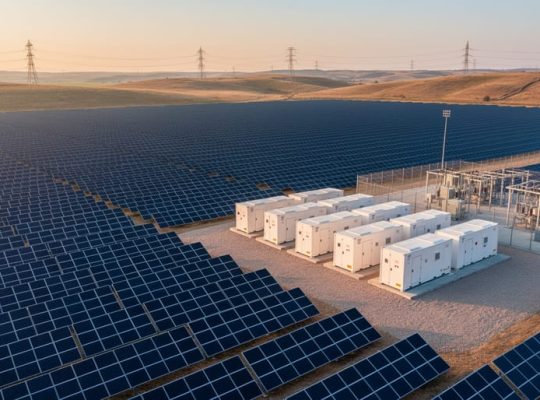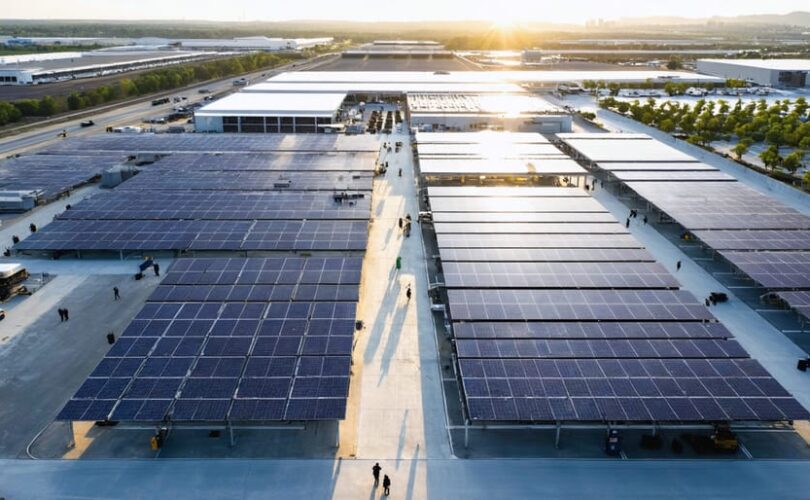
Solar manufacturing in the United States stands at a pivotal moment, driven by unprecedented federal investments, technological innovations, and growing demand in the global renewable energy market. The passage of the Inflation Reduction Act in 2022, allocating $369 billion for clean energy initiatives, has catalyzed a renaissance in domestic solar production capabilities. Major manufacturers are establishing gigawatt-scale facilities across multiple states, strengthening America’s position in the global supply chain while creating thousands of skilled manufacturing jobs.
This strategic shift towards domestic manufacturing addresses critical supply chain vulnerabilities, reduces dependence on foreign imports, and accelerates the nation’s transition to renewable energy. Advanced automation, improved cell efficiencies, and innovative manufacturing processes are enabling American facilities to compete effectively with international producers while maintaining stringent quality standards. As the industry continues to expand, partnerships between manufacturers, research institutions, and workforce development programs are fostering a robust ecosystem that supports long-term growth and technological advancement in solar manufacturing.
The Rise of Domestic Solar Production
Key Manufacturing Hubs
The United States has established several strategic solar manufacturing hubs across different regions, each contributing uniquely to the domestic solar supply chain. California’s Silicon Valley remains a crucial center for solar technology innovation, hosting numerous research facilities and manufacturing plants specializing in high-efficiency solar cells and advanced materials.
Ohio has emerged as a significant player, particularly in Toledo’s “Solar Valley,” where First Solar operates one of the largest thin-film solar module manufacturing facilities in the Western Hemisphere. Georgia has attracted substantial investment, with major manufacturers establishing facilities in the state, leveraging its logistics infrastructure and skilled workforce.
Buffalo, New York, houses a state-of-the-art gigafactory focusing on solar roof tiles and innovative photovoltaic products. Texas has become increasingly important in the solar manufacturing landscape, with multiple facilities in Houston and Austin specializing in silicon wafers and cell production.
These manufacturing centers often collaborate with local universities and research institutions, creating innovation clusters that drive technological advancement and workforce development. The strategic distribution of these hubs across the country helps optimize supply chain efficiency and reduces transportation costs for domestic solar deployment.

Policy Drivers and Incentives
The growth of solar manufacturing in the United States has been significantly influenced by strategic federal solar incentives and state-level policies. The Inflation Reduction Act of 2022 has emerged as a cornerstone policy, allocating substantial funding for domestic manufacturing through production tax credits and investment incentives. These initiatives specifically target key components like solar cells, modules, and critical materials, offering manufacturers up to $3 per kilowatt of cell capacity and $0.40 per watt for modules.
State-level programs complement federal efforts through specialized manufacturing zones, workforce development grants, and tax abatements. States like Georgia, Texas, and Ohio have implemented comprehensive incentive packages, attracting major manufacturing facilities through reduced energy costs, property tax exemptions, and streamlined permitting processes. These coordinated policy efforts have catalyzed significant private investment, with manufacturers committing billions to new production facilities across the country.
The combination of federal support and state-level initiatives has created a robust framework for sustainable industry growth, positioning the United States to compete effectively in the global solar manufacturing landscape.
Technological Innovations in US Solar Manufacturing
Advanced Production Techniques
Modern U.S. solar manufacturing facilities are embracing advanced solar production techniques that combine artificial intelligence, robotics, and precision engineering to enhance efficiency and quality. State-of-the-art automation systems now handle critical processes such as wafer cutting, cell assembly, and module lamination with unprecedented accuracy.
Industry leaders have implemented smart manufacturing systems that utilize real-time data analytics and machine learning algorithms to optimize production parameters continuously. These systems can detect microscopic defects, adjust processing conditions automatically, and maintain consistent quality across production lines.
Advanced inline testing and quality control measures employ spectral imaging and electroluminescence analysis to ensure each component meets rigorous performance standards. Manufacturers are also adopting innovative materials handling solutions, including automated guided vehicles (AGVs) and smart conveyor systems that streamline the production workflow.
The integration of Industry 4.0 principles has enabled seamless communication between different production stages, reducing downtime and improving resource utilization. Digital twin technology allows manufacturers to simulate and optimize production processes before implementation, significantly reducing setup times and material waste.
These technological advancements, combined with lean manufacturing principles, have resulted in higher throughput rates, improved cell efficiency, and reduced production costs, helping U.S. manufacturers maintain competitiveness in the global market while ensuring superior product quality.

Quality Control and Testing
Quality control in U.S. solar manufacturing adheres to rigorous standards established by the International Organization for Standardization (ISO) and the International Electrotechnical Commission (IEC). American manufacturers implement comprehensive testing protocols at multiple stages of production, ensuring the highest quality solar components reach the market.
Key quality assurance processes include flash testing of completed modules, electroluminescence imaging to detect microcracks and defects, and thermal cycling tests to verify durability under various weather conditions. Manufacturing facilities employ automated inspection systems with machine learning capabilities to identify defects in real-time, significantly reducing the likelihood of defective products reaching consumers.
The Solar Energy Industries Association (SEIA) works closely with manufacturers to maintain strict quality benchmarks. U.S. facilities regularly undergo third-party audits and certification processes, including the UL 61730 safety standard and IEC 61215 performance standard. Environmental stress testing simulates decades of outdoor exposure, ensuring panels maintain performance throughout their warranted lifetime.
Statistical process control methods monitor production variables, while detailed documentation systems enable complete traceability of materials and components. Many facilities implement Six Sigma methodologies to minimize defects and optimize manufacturing efficiency. Regular calibration of testing equipment and ongoing staff training programs ensure consistency in quality control procedures across production lines.
These comprehensive quality measures contribute to the superior reliability and performance of U.S.-manufactured solar products, supporting the industry’s reputation for excellence.
Competitive Advantages of US Manufacturing

Research and Development Integration
U.S. solar manufacturers maintain robust research partnerships with leading academic institutions, national laboratories, and private research facilities to drive innovation and efficiency improvements. These collaborative efforts focus on advancing photovoltaic technology, optimizing production processes, and developing next-generation solar solutions.
Notable partnerships include collaborations between manufacturers and the National Renewable Energy Laboratory (NREL), which provides cutting-edge research facilities and expertise in solar technology development. Universities such as MIT, Stanford, and Georgia Tech contribute significantly through joint research initiatives, helping manufacturers refine their production techniques and develop new materials.
The Department of Energy’s Solar Energy Technologies Office (SETO) facilitates many of these partnerships through funding programs and research initiatives. These programs enable manufacturers to access advanced testing facilities, specialized equipment, and expert knowledge while sharing resources and reducing research costs.
Manufacturing innovation institutes, such as the Sustainable Manufacturing Innovation Alliance, create platforms for knowledge exchange between industry players and research institutions. These partnerships have led to breakthrough developments in perovskite solar cells, bifacial modules, and advanced manufacturing automation.
Through these collaborative efforts, U.S. manufacturers maintain competitive advantages while contributing to the broader advancement of solar technology. The integration of research findings into production processes helps ensure American-made solar products remain at the forefront of efficiency and innovation.
Workforce Development
The growth of solar manufacturing in the United States has created significant demand for skilled workers, driving the development of comprehensive workforce training programs. Industry leaders are partnering with technical schools and community colleges to establish specialized curricula focused on solar manufacturing careers, ensuring a steady pipeline of qualified professionals.
These programs typically combine classroom instruction with hands-on training in advanced manufacturing techniques, quality control processes, and automated production systems. Students gain expertise in photovoltaic cell fabrication, module assembly, and testing procedures while developing critical problem-solving skills essential for modern manufacturing environments.
Several states have implemented initiatives to support workforce development, offering certifications and apprenticeship opportunities that align with industry standards. These programs often feature state-of-the-art training facilities equipped with the latest manufacturing technology, providing students with practical experience on equipment similar to what they’ll encounter in actual production environments.
The collaboration between manufacturers and educational institutions extends to research universities, where advanced degree programs focus on innovation in manufacturing processes and materials science. This educational ecosystem ensures that the U.S. solar manufacturing sector maintains a competitive advantage through a highly skilled workforce capable of driving technological advancement and operational efficiency.
Future Outlook and Market Projections
The U.S. solar manufacturing sector is poised for significant expansion through 2030, driven by the Inflation Reduction Act’s manufacturing incentives and growing domestic demand. Industry analysts project that U.S. solar manufacturing capacity could triple by 2025, potentially reaching 50 GW of annual module production capacity by 2030.
Major manufacturers are investing heavily in domestic facilities, with several new gigafactories planned across the Sun Belt states. These facilities will incorporate advanced automation and Industry 4.0 technologies, significantly improving production efficiency and reducing costs. The integration of artificial intelligence and machine learning in manufacturing processes is expected to optimize quality control and increase yield rates.
The development of next-generation solar technologies, including perovskite-silicon tandem cells and bifacial modules, will likely accelerate domestic innovation. Research partnerships between manufacturers and national laboratories are focusing on commercializing these technologies, potentially pushing module efficiencies beyond 25% while reducing production costs.
Supply chain localization efforts are gaining momentum, with new polysilicon, wafer, and cell manufacturing facilities under development. This vertical integration trend is expected to strengthen the resilience of domestic solar manufacturing and reduce dependency on international suppliers.
Employment projections indicate the creation of approximately 100,000 new manufacturing jobs by 2030. The sector’s growth is attracting substantial private investment, with venture capital and institutional investors showing increased interest in U.S.-based solar manufacturing ventures.
Despite these positive indicators, success will depend on sustained policy support, technological advancement, and the industry’s ability to compete with established international manufacturers on cost and scale.
The United States solar manufacturing sector stands at a pivotal moment of transformation and growth. With significant federal investment through the Inflation Reduction Act, coupled with increasing private sector participation, domestic solar production capacity is poised for unprecedented expansion. The establishment of new manufacturing facilities across multiple states not only strengthens America’s position in the global solar supply chain but also creates thousands of skilled jobs and supports local economies.
Looking ahead, the integration of advanced automation, artificial intelligence, and sustainable manufacturing practices will further enhance production efficiency and product quality. The collaboration between industry leaders, research institutions, and government agencies continues to drive innovation in manufacturing processes and materials technology. This ecosystem of partnership and innovation positions the U.S. to potentially become a global leader in next-generation solar technology manufacturing.
As domestic production scales up and manufacturing costs decrease, the U.S. solar industry is becoming increasingly competitive on the international stage. This growth trajectory, supported by strong policy frameworks and market demand, suggests a bright future for American solar manufacturing, contributing significantly to both economic development and clean energy goals.