Photovoltaic power potential represents one of the most promising frontiers in renewable energy, offering unprecedented opportunities for sustainable electricity generation across diverse geographical and economic landscapes. As global energy demands surge and climate concerns intensify, understanding the full scope of PV potential has become crucial for industry stakeholders, policymakers, and investors alike.
The convergence of advancing technology, declining manufacturing costs, and improved efficiency rates has transformed photovoltaic systems from alternative energy solutions into mainstream power generation contenders. Modern PV installations now achieve conversion efficiencies exceeding 20%, while innovative materials and smart grid integration capabilities continue to expand their practical applications.
This technological evolution, coupled with supportive policy frameworks and increasing environmental awareness, has created a robust foundation for exponential growth in the PV sector. Current assessments indicate that photovoltaic systems could potentially generate between 150-170,000 TWh of electricity annually, representing multiple times the current global electricity consumption.
This comprehensive analysis explores the multifaceted dimensions of photovoltaic power potential, examining technological capabilities, economic viability, environmental impact, and future growth trajectories. By understanding these crucial factors, stakeholders can make informed decisions about implementing and expanding photovoltaic solutions in their respective contexts.
Current Policy Frameworks Driving PV Growth
Federal and State Incentive Programs
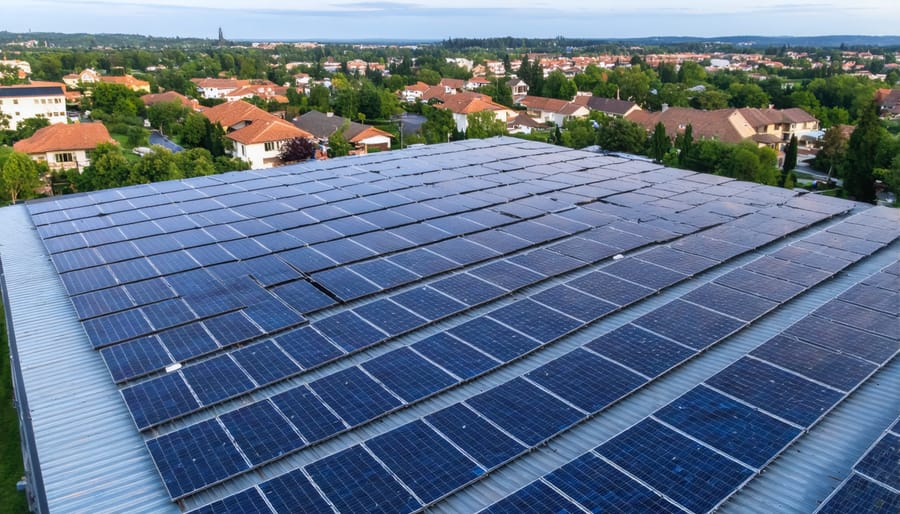
Government support for photovoltaic systems continues to evolve through various policies driving PV adoption at both federal and state levels. The federal Investment Tax Credit (ITC) remains a cornerstone incentive, offering a 30% tax credit for residential and commercial solar installations through 2032. This program has significantly reduced initial investment costs and accelerated market growth.
State-level initiatives complement federal programs through diverse mechanisms including Solar Renewable Energy Credits (SRECs), performance-based incentives, and net metering policies. California’s pioneering Solar Initiative and New York’s NY-Sun program exemplify successful state-level frameworks that have catalyzed regional PV markets.
Property Assessed Clean Energy (PACE) financing programs, available in multiple states, enable property owners to finance PV installations through property tax assessments. Additionally, utility-sponsored incentive programs offer rebates and performance-based payments, further reducing installation costs.
Recent legislative developments have strengthened these support mechanisms. The Inflation Reduction Act of 2022 extended and enhanced federal incentives, introducing additional benefits for projects meeting domestic content requirements and serving low-income communities. These coordinated federal and state efforts have created a robust ecosystem supporting sustained growth in PV deployment while fostering technological innovation and market maturity.
Net Metering and Feed-in Tariffs
Net metering and feed-in tariff policies play crucial roles in determining the economic viability of photovoltaic systems. Net metering allows PV system owners to receive credits for excess electricity fed back into the grid, effectively reducing their utility bills by offsetting consumption during non-generating hours. This billing mechanism has proven particularly effective in promoting residential and commercial PV adoption across numerous markets.
Feed-in tariffs (FiTs) provide guaranteed payments for renewable energy generation, typically at rates higher than retail electricity prices. These structured payment systems offer long-term contracts that ensure stable returns on investment for PV system owners. Countries like Germany and Japan have demonstrated the success of FiT policies in accelerating PV deployment and market growth.
The effectiveness of these pricing mechanisms varies significantly by region and regulatory framework. While net metering policies generally focus on small to medium-scale installations, FiTs often support larger commercial and utility-scale projects. Recent policy trends show a shift toward more market-responsive pricing mechanisms, including time-of-use rates and value-of-solar tariffs.
Implementation challenges include grid integration costs, utility revenue impacts, and ensuring fair compensation rates. Successful policy frameworks typically balance multiple stakeholder interests while maintaining grid stability and promoting sustainable market growth. As PV technology costs continue to decline, many jurisdictions are adjusting these policies to reflect changing market conditions while maintaining investment incentives.
Market Impact Assessment
Installation Cost Trends
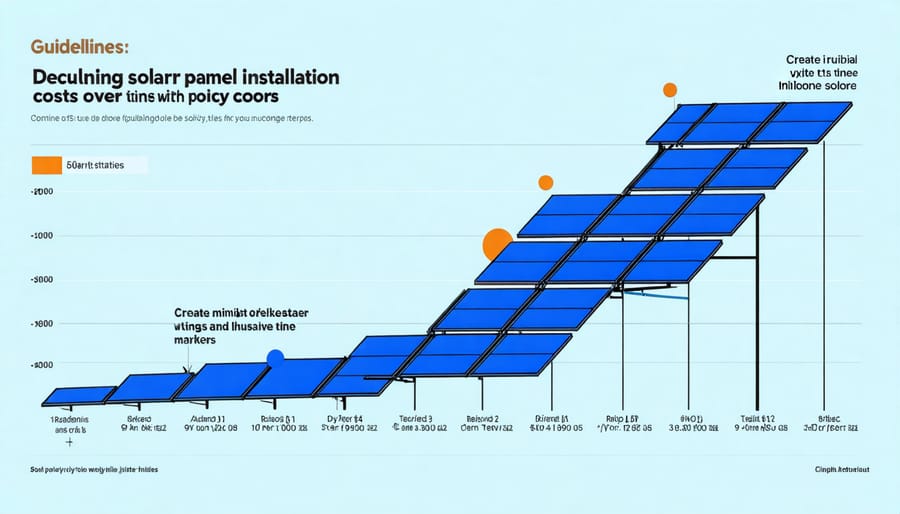
The installation cost trends for photovoltaic systems have shown significant improvement over the past decade, largely influenced by policy interventions and technological advancements. Federal tax incentives, state-level rebates, and renewable portfolio standards have collectively driven down costs by approximately 70% since 2010.
Investment Tax Credits (ITC) have played a particularly crucial role in reducing initial installation expenses, offering up to 30% reduction in system costs for both residential and commercial installations. State-specific initiatives, such as California’s Solar Initiative and New York’s NY-Sun program, have further accelerated cost reductions through direct incentives and market stimulation.
These policy mechanisms have also fostered increased competition among manufacturers and installers, leading to improved efficiency in production and installation processes. The average cost per watt has decreased from $7.34 in 2010 to approximately $2.65 in 2023 for residential systems, while commercial installations have seen even steeper declines.
Soft costs, including permitting, inspection, and interconnection fees, remain a significant portion of total installation expenses. Recent policy reforms focusing on streamlining these processes have begun showing positive results, with some jurisdictions reporting up to 20% reduction in soft costs through standardized permitting procedures.
Looking forward, emerging policies promoting energy storage integration and grid modernization are expected to influence installation costs. While these initiatives may initially increase system costs, they are projected to enhance overall system value and grid reliability, potentially leading to long-term cost benefits for consumers and utilities alike.
Industry Growth Metrics
The photovoltaic industry has demonstrated remarkable growth over the past decade, with global installed capacity reaching 713 GW by the end of 2022, representing a compound annual growth rate (CAGR) of 25.3% since 2012. Market analysis indicates that the sector is poised for continued expansion, with projections suggesting installed capacity will exceed 1,500 GW by 2027.
Employment statistics reflect this robust growth trajectory, with the solar industry creating jobs at a rate six times faster than the overall economy. As of 2022, the sector employed over 4.3 million people worldwide, with technical roles in installation and maintenance comprising approximately 67% of these positions. The United States alone added 47,000 solar jobs in 2022, bringing its total workforce to over 255,000 professionals.
Investment in photovoltaic technology has reached unprecedented levels, with global investments totaling $308 billion in 2022, a 36% increase from the previous year. Manufacturing capacity has expanded significantly, with annual production of solar panels exceeding 200 GW in 2022. Cost efficiency improvements continue to drive market growth, as the levelized cost of electricity (LCOE) for utility-scale solar installations has decreased by 85% since 2010.
Regional markets show varying growth rates, with Asia-Pacific leading global expansion at 42% of new installations, followed by Europe at 28% and North America at 19%. Emerging markets in Africa and South America are experiencing rapid growth, albeit from a smaller base, with annual installation rates increasing by over 50% in several countries. This geographic diversification strengthens the industry’s resilience and indicates strong global market potential.
Future Policy Directions
International Policy Developments
Recent years have witnessed significant shifts in international policies affecting photovoltaic development, fundamentally reshaping global PV market trends. The European Union’s Green Deal has established ambitious targets for renewable energy deployment, with member states implementing feed-in tariffs and auction systems to accelerate PV adoption. China’s 14th Five-Year Plan continues to prioritize solar manufacturing and deployment, while introducing stricter quality standards for PV components.
In the United States, the Inflation Reduction Act has introduced unprecedented incentives for domestic solar manufacturing and installation, including tax credits and grants. This legislation has sparked similar policy responses in other nations, leading to increased competition in manufacturing capacity and technological innovation.
Emerging economies are also implementing supportive frameworks, with India’s National Solar Mission setting aggressive installation targets and offering production-linked incentives. Countries across Southeast Asia have introduced renewable portfolio standards and net metering policies, creating new opportunities for PV deployment.
International cooperation has strengthened through initiatives like the International Solar Alliance, facilitating technology transfer and standardization of best practices. Carbon pricing mechanisms and environmental regulations are becoming more prevalent, indirectly benefiting PV deployment by increasing the cost competitiveness of solar energy compared to fossil fuels.
However, trade policies present both opportunities and challenges, with various nations implementing local content requirements and protective tariffs. These measures have led to the diversification of supply chains and the emergence of new manufacturing hubs, ultimately contributing to the industry’s resilience and global expansion.
Technology-Specific Policies
Technology-specific policies play a crucial role in advancing photovoltaic innovation and market adoption. Different jurisdictions have implemented targeted measures to support emerging PV technologies, with particular emphasis on high-efficiency cells and advanced manufacturing processes.
Notable examples include the European Union’s Strategic Energy Technology Plan, which allocates substantial funding for next-generation solar technologies, including perovskite cells and tandem configurations. In the United States, the Solar Energy Technologies Office maintains dedicated research programs supporting breakthrough PV technologies through competitive funding opportunities and public-private partnerships.
Many countries have established differentiated feed-in tariffs based on technology type, offering higher rates for innovative solutions that show promise but require additional support to achieve commercial viability. Japan’s New Energy and Industrial Technology Development Organization (NEDO) specifically targets bifacial modules and building-integrated photovoltaics (BIPV) through specialized grant programs.
Research and development tax credits often include provisions for emerging PV technologies, with enhanced benefits for solutions that significantly improve upon existing efficiency benchmarks. Several nations have implemented procurement policies requiring minimum efficiency standards, effectively creating market pull for high-performance technologies.
Technology-specific policies also address environmental considerations, with some jurisdictions offering additional incentives for PV solutions that minimize toxic materials or demonstrate superior lifecycle sustainability. Manufacturing support programs increasingly focus on advanced production techniques, including automated processing and Industry 4.0 integration.
These targeted policies have accelerated the commercialization of promising technologies while ensuring diverse technological pathways remain viable. However, policymakers must maintain flexibility to adapt these frameworks as technologies mature and new innovations emerge.
Grid Integration Policies
The successful integration of photovoltaic systems into existing power grids requires comprehensive policy frameworks that address technical, economic, and operational challenges. These policies establish grid integration requirements that ensure system stability, reliability, and efficient power distribution.
Many jurisdictions have implemented standardized interconnection procedures that specify technical parameters, safety protocols, and performance standards for PV systems. These regulations typically cover voltage control, frequency regulation, power quality requirements, and fault protection mechanisms. Grid operators must also maintain specific codes and standards that PV installations need to meet before receiving authorization for grid connection.
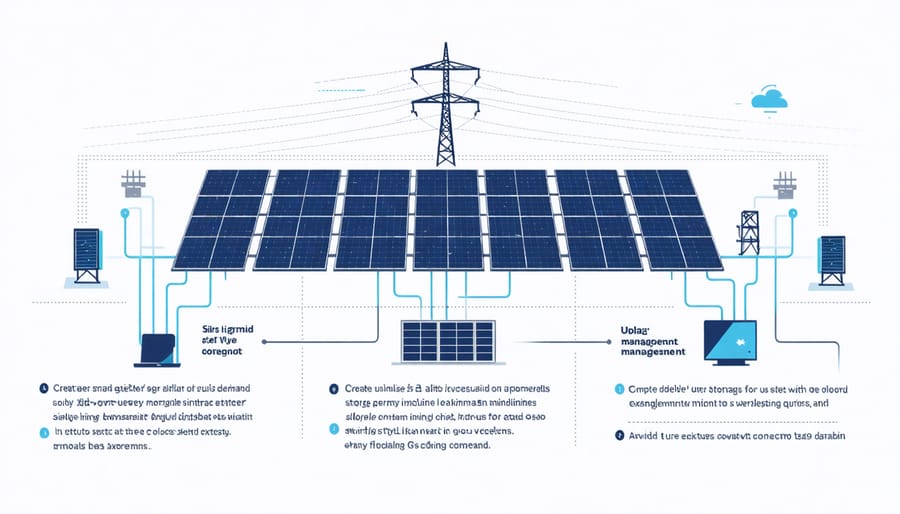
Feed-in tariffs and net metering policies play crucial roles in facilitating grid integration by providing financial incentives for PV system owners. These mechanisms enable bi-directional power flow and fair compensation for excess electricity fed back into the grid. Additionally, modern grid integration policies increasingly focus on smart grid technologies, energy storage requirements, and advanced monitoring systems to manage variable PV generation effectively.
Recent policy developments have emphasized grid modernization initiatives that support higher penetration levels of distributed PV systems. These include requirements for advanced inverter capabilities, communication protocols for grid interaction, and provisions for ancillary services that support grid stability. Regulatory frameworks continue to evolve as technologies advance and grid operators gain more experience managing high concentrations of solar power in their networks.
The analysis of photovoltaic power potential reveals significant opportunities for growth and technological advancement in the renewable energy sector. Recent developments in cell efficiency, coupled with decreasing manufacturing costs, position solar power as an increasingly viable solution for meeting global energy demands. The integration of smart grid technologies and improved energy storage systems has addressed many of the traditional challenges associated with solar power intermittency.
Looking ahead, several key factors will drive the continued expansion of photovoltaic power. Technological innovations in perovskite solar cells and bifacial modules promise to push efficiency boundaries further while reducing production costs. The growing adoption of building-integrated photovoltaics (BIPV) and floating solar farms demonstrates the versatility of PV applications across diverse settings.
Market projections indicate substantial growth potential, with global PV capacity expected to triple by 2027. This expansion will be supported by strengthening policy frameworks, increased corporate investment, and growing public awareness of environmental sustainability. Emerging markets, particularly in Southeast Asia and Africa, represent significant opportunities for PV deployment.
However, success will depend on continued research and development, supportive regulatory environments, and enhanced grid infrastructure. The industry must also address challenges related to recycling end-of-life panels and reducing the carbon footprint of manufacturing processes. With sustained technological advancement and policy support, photovoltaic power is well-positioned to play a central role in the global transition to renewable energy sources.